
Health
Two-Thirds Households In Nigeria Lack Money For Healthy Food — NBS Survey


A survey by the National Bureau of Statistics (NBS) has highlighted the harsh realities faced by Nigerian households, with two-thirds struggling to afford healthy and nutritious meals due to financial constraints. The report, titled Nigeria General Household Survey – Panel (GHS-Panel) Wave 5 (2023/2024), sheds light on the deepening multidimensional poverty and the impact of diminishing purchasing power caused by rising prices of goods and services.
Food Insecurity
The report reveals widespread food insecurity, with 66.7% of households unable to eat nutritious or preferred foods in the past month due to a lack of money. Other findings include:
- 63.8% of households consuming limited types of food.
- 62.4% expressing worry about insufficient food supplies.
- 60.5% eating less than they felt necessary.
The survey also notes a significant increase in food insecurity over time. Between Waves 4 and 5, the proportion of households worried about inadequate food rose from 36.9% to 62.4%.
Energy Access and Power Blackouts
Access to electricity varies significantly between urban and rural areas, with 82.2% of urban households connected to the power grid compared to just 40.4% in rural areas. However, households face an average of 6.7 power blackouts per week.
Traditional cooking methods dominate, with 65.0% of households using three-stone stoves and 70.2% relying on wood as fuel. Despite this, the use of liquefied petroleum gas (LPG) is steadily increasing.
Basic Infrastructure and Sanitation
The survey highlights significant gaps in basic infrastructure:
- Many households lack proper toilet facilities and rely on informal waste disposal methods, with 45.6% dumping waste in bushes or streets.
- Tube wells or boreholes are the primary sources of drinking water for many households.
Asset Ownership and Housing
Asset ownership has declined since 2018/19. Key findings include:
- 66.7% of households owning mobile phones, while 21.3% have internet access.
- 70.4% of households own their homes, with rural ownership higher at 80.1% compared to 49.1% in urban areas.
Implications
The survey underscores the urgent need for policy interventions to address poverty, food insecurity, and inadequate infrastructure in Nigeria. Rising inflation, coupled with inconsistent access to energy and basic amenities, continues to erode the quality of life for millions of Nigerians.




Health
WHO Confirms 1,300 deaths in Europe heatwaves
At least 191 million people are forecast to endure temperatures of at least 35 °C on Sunday in Europe, with the heat particularly intense in Germany, the Czech Republic, Hungary and Poland, according to AFP estimates.


The World Health Organisation (WHO) confirmed that more than 1,300 people have died in Europe since June 21 in connection with the record-breaking heatwave roasting much of the continent.
WHO chief Tedros Adhanom Ghebreyesus said on X that tens of millions have been braving the extreme temperatures in Europe as a deadly heatwave moves eastwards, with some countries announcing rising death tolls and health services warning of saturation.
On Sunday morning, French health officials said there had been around 1,000 more deaths than expected in that country just since Wednesday.
“Heat stress is often called the ‘silent killer’ – and European homes, workplaces and schools were not built for these temperatures,” he said.At least 191 million people are forecast to endure temperatures of at least 35 °C on Sunday in Europe, with the heat particularly intense in Germany, the Czech Republic, Hungary and Poland, according to AFP estimates.
Health
How 100 hospitals in Romania switched to pen and paper to defeat a national cyber-attack
Cutting off 100 hospitals in Romania from the internet stopped the hackers in their tracks, buying time to work out how bad the attack was.

Photo: Head of Romania’s Cyber-Security Directorate Dan Cimpean (L) was in charge of co-ordinating the crisis response
One after another the calls came in from hospitals; criminals were infecting computer networks in a mass hack that was putting countless lives at risk.
At Bucharest’s national cyber-security centre (DNSC) they watched helplessly as the hackers spread across Romania through a popular piece of medical software.
Cyber-chief Dan Cimpean had a tough decision to make, but it was the only option they had.
The order went out to more than 100 hospitals. Disconnect from the internet, now.
The cyber-attack on Romania’s hospitals in February 2024 is one of the worst to target healthcare systems around the world, but these incidents are becoming increasingly common.
Healthcare is now the most targeted area of critical national infrastructure, the FBI has said recently.
Cutting off 100 hospitals in Romania from the internet stopped the hackers in their tracks, buying time to work out how bad the attack was.
But it meant no connected devices, emails or web browsers.
Medical staff had to switch to pen and paper, improvising workarounds to protect patients while IT teams scrambled and the national cyber response centre tried to find out how the hackers had got in – and how they could stop them.
Their actions over four days from 10 February 2024, and those of the doctors and nurses, have been widely praised.
How they reacted and how they coped has become a test case for disaster planners internationally, as officials look for advice on responding to a mass hospital hack.
(Credit: BBC News)
Health
214 Nigerians die of Lassa fever in 2026
The outbreak has spread across 23 states and 109 Local Government Areas since January 2026.
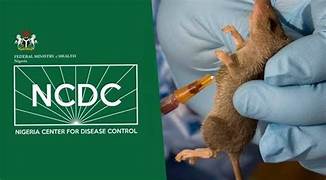
The Nigeria Centre for Disease Control and Prevention (NCDC) recorded 214 Lassa fever death between January to June this year.
The agency said that the Case Fatality Rate was climbing to 25.0 percent from 18.9 percent during the same period in 2025.
This is contained in the NCDC Lassa Fever Situation Report for Week 23 (June 1 to June 7).
Said the report: “New confirmed cases held steady in week 23, matching the count from week 22.“Infections were reported in Edo, Ondo, Bauchi and Ebonyi. No new healthcare worker infections were reported during the week.
“The outbreak has spread across 23 states and 109 Local Government Areas since January 2026,” it said.


A Review of Akwa Ibom State Government’s July Delivery Meeting

Explosion rocks Apapa tank farm; NPA, NIMASA move to curtail spread

FG slams 8-count charges on Adeyemi over fake agency ” I’m not a criminal”, he defends

Tech Expert, Zuckerberg trains with UFC champions, Adesanya, Alexander

Organ Trafficking: Ekweremadu bags 10 years in UK prison

SAINT OBI: Between his marriage and his death
-

 Sports2 days ago
Cape Verde faces defending world cup champions , Argentina today
-

 News3 days ago
JUST IN: Adire Fabric to Replace Khaki as New NYSC Uniform – Minister
-

 International2 days ago
General Hydrocarbons Floors FBN as S’Court Sets Aside Appeal Court Ruling
-

 News3 days ago
JUST IN: Supreme Court Introduces Digital System to End Manual Processes
-

 Entertainment3 days ago
Burna Boy Overtakes Tyla as Africa’s Most Streamed Artist on Spotify
-

 Business2 days ago
Naira Exchange Rates Friday, 3 July 2026
-

 News2 days ago
US ends military operations in Nigeria, withdraws 200 soldiers
-

 Sports3 days ago
Team Nigeria Targets 20 Golds at Commonwealth Games