
Sports
Why I Didn’t Buy Arsenal — Dangote
Dangote’s interests in Arsenal dates back over 15 years.

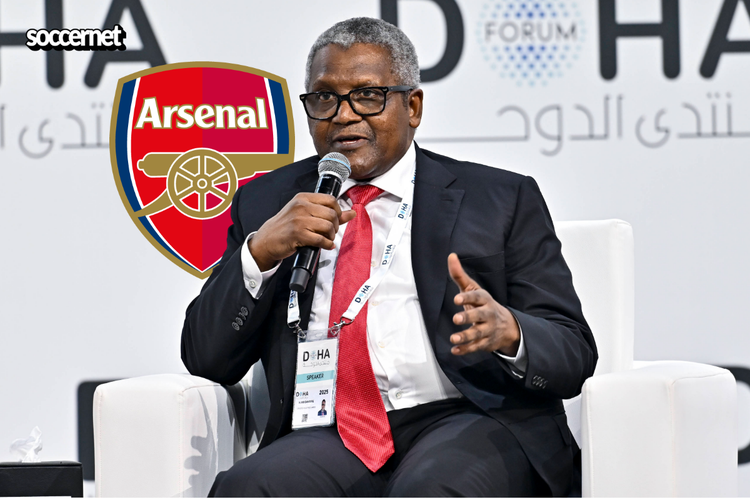
Africa’s richest man, Billionaire Aliko Dangote, has restated that his $20 billion refinery project in Lagos prevented him from buying into English Premier League club, Arsenal.
In a podcast broadcast by Nicolai Tangen, Chief Executive Officer of Norges Bank Investment released on YouTube Wednesday, Dangote said that if not for the refinery project, he would have bought the North London Gunners.
According to Dangote, Arsenal was worth about $2 billion at the time he was seriously considering a takeover, but the magnitude of his refinery project did not allow him the luxury of diverting funds to a football club ownership.
“When I was really very focused on buying Arsenal, then I was also facing the challenge of making sure the refinery gets its own completion, the fertilizer, the petrochemical.
At that time, Arsenal was worth just about $2 billion. Should I put my $2 billion in Arsenal and now allow the business to suffer? Or should I complete the business? Then I can continue to remain a very big supporter of Arsenal,” recalled the billionaire businessman.
He reveals that he chose to continue backing the club as a loyal fan rather than as an owner.
“So I decided to continue to support them, watch their games. Any time Arsenal plays, I always wear the jersey signed for me by the Captain. I am a fan—it is better I remain a fan and continue to fund my business,” said Dangote.
Dangote’s interests in Arsenal dates back over 15 years. He told BBC Africa Sports in 2015 that he planned a full takeover bid once his refinery provided the necessary funds.
Africa’s richest man had told American financier, David Rubenstein, in 2020: “It is a team that yes I would like to buy some day… I’m not buying Arsenal right now, I’m buying Arsenal when I finish all my projects at hand (including the refinery under construction) then.”
Sports
Mbappé wins Onze d’Or award for 2025/26 season
The Spanish club announced the award on Monday, October 19, saying Mbappé received 48.2 per cent of the votes to claim the honour for the first time in his career.
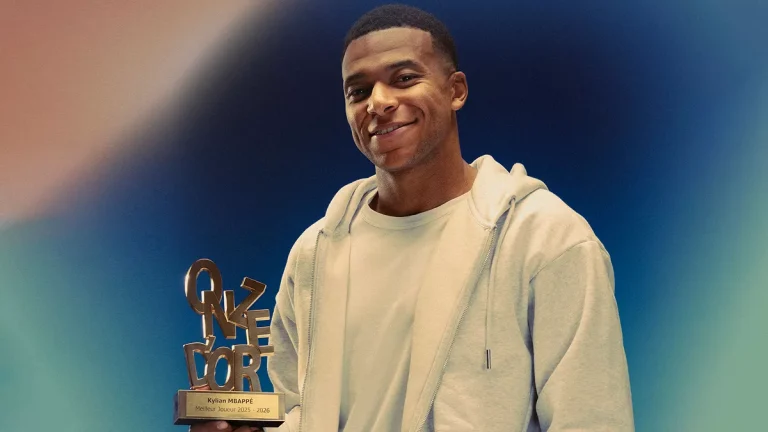
•Kylian Mbappé
Real Madrid forward Kylian Mbappé has won the Onze d’Or award for the best player of the 2025/26 season, following a vote by readers of French magazine Onze Mondial.
The Spanish club announced the award on Monday, October 19, saying Mbappé received 48.2 per cent of the votes to claim the honour for the first time in his career.
Paris Saint-Germain players João Neves and Khvicha Kvaratskhelia finished second and third, with 11.9 per cent and 10.8 per cent of the votes, respectively, according to Real Madrid.
In a statement published on its official website, the club said the French forward was the leading scorer in both the UEFA Champions League and La Liga during the 2025/26 season.
Sports
Ronaldo Gets 30-Day Suspension For Portugal Camp Walkout
Ronaldo’s suspension takes effect from the day of the Denmark match, meaning he has already served 19 days of his ban and will complete it by the end of October.

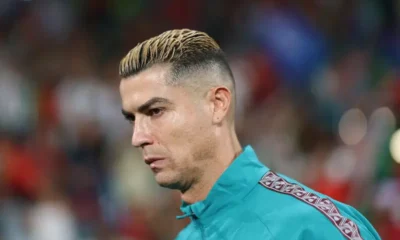
•Cristiano Ronaldo /AFP
Federação Portuguesa de Futebol (FPF), the official governing body of football in Portugal on Monday handed Cristiano Ronaldo a 30-day suspension for leaving the Portuguese national team camp during the Union of European Football Associations (UEFA) nations league.
The 41-year-old left the Portugal camp on September 30, before accusing coach Jorge Jesus of breaking his word about giving him game time.
Ronaldo apologised to supporters earlier in October, adding he would accept any punishment that was imposed.
The former Manchester United and Real Madrid star, who will also have to pay a fine of 255 euros ($286), has received the minimum penalty provided for in the federation’s regulations, which stipulate suspensions of between one and six months for leaving the national team.
Ronaldo left Portugal’s squad after first being made to warm up as a substitute against Norway on September 27 and not brought on, and then finding out he would not start against Denmark in the match on October 1.
Ronaldo’s suspension takes effect from the day of the Denmark match, meaning he has already served 19 days of his ban and will complete it by the end of October.
Sports
CAF Increases Annual Funding for Member Federations to $700,000
The funding has climbed in stages. It stood at $200,000 in 2021, rose to $400,000, then to $525,000, and now sits at $700,000.
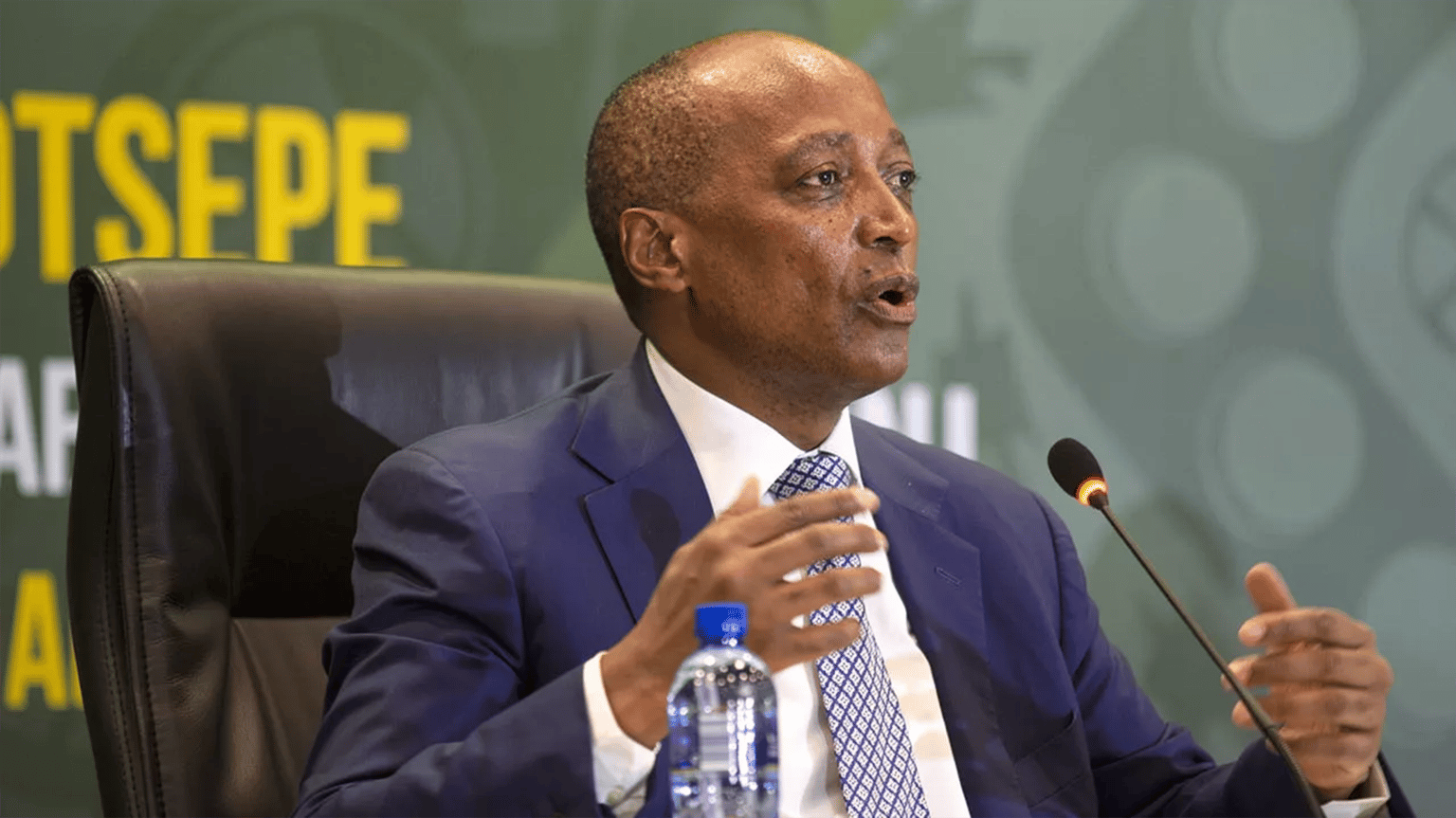
•CAF President Dr Patrice Motsepe
The Confederation of African Football (CAF) has raised the maximum annual subvention available to each of its 54 member associations to $700,000.
The new figure is a 33% increase on the previous allocation of $525,000.
The adjustment continues a steady rise in direct funding to national football governing bodies under CAF President Dr Patrice Motsepe.
Under the revised framework, each member association will now receive up to $700,000 yearly.
Across all 54 federations, the maximum annual allocation could reach about $37.8 million.
The difference of $175,000 per federation adds up to roughly $9.45 million in potential extra annual funding across the continent.
That gives CAF a bigger financial footprint in football development programmes.
Since 2021, the annual allocation per member association has moved from $200,000 to $700,000, a 250% growth over four years.
The funding has climbed in stages. It stood at $200,000 in 2021, rose to $400,000, then to $525,000, and now sits at $700,000. In four years, CAF has added $500,000 to what each federation can access annually.


UPDATE: Identity of Woman Who Flew into Nigeria with Ebola Virus Revealed

UNILAG School Teachers Begin Work-to-Rule Over Unpaid Arrears

Dollar to Naira Exchange Rate – Thursday, October 22, 2026

BREAKING: Lagos Govt Declares Today, Thursday Work-Free to Mark 2026 Ìṣẹ̀ṣe Day

Tech Expert, Zuckerberg trains with UFC champions, Adesanya, Alexander

Organ Trafficking: Ekweremadu bags 10 years in UK prison
-
 Business1 day ago
Naira Exchange Rates Wednesday, October 21, 2026
-
 Business1 day ago
Currency Words You Should Know
-

 Sports3 days ago
Mbappé wins Onze d’Or award for 2025/26 season
-

 Business1 day ago
NCC, CBN To Warn Companies By Flagging Fraudulent Phone Numbers
-
 Sports3 days ago
Ronaldo Gets 30-Day Suspension For Portugal Camp Walkout
-
 Business1 day ago
JPMorgan Eyeing Entry Into Nigeria’s Banking Industry
-

 Business1 day ago
RMRDC Taking 2027 Africa Raw Materials Summit To Kenya
-
 Health2 days ago
BREAKING: Nigeria Confirms First Ebola Case