
News
NJC Suspends Two Judges for One Year Without Pay

Rejects Appeals by Eight Retired Imo Judges
The National Judicial Council (NJC) has imposed fresh sanctions on judicial officers found guilty of misconduct, including the suspension of two High Court judges for one year without pay, while upholding the compulsory retirement of eight judges of the Imo State Judiciary.
The decisions were taken at the NJC’s 111th Meeting held on Tuesday, May 13, 2026, chaired by the Chief Justice of Nigeria, Hon. Justice Kudirat Kekere-Ekun.
Suspended Judges
Hon. Justice Ibrahim D. Shekarau of the Nasarawa State High Court was suspended for one year without pay over a petition filed by Oluwafunke Obale Ozozoma in Suit No. NSD/MG56M/2025. The NJC found that the judge granted an ex-parte order directing the transfer of N7 million from the petitioner’s bank account on the same day the application was filed and heard. The council ruled that there was no pending substantive suit, and the judge failed to verify the claims, acting in bad faith and breaching Rules 3.1, 3.3, and 3.5 of the Revised Code of Conduct for Judicial Officers (2016).
Similarly, Hon. Justice Edward A. E. Okpe of the Federal Capital Territory High Court was suspended for one year without pay following a petition by Mr. Sunday Emmanuel Oso in a matrimonial case (Suit No. FCT/HC/PET/529/2024). He was found to have granted an ex-parte application without proper notice to the petitioner and proceeded with committal proceedings in breach of fair hearing rules.
Imo State Judges
The NJC rejected appeals by eight compulsorily retired Imo State judges who were sanctioned for age falsification. The affected justices are:
- Hon. Justice B.C. Iheka
- Hon. Justice K. A. Leaweanya
- Hon. Justice Okereke Chinyere Ngozi
- Hon. Justice Innocent Chidi Ibeawuchi
- Hon. Justice Ofoha Uchenna
- Hon. Justice Everyman Eleanya
- Hon. Justice Rosemond Ibe
- Hon. Justice T. N. Nzeukwu
The Council, however, reinstated Hon. Justice T. I. Nze of the Imo State Customary Court of Appeal after he presented fresh and authentic evidence that warranted a review of his earlier retirement.
Other Decisions
During the meeting, the NJC considered 13 investigation reports and 98 petitions. It dismissed 73 petitions for lack of merit, want of diligent prosecution, or being time-barred. Four judges were cautioned, one received a final warning, and 11 petitions were sent for further investigation.
In a notable ruling, a petition against Hon. Justice Charles N. Wali of the Rivers State High Court concerning the Rivers State House of Assembly crisis was dismissed as unsubstantiated. The petitioner was recommended for referral to the Legal Practitioners Disciplinary Committee.
Several petitioners and lawyers faced sanctions for filing frivolous or reckless petitions, including referrals to the Inspector-General of Police and the Legal Practitioners Disciplinary Committee. One serial petitioner was barred from further submissions to the NJC.
The Council also commended nine judges for outstanding performance in the 2024 and 2025 legal years and issued 256 query letters to judicial officers over performance issues.
These actions underscore the NJC’s continued commitment to upholding discipline, integrity, and accountability within the Nigerian judiciary.


News
Ex-Supreme Court Judge Justice Kalgo dies at 89
Kalgo JSC was appointed Justice of the Court of Appeal in February 1988 and was later elevated to the Supreme Court of Nigeria on November 25, 1998, where he served honourably as a Justice of the Supreme Court (JSC) until his statutory retirement at age 70 in May 2007.

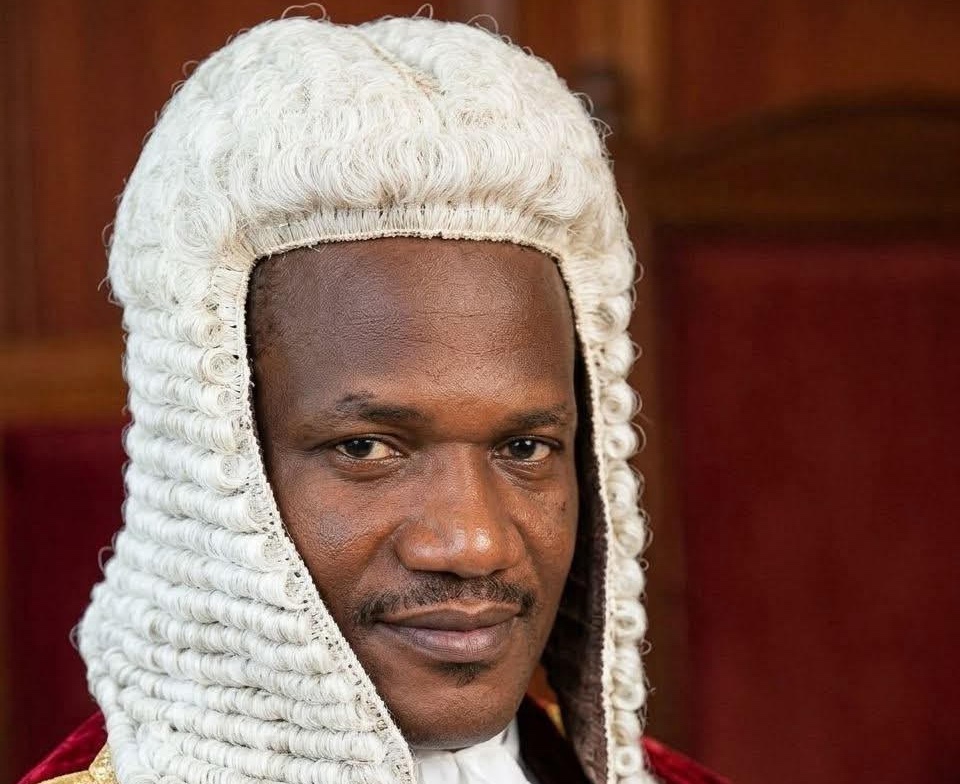
•Justice Umaru Atu Kalgo (1937-2026)
A former Justice of the Supreme Court of Nigeria Hon. Justice Umaru Atu Kalgo (Rtd.), is dead, aged 89.
The retired jurist died at about 3:00 am on Tuesday morning after a prolonged illness and was buried by 2:30 pm in Sokoto in accordance with Islamic rites.
His transition, it was noted, marks the end of an era for a legal icon who dedicated nearly five decades of his life to the service of the law, justice and the Nigerian judiciary.
According to records, the late jurist was born on May 12, 1937, in Kalgo, Kebbi State (then part of the North-Western State).
He attended Elementary School Kalgo, Middle School Sokoto, Middle School Birnin-Kebbi and Government College Zaria (1953–1958).
Late Justice Kalgo pursued legal studies at the Institute of Administration, Ahmadu Bello University (ABU), Zaria; Council of Legal Education, London; College of Law Holborn, London; and the Nigerian Law School, Lagos. He was called to the Nigerian Bar in 1965.
Kalgo JSC began his career as an Administrative Officer in Northern Nigeria before transitioning to State Counsel (1965–1972) and later Deputy Solicitor-General of the North-Western State.
He was appointed High Court Judge for Kano and North-Western State in 1974, later serving on the Sokoto State High Court Bench. He was elevated to Chief Judge of Sokoto State on January 1, 1981, serving with distinction until 1988.
Kalgo JSC was appointed Justice of the Court of Appeal in February 1988 and was later elevated to the Supreme Court of Nigeria on November 25, 1998, where he served honourably as a Justice of the Supreme Court (JSC) until his statutory retirement at age 70 in May 2007.
Major contributions to the legal profession and development of Nigerian jurisprudence:
He penned numerous landmark judgments across constitutional, civil and criminal law during his tenure at the Appellate Court and Supreme Court, leaving behind a rich legacy of case law.
Justice Kalgo played critical roles in national law reform, including serving on the Constitution Review Committee (1987–1988), the Constituent Assembly (1988–1989) and the Law Revision Committee for the Laws of the Federation (1990).
…..by Chukwudi Achife, Chief Press Secretary to the Tax Ombud.
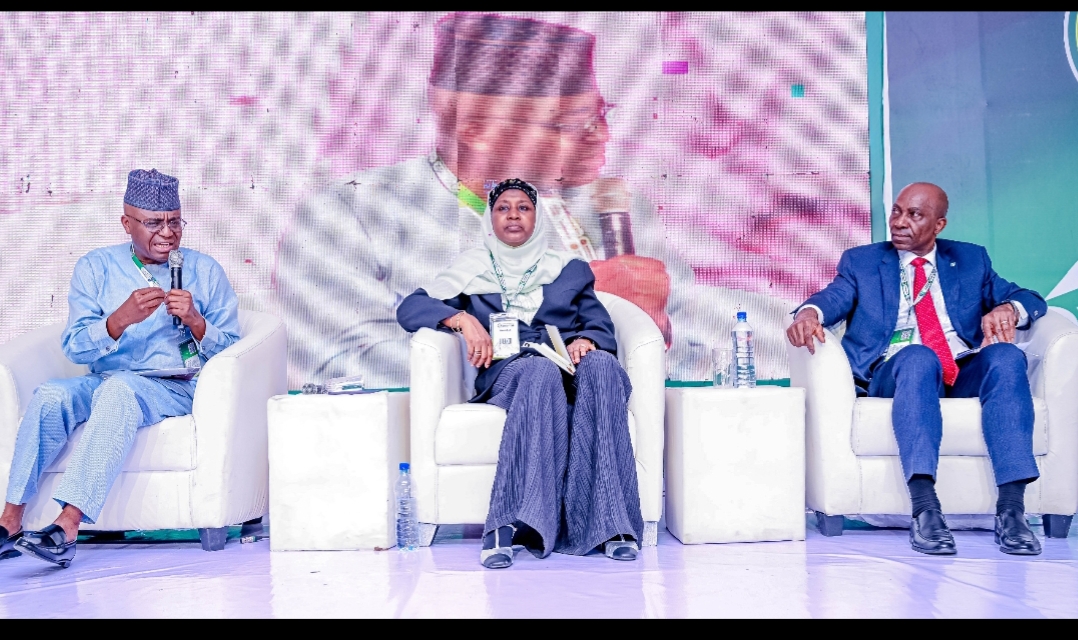
Nigerian lawyers have thrown their support behind the Office of the Tax Ombud’s campaign to boost voluntary tax compliance, describing taxation as a critical source of government revenue for infrastructure and social services.
The endorsement came during a panel discussion titled “Pay Now, Prosper Later” at the 66th Annual General Conference of the Nigerian Bar Association (NBA) in Port Harcourt, Rivers State.
The session featured Tax Ombud and Chief Executive Dr. John Nwabueze alongside senior lawyers, including Ahmed Raji, SAN. Participants stressed the need to strengthen public trust in tax authorities as a pathway to higher voluntary compliance and increased revenue.
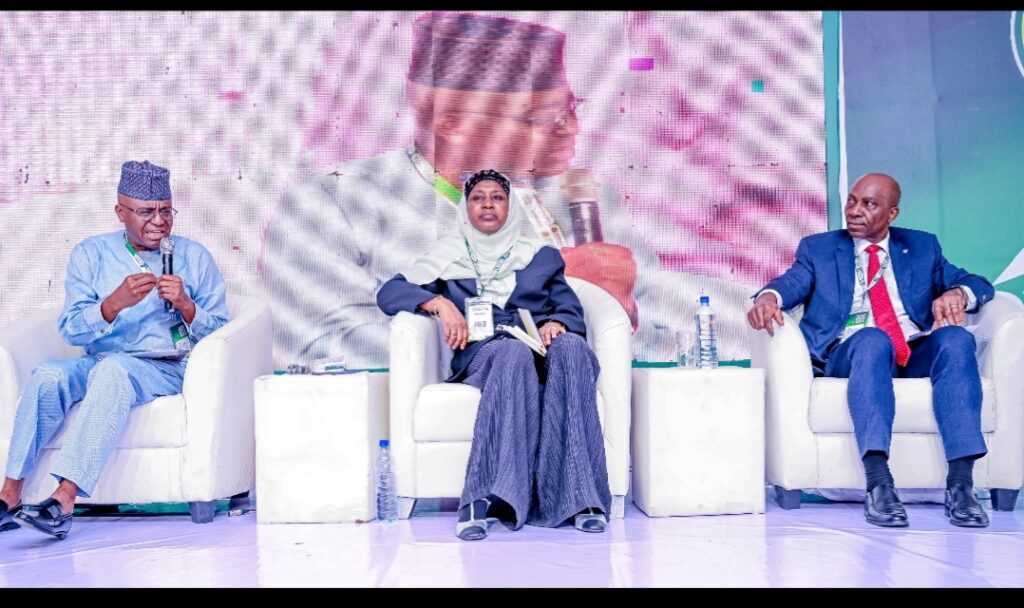
R-L: Tax Ombud/Chief Executive, Office of the Tax Ombud, Dr. John Nwabueze, Nigerian Revenue Service’s representative, Mrs. Bolanle Oniyangi, and Ahmed Raji, SAN, during a panel discussion recently at the 66th Annual General Conference of the Nigerian Bar Association (NBA) in Port Harcourt, Rivers State.
Dr. Nwabueze told the audience that the Office remains committed to offering taxpayers an independent and impartial channel for resolving tax-related complaints fairly and promptly.
“The Office of the Tax Ombud will alleviate the burden of administrative and procedural issues for taxpayers, helping to foster trust between citizens and tax authorities,” he said. “It is our belief that the Office will contribute significantly towards bridging the gap between taxpayers and tax administration, making the tax system more accessible and trusted. We strive to ensure that tax grievances are resolved in an open and accountable manner, ultimately strengthening Nigeria’s tax system.”
Since opening to the public in January, the Office has received 22 complaints and resolved 14 of them, Dr. Nwabueze disclosed. He added that ongoing stakeholder engagement and public-awareness efforts aim to expand access to its services.
While noting that the Office is non-judicial, he described it as an important early-dispute-resolution mechanism that can ease pressure on the courts and other tax adjudication bodies.
Nigerians seeking information or wishing to lodge a complaint are encouraged to contact the Office of the Tax Ombud. Officials expressed confidence that growing public awareness will enable the Office to play a larger role in building a fairer, more transparent and trusted tax system.
…..As the Governor Prepares to Deliver Keynote on Diaspora Investment
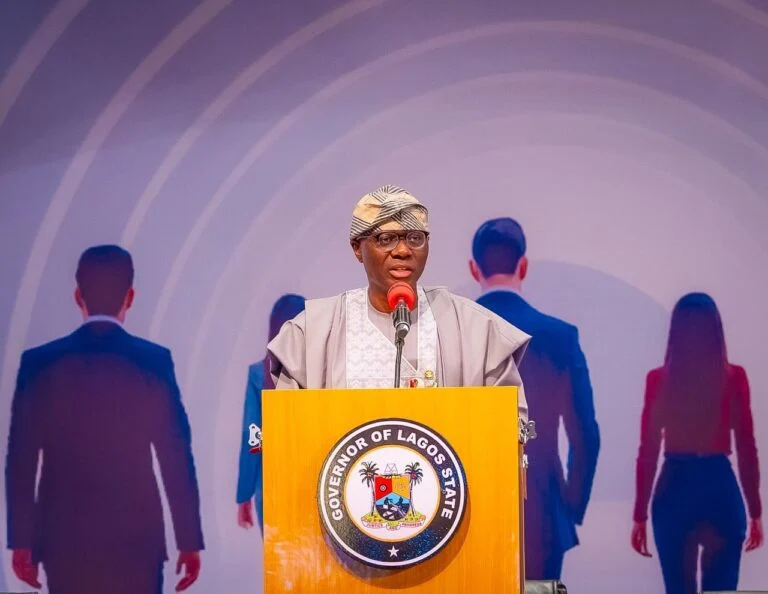
The Governor of Lagos State, Mr. Babajide Sanwo-Olu, has been named the recipient of the 2026 Global Transformation and Good Governance Prize by the Millennium Excellence Award USA.
In a letter from the Board of Directors of the Millennium Excellence Foundation (MEF), the award was conferred on Governor Sanwo-Olu after a rigorous selection process that recognised the extraordinary achievements and developmental trajectory of Lagos State under his leadership.
The letter stated: “The Board has unanimously resolved to confer upon His Excellency Babajide Sanwo-Olu one of the most prestigious honours bestowed under the auspices of the Foundation – the Global Transformation and Good Governance Prize by the Millennium Excellence Award USA.”
The award is conferred under the Royal Patronage of His Majesty Otumfuo Osei Tutu II, Asantehene of Kumasi. The Asantehene, regarded as one of Africa’s most respected monarchs, will personally present the honour alongside Her Royal Highness Lady Julia, Queen Consort, at the ceremony.
The Millennium Excellence Awards USA recognises outstanding individuals of African heritage and global contributors who have made significant impact in business, science, arts, philanthropy, and public service.
The ceremony will take place at the Warner Theatre, Washington D.C., on Saturday, 29th August 2026, with the Red Carpet commencing at 2:30 p.m.
Governor Sanwo-Olu will deliver a keynote address on positioning Lagos State, Africa’s largest sub-national economy, to diaspora communities. The address aims to attract investment in urban infrastructure, finance, and the state’s pipeline of investment-ready projects.
He will also participate in other sessions, including “Government Addresses: The Political Will Behind the Deal,” plenaries, and roundtable discussions focused on strengthening economic and social ties between Lagos and the diaspora.
Past laureates include Archbishop Desmond Tutu, Dr. Kofi Annan, Mo Ibrahim, Wole Soyinka, South African President Cyril Ramaphosa, Aliko Dangote, Tony Elumelu, and President John Dramani Mahama.


Naira Exchange Rates Wednesday, August 26

Ex-Supreme Court Judge Justice Kalgo dies at 89

Lawyers Back Tax Ombud’s Push for Greater Voluntary Compliance

Tech Expert, Zuckerberg trains with UFC champions, Adesanya, Alexander

Organ Trafficking: Ekweremadu bags 10 years in UK prison

SAINT OBI: Between his marriage and his death
-
 Business1 day ago
Naira Exchange Rates Tuesday, August 25
-

 Politics1 day ago
President Tinubu Retrieves APC Campaign List For Readjustment
-
 Politics1 day ago
Amaechi to Sowore: Close Your Mouth When Politicians Are Talking
-
 Politics1 day ago
[UPDATED] 2027: APC dismisses report of campaign council list withdrawal
-

 News1 day ago
FG Moves To Fix Benin-Asaba Federal Highway
-
 News1 day ago
Enugu iron-smelting site Gets $125,000 US Grant
-

 News3 days ago
NGE 2026 Conference: Onaiyekan, Mbah, Osigwe, Others to Speak in Enugu
-
 Entertainment3 days ago
BREAKING: Veteran Nollywood Actor Taiwo Hassan ‘Ogogo’ Reportedly Dies at 66