
Business
World Bank Approves Fresh $1.57bn Support Fund For Nigeria


The World Bank has approved three operations for a total of $1.57bn to support the Federal Government in strengthening human capital through better health for women, children and adolescents and building resilience to the effects of climate change, such as floods and droughts through improving dam safety and irrigation.
The new financing includes $500m for addressing governance issues that constrain the delivery of education and health (HOPE-GOV), $570m for the Primary Healthcare Provision Strengthening Program (HOPE-PHC) and $500m for the Sustainable Power and Irrigation for Nigeria Project (SPIN).
The HOPE-GOV and HOPE-PHC programs combined will support FG in improving service delivery in the basic education and primary healthcare sectors, which are critical to improving Nigeria’s human capital outcomes.
The SPIN project will support improving the safety of dams and the management of water resources for hydropower and irrigation in selected areas of Nigeria.
The HOPE-GOV Program will address underlying governance weaknesses in the systems and procedures of government in two key human development sectors.
It will particularly focus on critical cross-cutting challenges and enabling factors related to both financial and human resource management in basic education and primary healthcare sectors.
The Program will increase availability and effectiveness of financing for basic education and primary healthcare service delivery, enhance transparency and accountability of financing and improve recruitment, deployment and performance management of basic education teachers and primary healthcare workers by federal, state, and local governments.
In support of FG’s newly launched reforms in the health sector, the apex bank said under the Health Sector Renewal Investment Initiative, the HOPE-PHC project will improve the quality and utilisation of core reproductive, maternal, newborn, child, and adolescent health and nutrition services to substantially reduce maternal and under-five mortality and to improve the resilience of the health system— benefiting 40 million people, especially vulnerable populations.
The project is financed by a concessional $500m International Development Association (IDA) credit and an additional $70m in grant financing from the Global Financing Facility for Women, Children and Adolescents (GFF).
The GFF support includes $11m from the UK Foreign, Commonwealth & Development Office (FCDO) and $12.5m from the Children’s Investment Foundation Fund (CIFF) through joint financing with the GFF to help close the financing gap for primary and community healthcare and maternal newborn care at hospital-level, while also supporting government efforts to ensure sustainable financing for family planning commodities.
The SPIN Program will help Nigeria protect citizens from floods and drought through enhanced dam safety and operations.
The project will further support the provision of new and improved irrigation and drainage services over an area of 40,000 hectares.
This will help up to 950,000 people including households, farmers, and livestock breeders to directly benefit from more reliable, climate-resilient, and efficient irrigation, water supply and increased agricultural productivity through improved irrigation water management.
Through the SPIN project, the government will develop a master plan for hydropower and a structured public-private partnership transaction for a hydropower project.
“Effective investment in the health and education of Nigerians today is central to increasing their future employment opportunities, productivity, and earnings, while reducing poverty of the most vulnerable.
This new financing for human capital and primary healthcare will help to address the complex difficulties faced by Nigerians especially women and girls around access and quality of services, but also the governance arrangements that also explain these difficulties” said Dr. Ndiamé Diop, the World Bank Country Director for Nigeria.
“The SPIN program is timely and will protect Nigerians from floods and droughts in the areas where it will be implemented, while enabling an increase in hydropower generation.
The direct positive impact of this project on people and livelihoods is enormous, The World Bank is pleased to work with the government and other stakeholders to deliver this program,” Diop added.


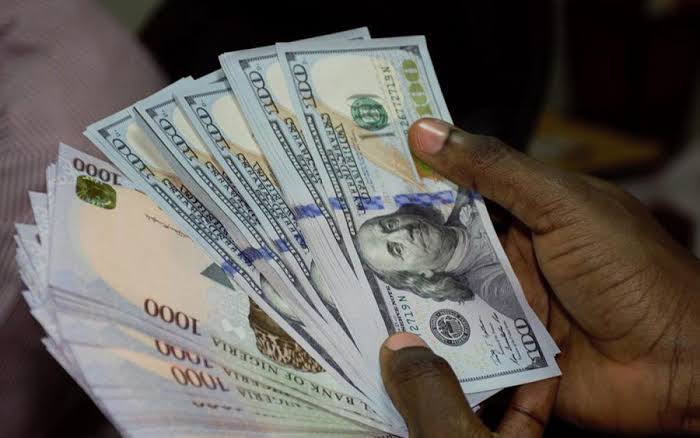
The Nigerian naira traded near recent levels against the US dollar on Thursday, with a modest gap between the official and parallel markets.
Official Market (CBN / NFEM)
- The official Nigerian Foreign Exchange Market (NFEM) rate closed around ₦1,334.72 per US dollar on October 21 (the most recent published CBN figure).
- Intraday trading on that day ranged roughly between ₦1,333 and ₦1,337.
- Interbank FX turnover rose sharply to about $127.6 million.
Parallel / Black Market (Aboki / Street Rate)
- Bureau de Change and parallel market dealers are quoting the dollar in the ₦1,370–₦1,390 range for selling (what you pay to buy dollars).
- Typical buy rates (what dealers pay for dollars) are around ₦1,355–₦1,375.
- The premium over the official rate remains relatively moderate by recent historical standards (roughly 3–4%).
Mid-Market Reference
International mid-market rates (used by many global converters) hover around ₦1,332–₦1,335 per dollar.
Quick Summary
| Market | Approx. Rate (₦ per $1) | Notes |
|---|---|---|
| Official (CBN/NFEM) | 1,335 | Latest published close |
| Parallel (Sell) | 1,370 – 1,390 | Street / BDC rate |
| Mid-market | 1,332 – 1,335 | Global reference |
Context: The naira has been relatively stable in recent sessions, supported by improved FX liquidity and external reserves. The gap between official and parallel rates remains narrower than the wide spreads seen in previous years, though demand for dollars for imports, travel, and remittances continues to influence the street rate.
Rates can shift during the day. Always confirm with a trusted bank, Bureau de Change, or licensed operator before transacting.
Business
RMRDC Taking 2027 Africa Raw Materials Summit To Kenya
Speaking with newsmen during the conclusion of the ARMS 2026, Ike-Muonso said Nigeria is the only county that has an organisation, government-owned organisation in the continent that is fully dedicated to adding value to raw materials.

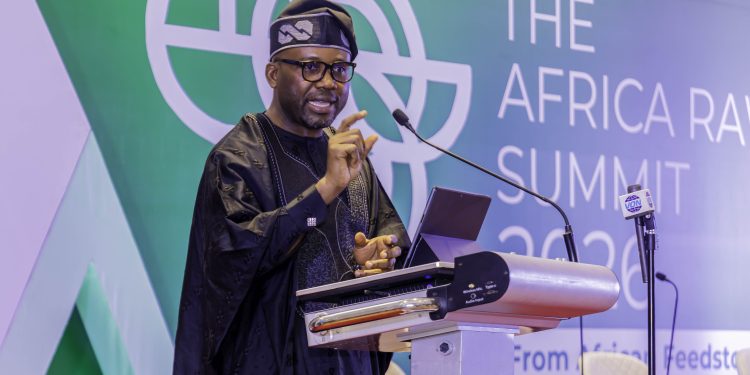
• Photo: Hon.Minister, Federal Ministry of Innovation, Science and Technology (FMIST), Dr Kingsley Udeh, declaring the event open.
The third edition of the Africa Raw Materials Summit (ARMS) 2027, would be used to garner support for setting up a centralised continental database for raw processing and value addition that is accessible to investors and industrialists.
The Director-General of the Raw Materials Research and Development Council (RMRDC), Prof. Nnanyelugo Ike-Muonso, disclosed this during the ARMS 2026 Summit , held in Abuja, themed, ‘From African Feedstock To Factories.’
Building enthusiasm ahead of the next year’s event scheduled to hold in Kenya, East Africa, Ike-Muonso explained that the decision to take the summit to Kenya was reached following what he described as the East Africa country participants’ dominance in the first and second edition of the summit.
Ike-Muonso said Nigeria is the only county that has an organisation, government-owned organisation in the continent that is fully dedicated to adding value to raw materials.
Business
JPMorgan Eyeing Entry Into Nigeria’s Banking Industry
J.P. Morgan operates in more than 100 countries worldwide, providing financial services, investment banking, asset management, and commercial banking across major global markets in the Americas, Europe, the Middle East, Africa, and Asia-Pacific.

JPMorgan Chase & Co has deposited N50 billion with the Central Bank of Nigeria as part of efforts to secure a merchant banking licence and expand its operations in Nigeria .
J.P. Morgan operates in more than 100 countries worldwide, providing financial services, investment banking, asset management, and commercial banking across major global markets in the Americas, Europe, the Middle East, Africa, and Asia-Pacific
Bloomberg reported that the CBN deposit, valued at about $38m, meets a key requirement in the American lender’s application and signals its readiness to establish a licensed banking operation in Nigeria.
However, the payment does not guarantee approval, as the CBN is yet to make a final decision on the application.
People familiar with the process, said the deposit was one of the final regulatory requirements for the licence.
They added that the bank expects to obtain approval by the end of 2026 or in early 2027, subject to the regulator’s decision.


UPDATE: Identity of Woman Who Flew into Nigeria with Ebola Virus Revealed

UNILAG School Teachers Begin Work-to-Rule Over Unpaid Arrears

Dollar to Naira Exchange Rate – Thursday, October 22, 2026

BREAKING: Lagos Govt Declares Today, Thursday Work-Free to Mark 2026 Ìṣẹ̀ṣe Day

Tech Expert, Zuckerberg trains with UFC champions, Adesanya, Alexander

Organ Trafficking: Ekweremadu bags 10 years in UK prison
-

 Sports3 days ago
Mbappé wins Onze d’Or award for 2025/26 season
-

 Business1 day ago
NCC, CBN To Warn Companies By Flagging Fraudulent Phone Numbers
-

 Sports3 days ago
Ronaldo Gets 30-Day Suspension For Portugal Camp Walkout
-

 Business1 day ago
Naira Exchange Rates Wednesday, October 21, 2026
-
 Business1 day ago
Currency Words You Should Know
-
Business1 day ago
JPMorgan Eyeing Entry Into Nigeria’s Banking Industry
-

 Business1 day ago
RMRDC Taking 2027 Africa Raw Materials Summit To Kenya
-
 Health1 day ago
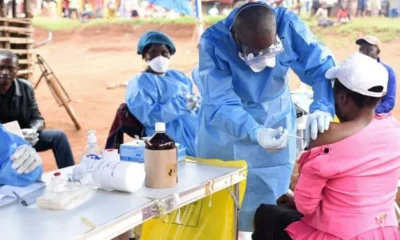
Ebola In Nigeria: Symptoms, Spread and How To Protect Yourself