
Business
‘China Prepared To Lend More’, FG Not Discussing Debt Forgiveness With Beijing — Minister

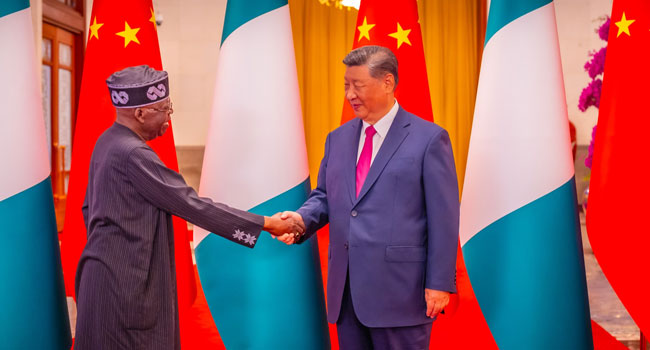
The Federal Government of Nigeria says it is not discussing debt forgiveness with China, noting that Beijing is willing to lend Nigeria more money and invest more in the economy of Nigeria.
The Minister of Foreign Affairs, Yusuf Tuggar, stated this on Channels Television’s Sunday Politics programme.
Nigeria has been making proposals for debt forgiveness at the United Nations General Assembly for some years now but this hasn’t been achieved.
At the recent 79th session of the United Nations General Assembly (UNGA) in New York, President Bola Tinubu, represented by Vice President Kashim Shettima, pushed for reform of the international financial system to include “comprehensive debt relief measures, to enable sustainable financing for development”.
Asked whether any of the multilateral or bilateral loans obtained by Nigeria was cancelled at this year’s UNGA, the foreign minister said, “Under President Obasanjo, we benefited from debt forgiveness.
It’s a process; it’s not just an event, it takes time but you have to be there, you have to be present, and then these things happen, they don’t happen overnight.
“The effect that we felt the last time we had debt forgiveness did not just happen with one UNGA.”
According to the Debt Management Office (DMO), Nigeria’s external debt stock as of March 2024 was N56trn ($42bn) while domestic debt stood at N65trn ($46.29bn).
China is one of the lenders to Nigeria.
Asked whether Nigeria is in talks with Beijing for debt relief considering that Tinubu met with his Chinese counterpart, Xi Jinping of late, the minister said that was not the case.
Tuggar said, “No, that is not what we are discussing with China.
And when it comes to the issue of debt, look at the debt-to-GDP ratio of Nigeria, we are not even among the critically indebted nations.
“When you talk about the debt of a developing country, Nigeria is not in that sort of precarious situation.
As a matter of fact, China is prepared to lend more, China is prepared to invest more in Nigeria in terms of infrastructure development and other things.”
The minister also said Nigeria would join BRICS+, a nine-member economic and political force, at the right time.
As of December 2004, Nigeria owed a total of $36bn (which amounted to N4.8trn at the exchange rate of N134/$1).
$30.84bn of the country’s external debt at the time was borrowed from the Paris Club, alongside other bilateral and multilateral facilities.
The Paris Club is an official group of money lenders formed in 1956 with headquarters in Paris, France.
Nigeria borrowed funds for developmental projects from members of the group such as the UK, US, France, Germany, Japan, Netherlands and eight other countries. Some of the funds borrowed were long before Obasanjo’s administration.
President Olusegun Obasanjo’s debt relief campaign in 2005 saw the Paris Club grant Nigeria a debt relief of $18bn out of the $30.8bn outstanding.
As an exit strategy, Nigeria paid Paris Club creditors $12.4bn which represented $6.3bn regularisation of arrears and a balance of $6.1bn.




Business
TIME Names Moniepoint CTO Felix Ike Among 50 Global Executives of the Year
In its citation, TIME said Ike “has helped to establish the business as one of Africa’s leading financial platforms.


TIME magazine has named Felix Ike, co-founder and Chief Technology Officer of Nigerian fintech Moniepoint, to its inaugural Executives of the Year: Tech and Data list.
Ike is the only executive representing an African company among the 50 leaders selected for the 2026 list.
The list, unveiled on Tuesday, September 22, recognises chief information officers, chief technology officers, chief data officers and chief product officers whose decisions are shaping how major organisations deploy technology and use data.
Moniepoint is also the only African company represented on the inaugural list.
Ike was named alongside executives from Netflix, CrowdStrike, Dell, Duolingo, AT&T, OpenAI, Anthropic, Shopify and Reddit, among others.
In its citation, TIME said Ike “has helped to establish the business as one of Africa’s leading financial platforms.
“The recognition follows Moniepoint’s inclusion in TIME’s 2025 list of the 100 Most Influential Companies, giving the Lagos-founded fintech another global distinction.
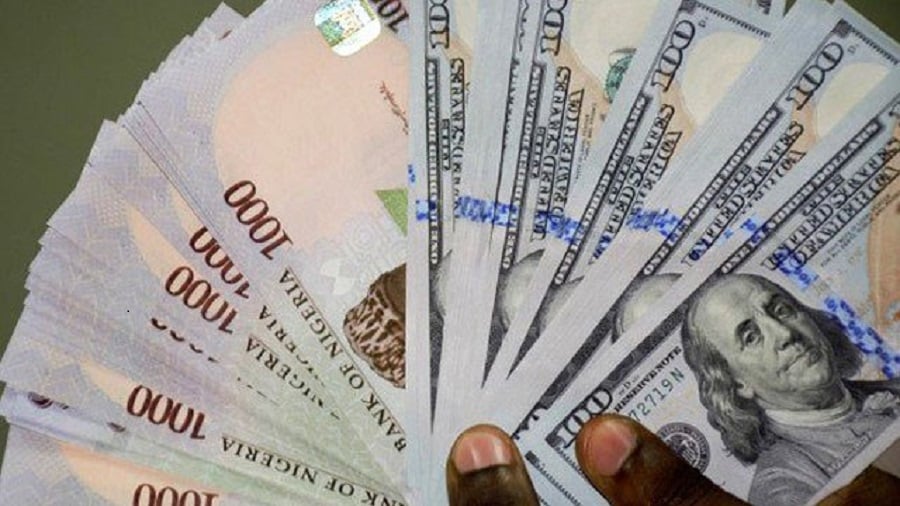
Black Market Rates
₦1382DOLLAR (USD)
₦1855POUND (GBP)
₦1545EURO (EUR)
1000 DOLLAR (CAD)
₦70 RAND (ZAR)
370DIRHAM (AED)
190YUAN (CNY)
₦100G.CEDI (GHS)
₦2350 CFA F.(XOF)
₦2250 CFA F.(XAF)
₦850 AUSSIE (AUD)
Official CBN Exchange Rates
DOLLAR (USD)₦1328.67
POUND (GBP)₦1758.36
EURO (EUR)₦1511.63
SWISS FRANC (CHF)₦1605.45
JAPANESE YEN (JPN)₦8.38
CFA FRANC (XOF)₦2.31
WEST AFRICAN UNIT OF ACCOUNT (WAUA)₦1808.03
CHINESE YUAN (CNY)₦197.92
SAUDI RIYAL (SAR)₦353.86
SOUTH AFRICAN RAND (ZAR)₦81.09
Business
Djibouti, Ethiopia and Dangote to build $660 million petroleum pipeline
In Kenya, Dangote and the government are due to break ground on a new 700,000-barrel-per-day crude oil refinery in Lamu next week.
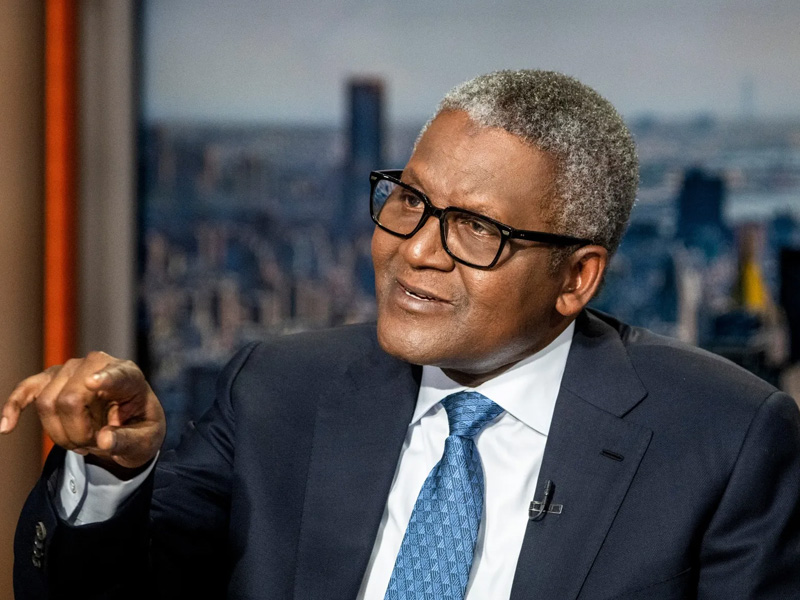
Ethiopia, Djibouti and Nigerian billionaire Aliko Dangote plan to build a $660 million refined petroleum pipeline that will connect Ethiopia and Djibouti, a spokesperson in Ethiopian Prime Minister Abiy Ahmed’s office said on Thursday.
The project will include a 120-km (75-mile) pipeline, as well as approximately 375,000 cubic metres of storage capacity at Damerjog in Djibouti and 800,000 cubic metres at Dewele in Ethiopia, the spokesperson told Reuters, adding it should become operational within 18 months.
Abiy said on his X account the project will be developed through a partnership between Ethiopian Investment Holdings and the Dangote Group, which separately is already building a $4 billion fertiliser pipeline and power plant, and a polypropylene packaging facility, in Ethiopia.
The project aims to reduce logistics costs and delays along the Ethiopia-Djibouti transport corridor, Abiy said.
Developers say the infrastructure will strengthen energy security and improve supply chain resilience for the two countries, he said.
Abiy is on a visit to Djibouti and made the announcement alongside its president, Ismail Omar Guelleh, and Dangote.
In Kenya, Dangote and the government are due to break ground on a new 700,000-barrel-per-day crude oil refinery in Lamu next week.


Congo military plane crash kills 13, including three officers

Manchester City Faces Expulsion For Breaching 114 EPL Financial Rules

TIME Names Moniepoint CTO Felix Ike Among 50 Global Executives of the Year

Tech Expert, Zuckerberg trains with UFC champions, Adesanya, Alexander

Organ Trafficking: Ekweremadu bags 10 years in UK prison

SAINT OBI: Between his marriage and his death
-
 Business3 days ago
FG Engages Stakeholders On Nigeria’s Rice Value Chain
-
 Business3 days ago
Naira To Dollar, Pound , Euro Rate Wednesday September 23
-
 Business3 days ago
Airtel Money Targets October Listing On London Stock Exchange
-
 Business2 days ago
MAN Urges CBN To Consider CRR Cut Next Phase of Monetary Easing
-

 Business3 days ago
Cardoso Says Multiple FX Windows Cost Nigeria 3% of GDP, Higher Than Fuel Subsidy
-
 Crime2 days ago
JUST IN: Zamfara LG Chairman Freed After 61 Days in Captivity
-

 News2 days ago
VP Shettima, Gov Mbah to address Over 500 editors on 2027 election issues
-

 Sports2 days ago
FIFA names Nigerian referee among 81 officials for U-17 World Cup