
Business
Dangote commends NUPRC for publishing Domestic Crude Supply Obligation Guidelines


…Says local price will continue to increase because Trading arms offer cargoes at $2-$4 per barrel, above NUPRC official price.
…Insists IOCs are frustrating its crude supply demands.
The Management of Dangote Industries Limited (DIL) have commended the Nigerian Upstream Petroleum Regulatory Commission (NUPRC) for its various interventions in the oil company’s crude supply requests from International Oil Companies (IOCs), and for publishing the Domestic Crude Supply Obligation (DCSO) guidelines to enshrine transparency in the oil industry.
Vice President, Oil & Gas, Dangote Industries Limited, Mr. DVG Edwin however said: “If the Domestic Crude Supply Obligation (DCSO) guidelines are diligently implemented, this will ensure that we deal directly with the companies producing the crude oil in Nigeria as stipulated by the PIA.
”Edwin insisted that IOCs operating in Nigeria have consistently frustrated the company’s requests for locally produced crude as feedstock for its refining process.
He highlighted that when cargoes are offered to the oil company by the trading arms, it is sometimes at $2-$4 (per barrel) premium above the official price set by NUPRC.
“As an example, we paid $96.23 per barrel for a cargo of Bonga crude grade in April (excluding transport).
The price consisted of $90.15 dated brent price + $5.08 NNPC premium (NSP) + $1 trader premium.
In the same month we were able to buy WTI at a dated brent price of $90.15 + $0.93 trader premium including transport.
When NNPC subsequently lowered its premium based on market feedback that it was too high, some traders then started asking us for a premium of up to $4m over and above the NSP for a cargo of Bonny Light”.
“Data on platforms like Platts and Argus shows that the price offered to us is way higher than the market prices tracked by these platforms.
We recently had to escalate this to NUPRC”, Edwin said, and urged the regulatory commission to take a second look at the issue of pricing.
Edwin’s response came against the background of a statement by the Chief Executive Officer of NUPRC, Engr. Gbenga Komolafe, who in an interview on ARISE News TV said that “it is ‘erroneous’ for one to say that the International Oil Companies (IOCs) are refusing to make crude oil available to domestic refiners, as the Petroleum Industry Act (PIA) has a stipulation that calls for a willing buyer-willing seller relationship.”
Edwin noted that, “The NUPRC has been very supportive to the Dangote Refinery as they have intervened several times to help us secure crude supply.
However, the NUPRC Chief Executive was probably misquoted by some people hence his statement that IOCs did not refuse to sell to us.
To set the records straight, we would like to recap the facts below.
“Aside from Nigerian National Petroleum Corporation Limited (NNPCL), to date we have only purchased crude directly from only one other local producer (Sapetro).
All other producers refer us to their international trading arms.
“These international trading arms are non-value adding middlemen who sit abroad and earn margin from crude being produced and consumed in Nigeria.
They are not bound by Nigerian laws and do not pay tax in Nigeria on the unjustifiable margin they earn.
“The trading arm of one of the IOCs refused to sell to us directly and asked us to find a middleman who will buy from them and then sell to us at a margin.
We dialogued with them for 9 months and in the end, we had to escalate to NUPRC who helped resolve the situation,” Edwin stated.
According to him, “When we entered the market to purchase our crude requirement for August, the international trading arms told us that they had entered their Nigerian cargoes into a Pertamina (the Indonesia National Oil Company) tender, and we had to wait for the tender to conclude to see what is still available.
“This is not the first time.
In many cases, particular crude grades we wish to buy are sold to Indian or other Asian refiners even before the cargoes are formally allocated in the curtailment meeting chaired by NUPRC.
“However, we would like to urge NUPRC to take a second look at the issue of pricing.
NUPRC has severally asserted that transactions should be on willing seller / willing buyer basis.
The challenge however is that market liquidity (many sellers / many buyers in the market at the same time) is a precondition for this.
Where a refinery needs a particular crude grade loading at a particular time then there is typically only one participant on either side of the market.
“It is to avoid the problem of price gouging in an illiquid market that the domestic gas supply obligation specifies volume obligation per producer and a formula for transparently determining pricing.
The fact that the domestic crude supply obligation as defined in the PIA has gaps is no reason for wisdom not to prevail”, Edwin stated.





Business
Cybercriminals cloning DStv, other brands to steal bank accounts across Africa
According to cybersecurity company NordVPN, the campaign distributes Remote Access Trojans (RATs) and banking trojans, forms of malware that can give criminals control over infected devices and access to sensitive information.


Cybercriminals are impersonating popular companies and government agencies across Africa in a campaign designed to take over smartphones and bank accounts.
More than 100 fake websites linked to the malware campaign have been identified since August 2025.
Brands including DStv, Takealot and South African Airways, as well as the South African Revenue Service (SARS), are being used to make fraudulent messages and websites appear legitimate.
According to cybersecurity company NordVPN, the campaign distributes Remote Access Trojans (RATs) and banking trojans, forms of malware that can give criminals control over infected devices and access to sensitive information.
The attacks are particularly concerning in South Africa, where Android dominates the mobile operating system market.
NordVPN said the attacks typically begin with social engineering, where criminals send convincing messages through SMS, WhatsApp or social media.
The messages may contain urgent offers or requests involving job opportunities, tax refunds, identity renewals or pension verification.
Victims are then directed to fake websites designed to closely resemble the official websites of trusted organisations.
The sites encourage users to download an Android application. Once installed, the malicious software can operate quietly in the background, including after the smartphone is restarted.
Business
Cement price hits N16,000 per bag
The current cement prices mark a steep rise from late 2024, when a bag sold for around N7,500.

• Chairman of BUA cement, Abdul Samad Rabiu (ASR)
Cement dealers across Nigeria have announced fresh price increases, with a 50kg bag now selling for as much as N16,000 in some markets, up from N13,000 recorded by buyers just days earlier.
The current cement prices mark a steep rise from late 2024, when a bag sold for around N7,500.
By the third quarter of 2025, that had risen to about N9,000 before reaching the N12,000 to N16,000 range now seen across different locations.
Other building materials have followed a similar upward path. Blocks have climbed from around N600 to N1,100 each.
Sand has gone from N165,000 to N250,000 per 30 tonnes. Granite has risen from N530,000 to N780,000 per 30 tonnes.
Reinforcing steel now costs N1.15 million per tonne, up from N850,000.
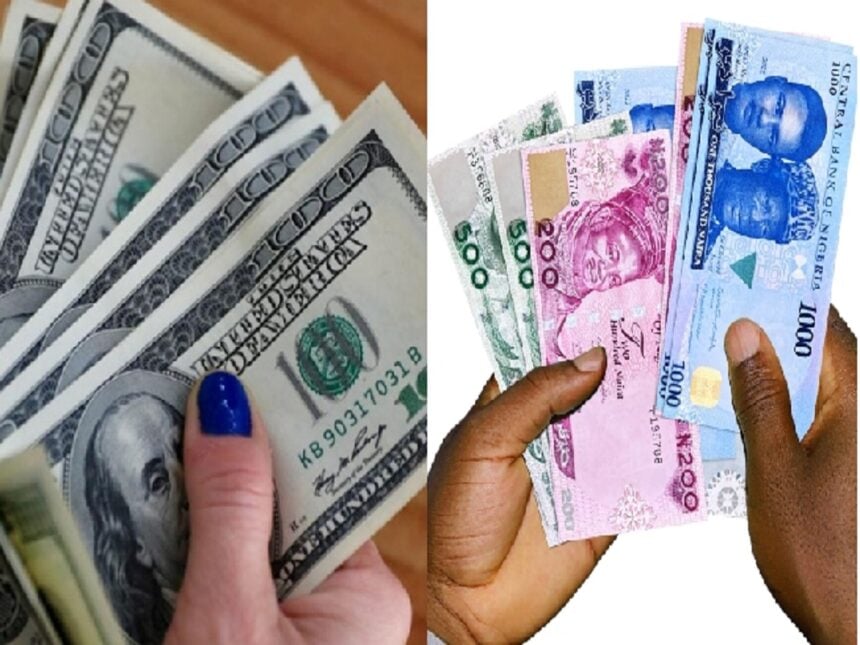
BLACK MARKET RATES
US Dollar (USD) Buy ₦1,405 Sell ₦1,410
Great British Pound(GBP) Buy ₦1,890 Sell: ₦1,915
EURO (EUR) Buy ₦1,590 Sell ₦1,610
Canadian Dollar (CAD) Buy ₦1,020 Sell ₦1,080
South African Rand (ZAR) Buy ₦75 Sell ₦90Ghana CEDI (GHS) Buy ₦95 Sell ₦110
West African CFA Buy ₦2, 300 Sell ₦2, 400
CENTRAL AFRICAN CFA Buy ₦2,150 Sell 2,250
CBN Exchange Rates
US Dollar (USD) ₦1,374.63
Great British Pound (GBP) ₦1,838.70
EURO (EUR) ₦1,574.97
Swiss Franc (CHF) ₦1,687.70
Chinese Yuan (CNY) ₦200.42
Japanese Yen (Yen) ₦8.49
West African CFA (XOF) ₦2.37
West African Unit Account (WAUA) ₦1,848.41
Saudi Riyal (SAR) ₦358.91
South African Rand (ZAR) ₦83.35


BREAKING: Veteran Nollywood Actor Taiwo Hassan ‘Ogogo’ Reportedly Dies at 66

NGE 2026 Conference: Onaiyekan, Mbah, Osigwe, Others to Speak in Enugu

Tinubu Names Yari, DG Presidential Campaign Council

Tech Expert, Zuckerberg trains with UFC champions, Adesanya, Alexander

Organ Trafficking: Ekweremadu bags 10 years in UK prison

SAINT OBI: Between his marriage and his death
-

 News3 days ago
BREAKING: ICPC Uncovers Another Fake Agency Operating Inside SGF’s Office (Video)
-

 News3 days ago
2027 Polls: INEC Fixes November For Nationwide Mock Accreditation Exercise
-

 News3 days ago
Enugu Air: NSIB releases preliminary report
-

 Politics3 days ago
Oyebamiji Meets Tinubu After Osun Poll
-
 Politics2 days ago
Tinubu chairs APC Presidential Campaign Council
-

 Politics1 day ago
APC Chair Dies After Collapse at Kogi Meeting
-
 News1 day ago
Tinubu Names Yari, DG Presidential Campaign Council
-
 News21 hours ago
NGE 2026 Conference: Onaiyekan, Mbah, Osigwe, Others to Speak in Enugu