
Business
Dangote Assures Steady Petrol, diesel Supply


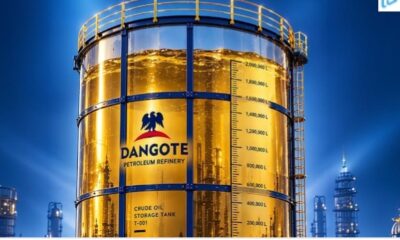
Dangote Petroleum Refinery has reaffirmed its commitment to ensuring steady and uninterrupted supply of Premium Motor Spirit (PMS) and Automotive Gas Oil (diesel) nationwide, with a daily production capacity exceeding the domestic demand.
Speaking on the development, Group Chief Branding and Communications Officer, Dangote Industries Limited, Anthony Chiejina, said the refinery’s operations are driven by the company’s dedication to supporting national energy stability and consumer confidence.
“Our refinery is currently loading over 45 million litres of PMS and 25 million litres of diesel daily which exceeds Nigeria’s demand,” Mr Chiejina said. “We are working collaboratively with regulatory agencies and distribution partners to guarantee efficient nationwide delivery. Dangote remains steadfast in its commitment to meeting the energy needs of Nigerians. This significant production capacity not only guarantees local supply but also enhances energy security and reduces dependence on imports.”
He noted that improved local production of petroleum products has helped stabilise the exchange rate and strengthen the naira.
“We have reduced foreign exchange outflows and increased inflows, which in turn supports the naira and strengthens the economy,” he added.
He further explained that it would be unpatriotic for anyone to criticise the recently announced tariff, which, according to him, is a good start. He emphasised that the tariff is designed to protect domestic industries from unfair competition and safeguard local production.
“Dumping engenders poverty, discourages industrialisation, creates unemployment and leads to revenue loss for the government. Across the world, nations protect their local manufacturers and industries from the threat of dumping. Dumping destroyed our textile industry, which was once a major employer of labour and creator of wealth,” he said.
He noted that beyond the tariff, the government should strengthen its monitoring and enforcement mechanisms to prevent the dumping of substandard and toxic petroleum products by unscrupulous and rent-seeking individuals who prioritise profiteering at the expense of Nigerians, often undermining well-intentioned government policies for their selfish interests.
He added that the prevalence of dumping in past years discouraged investors from establishing industries in Nigeria, as imported products flooded the market at unsustainable prices, undermining local production. The new tariff policy, he noted, would benefit local refiners and encourage fresh investments in the downstream oil sector, thereby strengthening Nigeria’s industrial base and creating more jobs.
He commended the foresight of President Bola Ahmed Tinubu for approving the tariff policy aimed at strengthening and transforming Nigeria’s downstream oil and gas sector. He noted that the decision reflects the administration’s commitment to creating a stable, business-friendly environment that supports local investment and enhances energy security.
“President Bola Ahmed Tinubu continues to embody courageous and visionary leadership, renewing the hope of Nigerians and restoring investor confidence in the nation’s economy. His administration’s bold and business-friendly reforms are reshaping the downstream oil and gas sector, unlocking new opportunities for industrial growth and national prosperity. The latest policy initiative stands as a testament to his foresight — one of the most transformative steps yet toward securing Nigeria’s energy future and empowering local industries to thrive,” he said
He warned that failure to protect local industries could lead to large-scale dumping from countries in Asia and Europe with excess production capacity. Such practices, he said, would strangulate domestic refineries, cripple allied industries, and undermine the laudable policies of President Bola Tinubu’s administration aimed at promoting industrial growth and economic stability.
Chiejina urged rent-seekers to reconsider their business practices and align with the Federal Government’s vision for a self-sustaining energy sector, rather than promoting the dumping of petroleum products in Nigeria. He emphasised the need for a collective sense of patriotism and responsibility among industry stakeholders, noting that national progress can only be achieved through shared commitment to policies that strengthen local industries and protect the economy.
Equipped with advanced technology and extensive infrastructure, the refinery is expected to significantly eliminate reliance on fuel imports, enhance supply chain stability, and alleviate pressure on foreign exchange reserves.
President of Dangote Industries Limited, Aliko Dangote, recently assured Nigerians that the prices of petrol will not be hiked during the ember months, despite recent global price increases. “I want to assure Nigerians that the Dangote Refinery is fully committed to maintaining an uninterrupted supply of petrol throughout the festive period. Nigerians can look forward to a Christmas and New Year free of fuel anxiety.”
Since commencing petrol production in September 2024, Dangote Petroleum Refinery has played a pivotal role in ensuring price stability, reducing the cost of petrol, aimed at stabilising the market and easing the burden on consumers. It has also eliminated the recurring fuel scarcity and long queues at filling stations that Nigeria often experienced, particularly during festive periods.
He noted that the average price of Premium Motor Spirit (PMS) in September 2024 was about N1,030 per litre, compared to an average of N841–N851 per litre in September 2025, following the implementation of the Dangote Refinery’s Direct Delivery Scheme.
Similarly, as of September 2024, the pump price of Automotive Gas Oil (AGO) ranged between N1,400 and N1,700 per litre, depending on the state, with prices reaching up to N1,700 in most northern states. By September 2025, however, the average price had dropped significantly to around N1,020 per litre, reflecting the refinery’s impact on stabilising the market and reducing logistics costs.
In comparison, petrol prices in neighbouring West African countries range between $1.20 and $2.00 per litre, while the average price in Nigeria remains around $0.60 per litre, a clear indication of the refinery’s profound impact on affordability and supply stability.










Shell has agreed to sell its entire interest in the Shell Nigeria Gas Group, which runs a domestic natural gas distribution network, to Nigerian energy firm Vaaris Energy Limited.
The deal, announced on Tuesday, October 13, 2026, covers Shell Petroleum B.V.’s full stake in the business. Shell Nigeria Gas, established in 1998, operates about 170 kilometres of pipelines across Ogun, Abia and Rivers states and supplies more than 130 industrial and commercial customers. Financial terms were not disclosed. Completion remains subject to regulatory approvals and other conditions.
Shell said the business will continue operating as normal and serving customers until the transaction closes. The company does not participate in upstream production, LNG or international gas trading through this unit.
Elohor Aiboni, Shell’s Country Chair in Nigeria, said: “Shell Nigeria Gas has served industrial and commercial customers in Nigeria for more than 25 years, supported by the commitment and expertise of its people. We believe this agreement provides a much stronger platform for the business’ next chapter under new ownership. Shell continues to focus on strategic Deepwater and Integrated Gas positions in Nigeria.”
The sale forms part of Shell’s broader strategy under CEO Wael Sawan to simplify its portfolio and concentrate on higher-return assets. It follows the company’s completed exit from onshore oil production in Nigeria, when it sold the Shell Petroleum Development Company to the Renaissance consortium in 2025.
Vaaris Energy is a privately held Nigerian company with interests across the oil and gas value chain and an existing operational presence in the country.
Business
FAO Names 22 African Women Agrifood Heroes, Nigeria Missing
The UN agency recognises women from 22 African countries for contributions to agriculture, food security and rural development under its global Women Heroes initiative.

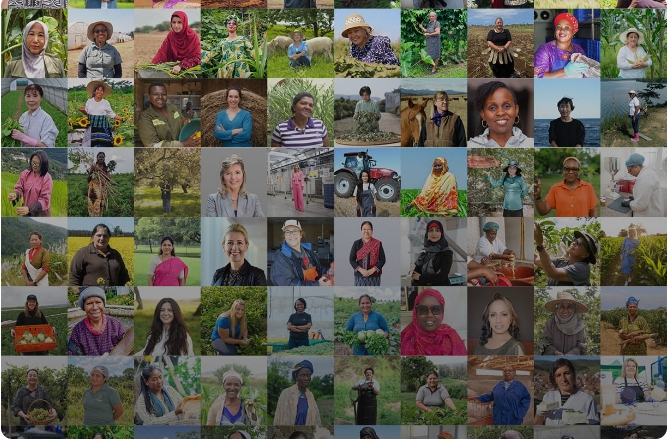
Image credit : FAO
By Ochefa
The Food and Agriculture Organization of the United Nations (FAO) has recognised 22 African women among its 100 Women Heroes in Agrifood Systems and Rural Development, with Nigeria conspicuously absent from the list.
The initiative, launched to mark the International Year of the Woman Farmer 2026, celebrates women whose contributions are advancing agriculture, strengthening food security and transforming rural communities worldwide.
The honourees represent diverse segments of the agrifood value chain, with achievements spanning market access, job creation, skills development, environmental conservation and the preservation of indigenous knowledge.
According to the initiative, their work demonstrates the critical role women play in building inclusive, sustainable and resilient agrifood systems.
22 African Honourees
The 22 women recognised come from different parts of the continent.
They include Teresa de Castro Vieira Mariz of Angola; Senait Gezahegn of Ethiopia; Lembie Tlhalerwa of Botswana; Simone Kountangni of Benin; and Amal Mekni of Tunisia.
Others are Grace Tumeo Bwanali of Zambia; Victoria Matebogo of South Africa; Didja Djaili Garga of Cameroon; Sanou Adiarra of Burkina Faso; and Zipporah Nyaguthii Gitonga of Kenya.
The list also features Sylvie Yakanandji of the Central African Republic; Pelegrinah Musingwini of Zimbabwe; Basamat Suliman Mursal Khalil of Sudan; Brenda Tsiba Djouassa of Gabon; and Alimata Coulibaly of Côte d’Ivoire.
Completing the list are Crescentia Mushobozi of the United Republic of Tanzania; Hasna Meeke Ahmed of Djibouti; Rozina Mebrahtu of Eritrea; Awa Jagne of The Gambia; Malerato Mary Khoeli of Lesotho; Berdiss Mohamed of Mauritania; and Nadege Uwamahoro of Rwanda.
Nigeria’s Absence Raises Questions
Despite agriculture’s importance to Nigeria’s economy and the livelihoods of millions of Nigerians, no Nigerian woman appears among the 22 African honourees identified in the list provided.
The omission raises questions about the visibility and international recognition of Nigerian women working across the agricultural value chain, from farming and processing to agribusiness, research and rural development.
Business
Global smartphone shipments fall 20% in Q3 2026, lowest in 14 years
“Consumers are holding on to their devices longer than estimated, increasingly considering refurbished devices and prioritizing higher-value devices,” said Shilpi Jain, a senior analyst at Counterpoint Research.

Counterpoint Research has reported drops in global smartphone shipments by 20% year on year in the third quarter of 2026, hitting the lowest level for the period in 14 years, or since 2012.
The report published on Monday showed that persistent memory shortages and rising component costs disrupted supply and pushed retail prices up.
Smartphone retail prices have increased by 20% so far in 2026 as manufacturers pass higher memory costs on to consumers.
Counterpoint said rising prices for DRAM and NAND memory components inflated bill of materials (BOM) costs, deepened supply shortages and disrupted shipments.
Manufacturers were forced to adjust shipment plans, raise prices and prioritise profitability over sales volumes.
The pressure is changing consumer behaviour. Buyers are holding on to their devices longer and considering alternatives.
“Consumers are holding on to their devices longer than estimated, increasingly considering refurbished devices and prioritizing higher-value devices,” said Shilpi Jain, a senior analyst at Counterpoint Research.
According to the report, Samsung and Apple gain market share during the period under review.
Samsung retained its position as the world’s largest smartphone manufacturer in the third quarter, accounting for 23% of global shipments despite a 3% year on year decline in shipment volume.
Counterpoint attributed Samsung’s performance to demand for its Galaxy Z Fold8 series and stable component supplies for its mid-range devices.
Apple’s market share reached 22%, crossing 20% for the first time in a third quarter, despite a year on year decline in shipments.
The absence of a base iPhone 18 model resulted in a smaller launch-month channel fill than the full iPhone 17 lineup a year earlier.
Counterpoint said the iPhone 18 Pro models recorded a stronger launch than their predecessors, particularly in China and India, while continued momentum from the iPhone 17 series helped offset the shipment decline.


BREAKING: Shell to Exit Nigeria’s Domestic Gas Distribution Business

FAO Names 22 African Women Agrifood Heroes, Nigeria Missing

NAF Crash: Residents Fear Disease as Body Parts Foul Community River

Tech Expert, Zuckerberg trains with UFC champions, Adesanya, Alexander

Organ Trafficking: Ekweremadu bags 10 years in UK prison

BREAKING: Lagos Govt Declares Today, Thursday Work-Free to Mark 2026 Ìṣẹ̀ṣe Day
-
 Business2 days ago
Nigeria’s ₦33bn Fruit Import Bill Exposes Missed Opportunities in Jos
-

 Business2 days ago
Naira To Dollar, Pound ,Euro …Rates For Monday, October 12
-

 International2 days ago
‘Up to our people’ to pick leader, Zelenskyy responds to Trump’s pledge for new elections in Ukraine
-

 Opinions2 days ago
Human Capital Africa Statement For International Day of the Girl Child 2026
-

 Politics2 days ago
2027: 119 Women Jostle For State’s Governors
-

 Politics2 days ago
BEWARE: Fake 2027 Gov’ Candidates List Circulating Online — INEC Raises Alarm
-
 News2 days ago
Forbes Scores GTBank Best Employers 2026
-
 Business18 hours ago
Dangote Refinery IPO Attracts N8.61trn in Subscriptions, Four Times Offer