
Business
WhatsApp may exit Nigeria over $220m fine


One week after Nigeria’s Federal Competition and Consumer Protection Commission imposed a $220 million fine on WhatsApp for a data privacy breach, the company may suspend its operations in the country due to further regulatory demands.
Sources close to the situation indicate that Meta, WhatsApp’s parent company, is contemplating the withdrawal of certain services from Nigeria.
Alongside the substantial fine, the FCCPC has directed WhatsApp to cease sharing user data with other Facebook companies and third parties without explicit user consent.
The commission also requires WhatsApp to disclose details about its data collection practices and to enhance user control over data usage.
In response, a WhatsApp spokesperson emailed TechCabal, “We want to be clear that, technically, based on the order, it would be impossible to provide WhatsApp in Nigeria or globally.
” The spokesperson criticized the FCCPC’s order as flawed, asserting that it inaccurately portrays WhatsApp’s data handling and would necessitate significant changes to the platform’s infrastructure.
Meta has not addressed the FCCPC’s allegations regarding user opt-out options from the 2021 privacy policy but maintains that the update does not involve sharing user data.
The company’s privacy policy states, “While traditionally mobile carriers and operators store this information, we believe that keeping these records for two billion users would be both a privacy and security risk and we don’t do it.”
The potential suspension of WhatsApp could have significant repercussions for individuals and small businesses in Nigeria, many of whom rely on WhatsApp, Instagram, and Facebook for customer engagement.
Some privacy lawyers have questioned the FCCPC’s use of the National Data Protection Regulation as the foundation for the fine.
Enacted in 2019 by the National Information Technology Development Agency, the NDPR is Nigeria’s principal data protection framework.
Two unnamed lawyers have expressed doubts about the NDPR’s authority in such a high-stakes matter and questioned whether a government regulation can be deemed definitive in privacy issues.
Additionally, two unnamed government officials have raised concerns about the fairness of the $220 million fine. “We are too revenue-focused.
What is the opportunity cost of $220 million in government coffers?” questioned an industry expert.
Should WhatsApp choose to halt its operations in Nigeria due to these demands, both the FCCPC and the Nigerian government will face significant scrutiny and consequences.
Business
JPMorgan Eyeing Entry Into Nigeria’s Banking Industry
J.P. Morgan operates in more than 100 countries worldwide, providing financial services, investment banking, asset management, and commercial banking across major global markets in the Americas, Europe, the Middle East, Africa, and Asia-Pacific.


JPMorgan Chase & Co has deposited N50 billion with the Central Bank of Nigeria as part of efforts to secure a merchant banking licence and expand its operations in Nigeria .
J.P. Morgan operates in more than 100 countries worldwide, providing financial services, investment banking, asset management, and commercial banking across major global markets in the Americas, Europe, the Middle East, Africa, and Asia-Pacific
Bloomberg reported that the CBN deposit, valued at about $38m, meets a key requirement in the American lender’s application and signals its readiness to establish a licensed banking operation in Nigeria.
However, the payment does not guarantee approval, as the CBN is yet to make a final decision on the application.
People familiar with the process, said the deposit was one of the final regulatory requirements for the licence.
They added that the bank expects to obtain approval by the end of 2026 or in early 2027, subject to the regulator’s decision.
Business
How I steal ATM users’ PINs, defraud them
“I do go to the ATM machine to lie in wait for gullible customers who believe whatever I may tell them, and people that seek for help too,” he said.
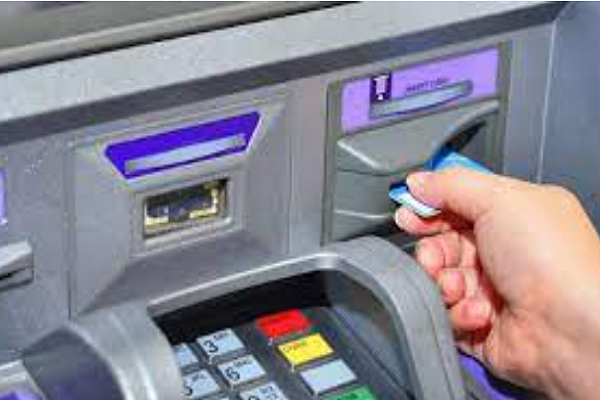
A fraudster has confessed to the police how he stole bank customers’ PINs by pretending to help them operate automated teller machines
The suspect, whose identity was not disclosed in a statement by the Cross River State Police Command, said that he targeted customers who needed assistance at ATM points, withheld their cards and observed them entering their PINs before leaving the premises.
The Cross River State Police Command’s Public Relations Officer, ASP Sunday Eitokpah, disclosed this in a video uploaded to the command’s Facebook page on Tuesday.
Eitokpah said the suspect was arrested on October 6, 2026, over alleged fraud involving unsuspecting ATM users.
Explaining the alleged method, the suspect said he approached customers who appeared to need help and exploited their willingness to trust him.
“I do go to the ATM machine to lie in wait for gullible customers who believe whatever I may tell them, and people that seek for help too,” he said.
He added, “So, if you call for help or assistance from me, what I do is I put the ATM on the cardless transaction mode and withhold your card. You’ll be thinking your card is inside, but your card is not inside.”
According to the suspect, he watched as customers selected the transactions they wanted to carry out and entered their PINs.
He said, “And you’ll choose a transaction which you want to perform. It’s either withdrawal or transfer or inquiry. By the time you click on any of them, ask you to put your password, to put your password, and confirm your password, I will leave the premises.”
Eitokpah said the suspect allegedly memorised customers’ PINs as they entered them, then left the ATM point with the information needed to carry out fraudulent transactions elsewhere.
The customers would subsequently discover that their cards were missing and their accounts had been debited.
Business
NCC, CBN To Warn Companies By Flagging Fraudulent Phone Numbers
“A phone number has also become part of our digital identity, used to access financial services, manage pensions and shop online,” Maida said.

The Nigerian Communications Commission is working with the Central Bank of Nigeria (CBN) to identify recycled phone numbers and numbers flagged for fraudulent activities.
The NCC Executive Vice Chairman, Dr Aminu Maida, disclosed this on Tuesday in Lagos at the commission’s 95th Telecom Consumer Parliament.
Maida said that the proposed verifications under its Telecommunications Identity Risk Management System (TIRMS) would help organisations to identify fraudulent linked phone numbers and reduce the risk of unauthorised access to customers’ accounts and services.
He said phone numbers have become central to how people access digital services.
“A phone number has also become part of our digital identity, used to access financial services, manage pensions and shop online,” Maida said.

JPMorgan Eyeing Entry Into Nigeria’s Banking Industry

How I steal ATM users’ PINs, defraud them

NCC, CBN To Warn Companies By Flagging Fraudulent Phone Numbers

BREAKING: Lagos Govt Declares Today, Thursday Work-Free to Mark 2026 Ìṣẹ̀ṣe Day

Tech Expert, Zuckerberg trains with UFC champions, Adesanya, Alexander

Organ Trafficking: Ekweremadu bags 10 years in UK prison
-

 Sports2 days ago
Mbappé wins Onze d’Or award for 2025/26 season
-

 Business3 hours ago
Naira Exchange Rates Wednesday, October 21, 2026
-

 News2 days ago
JUST IN: Ex-Delta Gov Uduaghan Dies at 71, Oborevwori Mourns
-

 Business2 hours ago
Currency Words You Should Know
-

 Sports2 days ago
Ronaldo Gets 30-Day Suspension For Portugal Camp Walkout
-
 Business2 hours ago
NCC, CBN To Warn Companies By Flagging Fraudulent Phone Numbers
-

 Health16 hours ago
BREAKING: Nigeria Confirms First Ebola Case
-
 Business1 hour ago
How I steal ATM users’ PINs, defraud them