
Business
Tax reform will boost workers’ welfare – Fed Govt

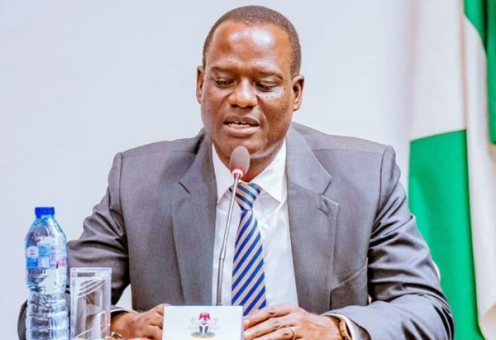
The proposed Tax Reform Bills will significantly improve the quality of life for workers, the Federal Government has reaffirmed.
In response to misgivings expressed by the Nigeria Labour Congress (NLC) Joe Ajaero, Chairman of the Presidential Fiscal Policy and Tax Reforms Committee, Taiwo Oyedele outlined key measures embedded in the bills.
He said lowly-paid workers earning around N1 million annually (approximately N83,000 monthly), would enjoy full exemption from the Pay As You Earn (PAYE) tax. This policy would cover nearly one-third of workers in both the public and private sectors.
For middle-income earners, the bills propose reduced PAYE tax rates for those earning up to N20 million annually (about N1.7 million per month), benefiting an additional 60 percent of Nigerian workers.
Members of the armed forces actively engaged in combating insecurity will also receive PAYE tax exemptions alongside other ranks.
To mitigate the rising cost of living, the bills propose eliminating Value Added Tax (VAT) on essential goods and services, including food, healthcare, and education, which account for approximately 60 percent of all household consumption.
Other items such as transportation, renewable energy, compressed natural gas (CNG), baby products, sanitary towels, and fuel products, representing over 20 percent of household consumption, are also exempted.
Oyedele explained that these measures would address nearly 82 percent of household expenses and up to 100 percent for low-income earners.
The tax reform bills include provisions to incentivize better compensation for workers. These include tax breaks for wage awards and transport subsidies targeting low-income earners.
Furthermore, the bills aim to simplify processes by removing bureaucratic restrictions on wage awards and introducing caps on taxable benefits granted to workers.
Oyedele explained that the reforms propose VAT exemptions on rent and property acquisition to promote affordable housing. Stamp duties on rents below N10 million would also be waived to alleviate housing-related financial burdens.
The tax reforms also prioritize employment creation through various incentives. These include tax benefits for employers hiring more workers, tax-friendly rules to attract remote work opportunities for Nigerians, and tax exemptions for 97 percent of Small and Medium Enterprises (SMEs).
The harmonization and reduction of tax rates for large businesses are expected to stimulate growth, creating more job opportunities.
Acknowledging that the tax bills could be refined further, Oyedele noted the importance of robust debates and stakeholder engagements during the legislative process.
“The bills in their current form are the most pro-workers tax reforms in Nigerian history,” he stated, urging the NLC to collaborate in identifying areas for improvement.
“We believe the NLC will not intentionally work against the interest of its members. We look forward to discussing specific areas to better serve the interest of all Nigerians, including workers,” Oyedele added.










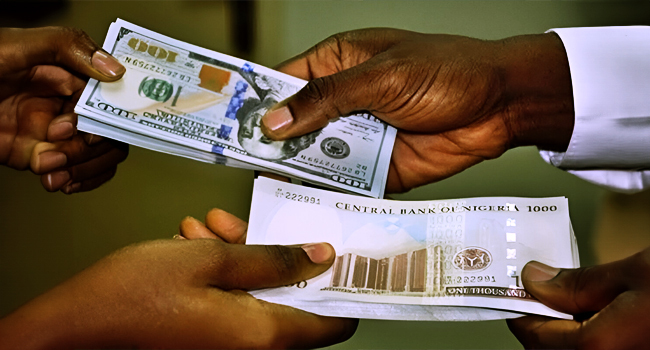
BLACK/ PARALLEL MARKET RATES
₦1370 DOLLAR (USD)
₦1800 POUND (GBP)
₦1510 EURO (EUR)
₦970 CANADIAN DOLLAR (CAD)
₦65 SOUTH AFRICAN RAND (ZAR)
₦350 UAE DIRHAM (AED)
₦190 CHINESE YUAN (CNY)
₦100 GHANAIAN CEDI (GHS)
₦2300 WEST AFRICAN CFA F.(XOF)
₦2200 CENTRAL AFRICAN CFA F.(XAF)
₦850 AUSTRALIAN DOLLAR AUSSIE (AUD)
CBN OFFICIAL RATES
DOLLAR (USD)₦1331.61
POUND (GBP)₦1764.26
EURO (EUR)₦1490.48
SWISS FRANC (CHF)₦1608.23
JAPANESE YEN (JPN)₦8.4
CFA FRANC (XOF)₦2.27
WEST AFRICAN UNIT OF ACCOUNT (WAUA)₦1802.33
CHINESE YUAN (CNY)₦199.01
SAUDI RIYAL (SAR)₦354.83
SOUTH AFRICAN RAND (ZAR)₦80.49
Business
WEF could appoint Lagarde as its next chair, sources say
The WEF’s Board of Trustees, which includes Lagarde herself, was due to meet on November 2 and could elect her as its next chair, said the people close to the organisation, who spoke on condition of anonymity due to the sensitivity of the matter.

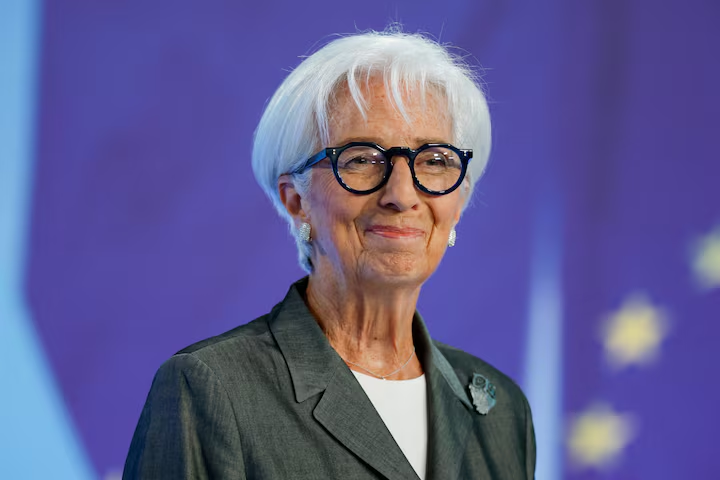
•European Central Bank President Christine Lagarde
The World Economic Forum could appoint Christine Lagarde as its next chair as soon as next month, four people close to the organisation told Reuters, meaning she would step down early as European Central Bank chief and trigger a wider reshuffle at the top of the ECB.Lagarde’s ECB term is scheduled to end in October 2027.
Leaving early would give European Union leaders a chance to pick a new ECB President before France’s spring presidential election, which opinion polls suggest the far-right could win, and could pave the way for a deal involving two other senior ECB roles.
The WEF’s Board of Trustees, which includes Lagarde herself, was due to meet on November 2 and could elect her as its next chair, said the people close to the organisation, who spoke on condition of anonymity due to the sensitivity of the matter.
No final decision has been taken yet, they said.
A spokesperson for the WEF said the forum could not confirm when the next full Board of Trustees meeting would take place, but that the aim was to hold one before the end of the year.
Business
Germany plans tax on sugary drinks
The tax is expected to generate additional revenue for the federal government of €690 million in 2027 and €925 million in 2028.

The German cabinet has approved draft legislation to tax sugary drinks in Europe’s biggest economy.
If passed by the German Bundestag, the tax will take effect on 1 July 2027.
The coalition aims to raise revenue for the federal budget while encouraging manufacturers to reduce sugar content and offer healthier products.
The levy is intended to ease pressure on the healthcare system, which faces costs of more than €2 billion every year linked to the high consumption of sugary drinks, which contributes to obesity, diabetes and tooth decay.
According to the federal government, Berlin is using the tax to implement “what associations from the fields of health, science, child protection, and consumer protection have long been demanding.”
The tax is expected to generate additional revenue for the federal government of €690 million in 2027 and €925 million in 2028.


JUST IN: Mob Sets BRT Bus Ablaze After Motorcyclist’s Death in Lagos

BREAKING: DSS Arrests Fugitive Maina Son, Hands Him to EFCC

BREAKING: 5 Arrested Over Imo NYSC Abduction

BREAKING: Lagos Govt Declares Today, Thursday Work-Free to Mark 2026 Ìṣẹ̀ṣe Day

Tech Expert, Zuckerberg trains with UFC champions, Adesanya, Alexander

Organ Trafficking: Ekweremadu bags 10 years in UK prison
-
 Business3 days ago
Naira Exchange Rates For Thursday, October 15
-
 Sports3 days ago
CAF Increases Annual Funding for Member Federations to $700,000
-

 News3 days ago
ASCON To Be Rebranded “National School Of Government”
-

 Business3 days ago
Germany plans tax on sugary drinks
-
 Business3 days ago
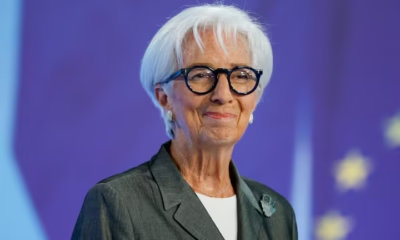
WEF could appoint Lagarde as its next chair, sources say
-

 International2 days ago
“Mother of all bombs,” Trump Plans To Hit Iran
-
 Business2 days ago
Naira Exchange Rates Friday, October 16
-
 Crime1 day ago
BREAKING: 5 Arrested Over Imo NYSC Abduction