
Business
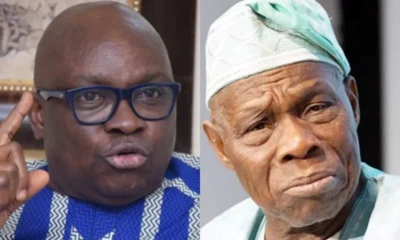
NNPCL invites Obasanjo to tour PH, Warri Refinerie

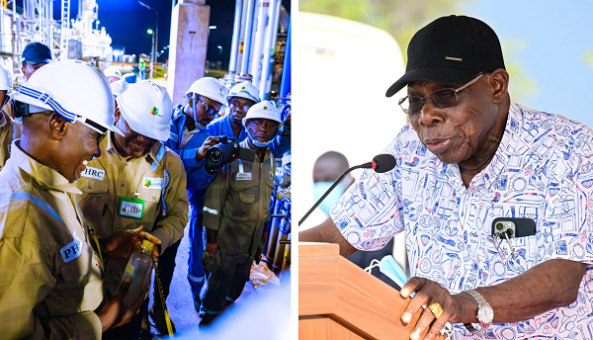
Former President Olusegun Obasanjo received a special invitation yesterday: a tour of the Port Harcourt and Warri refineries to confirm their operational status.
The Nigerian National Petroleum Company Limited (NNPCL) assured Obasanjo the days of inefficiency were gone and that the one-time corporation is now a profit-driven company.
NNPCL was reacting to an interview Obasanjo granted Channels Television, in which he said Shell Petroleum Development Company (SPDC) told him that the NNPCL could not run a refinery.
According to him, SPDC was invited to buy equity in the plant but complained that corruption would never allow it to function.
Obasanjo expressed the view that NNPCL had been very deceptive about the functionality of the refineries.
The Port Harcourt Refinery started working in November, while Warri began operation last month.
NNPCL Chief Corporate Communications Officer, Mr. Olufemi Soneye, extended the company’s invitation to the former president for a tour of the refineries.
He said: “We extend an open invitation to President Obasanjo for a tour of the rehabilitated refineries to witness firsthand the progress made under the new NNPC Limited.
“We invite our esteemed former president to join us in this effort as we continue to deliver energy security for our nation and provide tangible benefits to Nigerians.
“His wisdom and experience are invaluable, and we assure him that his advice will always be welcomed and appreciated.
”According to Soneye, NNPCL did not merely carry out turnaround maintenance but did a complete overhaul of the refineries.
He said: “As part of this transformation, NNPC Limited has gone beyond oil and gas to become an integrated energy company.
“One of our notable achievements is the complete rehabilitation of the Port Harcourt Refining Company (PhRC) and Warri Refinery.
“This process was not merely the Turnaround Maintenance (TAM) of the past but a full-scale overhaul designed to meet world-class standards.
“Similarly, we are currently conducting the same comprehensive rehabilitation of the old Port Harcourt Refinery and Kaduna Refinery.”
The spokesman said NNPCL has also moved on from being a loss-making organisation to profit -driven international energy firm.
The new NNPC Limited, Soneye said, is committed not only to enhancing the refineries but also to maintaining them to global standards.
He said: “The NNPC has undergone a transformative journey, evolving from a government corporation into a private entity—NNPC Limited.
“This transition has marked a significant shift from being a loss-making organisation to a profit-oriented global energy company.
“We deeply respect and hold President Obasanjo in the highest regard as a distinguished statesman who has contributed significantly to the progress of our nation.
“He has every right to share his perspectives on national issues, and we value his insights and counsel.
“We remain grateful for his leadership and enduring commitment to the growth and development of Nigeria.
“Together, we can continue to build a brighter future for our great nation.”
Obasanjo said his successor, the late President Umaru Musa Yar’Adua, rejected a $750 million offer from Aliko Dangote to manage the Port Harcourt and Kaduna refineries in 2007.
Speaking on the television programme, the former president said he sought external help to rehabilitate and manage the facilities but faced resistance.
“When I was president, I wanted to do something about the three refineries: Port Harcourt, Warri, and Kaduna.
“Aliko got a team together after I asked Shell to come and run it for us. And Shell said they wouldn’t.
“Later on, I called them. I called the boss of Shell to come and tell me what the problem was and he gave me four or five reasons.
“He (Shell boss) said, first of all, they make a major profit from upstream, not from downstream. He said they run downstream just to keep their head above water.
“Two, our refineries were too small: 60,000 barrels, 100,000 barrels and I think 120,000 barrels. He said that at that time, the average refinery was going for 250,000 barrels.
“Three, he said our refineries were not well maintained. Four, he said there was too much corruption around the activities of our refinery and they would not want to get involved in that.
“After that, Aliko got a team together and they paid $750million to take part in PPP (Public–Private Partnership) in running the refineries.
“My successor refunded their money and I went to my successor and told him what transpired.
“He said NNPC said they wanted the refineries and they could run it. “I said: ‘But you know they cannot run it.’
”Obasanjo was confident in Dangote’s ability to manage his refinery effectively, unlike those of the NNPCL.
“I was told not too long ago that since that time, more than $2 billion have been squandered on the refineries and they still will not work.
“If a company like Shell tells me what they told me, I will believe them.
“But here we are, over $2 billion squandered, and the refineries still won’t work,” Obasanjo said.






BLACK/ PARALLEL MARKET RATES
₦1370 DOLLAR (USD)
₦1800 POUND (GBP)
₦1510 EURO (EUR)
₦970 CANADIAN DOLLAR (CAD)
₦65 SOUTH AFRICAN RAND (ZAR)
₦350 UAE DIRHAM (AED)
₦190 CHINESE YUAN (CNY)
₦100 GHANAIAN CEDI (GHS)
₦2300 WEST AFRICAN CFA F.(XOF)
₦2200 CENTRAL AFRICAN CFA F.(XAF)
₦850 AUSTRALIAN DOLLAR AUSSIE (AUD)
CBN OFFICIAL RATES
DOLLAR (USD)₦1331.61
POUND (GBP)₦1764.26
EURO (EUR)₦1490.48
SWISS FRANC (CHF)₦1608.23
JAPANESE YEN (JPN)₦8.4
CFA FRANC (XOF)₦2.27
WEST AFRICAN UNIT OF ACCOUNT (WAUA)₦1802.33
CHINESE YUAN (CNY)₦199.01
SAUDI RIYAL (SAR)₦354.83
SOUTH AFRICAN RAND (ZAR)₦80.49
Business
WEF could appoint Lagarde as its next chair, sources say
The WEF’s Board of Trustees, which includes Lagarde herself, was due to meet on November 2 and could elect her as its next chair, said the people close to the organisation, who spoke on condition of anonymity due to the sensitivity of the matter.

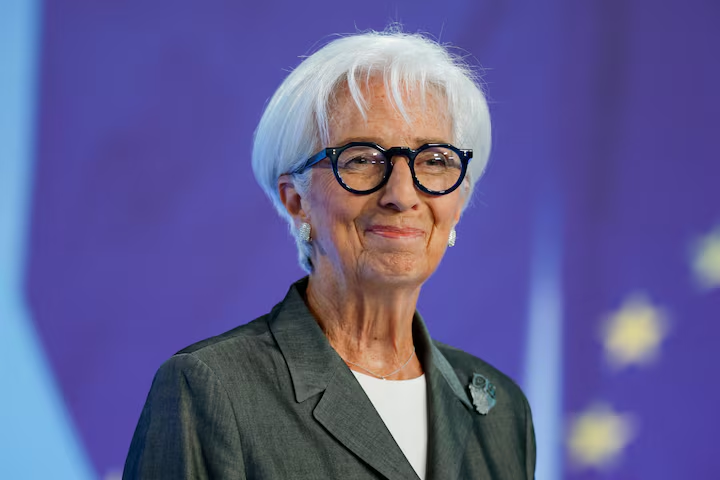
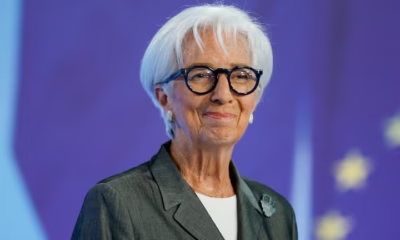
•European Central Bank President Christine Lagarde
The World Economic Forum could appoint Christine Lagarde as its next chair as soon as next month, four people close to the organisation told Reuters, meaning she would step down early as European Central Bank chief and trigger a wider reshuffle at the top of the ECB.Lagarde’s ECB term is scheduled to end in October 2027.
Leaving early would give European Union leaders a chance to pick a new ECB President before France’s spring presidential election, which opinion polls suggest the far-right could win, and could pave the way for a deal involving two other senior ECB roles.
The WEF’s Board of Trustees, which includes Lagarde herself, was due to meet on November 2 and could elect her as its next chair, said the people close to the organisation, who spoke on condition of anonymity due to the sensitivity of the matter.
No final decision has been taken yet, they said.
A spokesperson for the WEF said the forum could not confirm when the next full Board of Trustees meeting would take place, but that the aim was to hold one before the end of the year.
Business
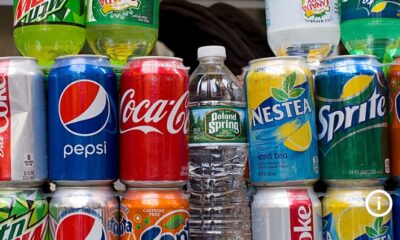
Germany plans tax on sugary drinks
The tax is expected to generate additional revenue for the federal government of €690 million in 2027 and €925 million in 2028.
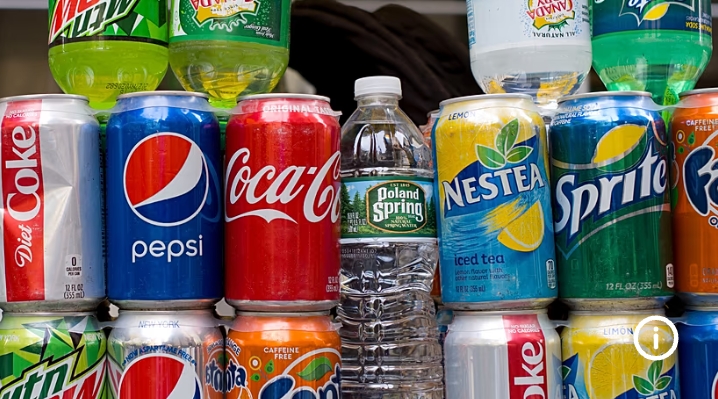
The German cabinet has approved draft legislation to tax sugary drinks in Europe’s biggest economy.
If passed by the German Bundestag, the tax will take effect on 1 July 2027.
The coalition aims to raise revenue for the federal budget while encouraging manufacturers to reduce sugar content and offer healthier products.
The levy is intended to ease pressure on the healthcare system, which faces costs of more than €2 billion every year linked to the high consumption of sugary drinks, which contributes to obesity, diabetes and tooth decay.
According to the federal government, Berlin is using the tax to implement “what associations from the fields of health, science, child protection, and consumer protection have long been demanding.”
The tax is expected to generate additional revenue for the federal government of €690 million in 2027 and €925 million in 2028.


JUST IN: Mob Sets BRT Bus Ablaze After Motorcyclist’s Death in Lagos

BREAKING: DSS Arrests Fugitive Maina Son, Hands Him to EFCC

BREAKING: 5 Arrested Over Imo NYSC Abduction

BREAKING: Lagos Govt Declares Today, Thursday Work-Free to Mark 2026 Ìṣẹ̀ṣe Day

Tech Expert, Zuckerberg trains with UFC champions, Adesanya, Alexander

Organ Trafficking: Ekweremadu bags 10 years in UK prison
-
 Business2 days ago
Naira Exchange Rates For Thursday, October 15
-
 Sports2 days ago
CAF Increases Annual Funding for Member Federations to $700,000
-
 News2 days ago
ASCON To Be Rebranded “National School Of Government”
-
 Business2 days ago
Germany plans tax on sugary drinks
-
 Business2 days ago
WEF could appoint Lagarde as its next chair, sources say
-
 International2 days ago
“Mother of all bombs,” Trump Plans To Hit Iran
-

 News3 days ago
Sanwo-Olu Appoints Olatunbosun Ogunbanwo, 5 Others as Perm Secs
-
 Business1 day ago
Naira Exchange Rates Friday, October 16