
Business
MAN Articulates Benefits of Amending FTZs Tax Bill
An example that is not farfetched is the situation in nearby Ghana. Ghana only allows up to 30% of sales into the customs territory subject to payment of duties and taxes, including CIT.


The Manufacturers Association of Nigeria (MAN) said on Tuesday that the National Assembly should go on with the proposed reform of the free-trade zone operations in the country.
The leadership of the MAN expressed their conviction that the amendments will ensure equitable tax treatment for companies operating in the customs territory and those licensed to operate within the free zones with respect to sales into the customs territory, thereby enabling fair competition while protecting the country’s tax base.
In the position statement, signed by the association’s Segun Ajayi-Kadir, Director-General, MAN noted that licensed entities will also enjoy similar incentives available to entities within the customs territory with respect to their sale of goods and services into the Customs Territory, a win-win outcome.
“It is important for us to situate this conversation within the context of what export processing zones and export free trade zones were created to achieve and the value they are purposed to deliver to the economy.
It is clear from the enabling laws and in the 3rd Schedule to the NEPZA Act with the first listed approved activity stated as “manufacturing of goods for export”, while other activities relate to international services, transshipment and services within the zones.
The emphasis here is “within the zones,” he said.
He argued that for instance, banking is listed as an approved activity but it does not mean that a bank can set up in the zone and render banking services across Nigeria without paying taxes, rather it refers to banking within the zone and exports.
So, this should explain how other activities (apart from manufacturing for export) should be viewed.
“The concern of my members and the contention here are obviously pertaining to tax incentives.
In specific terms, Section 8 on exemption from taxes only applies to approved enterprises operating within a Zone.
They are exempted from all Federal, State and Local Government taxes, levies and rates. Sales to the customs territory is neither an approved activity nor is it within the zone.
“However, section 18 permits the sale of goods and services to the customs territory, but this does not confer tax exemption on the sales, but rather a regulatory matter regarding what is permissible.
“Over time, the provisions of sections 8 and 18 have been misinterpreted as not only permitting the sale into the customs territory but also as tax exemption.
“So again, I say this is where the concern of my members and the contention lies: This position is not consistent with the law and it undermines tax-paying entities operating within the customs territory and producing similar goods and services.
Where does the tax exemption enjoyed by the companies operating within the zones, leave my more than 2,500 members who operate outside the zone, in terms of level playing field, competitiveness, fairness and equity?
They find themselves in a disadvantaged position and are rendered less competitive”, he stated.
Ajayi-Kadri said that he believed that the tax reform bill before the National Assembly has actually come to the rescue.
“The bill seeks to bring clarity and equity by stating that sales to the customs territory are taxable, not just for import duties and VAT, but also for CIT purposes.
That is to say that all sellers in the customs territory should be subject to the same tax obligations.
“Subsequently, I don’t think the relevant provisions of the tax reform bill amount to a reversal of the incentives, not at all. It is actually a clarification to align with the intent and letters of the enabling laws.
This is in line with global best practice for free zones. In fact, Nigeria will continue to be more generous even after the proposed amendments.
An example that is not farfetched is the situation in nearby Ghana. Ghana only allows up to 30% of sales into the customs territory subject to payment of duties and taxes, including CIT.
Whereas we allow 100% sales. Exports by a zone entity are tax-free only for 10 years after which up to 8% CIT will apply. Nigeria offers indefinite tax exemption on exports.”


Business
Textiles was my biggest business mistake — Dangote
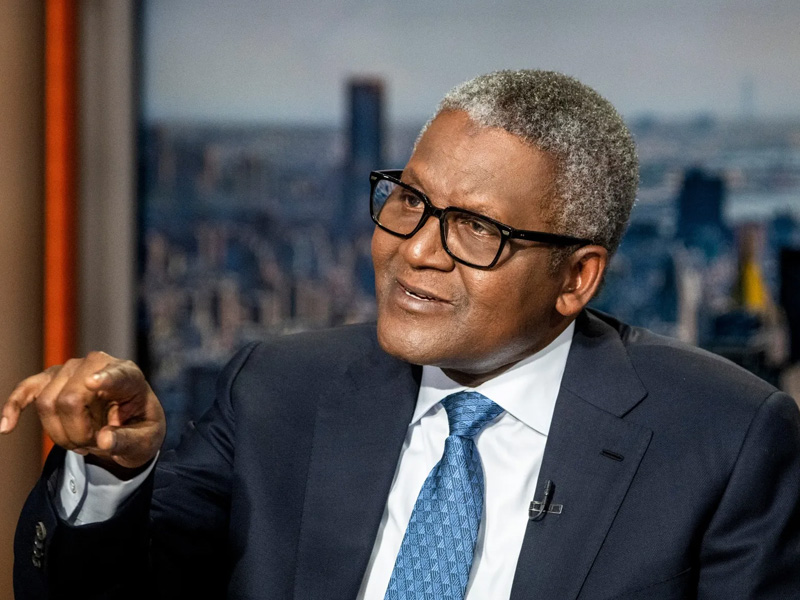
Dangote disclosed that almost 8,000 workers were laid off across the textile business, with 6,920 of them coming from Nigerian Textile Mills in Ikeja alone.
•Aliko Dangote
President of Dangote Group, Aliko Dangote, has described his investment in the textile industry as the biggest business mistake of his decades in business.
Dangote made the disclosure during an appearance on Arise Television, where he reflected on some of the challenges he encountered while building his business empire.
Dangote’s comments come amid ongoing concerns over the survival of local manufacturing industries and the impact of imported goods on domestic production and employment.
“My biggest business mistake was textiles,” he said.
According to the industrialist, the textile business eventually collapsed due to inadequate policy protection and what he described as dumping by foreign manufacturers.
“We were swamped by Chinese dumping and Indian dumping. So eventually we had to close down,” Dangote said.
He said the closure had a significant impact on workers, particularly employees of Nigerian Textile Mills in Ikeja, Lagos.
Dangote disclosed that almost 8,000 workers were laid off across the textile business, with 6,920 of them coming from Nigerian Textile Mills in Ikeja alone.
He said the experience shaped his approach to subsequent investments, stressing the need to ensure that businesses remain viable even when government protection is eventually withdrawn.
Business
Dangote: Africa Is Like a ‘Scratch Card’ — Opportunities Are Immense
Dangote’s message, therefore, extends beyond the refinery itself: Africa’s opportunities will remain invisible unless capital is deployed to “scratch” the surface and turn potential into productive assets.
| map of Africa by Wikipedia
By Ochefa
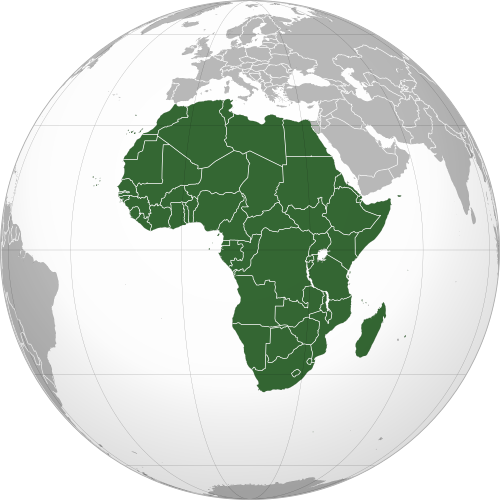
Africa is sitting on enormous economic opportunities that remain largely untapped, President and Chief Executive Officer of Dangote Industries Limited, Alhaji Aliko Dangote, has declared.
Dangote likened the continent to a “scratch card”, saying its vast opportunities would only become visible when Africans and investors take deliberate steps to unlock them.
“Africa is like a scratch card. Unless you scratch it, you don’t see the use of it. The opportunities are immense,” Dangote said.
He spoke in Lagos during the Dangote Petroleum Refinery and Petrochemicals “Facts Behind the Offer” presentation and opening gong ceremony, held to mark the formal opening of the refinery’s Initial Public Offering (IPO) on the Nigerian Exchange Limited (NGX).
The offer comprises 4.1 billion new ordinary shares at ₦525 per share, giving the issue a value of about ₦2.15 trillion, with a minimum subscription of 10 shares valued at ₦5,250. The offer is scheduled to close on October 13, 2026, subject to the terms contained in the prospectus.
Dangote said the group was looking beyond Nigeria as it seeks to expand its industrial footprint across Africa, disclosing plans being explored for the establishment of a refinery in Lamu, Kenya.
The move, he said, reflects the need to build African businesses capable of attracting large-scale international capital while creating greater economic integration across the continent.
According to him, the Dangote Group’s expansion strategy is not simply about building individual businesses, but about creating platforms through which Africans and international investors can participate in the continent’s economic transformation.
“What we are trying to do is to open up the market and make sure that when we open up the market, Africans and non-Africans will join us to have what you call the new Africa rising,” he said.
The refinery IPO represents a major test of Nigeria’s ability to mobilise domestic and international capital behind large-scale industrial projects.
Dangote urged Nigerians and other Africans to seize the opportunity presented by the offer, arguing that the refinery has the potential to become Africa’s largest company by the end of 2026.
His “scratch card” analogy captures the central argument behind the expansion strategy: Africa’s economic potential may be enormous, but unlocking it requires capital, infrastructure, industrial investment and businesses willing to take long-term risks.
For Nigeria, the refinery’s public offering also signals a potentially significant shift in the ownership structure of one of the country’s biggest industrial assets—from a project largely associated with one private investor to an enterprise in which a broader pool of investors can participate.
The development comes as Nigeria seeks to deepen its capital market, retain more domestic savings within the economy and mobilise long-term funding for productive investment.
Dangote’s message, therefore, extends beyond the refinery itself: Africa’s opportunities will remain invisible unless capital is deployed to “scratch” the surface and turn potential into productive assets.

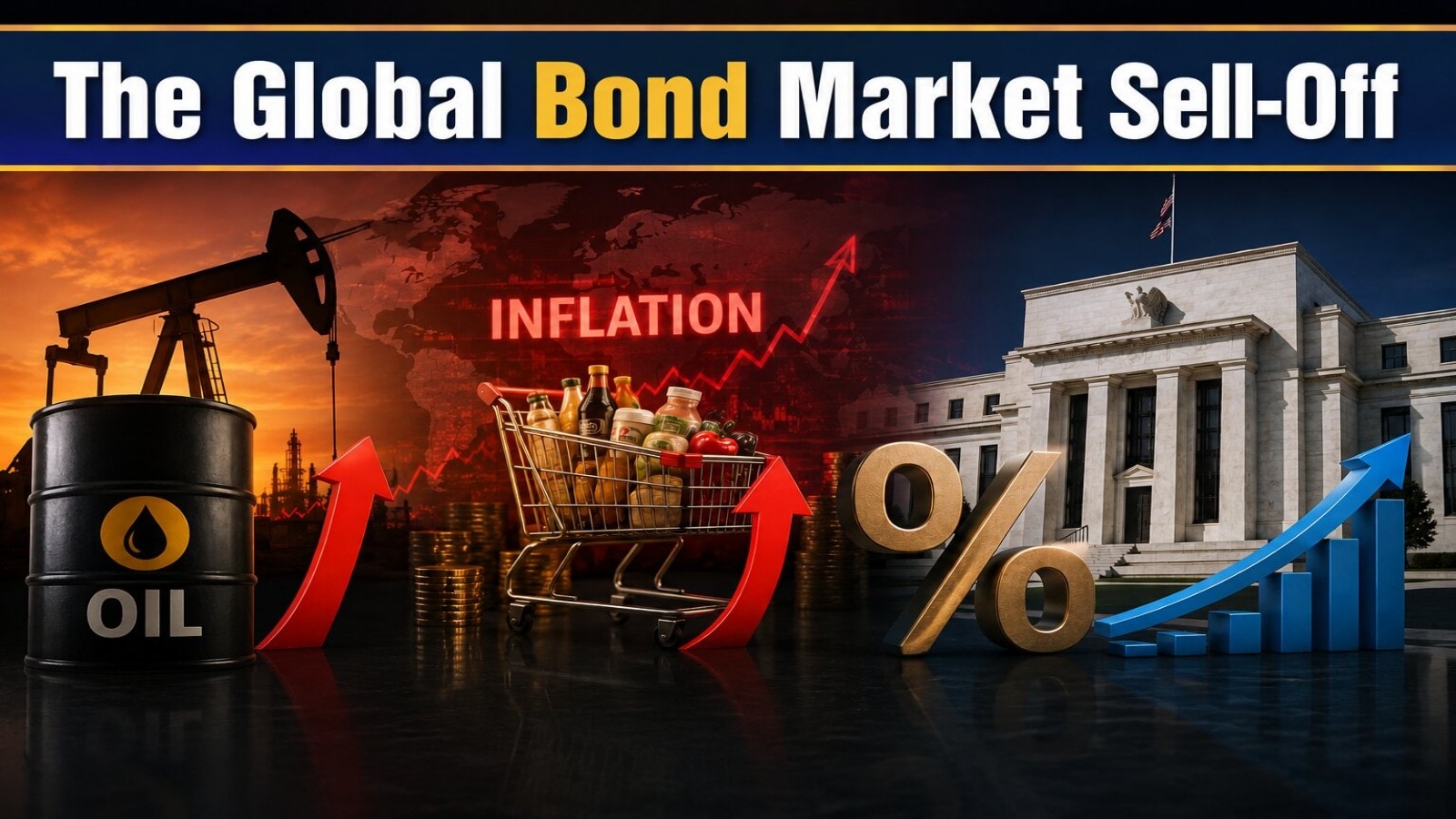
A sharp selloff in the US bond market has driven the benchmark Treasury yield above 5%, sending shockwaves through equity markets and heightening investor anxiety.
The surge in yields, particularly on the 10-year Treasury note, reflects growing concerns over persistent inflation, the outlook for interest rates, and the broader path of monetary policy. As bond prices fell, yields climbed past the psychologically important 5% threshold, marking a significant move that has unsettled risk assets.
US stock markets reacted with broad declines, as higher yields increased the attractiveness of fixed-income investments relative to equities and raised borrowing costs for companies. Major indices came under pressure, with investors reassessing valuations amid the rising cost of capital.
Market analysts note that the rapid move higher in yields has intensified volatility across asset classes. Traders are closely watching upcoming economic data and any signals from the Federal Reserve for clues on whether the upward pressure on yields will persist.
The development underscores the sensitivity of both bond and equity markets to shifting expectations around inflation and monetary policy in the world’s largest economy.


Millions affected as floods strike India

JUST IN: All Occupants Survive as Aircraft Crashes, Catches Fire

Textiles was my biggest business mistake — Dangote

Tech Expert, Zuckerberg trains with UFC champions, Adesanya, Alexander

Organ Trafficking: Ekweremadu bags 10 years in UK prison

SAINT OBI: Between his marriage and his death
-

 Business2 days ago
Naira Exchange Rates To Dollar, Pound , Euro… September 14
-
 Business2 days ago
Filling Stations Selling Petrol, Diesel Higher Driven By Global Crude Prices
-
 Business2 days ago
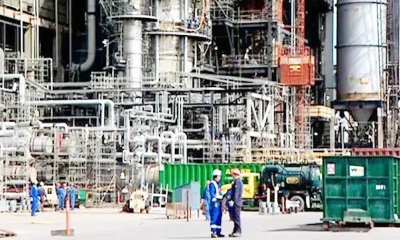
Dangote Refinery’s IPO Officially Opens Today On NGX
-

 Business1 day ago
Dangote at IPO Listing, Charges Public,”I don’t want to be called richest man in Africa”
-

 Politics1 day ago
Again, Desmond Elliot begs political mentor,Gbajabiamila , “I’m sorry, Daddy”
-

 News14 hours ago
Boko Haram Denies Ceasefire with FG, Vows Continued Attacks
-

 News14 hours ago
Police Raise Alarm Over Terrorists and Informants Spying on Schools, Other Targets
-
 Crime14 hours ago
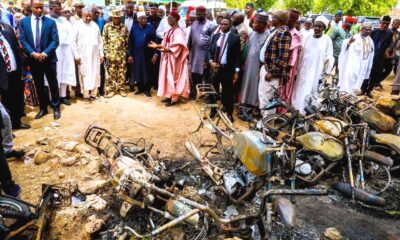
Boko Haram Attacks Adamawa Community, Kills Residents