
Business
JUST IN: IPMAN threatens shutdown in S’West as LASMA impounds 30 tankers

The Independent Petroleum Marketers Association, South-West Zone, has vowed that it will shut down operations across the region if the 30 tankers arrested by the Lagos State government are not released.
The Chairman, IPMAN Western Zone, Joseph Akanni, made this known on Monday, during an interview with newsmen in Ibadan, the Oyo State capital.
Akanni declared the association’s support for the Petroleum Tanker Drivers, as well as other stakeholders in the industry over the issue, saying “Injury to one is an injury to all.”
He disclosed that the 30 tankers bearing 45,000 litres of Premium Motor Spirit were towed out of Dangote Refinery at about 3:00am on Saturday, February 22, 2025.
“The vehicles and the drivers were arrested by the Lagos State Traffic Management Authority (LASMA) under the Ministry of Transportation in Lagos and were put at the LASMA yard in Oshodi.
“So, IPMAN is in solidarity with the PTD, National Association of Road Transport Owners (NARTO), and NUPENG is showing solidarity with the other stakeholders to take action against Lagos State governments, especially the Ministry of Transport.
“What the Ministry of Transport has done is against the law. It is dangerous. It is dangerous to keep tankers with petrol in a place because petrol is flammable.
And the information reaching us is that they have started siphoning petrol from the tankers, which implies that we won’t have the same quantity as when it was towed.
“And that we are ready if nothing is done, we are ready to shut down our stations; our petrol stations across Southwest, in solidarity with the tanker drivers,” Akanni said.
The South-West IPMAN chairman revealed that the product in the impounded tankers belongs to members of IPMAN, saying the association is in support of the actions of NUPENG over the incident.
Akanni added that under fire safety regulations, “even if a truck with petrol is arrested, the tanker is supposed to go and offload the petrol first, before anything.”
“So, now they took the tankers with about 45,000 litres of petrol, numbering about 30, which is very dangerous.
“We are giving stern warning that if there is any fire incident, Lagos State government is going to be responsible for the loss of products and the deaths,” Akanni said.




Black Market Exchange Rates
₦1365DOLLAR (USD)
₦1820POUND (GBP)
₦1535EURO (EUR)
₦970 CANADIAN DOLLAR (CAD)
₦65 SOUTH AFRICAN RAND (ZAR)
₦350 UAE DIRHAM (AED)
₦190 CHINESE YUAN (CNY)
₦100 GHANAIAN CEDI (GHS)
West African CFA ₦2300CFA
Central African CFA ₦2200
Australian Dollar currency ₦850AUSSIE (AUD)
Official CBN Exchange Rates
DOLLAR (USD)₦1330.10
POUND (GBP)₦1759.58
EURO (EUR)₦1496.76
SWISS FRANC (CHF)₦1605.62
JAPANESE YEN (JPN)₦8.45
CFA FRANC (XOF)₦2.29
WEST AFRICAN UNIT OF ACCOUNT (WAUA)₦1801.60
CHINESE YUAN (CNY) ₦198.39
SAUDI RIYAL (SAR)₦354.25
SOUTH AFRICAN RAND (ZAR)₦79.91
Business
Diesel Costs Bite: LAMATA Accelerates Shift To CNG, Electric Buses
The move comes as diesel prices have more than doubled, rising from about N950 per litre at the beginning of the year to between N1,950 and N2,100 per litre, depending on the source.

Lagos is accelerating its transition away from diesel-powered public transport as the Lagos Metropolitan Area Transport Authority (LAMATA) begins phasing out diesel buses from its regulated fleet, amid a surge in diesel prices that has pushed operating costs sharply higher.
LAMATA is targeting clean-energy propulsion for 52 per cent of its Bus Rapid Transit (BRT) fleet by 2050, with compressed natural gas (CNG) and electric vehicles (EVs) taking the place of conventional diesel buses under a policy that took effect at the beginning of 2026.
The Managing Director and Chief Executive Officer of LAMATA, Mrs. Abimbola Akinajo, disclosed this weekend, during the handover of 20 additional high-capacity CNG buses under the Presidential Initiative on CNG and EVs.
The latest delivery brings LAMATA’s CNG fleet to about 170 buses, following the deployment of approximately 150 CNG buses before the new vehicles were received.
The authority also operates high-capacity and medium-capacity electric buses.
Akinajo said some of the new CNG buses would be deployed on the busy Ikorodu–Tafawa Balewa Square corridor, where passenger demand remains high.
“We will only work with CNG or EV buses, and this has been the policy since the beginning of the year,” she said.
The move comes as diesel prices have more than doubled, rising from about N950 per litre at the beginning of the year to between N1,950 and N2,100 per litre, depending on the source.
For LAMATA, the shift is therefore not only an environmental policy but also a cost-management strategy aimed at shielding commuters and transport operators from the impact of rising fuel expenses.
Akinajo said regulated public transport fares had not been increased, partly because the lower operating costs of CNG and electric buses were helping to contain the pressure on operators.
“Regulated public transport fares have not increased, and these buses have helped us achieve that,” she said.
Diesel phase-outUnder the new policy, existing diesel-powered buses in the regulated system will be progressively replaced with CNG and electric alternatives.
Akinajo said the long-term direction was for the regulated system to ultimately operate an entirely electric fleet, while the broader clean-energy target provides a pathway towards reducing emissions from Lagos’ transportation sector.
Transportation remains a major source of emissions in the megacity, making the switch to cleaner buses a key component of Lagos State’s long-term ambition of achieving net-zero emissions by 2050.
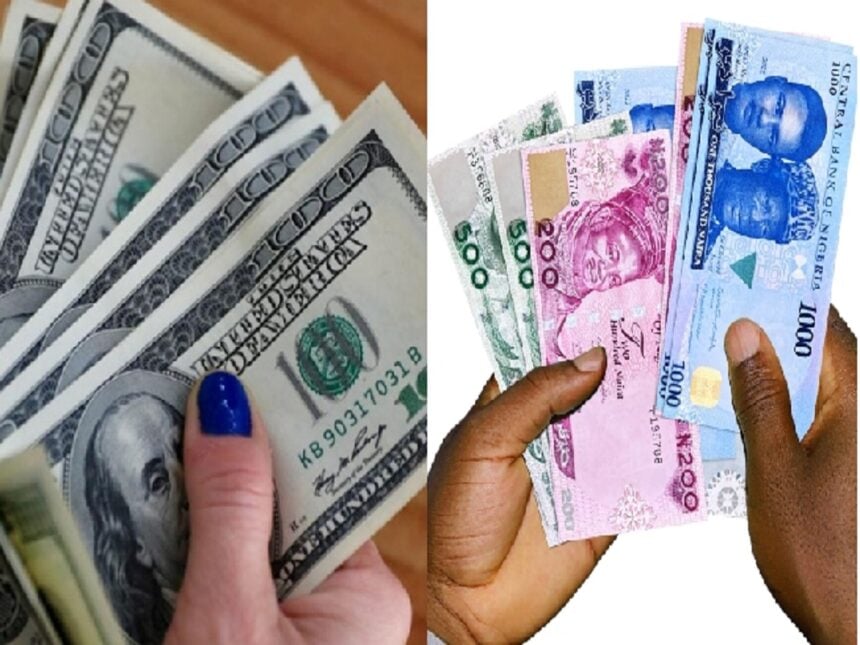
BLACK MARKET RATES
₦1375DOLLAR (USD)
₦1845 POUND (GBP)
EURO (EUR) ₦1550
₦1000 CANADIAN DOLLAR (CAD)
₦70 SOUTH AFRICAN RAND (ZAR)
₦370 UAE DIRHAM
₦190 CHINESE YUAN (CNY)
₦100 GHANA CEDI (GHS)
₦2350 CFA F.(XOF)
₦2250 CFA F.(XAF)
₦850 AUSTRALIAN DOLLAR (AUSSIE)
Official CBN Exchange Rates
DOLLAR (USD)₦1329.16
POUND (GBP)₦1766.59
EURO (EUR) ₦1510.06
SWISS FRANC (CHF) ₦1593.91
JAPANESE YEN (JPN)₦8.47
CFA FRANC (XOF) ₦2.30
WEST AFRICAN UNIT OF ACCOUNT (WAUA) ₦1807.23
CHINESE YUAN (CNY) ₦198.25
SAUDI RIYAL (SAR) ₦353.97
SOUTH AFRICAN RAND (ZAR) ₦81.18


BREAKING: New Iranian Leader Killed Today -Waiting on Statement From Putin

Naira Rates To Dollar , Pound, EURO… Monday, October 5

BBNaija season 11: “And The Winner is Temi Nkem”

Tech Expert, Zuckerberg trains with UFC champions, Adesanya, Alexander

Organ Trafficking: Ekweremadu bags 10 years in UK prison

SAINT OBI: Between his marriage and his death
-
 Business15 hours ago
Diesel Costs Bite: LAMATA Accelerates Shift To CNG, Electric Buses
-

 International15 hours ago
US’s Gullah Geechee communities celebrate historic cultural festival rooted in West Africa
-
 Sports3 hours ago
FIFA to decide 2030 World Cup final venue in 2028 as Morocco, Spain wait
-
 International14 hours ago
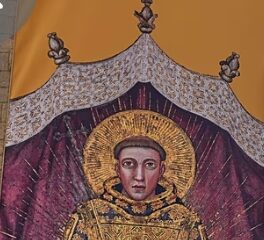
Italy marks 800 years since death of Saint Francis of Assisi
-

 News3 hours ago
NGE Tasks Newsrooms, INEC on Must-Do Measures for Credible 2027 Polls
-
 Entertainment3 hours ago
BBNaija season 11: “And The Winner is Temi Nkem”
-

 News14 hours ago
Nigerian-Born Former Texas Professor Gets 78 Months For $921,000 Student Aid Fraud
-

 International13 hours ago
Ethiopian woman says she hasn’t eaten or drunk water since age 10