
News
JUST IN: Tinubu to implement Oronsaye report, to scrap, merge many govt agencies

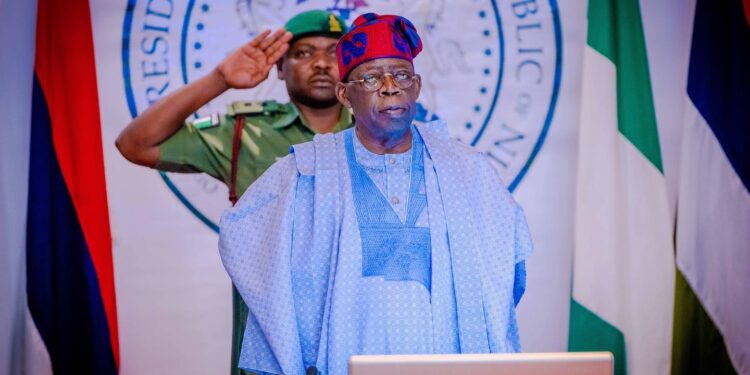
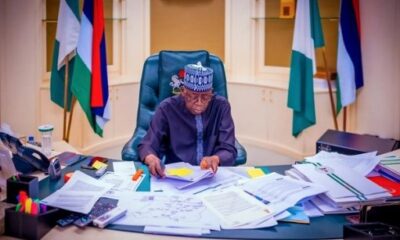
President Bola Tinubu has resolved to implement the Stephen Oronsaye report that called for a leaner government by merging some agencies and scrapping some others.
The president’s decision was announced by a presidential spokesperson, Bayo Onanuga, in a post on X.
“Twelve years after the Steve Oronsaye panel submitted its report on restructuring and rationalizing Federal government parastatals and agencies and a white paper issued two years after, President Tinubu and the Federal Executive Council today decided to implement the report,” Mr Onanuga wrote.
“Many agencies will be scrapped and many others will be merged, to pave the way to a leaner government,” he said.
Also, briefing State House correspondents after Monday’s meeting of the Federal Executive Council (FEC), the Minister of Information and National Orientation, Mohammed Idris, said some Ministries, Departments and Agencies (MDAs) would be scrapped, merged or subsumed into relevant organisations of government.
He said the aim was only to cut costs and not to throw Nigerians into the labour market.
Mr Idris said the details of the affected MDAs would be made known soon, adding that a committee had been set up for the implementation of the report.
Background…
In 2011, former President Goodluck Jonathan set up the presidential committee on the reformation of government agencies chaired by Steven Oronsaye, a former Head of Service of the Federation.
Its terms of reference included, among others, examining the enabling Acts and mandates of all the federal agencies, parastatals, and commissions to determine areas of overlap or duplication of functions.
The committee, in its report, recommended that of the 541 Statutory and Non-Statutory Federal Government Parastatals, Agencies and Commissions, 263 statutory agencies should be reduced to 161, 38 agencies should be abolished, 52 agencies should be merged, and 14 should revert to departments in ministries.
A white paper committee, headed by the then Attorney-General of the Federation and Minister of Justice, Mohammed Adoke, reviewed the report and rejected most of the recommendations of the committee when it submitted its report in 2014.
However, even the accepted recommendations were not implemented until the Jonathan administration left office in 2015.
In 2021, the administration of President Muhammadu Buhari inaugurated two committees to implement the report. One of the committees, headed by a former Head of Service, Bukar Aji, was mandated to review the Oronsaye Report and the government white paper. The other committee, chaired by Amal Pepple, was mandated to review MDAs created between 2014 and 2021.
The then Secretary to the Government of the Federation, Boss Mustapha, in July 2022, set up another white paper committee, headed by Ebele Okeke, to review the report of the Pepple committee. However, the Buhari administration failed to implement the report.
While the discourse on the implementation of the report was ongoing, the National Assembly and successive governments have been creating agencies and institutions, therefore, increasing the cost of governance in the process.
The consequence of the bloated government has been the steady increase in the recurrent expenditure of the federal government.
Critics have also accused Mr Tinubu of not willing to reform the civil service. Many refer to the appointment of 50 ministers by Mr Tinubu to buttress the point.
Aside from the appointments, Mr Tinubu also embarked on some frivolous budgetary expenses, most notably the allocation of N344 billion to the National Assembly in the 2024 budget and spending billions on the renovation of his official residence and that of his deputy.
Former Vice President Atiku Abubakar, in a statement he posted on X on Sunday, slammed President Tinubu for failing to reduce the size of government, as done by Argentine President Javier Milei.
“He (Milei) started off cutting government expenditure by reducing the size of government and wastage; blocked stealing of government funds, and attracted Foreign Direct Investment (FDI) through concessions, tax holidays, and improved ease of doing business,” Atiku said.
In a recent editorial, the Tinubu administration said it will implement the Oronsaye report as a way of cutting the cost of running the government.
Expected opposition…
Meanwhile, organised labour groups are expected to kick against the latest move by President Tinubu because the policy may lead to the loss of jobs.
Workers in Nigeria are already grappling with the cost of living crisis due to some of the policies of the current administration, notably the fuel subsidy removal and foreign exchange unification policy.
The two main unions in Nigeria, the Nigeria Labour Congress (NLC) and Trade Union Congress (TUC), are set to embark on nationwide protests against economic hardship.





News
Police must pay transport fares, says AIG
” No police officer has the right to enter your vehicle without paying. We should assist one another willingly, not by force,” he said.

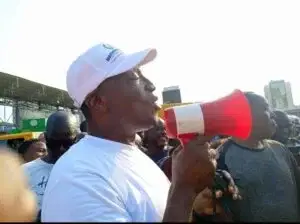
• The Assistant Inspector-General of Police(AIG) in charge of Zone 2 Command, Mr Olohundare Jimoh, speaking with transporters at Obalende garage, Lagos State, on Wednesday.
The Assistant Inspector-General of Police, Zone 2 Command, Mr Olohundare Jimoh, has declared that officers must pay fares before boarding commercial vehicles, warning against abuse of authority.
Jimoh spoke on Wednesday at Obalende garage during a sensitisation meeting with drivers and transport workers marking National Police Day 2026.
He stressed that relations between police and the public must be based on partnership, not coercion, urging both sides to support each other voluntarily.
“No police officer has the right to enter your vehicle without paying. We should assist one another willingly, not by force,” he said.
Jimoh called for stronger cooperation to maintain safety and order on roads, insisting there was no conflict between officers and transport unions.
“I don’t collect money from officers. We don’t arrest people arbitrarily. If you have issues with any officer, report directly to me,” he said.
(Vanguard)
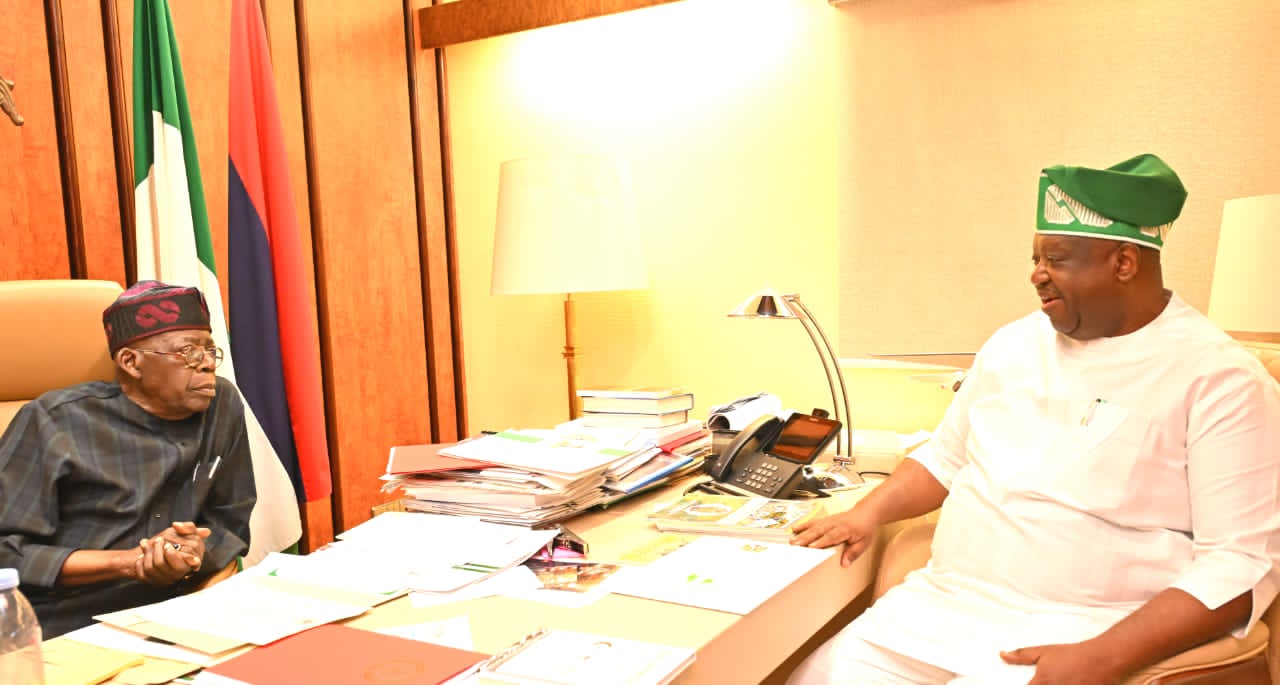
President Bola Ahmed Tinubu will leave for Jos tomorrow to commiserate with the state government and residents over recent deadly gun attacks that lefts dozens dead.
This was following Governor Caleb Mutfwang’s security briefing to the President on the recent violent attack in Angwan Rukuba, Plateau State.
During the meeting on Wednesday at the presidential villa in Abuja, Governor Caleb Mutfwang told Mr President that although security forces have restored calm after fresh disturbances involving looters on Wednesday morning, following the deadly Palm Sunday attack that left more than a dozen dead and many others injured.
He said that investigations are continuing to determine the identities or motives of the attackers who are yet to be apprehended .
Presidency source said that President Tinubu was initially scheduled for a planned trip to Ogun State to flag off operations at the Gateway International Cargo Airport on Thursday.
From Jos, the President will travel to Lagos to observe Good Friday.
On Saturday, April 4, he will visit Ogun State to commission projects including the cargo airport.
He will then return to Lagos during the Easter holiday to commission several state infrastructure projects, including the Ojota/Opebi Link Bridge.
Before heading back to Abuja, the president will visit Bayelsa State on April 10 to commission projects completed under Governor Duoye Diri.
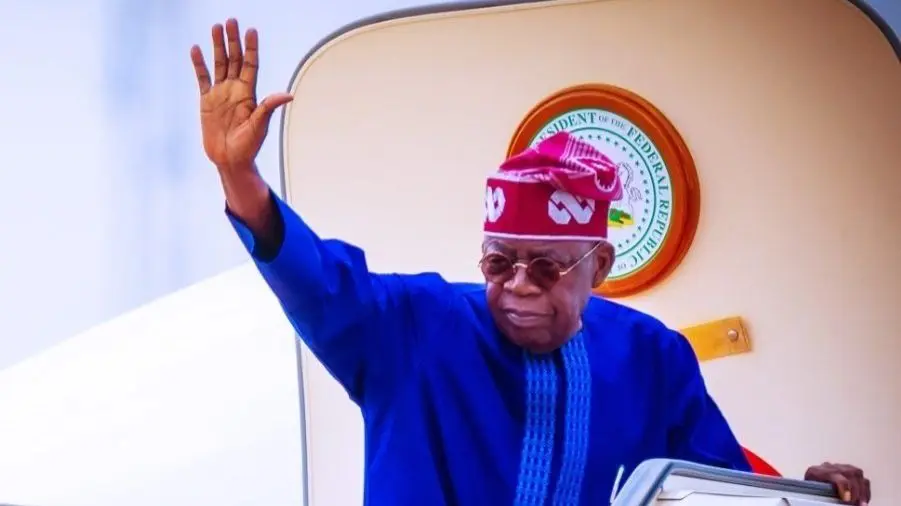
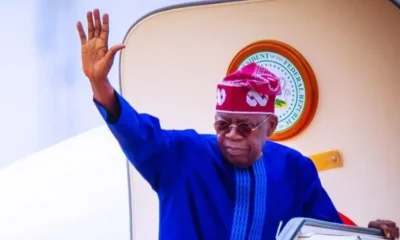
President Bola Ahmed Tinubu will tomorrow embark on a visit to Jos, Plateau State, as the first leg of a five-state tour across the country.
The Presidency announced that the President has postponed his scheduled trip to Ogun State to enable him to commence the series of official visits.
Details of the remaining four states in the tour are expected to be released by the Presidency in due course.
The development comes as President Tinubu continues nationwide engagements aimed at assessing development projects, interacting with stakeholders, and addressing key national issues in the respective states.
Further updates on the itinerary will be communicated as the visits progress.


INEC Dismisses Calls for Chairman’s Removal

Ebonyi: Gunmen Assasinate Another Traditional Ruler

From South Africa to US, ‘Cicada’ COVID-19 variant spreading

Tech Expert, Zuckerberg trains with UFC champions, Adesanya, Alexander

Organ Trafficking: Ekweremadu bags 10 years in UK prison

SAINT OBI: Between his marriage and his death
-
 Business2 days ago
33 Nigerian Banks Beat CBN’s Recapialisation with ₦4.65trn Combined Capital Base
-
 Sports2 days ago
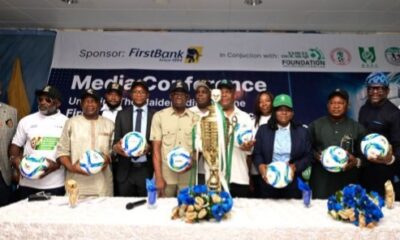
FirstBank Sponsors Samuel Okwaraji U-16 Football Championship 2026
-
 Politics2 days ago
BREAKING: INEC Withdraws Recognition of David Mark’s ADC
-
 News2 days ago
JUST IN: Tinubu Heads to Jos Tomorrow, Postpones Ogun Trip for 5-State Visits
-
 Entertainment2 days ago
Super Eagles Iwobi to launch music album ‘More To Life’
-
 News2 days ago
Easter: FG declares Friday, Monday public holidays
-
 Politics2 days ago
Arise News Anchor Ikokwu in Political Race for Reps Seat
-
 News2 days ago
Gas Leak in Ogun School: 30 Students, Teacher Hospitalised