
News
JUST IN: Tinubu to implement Oronsaye report, to scrap, merge many govt agencies

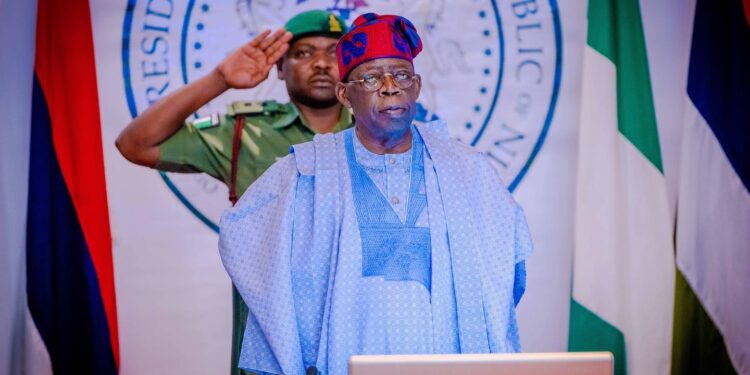
President Bola Tinubu has resolved to implement the Stephen Oronsaye report that called for a leaner government by merging some agencies and scrapping some others.
The president’s decision was announced by a presidential spokesperson, Bayo Onanuga, in a post on X.
“Twelve years after the Steve Oronsaye panel submitted its report on restructuring and rationalizing Federal government parastatals and agencies and a white paper issued two years after, President Tinubu and the Federal Executive Council today decided to implement the report,” Mr Onanuga wrote.
“Many agencies will be scrapped and many others will be merged, to pave the way to a leaner government,” he said.
Also, briefing State House correspondents after Monday’s meeting of the Federal Executive Council (FEC), the Minister of Information and National Orientation, Mohammed Idris, said some Ministries, Departments and Agencies (MDAs) would be scrapped, merged or subsumed into relevant organisations of government.
He said the aim was only to cut costs and not to throw Nigerians into the labour market.
Mr Idris said the details of the affected MDAs would be made known soon, adding that a committee had been set up for the implementation of the report.
Background…
In 2011, former President Goodluck Jonathan set up the presidential committee on the reformation of government agencies chaired by Steven Oronsaye, a former Head of Service of the Federation.
Its terms of reference included, among others, examining the enabling Acts and mandates of all the federal agencies, parastatals, and commissions to determine areas of overlap or duplication of functions.
The committee, in its report, recommended that of the 541 Statutory and Non-Statutory Federal Government Parastatals, Agencies and Commissions, 263 statutory agencies should be reduced to 161, 38 agencies should be abolished, 52 agencies should be merged, and 14 should revert to departments in ministries.
A white paper committee, headed by the then Attorney-General of the Federation and Minister of Justice, Mohammed Adoke, reviewed the report and rejected most of the recommendations of the committee when it submitted its report in 2014.
However, even the accepted recommendations were not implemented until the Jonathan administration left office in 2015.
In 2021, the administration of President Muhammadu Buhari inaugurated two committees to implement the report. One of the committees, headed by a former Head of Service, Bukar Aji, was mandated to review the Oronsaye Report and the government white paper. The other committee, chaired by Amal Pepple, was mandated to review MDAs created between 2014 and 2021.
The then Secretary to the Government of the Federation, Boss Mustapha, in July 2022, set up another white paper committee, headed by Ebele Okeke, to review the report of the Pepple committee. However, the Buhari administration failed to implement the report.
While the discourse on the implementation of the report was ongoing, the National Assembly and successive governments have been creating agencies and institutions, therefore, increasing the cost of governance in the process.
The consequence of the bloated government has been the steady increase in the recurrent expenditure of the federal government.
Critics have also accused Mr Tinubu of not willing to reform the civil service. Many refer to the appointment of 50 ministers by Mr Tinubu to buttress the point.
Aside from the appointments, Mr Tinubu also embarked on some frivolous budgetary expenses, most notably the allocation of N344 billion to the National Assembly in the 2024 budget and spending billions on the renovation of his official residence and that of his deputy.
Former Vice President Atiku Abubakar, in a statement he posted on X on Sunday, slammed President Tinubu for failing to reduce the size of government, as done by Argentine President Javier Milei.
“He (Milei) started off cutting government expenditure by reducing the size of government and wastage; blocked stealing of government funds, and attracted Foreign Direct Investment (FDI) through concessions, tax holidays, and improved ease of doing business,” Atiku said.
In a recent editorial, the Tinubu administration said it will implement the Oronsaye report as a way of cutting the cost of running the government.
Expected opposition…
Meanwhile, organised labour groups are expected to kick against the latest move by President Tinubu because the policy may lead to the loss of jobs.
Workers in Nigeria are already grappling with the cost of living crisis due to some of the policies of the current administration, notably the fuel subsidy removal and foreign exchange unification policy.
The two main unions in Nigeria, the Nigeria Labour Congress (NLC) and Trade Union Congress (TUC), are set to embark on nationwide protests against economic hardship.






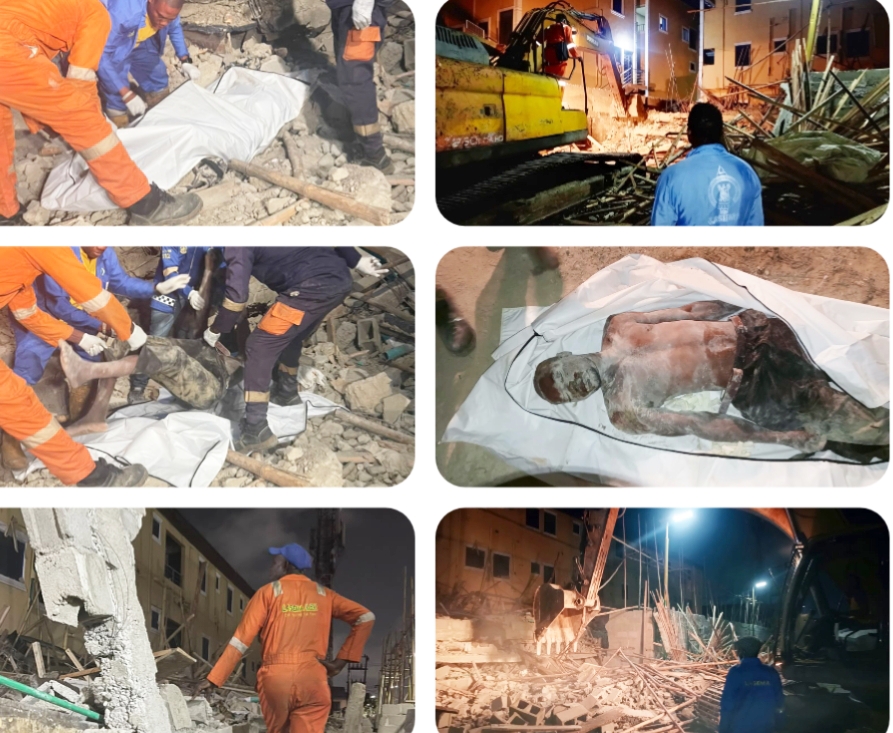
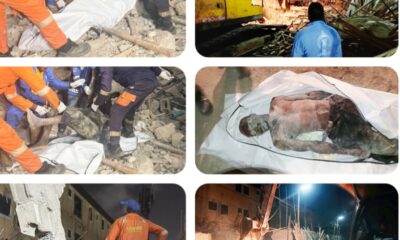
A two-storey building has collapsed in the Fadeyi area of Lagos, resulting in one fatality and the rescue of three people, emergency officials confirmed on Friday morning.
The incident occurred in the early hours, sending residents and nearby traders into panic as the structure suddenly gave way. Rescue teams from the Lagos State Emergency Management Agency (LASEMA) and other first responders quickly arrived at the scene and began extracting victims from the rubble.
According to preliminary reports, one person was confirmed dead at the site, while three others were pulled out alive and rushed to a nearby hospital for treatment. Their conditions have not yet been disclosed.
Security personnel have cordoned off the area to allow rescue operations to continue and to prevent further access by onlookers. Officials are still assessing whether any other persons remain trapped under the debris.
The cause of the collapse has not been established. Authorities have not ruled out structural failure, but investigations are ongoing.
Further updates are expected as the rescue operation progresses and more details become available from emergency services.
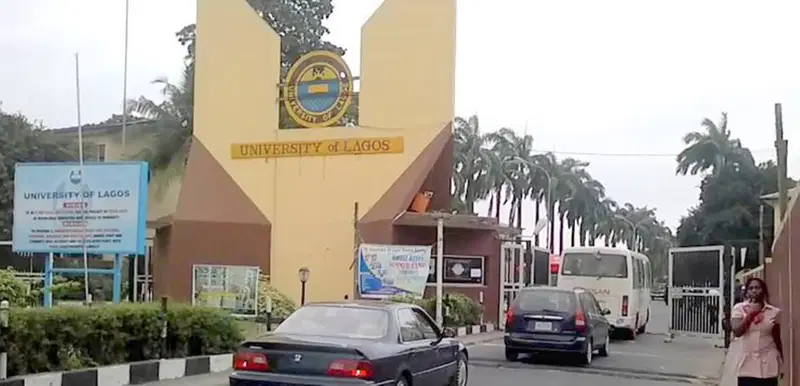
Teachers at the International School, University of Lagos (ISL), on Wednesday commenced a work-to-rule action over unpaid salary arrears, their removal from the university’s payroll, and delays in implementing a National Industrial Court judgment.
The staff are demanding the payment of outstanding Consolidated Tertiary Institutions Teaching Allowance (CONTTA) arrears, as well as arrears from the 25 per cent and 35 per cent salary adjustments approved in 2024. They also want full restoration to the university’s payroll.
Comrade Razak Yusuf, Chairman of the Senior Staff Association of Nigerian Universities (SSANU), University of Lagos branch, said the industrial action followed prolonged delays in resolving the teachers’ employment status and financial entitlements.
The teachers had approached the National Industrial Court of Nigeria, which ruled in their favour on May 11, 2026. Despite the judgment, they claim the university has yet to fully restore their names to the payroll or settle outstanding benefits.
Protesters carried placards with messages such as “Equal Work, Equal Rights,” “ISL tutors deserve their due,” and “Other UNILAG staff paid, ISL tutors still owed.” The action disrupted teaching and a scheduled mid-term examination at the school.
The teachers called on the university management to restore the affected staff to the payroll, settle all outstanding financial obligations, and provide a clear payment plan with timelines.
They rejected suggestions that any interim arrangement under the university’s Council protocol amounted to goodwill, insisting they were only seeking recognition of their employment rights.
The development continues a pattern of industrial disputes at the University of Lagos over salary and allowance issues.
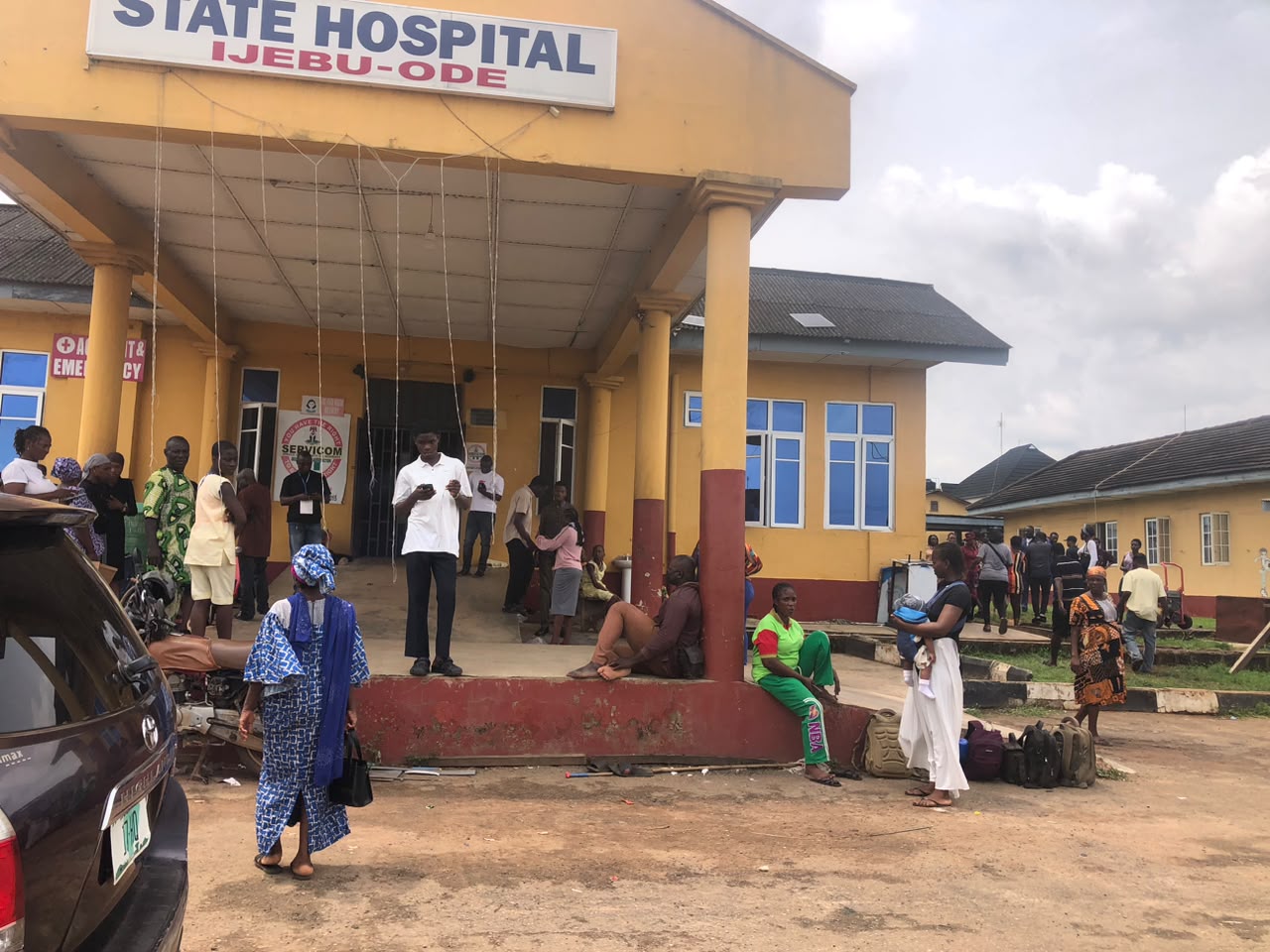
Hundreds of students were hospitalised on Wednesday morning after fresh gaseous emissions hit parts of Ogun State, including Ijebu-Ode, Ijebu-Igbo and Ago-Iwoye.
The incident affected pupils at Anglican Girls Grammar School, Obalende, Ijebu-Ode, and Ijebu-Igbo Girls Grammar School. Several schools in Ago-Iwoye suspended academic activities and sent students home as a precaution.
Kehinde Bello, General Manager of the Ogun State Environmental Protection Agency (OGEPA), visited the affected areas and linked the emissions to underground gas previously recorded in Ijebu-Ode since April 2026. He said the situation was under control and attributed the releases to natural geological and tectonic fault lines, ruling out sabotage or a gas pipeline leak.
Bello assured residents that the state government was working on a lasting solution. He advised anyone exposed to the odour to cover their noses and mouths with wet handkerchiefs.
The recurring emissions have renewed concerns about the safety of students and residents in the affected communities.


History of Naira Revaluation and Devaluation (1973–2026) (Part 2)

EBOLA: Lagos Heightens Watch at Airports After Abuja Case

JUST IN: Four Pilots Die After Mid-Air Collision of Military Planes in Philippine

BREAKING: Lagos Govt Declares Today, Thursday Work-Free to Mark 2026 Ìṣẹ̀ṣe Day

Tech Expert, Zuckerberg trains with UFC champions, Adesanya, Alexander

Organ Trafficking: Ekweremadu bags 10 years in UK prison
-

 Business3 days ago
Naira To Dollar, Pound, Euro… Today October 23
-
 Business3 days ago
Obasanjo Accuses Tinubu : “You Made Every Nigerian Poor By 300% Naira Devaluation”
-
 Entertainment3 days ago
JUST IN: Nollywood Veteran Francis Duru Dies at 57 After Brief Illness
-
 News3 days ago
JUST IN: 1 Dead, 3 Rescued in Fadeyi Building Collapse, Lagos
-
 Business3 days ago
History of Naira Revaluation and Devaluation (1973–2026)
-

 Business3 days ago
CBN Licences Abbey Bank to Start Full Commercial Banking in November 2026
-
 Politics2 days ago
2027 presidential election: Tinubu’s Northern test begins today
-
 Health2 days ago
Ebola patient in Abuja showing signs of recovery – FG