
Business
Dangote Partners Honeywell International to Boost Refinery Capacity to 1.4 million barrels per day

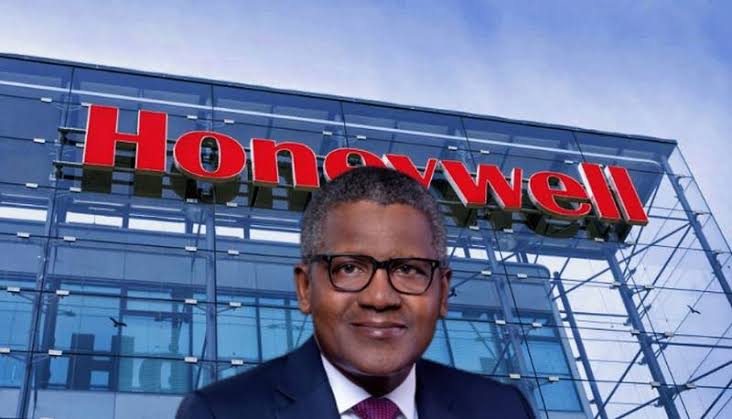
Dangote Refinery, Africa’s largest single-train petroleum refinery, has signed a landmark contract with U.S. industrial giant Honeywell International to execute a significant capacity upgrade that will boost the facility’s crude processing capability from the current 650,000 barrels per day to an ambitious 1.4 million barrels per day.
The multi-billion-dollar project, described by sources close to the deal as one of the largest refinery expansion initiatives globally in recent years, will involve the installation of advanced process units, automation systems, and energy-efficiency technologies supplied and integrated by Honeywell UOP and Honeywell Process Solutions.
Aliko Dangote, President and CEO of Dangote Industries Limited, confirmed the partnership, stating: “This strategic collaboration with Honeywell will position the Dangote Refinery as one of the top five largest refineries in the world by capacity.
The upgrade will not only enhance our ability to meet Nigeria’s complete refined products demand but also establish the refinery as a major export hub for gasoline, diesel, jet fuel, and petrochemicals across Africa and beyond.
”The expansion is expected to be implemented in phases, with key units including additional crude distillation, hydrocracking, and catalytic reforming modules.
Honeywell’s proprietary technologies are anticipated to improve yield of high-value products while reducing energy consumption and emissions.Upon completion, the 1.4 million bpd Dangote Refinery will surpass the current global top-tier facilities such as Reliance Industries’ Jamnagar Refinery (1.24 million bpd) and Paraguay’s planned 1.2 million bpd project, cementing its status as the world’s largest single-train refinery.
The project is expected to create thousands of direct and indirect jobs during the construction and commissioning phases and further reduce Nigeria’s dependence on imported refined petroleum products.
A spokesperson for Honeywell confirmed the award, saying the company was “honored to partner with Dangote on this transformative project that will reshape the African downstream landscape.
”Detailed timelines and the exact value of the contract were not disclosed, but industry analysts estimate the expansion could exceed $5–7 billion in total investment.
The statement said: Dangote Group is pleased to announce that it has entered into a strategic partnership with Honeywell International Inc to support the next phase of expansion of the Dangote Petroleum Refinery.
This collaboration will provide advanced technology and services that will enable the refinery to increase its processing capacity to 1.4 million barrels per day by 2028, marking a major milestone in our long-term vision to build the world’s largest petroleum refining complex.
Through this agreement, Honeywell will supply specialised catalysts, equipment, and process technologies that will allow the refinery to process a broader slate of crude grades efficiently and to further enhance product quality and operational reliability.
Honeywell, a global Fortune 100 industrial and technology company, offers a wide portfolio of solutions across aviation, automotive, industrial automation, and advanced materials.
Honeywell’s division UOP has been a technology partner to Dangote since 2017, providing proprietary refining systems, catalyst regeneration equipment, high performance column trays, and heat exchanger technologies that support our best-in-class operations.
Dangote Group is also advancing its petrochemical footprint. As part of the wider collaboration, we are scaling our polypropylene capacity to 2.4 million metric tons annually using Honeywell’s Oleflex technology.
Polypropylene is a key industrial material widely used across packaging, manufacturing, and automotive applications.In addition to refining expansion, Dangote Group is progressing with the next phase of its fertiliser growth plan in Nigeria. We will increase our urea production capacity from 3 million metric tons to 9 million metric tons annually.
The existing plant consists of two trains of 1.5 million metric tons each. The expansion will add four additional trains to meet growing demand for high-quality fertiliser across Africa and global markets.
Dangote Group remains fully committed to delivering world-class industrial capacity, strengthening Nigeria’s energy security, and driving sustainable economic growth through long-term investment, innovation, and strategic global partnerships.
Business
RMRDC Taking 2027 Africa Raw Materials Summit To Kenya
Speaking with newsmen during the conclusion of the ARMS 2026, Ike-Muonso said Nigeria is the only county that has an organisation, government-owned organisation in the continent that is fully dedicated to adding value to raw materials.

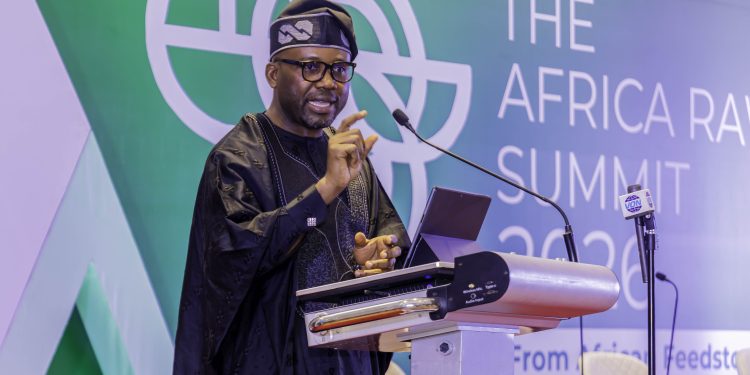
• Photo: Hon.Minister, Federal Ministry of Innovation, Science and Technology (FMIST), Dr Kingsley Udeh, declaring the event open.
The third edition of the Africa Raw Materials Summit (ARMS) 2027, would be used to garner support for setting up a centralised continental database for raw processing and value addition that is accessible to investors and industrialists.
The Director-General of the Raw Materials Research and Development Council (RMRDC), Prof. Nnanyelugo Ike-Muonso, disclosed this during the ARMS 2026 Summit , held in Abuja, themed, ‘From African Feedstock To Factories.’
Building enthusiasm ahead of the next year’s event scheduled to hold in Kenya, East Africa, Ike-Muonso explained that the decision to take the summit to Kenya was reached following what he described as the East Africa country participants’ dominance in the first and second edition of the summit.
Ike-Muonso said Nigeria is the only county that has an organisation, government-owned organisation in the continent that is fully dedicated to adding value to raw materials.
Business
JPMorgan Eyeing Entry Into Nigeria’s Banking Industry
J.P. Morgan operates in more than 100 countries worldwide, providing financial services, investment banking, asset management, and commercial banking across major global markets in the Americas, Europe, the Middle East, Africa, and Asia-Pacific.

JPMorgan Chase & Co has deposited N50 billion with the Central Bank of Nigeria as part of efforts to secure a merchant banking licence and expand its operations in Nigeria .
J.P. Morgan operates in more than 100 countries worldwide, providing financial services, investment banking, asset management, and commercial banking across major global markets in the Americas, Europe, the Middle East, Africa, and Asia-Pacific
Bloomberg reported that the CBN deposit, valued at about $38m, meets a key requirement in the American lender’s application and signals its readiness to establish a licensed banking operation in Nigeria.
However, the payment does not guarantee approval, as the CBN is yet to make a final decision on the application.
People familiar with the process, said the deposit was one of the final regulatory requirements for the licence.
They added that the bank expects to obtain approval by the end of 2026 or in early 2027, subject to the regulator’s decision.
Business
How I steal ATM users’ PINs, defraud them
“I do go to the ATM machine to lie in wait for gullible customers who believe whatever I may tell them, and people that seek for help too,” he said.
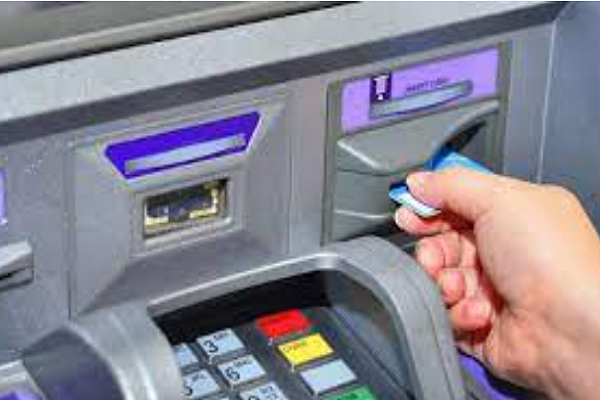
A fraudster has confessed to the police how he stole bank customers’ PINs by pretending to help them operate automated teller machines
The suspect, whose identity was not disclosed in a statement by the Cross River State Police Command, said that he targeted customers who needed assistance at ATM points, withheld their cards and observed them entering their PINs before leaving the premises.
The Cross River State Police Command’s Public Relations Officer, ASP Sunday Eitokpah, disclosed this in a video uploaded to the command’s Facebook page on Tuesday.
Eitokpah said the suspect was arrested on October 6, 2026, over alleged fraud involving unsuspecting ATM users.
Explaining the alleged method, the suspect said he approached customers who appeared to need help and exploited their willingness to trust him.
“I do go to the ATM machine to lie in wait for gullible customers who believe whatever I may tell them, and people that seek for help too,” he said.
He added, “So, if you call for help or assistance from me, what I do is I put the ATM on the cardless transaction mode and withhold your card. You’ll be thinking your card is inside, but your card is not inside.”
According to the suspect, he watched as customers selected the transactions they wanted to carry out and entered their PINs.
He said, “And you’ll choose a transaction which you want to perform. It’s either withdrawal or transfer or inquiry. By the time you click on any of them, ask you to put your password, to put your password, and confirm your password, I will leave the premises.”
Eitokpah said the suspect allegedly memorised customers’ PINs as they entered them, then left the ATM point with the information needed to carry out fraudulent transactions elsewhere.
The customers would subsequently discover that their cards were missing and their accounts had been debited.


JUST IN: Gas Emissions Hit Ogun Schools, Hundreds of Pupils Hospitalised

Ebola In Nigeria: Symptoms, Spread and How To Protect Yourself

NDC Plans Fresh Congresses To Replace Defector Members

BREAKING: Lagos Govt Declares Today, Thursday Work-Free to Mark 2026 Ìṣẹ̀ṣe Day

Tech Expert, Zuckerberg trains with UFC champions, Adesanya, Alexander

Organ Trafficking: Ekweremadu bags 10 years in UK prison
-

 Sports2 days ago
Mbappé wins Onze d’Or award for 2025/26 season
-

 Business17 hours ago
Naira Exchange Rates Wednesday, October 21, 2026
-

 Business17 hours ago
Currency Words You Should Know
-

 Business17 hours ago
NCC, CBN To Warn Companies By Flagging Fraudulent Phone Numbers
-

 News2 days ago
JUST IN: Ex-Delta Gov Uduaghan Dies at 71, Oborevwori Mourns
-

 Sports2 days ago
Ronaldo Gets 30-Day Suspension For Portugal Camp Walkout
-
Business16 hours ago
JPMorgan Eyeing Entry Into Nigeria’s Banking Industry
-
 Health1 day ago
BREAKING: Nigeria Confirms First Ebola Case