
Business
JUST IN: CBN raises interest rate to 24.75% in bid to curb inflation


In a move aimed at tackling the rising inflation in Nigeria, the Central Bank of Nigeria’s (CBN) Monetary Policy Committee (MPC) has announced a significant increase in the benchmark interest rate.
The Monetary Policy Rate (MPR) which was previously 22.75 now stands at 24.75%.
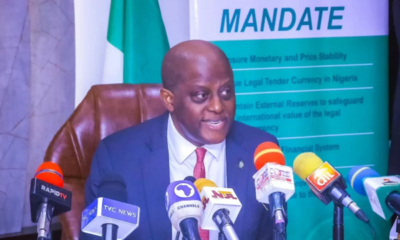
Speaking to journalists after the MPC meeting, CBN Governor Yemi Cardoso, emphasized the committee’s commitment to curbing inflation and restoring the purchasing power of Nigerians.
He outlined the various policy adjustments implemented:
The most significant change is the substantial increase in the MPR to 24.75%. This makes borrowing more expensive, aiming to reduce spending and slow economic growth, ultimately bringing down inflation.
The CBN has also adjusted the Cash Reserve Ratio (CRR) for commercial banks, maintaining it at 45%. However, the CRR for merchant banks has been increased from 10% to 14%.
Additionally, the liquidity ratio remains unchanged at 13%. These measures aim to tighten control over the money supply in circulation, further dampening inflationary pressures.
Cardoso highlighted the importance of food security in the fight against inflation. He urged the federal government to fully implement its agricultural programmes, aiming to increase domestic food production and reduce reliance on imported food items, which can be susceptible to price fluctuations.
The increased interest rate will have a ripple effect throughout the Nigerian economy. Borrowers, including businesses and individuals, can expect to pay more for loans, potentially impacting investment and consumer spending.
However, the CBN’s actions are intended to bring down inflation in the long run, which would ultimately benefit Nigerians by stabilizing prices and protecting their purchasing power.
The MPC’s decision to aggressively raise interest rates reflects the seriousness of Nigeria’s inflation challenge.
Whether these measures will achieve the desired outcome remains to be seen. The effectiveness will depend on various factors, including the government’s success in boosting food production and the overall response of the Nigerian economy to tighter monetary policy.





Business
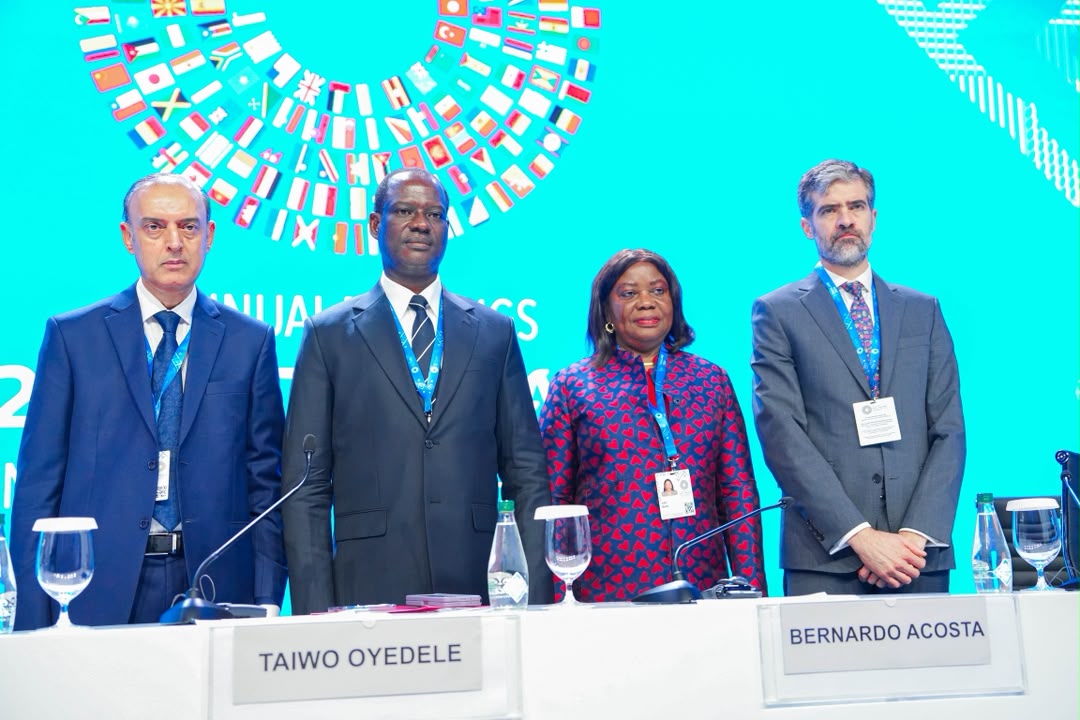
Oyedele Chairs G-24 Call for Fairer Global Financial System, Affordable Development Financing
The meeting concluded that domestic reform alone will not shield developing economies from external shocks — affordable finance, effective debt resolution, fairer representation in international institutions, and sustained cooperation are equally necessary.

Business
NAFDAC scolds fake manufacturers: “You are killing Nigerians in order to make money”
He warned that the circulation of counterfeit drinks posed a serious public health concern, urging suspected manufacturers to abandon the illegal trade.

“You are killing Nigerians in order to make money,which is not good.”
That’s the National Agency for Food and Drug Administration and Control (NAFDAC) scolding Nigerians caught in the act of counterfeiting drinks.
The occasion was at Zamfara Plaza, BBA Trade Fair Complex, along the Badagry Expressway, Ojo, Lagos State.
The Assistant Director of the Investigation and Enforcement Directorate of NAFDAC, Mr Kunle Ojo, who led the enforcement said the agency caught some of the suspects in the act and recovered drums, filters, packaging materials, a heating device and other equipment allegedly used in the illicit production process.
The suspects, identified as Okafor and John, were arrested during an enforcement operation in a two-storey building where equipment and materials allegedly used to repackage and produce counterfeit alcoholic and energy drinks where discovered.
The raid, according to NAFDAC, followed credible intelligence and surveillance on suspected counterfeiters operating within the Trade Fair International Market.
He warned that the circulation of counterfeit drinks posed a serious public health concern, urging suspected manufacturers to abandon the illegal trade.

Shell has agreed to sell its entire interest in the Shell Nigeria Gas Group, which runs a domestic natural gas distribution network, to Nigerian energy firm Vaaris Energy Limited.
The deal, announced on Tuesday, October 13, 2026, covers Shell Petroleum B.V.’s full stake in the business. Shell Nigeria Gas, established in 1998, operates about 170 kilometres of pipelines across Ogun, Abia and Rivers states and supplies more than 130 industrial and commercial customers. Financial terms were not disclosed. Completion remains subject to regulatory approvals and other conditions.
Shell said the business will continue operating as normal and serving customers until the transaction closes. The company does not participate in upstream production, LNG or international gas trading through this unit.
Elohor Aiboni, Shell’s Country Chair in Nigeria, said: “Shell Nigeria Gas has served industrial and commercial customers in Nigeria for more than 25 years, supported by the commitment and expertise of its people. We believe this agreement provides a much stronger platform for the business’ next chapter under new ownership. Shell continues to focus on strategic Deepwater and Integrated Gas positions in Nigeria.”
The sale forms part of Shell’s broader strategy under CEO Wael Sawan to simplify its portfolio and concentrate on higher-return assets. It follows the company’s completed exit from onshore oil production in Nigeria, when it sold the Shell Petroleum Development Company to the Renaissance consortium in 2025.
Vaaris Energy is a privately held Nigerian company with interests across the oil and gas value chain and an existing operational presence in the country.


Oyedele Chairs G-24 Call for Fairer Global Financial System, Affordable Development Financing

NAFDAC scolds fake manufacturers: “You are killing Nigerians in order to make money”

BREAKING: Shell to Exit Nigeria’s Domestic Gas Distribution Business

Tech Expert, Zuckerberg trains with UFC champions, Adesanya, Alexander

BREAKING: Lagos Govt Declares Today, Thursday Work-Free to Mark 2026 Ìṣẹ̀ṣe Day

Organ Trafficking: Ekweremadu bags 10 years in UK prison
-
 Business2 days ago
Nigeria’s ₦33bn Fruit Import Bill Exposes Missed Opportunities in Jos
-
 Business2 days ago
Naira To Dollar, Pound ,Euro …Rates For Monday, October 12
-

 International3 days ago
‘Up to our people’ to pick leader, Zelenskyy responds to Trump’s pledge for new elections in Ukraine
-
 Politics2 days ago
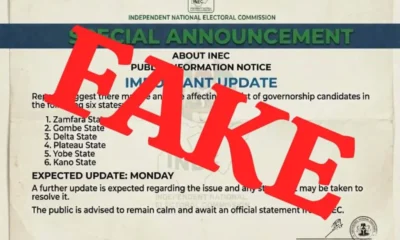
BEWARE: Fake 2027 Gov’ Candidates List Circulating Online — INEC Raises Alarm
-

 Opinions2 days ago
Human Capital Africa Statement For International Day of the Girl Child 2026
-

 Politics2 days ago
2027: 119 Women Jostle For State’s Governors
-
 News2 days ago
Forbes Scores GTBank Best Employers 2026
-
 Business1 day ago
Dangote Refinery IPO Attracts N8.61trn in Subscriptions, Four Times Offer