
Business
BREAKING: CBN Unveils New Minimum Capital Requirements For Banks …Gives Banks 24 months To Recapitalise


…… This comes 20 years (2004) when a similar exercise of NGN25 billion was announced by the CBN under Governor Chukwuma Soludo.
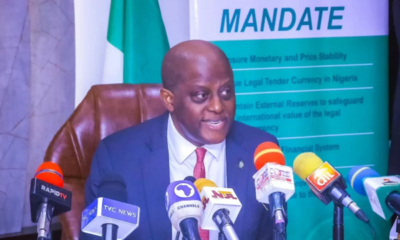
The Central Bank of Nigeria (CBN) has on Thursday, March 28, 2024, unveiled new minimum capital requirements for banks, pegging the minimum capital base for commercial banks with international authorisation at N500 Billion.
This comes days after urging Nigerian banks to expedite action on the recapitalisation of their capital base in order to strengthen the financial system.
Acting Director, Corporate Communications Department, Mrs. Hakama Sidi Ali confirmed the unveiling saying thaty the new minimum capital base for commercial banks with national authorisation is now N200 Billion, while the new requirement for those with regional authorization is N50 Billion.
Mrs. Sidi Ali also disclosed that the new minimum capital for merchant banks would be N50 Billion, while the new requirements for non-interest banks with national and regional authorisations are N20 Billion and N10 Billion, respectively.
A circular signed by the Director, Financial Policy and Regulation Department, Mr. Haruna Mustafa, to all commercial, merchant, and non-interest banks and promoters of proposed banks emphasized that all banks are required to meet the minimum capital requirement within 24 months commencing from April 1, 2024, and terminating on March 31, 2026
According to the circular, the move, initially disclosed by the CBN Governor, Olayemi Cardoso, in his address to the Annual Bankers’ Dinner in November 2023, was to enhance banks’ resilience, solvency, and capacity to continue supporting the growth of the Nigerian economy.
To enable them to meet the minimum capital requirements, the CBN urged banks to consider inject fresh equity capital through private placements, rights issues and/or offers for subscription; Mergers and Acquisitions (M&As); and/or upgrade or downgrade of license authorisation.
Furthermore, the circular disclosed that the minimum capital shall comprise paid-up capital and share premium only. It stressed that the new capital requirement shall not be based on the Shareholders’ Fund.
“Additional Tier 1 (AT1) Capital shall not be eligible for meeting the new requirement. Notwithstanding the capital increase, banks are to ensure strict compliance with the minimum capital adequacy ratio (CAR) requirement applicable to their license authorisation.
“In line with extant regulations, banks that breach the CAR requirement shall be required to inject fresh capital to regularise their position,” it added.
The CBN circular said the minimum capital requirement for proposed banks shall be paid-up capital, adding that the new minimum capital requirement shall apply to all new applications for banking licenses submitted after April 1, 2024.
It noted that the CBN would continue to process all pending applications for banking licenses for which a capital deposit had been made and/or an Approval-in-Principle (AIP) had been granted.
However, it said that the promoters of such proposed banks would make up the difference between the capital deposited with the CBN and the new capital requirement no later than March 31, 2026.
Meanwhile, the CBN said all banks are required to submit an implementation plan (clearly indicating the chosen option(s) for meeting the new capital requirement and various activities involved with their timelines) no later than April 30, 2024.
The CBN also disclosed that it would monitor and ensure compliance with the new requirements within the specified timeline.





Business
CBN admits it opened domiciliary accounts for PFIPC agency
Represented by the Director of its Banking Services Department, Hamisu Ibrahim, the CBN said that the accounts are one in US dollars, the other in British pounds sterling, were opened following a mandate received from the Office of the Accountant-General of the Federation.

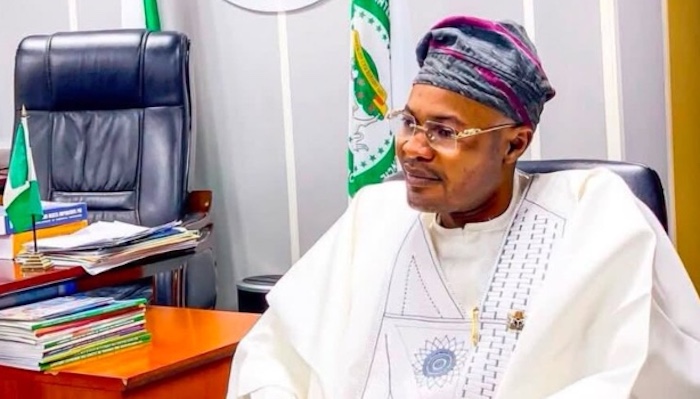
File photo : PFIPC agency DG, Adeniyi Adeyemi
The Central Bank of Nigeria had admitted that it opened two foreign-currency domiciliary accounts for the controversial Presidential Foreign Investment Promotion Council (PFIPC).
The apex bank made the confirmation, yesterday, during the public hearing convened at the National Assembly Complex by the House of Representatives Ad-hoc Committee investigating the existence and operations of the PFIPC, chaired by Yusuf Gagdi and inaugurated by Speaker Tajudeen Abbas.
Represented by the Director of its Banking Services Department, Hamisu Ibrahim, the CBN said that the accounts are one in US dollars, the other in British pounds sterling, were opened following a mandate received from the Office of the Accountant-General of the Federation.
He explained that on July 30, 2025, CBN received a mandate dated July 29, 2025 from the Office of the Accountant-General.
“We received the mandate to authorise two accounts, one a US dollar domiciliary account, the other a pound domiciliary account, for the Presidential Economic Advisory Council/Presidential Foreign Investment Promotion Council,” Ibrahim told the committee.
He explained the CBN’s verification process, “The process of opening an account requires a mandate from the Office of the Accountant-General of the Federation.
“Once we receive that mandate, we perform all the necessary verifications to confirm that this mandate is actually coming from that office.
The department that handles the mandate is different from the department that actually does the account opening,” he said.
Nevertheless, he noted that no one came to activate the accounts after they were opened.“We did not receive any correspondence, mandate, signature or mandate cards. We were not introduced to the authorising or approving officers.“Based on that, those accounts remain inactive, with zero balance. There have been no foreign exchange allocations.
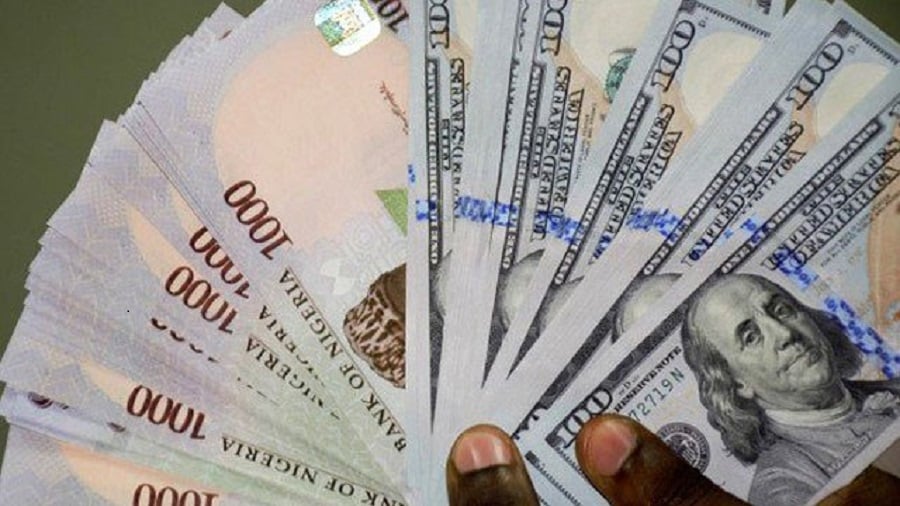
BLACK MARKET RATES
US DOLLAR (USD) Buy ₦1, 410 Sell ₦1,415
GREAT BRITISH POUND (GBP) Buy ₦1,890 Sell: ₦1,910
EURO (EUR) Buy ₦1,580 Sell ₦1,600
CANADIAN DOLLAR (CAD) Buy ₦1,020 Sell ₦1,080
SOUTH AFRICAN RAND (ZAR) Buy ₦75 Sell ₦90
UAE DIRHAM Buy ₦350 Sell ₦370 CHINESE YUAN Buy ₦190 Sell ₦205
GHANA CEDI (GHS) Buy ₦95 Sell ₦110
WEST AFRICAN CFA Buy ₦2, 300 Sell ₦2, 400
CENTRAL AFRICAN CFA Buy ₦2,150 Sell 2,250
AUSTRALIAN DOLLAR Buy ₦800 Sell ₦900
CBN OFFICIAL EXCHANGE RATES
US DOLLAR (USD) ₦1,380.11
GREAT BRITISH POUND (GBP) ₦1,857.35
EURO (EUR) ₦1,575.95
SWISS FRANC (CHF) ₦1,705. 31
JAPANESE YEN (JPN) ₦8.50
CHINESE YUAN (CNY) ₦203.94
WEST AFRICAN CFA (XOF) ₦2.40
WEST AFRICAN UNIT ACCOUNT (WAUA) ₦1,874. 32
SAUDI RIYAL (SAR) ₦367.49
SOUTH AFRICAN RAND (ZAR) ₦83.69
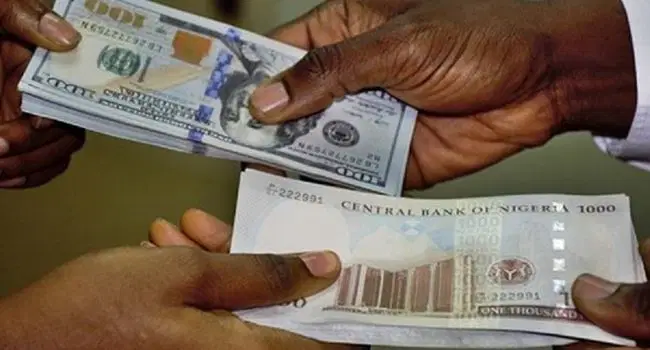
BLACK MARKET RATES
US DOLLAR (USD) Buy ₦1, 416 Sell ₦1,422
GREAT BRITISH POUND (GBP) Buy ₦1,895 Sell: ₦1,915
EURO (EUR) Buy ₦1,590 Sell ₦1,610
CANADIAN DOLLAR (CAD) Buy ₦1,020 Sell ₦1,080
SOUTH AFRICAN RAND (ZAR) Buy ₦75 Sell ₦90
UAE DIRHAM Buy ₦350 Sell ₦370 CHINESE YUAN Buy ₦190 Sell ₦205
GHANA CEDI (GHS) Buy ₦95 Sell ₦110
WEST AFRICAN CFA Buy ₦2, 300 Sell ₦2, 400
CENTRAL AFRICAN CFA Buy ₦2,150 Sell 2,250
AUSTRALIAN DOLLAR Buy ₦800 Sell ₦900
CBN OFFICIAL EXCHANGE RATES
US DOLLAR (USD) ₦1,380.18
GREAT BRITISH POUND (GBP) ₦1,854.42
EURO (EUR) ₦1,577.00
SWISS FRANC (CHF) ₦1,707.94
JAPANESE YEN (JPN) ₦8.50
CHINESE YUAN (CNY) ₦203.57
WEST AFRICAN CFA (XOF) ₦2.40
WEST AFRICAN UNIT ACCOUNT (WAUA) ₦1,874. 32
SAUDI RIYAL (SAR) ₦367.48
SOUTH AFRICAN RAND (ZAR) ₦83.29


CBN admits it opened domiciliary accounts for PFIPC agency

Naira Exchange Rates At The Parallel/ Official Market Tuesday, 21 July

Ayo Fayose Gets Presidential Portfolio As REA Board Chairman

Tech Expert, Zuckerberg trains with UFC champions, Adesanya, Alexander

Organ Trafficking: Ekweremadu bags 10 years in UK prison

SAINT OBI: Between his marriage and his death
-

 News24 hours ago
BIJAMIC College Charges Class of 2026 Graduates to Embrace Resilience, Learn from Thomas Edison
-
 Sports2 days ago
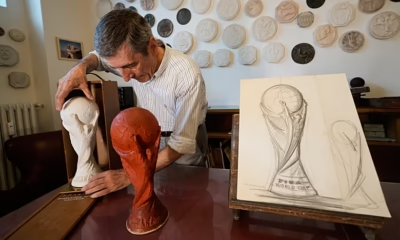
Who made the FIFA World Cup trophy?
-

 News1 day ago
Senegal President, Faye elected new ECOWAS chairman
-

 Sports1 day ago
FIFA To Review Hydration Breaks After World Cup Final – Wenger
-

 Crime2 days ago
Students Killed as Troops Foil ISWAP Abduction Bid in Borno
-

 Sports1 day ago
Burna Boy shines in first-ever World Cup Halftime Show
-

 News2 days ago
Badejo-Okusanya Emerges NBA National President (2026-2028)
-
 News1 day ago
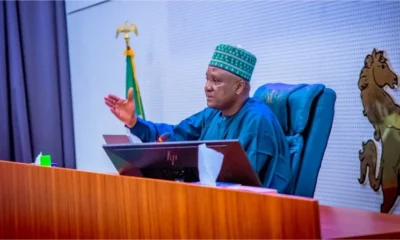
Abbas inaugurating today committee to investigate illegal PFIPC agency