
News
Face of North East’s Suicide Bombers Ringleader
According to consistent and corroborated statements, Shariff Umar was responsible for recruiting, preparing, directing, and dispatching suicide bombers to assigned targets, as well as coordinating logistics and delivery of Improvised Explosive Device (IED) components.

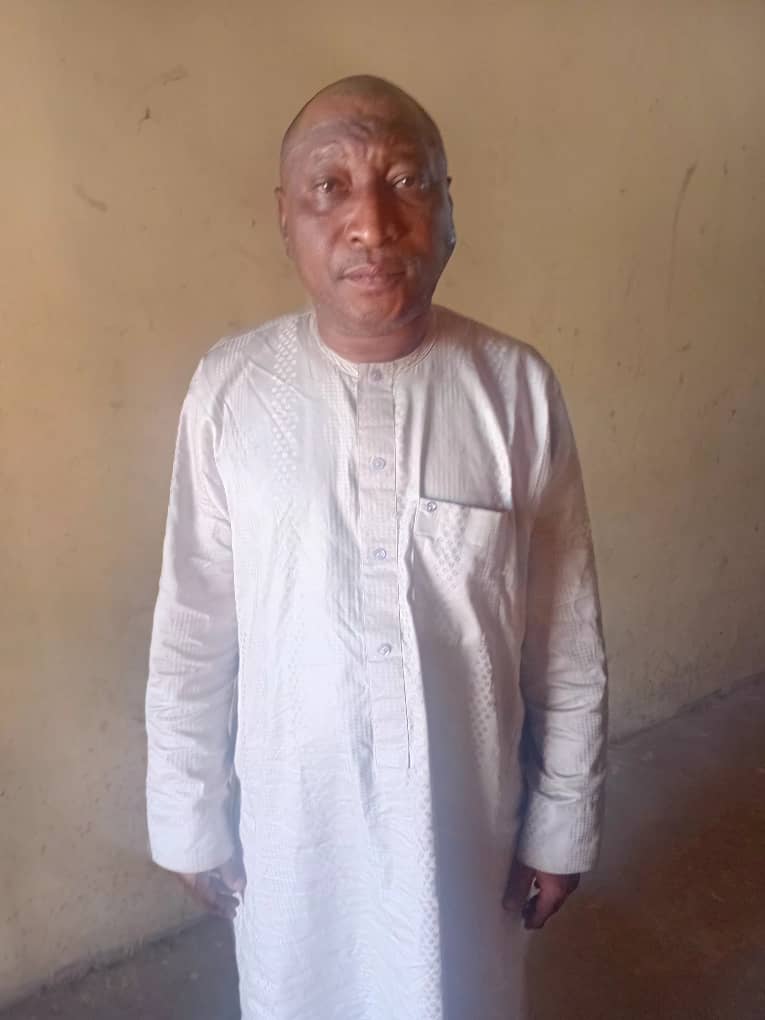
•Shariff Umar/ Operation HADIN KAI photo
Operation HADIN KAI (OPHK) has made a major breakthrough in its sustained counter-terrorism operations with the identification of Shariff Umar as the principal coordinator of suicide bombing activities responsible for recent attacks and attempted attacks within the North East.
This development followed intelligence-led cordon-and-search operations conducted at the Kalmari area of Maiduguri on 31 December 2025, during which 14 suspects linked to suicide bombing activities were arrested.
Subsequent detailed identification and investigative processes established the structure, roles, and operational linkages of the terror cell.
During the investigation, a suspected suicide bomber currently in custody, Ibrahim Muhammad, unequivocally identified Shariff Umar (also known as “Yusuf”) as the ringleader and coordinator of the terror network.
According to consistent and corroborated statements, Shariff Umar was responsible for recruiting, preparing, directing, and dispatching suicide bombers to assigned targets, as well as coordinating logistics and delivery of Improvised Explosive Device (IED) components.
Investigations further revealed that Shariff Umar directly coordinated the suicide bombing attack at the Gamboru Market Mosque on 24 December 2025, during which his accomplice, Adamu (now deceased), detonated a suicide vest.
He was also identified as the coordinator of the foiled suicide bombing attempt in Damaturu, personally handing over IED components to the suicide bomber in Maiduguri.
Additional links within the network were established, including the involvement of Shariff Umar’s wife, Yagana Modu, and the confirmation by his stepdaughter, Amina, who admitted to previously seeing the suspect bomber within their residence.
These findings significantly strengthened the investigative trail and exposed the domestic and community-based concealment methods employed by terrorist facilitators.
All suspects remain firmly in custody and are undergoing intensive, multi-layered investigations aimed at fully dismantling the network, identifying additional collaborators, and recovering any remaining explosives or logistical assets.
OPHK underscores that this success once again highlights the critical importance of effective collaboration between security forces and the civil populace.
Terrorist networks often survive by hiding within communities, exploiting silence, fear, or misplaced loyalty.
Timely information from law-abiding citizens remains one of the most powerful tools in preventing attacks and saving innocent lives.
Members of the public are therefore strongly urged to remain vigilant and report suspicious persons, movements, or activities to security agencies.
Cooperation and trust between the military and local communities are essential to completely rooting out terrorism and restoring lasting peace across the region.



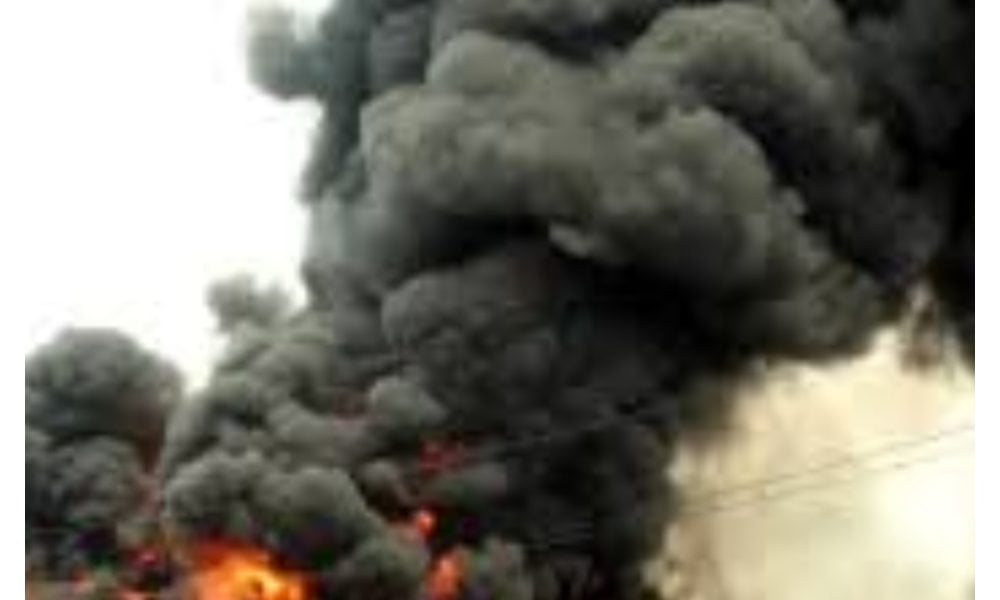
A gas pipeline explosion in Aleto community, Eleme Local Government Area of Rivers State, on Thursday evening has left at least 20 people injured, with about 50 houses destroyed by the resulting fire.
The blast occurred around 5 pm after a pipeline belonging to the Nigeria Gas Company ruptured along Old Bori Road. Several victims were rushed to hospitals. Stalls and a mechanic workshop with parked cars were also affected.
Residents said the pipeline had been leaking for about three weeks. Stanley, a local, stated that community leaders had alerted the company, but no effective action was taken. Most of those hurt were passers-by and people working in the area.
Daniel Chuma, Leader of the Eleme Legislative Council, visited the scene and confirmed the scale of the damage. He said he had earlier written to the company and petitioned NOSDRA and the Rivers State Ministry of Environment, copying the police, after a previous leak on another section of the same pipeline.
“Today, we were called to an explosion at the same Nigeria Gas Company pipeline that has destroyed over 50 houses and cars, with many casualties. People have been rushed to the hospital,” Chuma said. He added that no company representative had arrived at the scene, and community members had cordoned off the area with barrier tape to prevent further harm.
The Youths and Environmental Advocacy Centre (YEAC-Nigeria) also confirmed the incident. Its Executive Director, Dr Fyneface Dumnamene, said several people had been hospitalised and called on the Rivers State Government, the Ministry of Environment, NOSDRA, the Federal Government and other relevant agencies to support the affected residents of Aleto.
The fire was still burning at the time of early reports.
News
ASCON To Be Rebranded “National School Of Government”
Situated at Topo, Badagry Lagos, President Tinubu said that the proposed institution would serve as a national centre for leadership development, policy delivery and executive capacity building.

President Bola Tinubu has asked the Senate to approve a bill seeking to repeal the Administrative Staff College of Nigeria (ASCON) Act and establish the National School of Government, Nigeria.
Situated at Topo, Badagry Lagos, President Tinubu said that the proposed institution would serve as a national centre for leadership development, policy delivery and executive capacity building.
Senate President Godswill Akpabio read the president’s letter transmitting the National School of Government Bill 2026 to the upper chamber during Wednesday plenary.
In the letter, Tinubu urged the Senate to give the proposed legislation expeditious consideration, stressing the need to establish a dedicated institution to strengthen leadership development and improve the capacity of public officials to deliver government policies.
The president invoked Section 58(2) of the 1999 Constitution, as amended, to formally transmit the bill to the Senate for legislative consideration.“Pursuant to Section 58 (2) of the 1999 Constitution of the Federal Republic of Nigeria, as amended, I forward herewith the National School of Government Bill 2026 for the kind consideration of the Senate,” Tinubu stated in the letter.
He expressed the hope that the lawmakers would give the bill the necessary attention and facilitate its consideration.
According to the president, the proposed institution would serve as a national centre for leadership development, policy delivery and executive capacity building.
News
Sanwo-Olu Appoints Olatunbosun Ogunbanwo, 5 Others as Perm Secs
Ogunbanwo brings nearly three decades of experience in public service, strategic communication, public relations and information management.

•Mr. Olatunbosun Ogunbanwo
Lagos State Governor, Mr. Babajide Sanwo-Olu, has appointed Mr. Olatunbosun Ogunbanwo, Director of Public Affairs at the Lagos State Ministry of Health, as a Permanent Secretary in the State Public Service, alongside five other senior officers.
The five other senior officers appointed as Permanent Secretaries as conveyed by the Head of Service (HOS), Mr. Bode Agoro, in Circular Ref. No. CIR/HOS/’26/071, dated October 13, 2026, are Dr. Olawale Mahadiyu Adegbite, Director of Medical Services, Health Service Commission; Mrs. Folashade Aina Thomas-Orogan and Mr. Adebayo Mubashiru Haroun, both Directors, State Counsel at the Ministry of Justice.
The rest are Mrs. Olayinka Margret Oye-Bamgbose, Director of Administration and Human Resource at the Lagos State University Teaching Hospital (LASUTH) and Mrs. Bilquees Toyin Adekoya, Principal/Director of Education at Education District VI.
The appointments, which take effect from October 13, 2026, were aimed at reinvigorating the State’s policy implementation apparatus and strengthening public service delivery.
Mr. Olatunbosun Ogunbanwo
Ogunbanwo brings nearly three decades of experience in public service, strategic communication, public relations and information management.
Before his appointment, Ogunbanwo served as Director of Public Affairs at the Ministry of Health and previously held the same position at the Ministry of Agriculture.
He also played key communication roles in Lagos State’s responses to public health emergencies, including Ebola, COVID-19, Lassa fever and diphtheria.


BREAKING: Explosion Rocks Rivers, Many Rushed to Hospital

“Mother of all bombs,” Trump Plans To Hit Iran

WEF could appoint Lagarde as its next chair, sources say

Tech Expert, Zuckerberg trains with UFC champions, Adesanya, Alexander

BREAKING: Lagos Govt Declares Today, Thursday Work-Free to Mark 2026 Ìṣẹ̀ṣe Day

Organ Trafficking: Ekweremadu bags 10 years in UK prison
-

 Business3 days ago
Dangote Refinery IPO Attracts N8.61trn in Subscriptions, Four Times Offer
-
Business3 days ago
Top 10 Highest-Paid CEOs in Nigeria
-

 Business2 days ago
Naira Exchange Rates To Dollar , Pound ,Euro, … Tuesday, October 13
-

 Business2 days ago
Global smartphone shipments fall 20% in Q3 2026, lowest in 14 years
-
Sports2 days ago
Rwanda to host F1’s first race in Africa since 1993
-
 News2 days ago
UNCTAD Warns Debt Burden Threatens Future of 3.7bn People
-

 International2 days ago
Child marriage in southern Germany: Over 350 cases recorded, some brides as young as 11
-
 News2 days ago
Nigeria, AfDB Agree Portfolio Review (Photos)
Larry Thomas
January 6, 2026 at 2:33 am
Hello! I’ve been reading your weblog for some time now and finally got the bravery to go ahead and give you a shout out from Huffman Texas! Just wanted to tell you keep up the fantastic work!