
Business
Emirates Returns to Nigeria Airspace in Grand Style ▪︎ Lauds FG, Aviation Authority


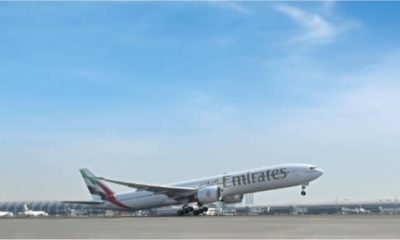
Emirates international airline, has resumed passenger services to Lagos, Nigeria, with a daily service.
The official delegation onboard was led by Adil Al Ghaith, Senior Vice President Commercial Operations, Gulf, Middle East and Central Asia; David Broz, Senior Vice President of Aeropoliticaland Airline Industry Affairs and Sami Aqil Abdullah, Senior Vice President Emirates Airport Services Outstation and Business Support.
The official delegation from Nigeria onboard the flight included His Excellency, Festus Keyamo, Honourable Minister of Aviation and Aerospace Development of Nigeria; His Excellency, Zayyan Ibrahim, Consul General of the Federal Republic of Nigeria in Dubai and the Northern Emirates and Adewale Babtunde Awolesi Head of Chancery, Consulate General of Nigeria.
Soon after it landed, the airline hosted an exclusive event for VIPs, government officials, key representatives from Nigeria’s Civil Aviation Authority, Federal Airports Authority of Nigeria, Customs, Police and the Airforce, as well as trade and industry partners and corporate clients.
Commenting on the return of services, Adnan Kazim, Deputy President and Chief Commercial Officer, Emirates Airline said, “This has been a long-awaited moment, and we are excited to resume operations to Lagos, helping reconnect travellers seamlessly to and through Dubai, coupled with a consistent, world-class experience onboard.
We would like to thank the Nigerian authorities, including the Federal Ministry of Aviation and Aerospace Development and the Federal Airports Authority of Nigeria, as well as the UAE authorities including His Excellency Salem Saeed Al Shamsi, Ambassador of the United Arab Emirates, Abuja, Nigeria and His Excellency Dr Abdulla Almandoos, Consulate General of the United Arab Emirates in Lagos, for their support.
“We are committed to making this route a success and look forward to contributing to the Nigerian aviation industry’s growth and offering travellers and businesses more choice and connectivity to key destination across our network.”
His Excellency, Festus Keyamo, Honourable Minister of Aviation and Aerospace Development of Nigeria said: “We are pleased to welcome Emirates back to Nigeria.
Emirates has become a global brand and Nigeria, being the most populous black nation in the world, is the sure destination for all major airlines in the world.
“So, this is a mutually beneficial relationship and we look forward to many years of seamless operations for the designated airlines of both countries to ply the route.”
EK783 departs Dubai at 0945hrs, arriving in Lagos at 1520hrs; the return flight EK784 takes off from Lagos at 1730hrs and lands in Dubai at 0510hrs the following day. The daily service has been scheduled to optimise connections to and from key points in Europe, the US, the Far East and the wider Middle East and GCC, streamlining business and leisure travel to and from Nigeria.
The Dubai-Lagos service is operated with a Boeing 777-300ER, offering eight First class suites, 42 Business class seats and 304 economy class seats, with added comforts and perks in each cabin class.
Strengthening business links between UAE and Nigeria
With the resumption of operations to Lagos, Emirates provides frictionless connectivity to one of Africa’s major economic hubs, facilitating global trade and strengthening business ties, in line with the UAE and Nigeria’s strong bilateral trade relations.
Emirates SkyCargo will support Nigerian businesses by offering more than 300 tonnes of bellyhold cargo capacity in and out of Lagos every week, into key markets such as UAE, Malaysia, Hong Kong, and Bahrain, among others.
Anticipated commodities such as Kola Nuts, food and beverages, and urgent courier material will be transported via the airline’s state-of-the-art hub in Dubai, quickly, efficiently, and reliably via the airline’s multi-vertical specialized product portfolio.
Imports into Nigeria are anticipated from key markets such as UAE, India and Hong Kong, with key commodities including a mix of general cargo, pharmaceuticals and electronics.
The Dubai-Lagos service is operated with a Boeing 777-300ER, offering eight First class suites, 42 Business class seats and 304 economy class seats, with added comforts and perks in each cabin class.
Emirates is one of only two airlines offering First Class in and out of Lagos, and offers an unrivalled experience with luxurious touches, a premium gastronomic selection of dishes and fine beverages, and one of the biggest screens in the sky, all in midst of comfort and privacy.
Offering the best experience across every class, passengers will dine on regionally inspired multi-course menus, complemented by a wide selection of premium beverages.
Customers can tune in to over 6,500 channels of global entertainment, including 23 Nigerian movies, series and other content on ice, Emirates’ award-winning inflight entertainment system.
To support travel to Dubai or onwards, Emirates will also facilitate 48 hour and 96 hour Dubai visa applications for travellers from Nigeria, an offer which is exclusive to the airline.
Celebrating the resumption of services, Emirates award-winning loyalty programme, Skywards, reinstated previous tier status levels for Skywards members to ensure continuation of earned benefits and recognition.





Business
Naira Exchange Rates To Dollar, Pound, Euro…Wednesday, 16 September 2026
How much is 100 pounds in naira today?
At the current black market rate of 1880 per pound, 100 British Pounds = 188,000 Naira
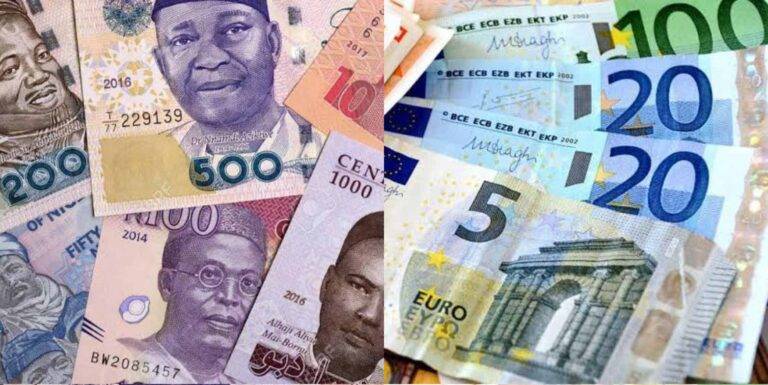
BLACK MARKET RATE
1 US Dollar is 1380 Naira.
1 Great British Pound (GBP) is 1880 Naira.
1 Euro (EUR) is 1575 Naira.
1 Canadian Dollar (CAD) is 1000 Naira.
1 Chinese Yuan is 190 Naira.
1 Ghanaian Cedi is 100 Naira.
1 South African Currency, Rand (ZAR) is 70 Naira.
1 UAE Dirham is 370 Naira.
1 CFA Franc (XOF) is 2350 Naira.
1 CFA Franc (XAF) is 2250 Naira.
1 Australian Dollar (AUD) is 850 Naira.
CBN Exchange Rate
DOLLAR (USD) ₦1329.15
POUND (GBP) ₦1793.69
EURO (EUR) ₦1534.77
SWISS FRANC (CHF) ₦1622.69
JAPANESE YEN (JPN) ₦8.5
CFA FRANC (XOF) ₦2.33
WEST AFRICAN UNIT OF ACCOUNT (WAUA) ₦1811.58
CHINESE YUAN (CNY)₦198.03
SAUDI RIYAL (SAR)₦353.85
SOUTH AFRICAN RAND (ZAR)₦81.79
Business
Textiles was my biggest business mistake — Dangote
Dangote disclosed that almost 8,000 workers were laid off across the textile business, with 6,920 of them coming from Nigerian Textile Mills in Ikeja alone.
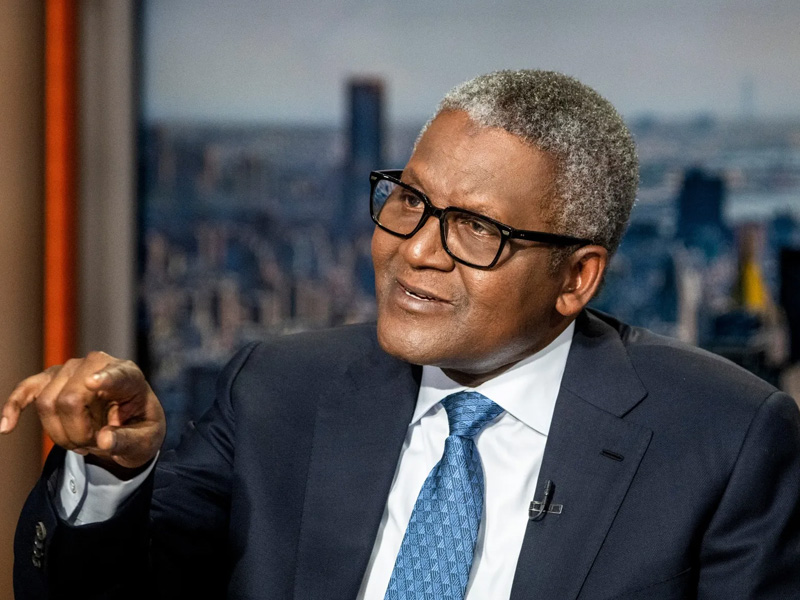
•Aliko Dangote
President of Dangote Group, Aliko Dangote, has described his investment in the textile industry as the biggest business mistake of his decades in business.
Dangote made the disclosure during an appearance on Arise Television, where he reflected on some of the challenges he encountered while building his business empire.
Dangote’s comments come amid ongoing concerns over the survival of local manufacturing industries and the impact of imported goods on domestic production and employment.
“My biggest business mistake was textiles,” he said.
According to the industrialist, the textile business eventually collapsed due to inadequate policy protection and what he described as dumping by foreign manufacturers.
“We were swamped by Chinese dumping and Indian dumping. So eventually we had to close down,” Dangote said.
He said the closure had a significant impact on workers, particularly employees of Nigerian Textile Mills in Ikeja, Lagos.
Dangote disclosed that almost 8,000 workers were laid off across the textile business, with 6,920 of them coming from Nigerian Textile Mills in Ikeja alone.
He said the experience shaped his approach to subsequent investments, stressing the need to ensure that businesses remain viable even when government protection is eventually withdrawn.
Business
Dangote: Africa Is Like a ‘Scratch Card’ — Opportunities Are Immense
Dangote’s message, therefore, extends beyond the refinery itself: Africa’s opportunities will remain invisible unless capital is deployed to “scratch” the surface and turn potential into productive assets.
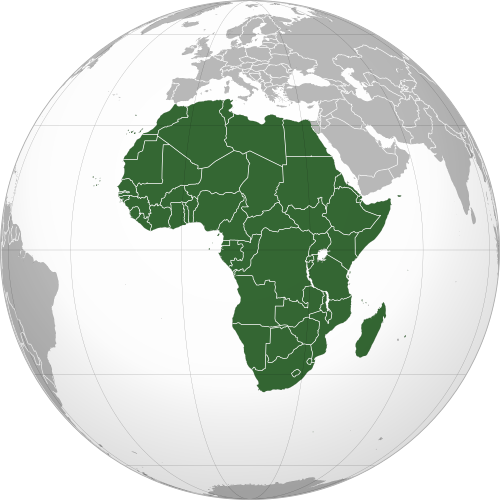
| map of Africa by Wikipedia
By Ochefa
Africa is sitting on enormous economic opportunities that remain largely untapped, President and Chief Executive Officer of Dangote Industries Limited, Alhaji Aliko Dangote, has declared.
Dangote likened the continent to a “scratch card”, saying its vast opportunities would only become visible when Africans and investors take deliberate steps to unlock them.
“Africa is like a scratch card. Unless you scratch it, you don’t see the use of it. The opportunities are immense,” Dangote said.
He spoke in Lagos during the Dangote Petroleum Refinery and Petrochemicals “Facts Behind the Offer” presentation and opening gong ceremony, held to mark the formal opening of the refinery’s Initial Public Offering (IPO) on the Nigerian Exchange Limited (NGX).
The offer comprises 4.1 billion new ordinary shares at ₦525 per share, giving the issue a value of about ₦2.15 trillion, with a minimum subscription of 10 shares valued at ₦5,250. The offer is scheduled to close on October 13, 2026, subject to the terms contained in the prospectus.
Dangote said the group was looking beyond Nigeria as it seeks to expand its industrial footprint across Africa, disclosing plans being explored for the establishment of a refinery in Lamu, Kenya.
The move, he said, reflects the need to build African businesses capable of attracting large-scale international capital while creating greater economic integration across the continent.
According to him, the Dangote Group’s expansion strategy is not simply about building individual businesses, but about creating platforms through which Africans and international investors can participate in the continent’s economic transformation.
“What we are trying to do is to open up the market and make sure that when we open up the market, Africans and non-Africans will join us to have what you call the new Africa rising,” he said.
The refinery IPO represents a major test of Nigeria’s ability to mobilise domestic and international capital behind large-scale industrial projects.
Dangote urged Nigerians and other Africans to seize the opportunity presented by the offer, arguing that the refinery has the potential to become Africa’s largest company by the end of 2026.
His “scratch card” analogy captures the central argument behind the expansion strategy: Africa’s economic potential may be enormous, but unlocking it requires capital, infrastructure, industrial investment and businesses willing to take long-term risks.
For Nigeria, the refinery’s public offering also signals a potentially significant shift in the ownership structure of one of the country’s biggest industrial assets—from a project largely associated with one private investor to an enterprise in which a broader pool of investors can participate.
The development comes as Nigeria seeks to deepen its capital market, retain more domestic savings within the economy and mobilise long-term funding for productive investment.
Dangote’s message, therefore, extends beyond the refinery itself: Africa’s opportunities will remain invisible unless capital is deployed to “scratch” the surface and turn potential into productive assets.


Olu Jacobs: His Life and Times
EXCLUSIVE: Veteran Nollywood Actor, Olu Jacobs Dies at 84

Naira Exchange Rates To Dollar, Pound, Euro…Wednesday, 16 September 2026

Tech Expert, Zuckerberg trains with UFC champions, Adesanya, Alexander

Organ Trafficking: Ekweremadu bags 10 years in UK prison

SAINT OBI: Between his marriage and his death
-
 Business2 days ago
Naira Exchange Rates To Dollar, Pound , Euro… September 14
-
 News24 hours ago
Boko Haram Denies Ceasefire with FG, Vows Continued Attacks
-
 Business2 days ago
Filling Stations Selling Petrol, Diesel Higher Driven By Global Crude Prices
-
 Politics2 days ago
Again, Desmond Elliot begs political mentor,Gbajabiamila , “I’m sorry, Daddy”
-
 Business2 days ago
Dangote Refinery’s IPO Officially Opens Today On NGX
-
 Business2 days ago
Dangote at IPO Listing, Charges Public,”I don’t want to be called richest man in Africa”
-

 News1 day ago
Police Raise Alarm Over Terrorists and Informants Spying on Schools, Other Targets
-

 Crime24 hours ago
Boko Haram Attacks Adamawa Community, Kills Residents