
News
Fubara Vows To Resist LG Poll Disruption says Police Presence Inconsequential

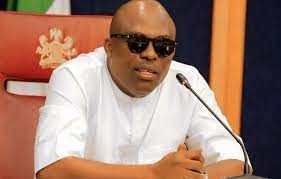
Rivers State Governor, Siminalayi Fubara has expressed surprise at the actions of the police in allegedly attempting to invade the premises of the Rivers State Independent Electoral Commission (RSIEC) to disrupt the planned Local Government election on Saturday.
Speaking during a media briefing at the government house in Port Harcourt, Governor Fubara on Friday, said the move was surprising because he had previously received information indicating that the police intended to withdraw from the local government elections.
He questioned why Rivers State is being singled out, especially with what he described as an undue focus on an electoral body that falls under state jurisdiction.
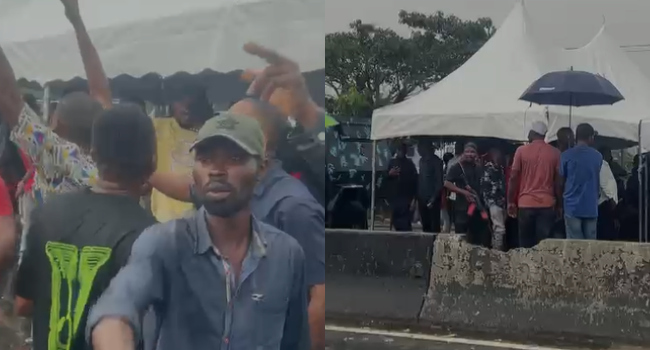
Protesters at the RSIEC on Friday, insisting that the LG elections must hold.
He pointed out that the court ruling from Abuja had only instructed the police not to provide security, and not to seal the Rivers State Independent Electoral Commission (RSIEC) premises or interfere with the elections.
According to him, the ruling from the Rivers State High Court should take precedence, as it was issued first.
He emphasised the importance of conducting the elections in compliance with the Supreme Court’s ruling which the Federal Government is set to implement.
Fubara noted that attempts to obstruct the elections would have far-reaching consequences, particularly on the welfare of local government workers.
The governor urged the Inspector General of Police (IGP) to be ready to take responsibility for any disruptions, warning that any attempt by individuals or groups to stop the elections would be firmly resisted.
Fubara reaffirmed that the elections would go ahead as scheduled, and the elected officials would be sworn in. “We are prepared, we are prepared” he stated.
He explained that before the election process, a formal request for protection was sent to the National Security Adviser, the IGP, the Department of State Services (DSS), and other security agencies, along with a copy of the Rivers State High Court judgment.
Fubara concluded by downplaying the importance of police presence, noting that they were not required to be near polling units.
He expressed confidence that other security agencies could fulfil the role of maintaining law and order in the absence of the police







The Nigerian Air Force (NAF) has released the identities of the people who died in the crash involving an NAF ATR 42 aircraft in the Igbokoda area of Ondo State, on Monday.
The aircraft, NAF 931, was carrying five crew members and 20 passengers when it crashed during a routine mission from Benin to Lagos.
In a statement, Air Commodore Ehimen Ejodame, NAF spokesperson, said no survivor had been found following the accident, which prompted the immediate activation of search-and-rescue operations in coordination with relevant authorities.
Those killed include five crew members: Squadron Leader MI Aburime, the flight captain; Squadron Leader AP Man-Ugwueje, co-pilot; Flight Lieutenant IS Bako, co-pilot; Warrant Officer Abubakar A, aircraft technician; and Corporal Uguru HC, aircraft technician.
The 20 passengers were identified as Flight Lieutenant TL Lazarus; Flight Lieutenant M Akinloye; Flying Officer IM Adeshina; Master Warrant Officer Onwuka F; Master Warrant Officer Matini BA; Warrant Officer Nuhu FS; Flight Sergeant James RB; Flight Sergeant Mohammed AI; Sergeant Ani AE; Sergeant Izibenikien SI; Sergeant Alafuka C; Sergeant Mbadugha AN; Lance Corporal Ugwuba FC; Lance Corporal Eledan GE; Mrs Ezeh Nneka; Godstmine Tarabina; Joy Micheal; Sunday Micheal; Ukeme David; and Gideon Omotola.
The Chief of the Air Staff, Air Marshal Sunday Kelvin Aneke, expressed profound condolences to the families, loved ones and colleagues of those who lost their lives in the crash.
Aneke described the incident as a deeply painful moment for the Nigerian Air Force and the country, while assuring the bereaved families of the Service’s full support during the difficult period.
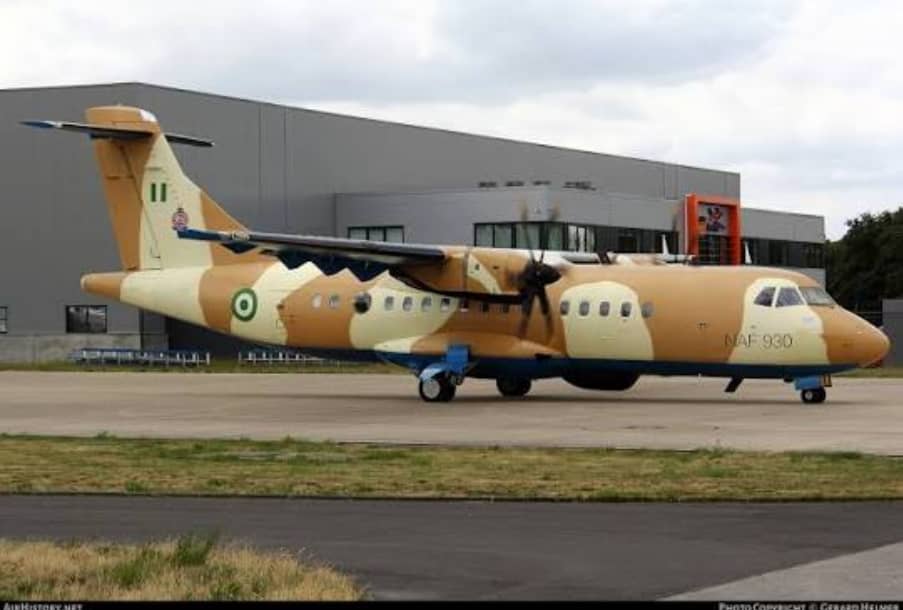
A Nigerian military aircraft, ATR-42 carrying 32 people has crashed near the Naval Base in Igbokoda, Ondo State.
Minister of Aviation Festus Keyamo said the aircraft, with tail number NGR 931, was flying from Benin to Lagos when contact was lost at about 9:13 a.m.
The wreckage has been located, and search and rescue operations are underway.
Preliminary information indicates there were 25 passengers and seven crew members on board.
Keyamo said he has spoken with the Chief of Air Staff, Air Marshal Sunday Kelvin Aneke, and pledged the ministry’s full support for the rescue effort.
Meanwhile, the Nigerian Air Force (NAF) has activated an immediate Search and Rescue operation following an ATR-42 aircraft accident in the Igbokoda area of Ondo State on 5 October 2026.
The aircraft was on a routine mission from Benin to Lagos when the accident occurred. Search and Rescue operations, in coordination with relevant authorities and emergency response agencies, are currently ongoing.
Ehimen Ejodame, Air Commodore, Director of Public Relations and Information Headquarters, Nigerian Air Force, said NAF is committed to ensuring the success of the ongoing Search and Rescue efforts. Further details will be communicated in due course.

News
NGE Tasks Newsrooms, INEC on Must-Do Measures for Credible 2027 Polls
The Guild warned that synthetic content could be produced and distributed rapidly, including fabricated election results, cloned voices of public officials, forged documents, manipulated result sheets and fake reports attributed to established media organisations.

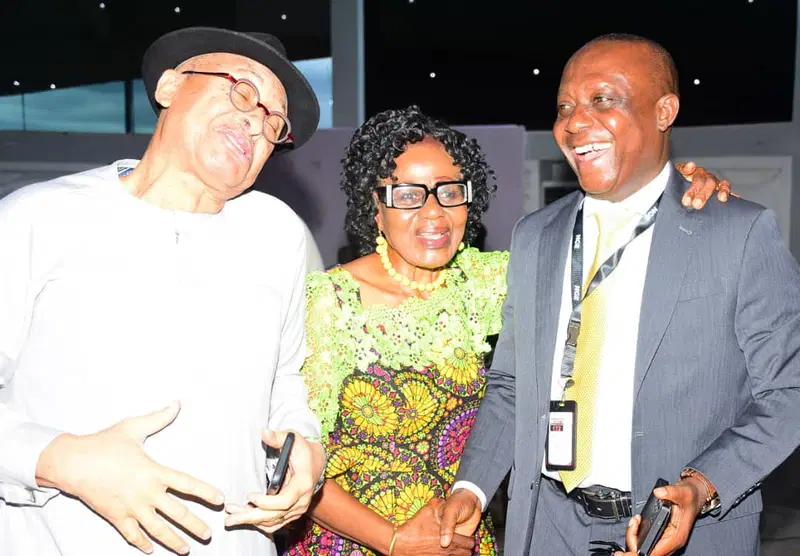
• [File photo] L-R Prof Pat Utomi; Prof Chinyere Okunna and Eze Anaba President Nigerian Guild of Editors at the 22nd All Nigerian Editors Conference in Enugu. Photo. Nwankpa Chijioke.
The Nigerian Guild of Editors (NGE) has tasked news organisations and the Independent National Electoral Commission (INEC) with implementing far-reaching reforms to strengthen the credibility of Nigeria’s 2027 general elections.
The Guild, in a communiqué issued at the end of the 22nd All Nigeria Editors Conference (ANEC 2026) in Enugu, called on newsrooms to institutionalise fact-checking and verification systems and integrate digital verification, deepfake detection and forensic tools into their editorial workflows.
The communiqué, signed by NGE President, Eze Anaba, and General Secretary, Onuoha Ukeh, also called for electoral reforms, including the introduction of a 50 per cent threshold for presidential elections and the resolution of electoral disputes before the swearing-in of declared winners.
The Guild urged all news organisations to adopt the Nigerian Media Code of Election Coverage (Revised 2022) and train journalists and other editorial staff on its provisions ahead of the 2027 elections.
The Code was jointly endorsed by the Newspaper Proprietors’ Association of Nigeria, Broadcasting Organisations of Nigeria, Nigeria Union of Journalists, NGE, Radio, Television, Theatre and Arts Workers Union, and Guild of Corporate Online Publishers.
According to the Guild, the media has a critical responsibility to provide accurate, verified and independent information to the electorate while holding governments, political parties and other centres of power to account.
The NGE identified generative artificial intelligence, deepfakes, voice cloning and automated networks as major emerging threats to the integrity of electoral information.
The Guild warned that synthetic content could be produced and distributed rapidly, including fabricated election results, cloned voices of public officials, forged documents, manipulated result sheets and fake reports attributed to established media organisations.
The editors said the greatest danger was not merely the circulation of individual falsehoods but the broader erosion of public trust when citizens became unable to distinguish authentic information from fabricated content.
The conference, with the theme, “The Ballot, the Media and the Task of Keeping Democracy Alive,” was chaired by the Obi of Onitsha, His Royal Majesty Igwe Nnaemeka Alfred Achebe, while the Archbishop Emeritus of Abuja, His Eminence John Cardinal Onaiyekan, delivered the keynote address.
Vice President Kashim Shettima participated virtually as Special Guest of Honour, while Enugu State Governor, Dr Peter Ndubuisi Mbah, served as Chief Host.
More than 500 editors, publishers and senior media practitioners from print, broadcast and digital platforms, alongside political, traditional, religious, academic, regulatory and development-sector leaders, attended the conference.


BREAKING: APC Chairmen Accused of Leading Armed Attacks on ADC Members in Igueben

UPDATE: NAF Release Identities of Ondo Crash Victims

I sleep And Eat Thinking About Tinubu’s Re-Election – Wike

Tech Expert, Zuckerberg trains with UFC champions, Adesanya, Alexander

Organ Trafficking: Ekweremadu bags 10 years in UK prison

SAINT OBI: Between his marriage and his death
-

 Business3 days ago
Diesel Costs Bite: LAMATA Accelerates Shift To CNG, Electric Buses
-
 International3 days ago
US’s Gullah Geechee communities celebrate historic cultural festival rooted in West Africa
-

 International3 days ago
Italy marks 800 years since death of Saint Francis of Assisi
-

 Sports2 days ago
FIFA to decide 2030 World Cup final venue in 2028 as Morocco, Spain wait
-

 News2 days ago
NGE Tasks Newsrooms, INEC on Must-Do Measures for Credible 2027 Polls
-

 Entertainment2 days ago
BBNaija season 11: “And The Winner is Temi Nkem”
-
 News3 days ago
Nigerian-Born Former Texas Professor Gets 78 Months For $921,000 Student Aid Fraud
-

 International3 days ago
Ethiopian woman says she hasn’t eaten or drunk water since age 10