
Business
Strait of Hormuz disruptions: Implications for global trade and development
The ongoing military escalation in the region has disrupted shipping flows through this narrow passage.


The Strait of Hormuz is one of the world’s most critical maritime chokepoints, carrying around a quarter of global seaborne oil trade and significant volumes of liquefied natural gas and fertilizers.
UNCTAD reports that the ongoing military escalation in the region has disrupted shipping flows through this narrow passage.
The resulting ripple effects go far beyond the region, affecting energy markets, maritime transport and global supply chains.
These developments raise concerns for global trade and development prospects. Oil markets have reacted quickly, with Brent crude prices now rising above $90 per barrel.
Higher energy, fertilizer and transport costs – including freight rates, bunker fuel prices and insurance premiums – may increase food costs and intensify cost-of-living pressures, particularly for the most vulnerable.
Similar repercussions were observed during recent global shocks, including the COVID-19 pandemic and at the beginning of the war in Ukraine, which showed how disruptions in energy, transport and agricultural inputs can propagate across interconnected markets.
The current shock comes at a time when many developing economies struggle to service their debt, tightening fiscal space and limited capacity to absorb new price shocks.
While the overall global economic impacts will depend on the duration and scale of the disruption, the situation highlights the importance of continued monitoring, particularly implications for vulnerable economies.
Key implications and considerations
- Disruptions in the Strait of Hormuz underscore the vulnerability of critical maritime chokepoints to geopolitical tensions and their potential to transmit shocks across supply chains and commodity markets.
- Reducing risks to global trade and development, including environmental risks, requires de-escalation and safeguarding maritime transport, ports and seafarers, and other civilian infrastructure, while maintaining secure trade corridors in line with international law and freedom of navigation
- Economic impacts, both globally and for the region, will depend on the duration, intensity and geographic scope of the tensions. Continued monitoring is essential to assess evolving risks and their potential impacts.
- Socio-economic implications for developing economies: Many developing countries already face high debt service burdens, limited fiscal space and constrained access to finance. In this context, rising energy, transport and food costs could strain public finances and increase pressure on household budgets, potentially heightening economic and social pressures and complicating progress toward sustainable development, particularly in economies heavily dependent on imported energy, fertilizers and staple foods.








Business
Dangote Foundation Takes Over Aliko Dangote Skills Acquisition Centre Kano
Under the agreement, the Foundation will manage the multi-million naira facility for a number of years and operate programmes aimed at equipping young people with technical, digital and industrial skills.
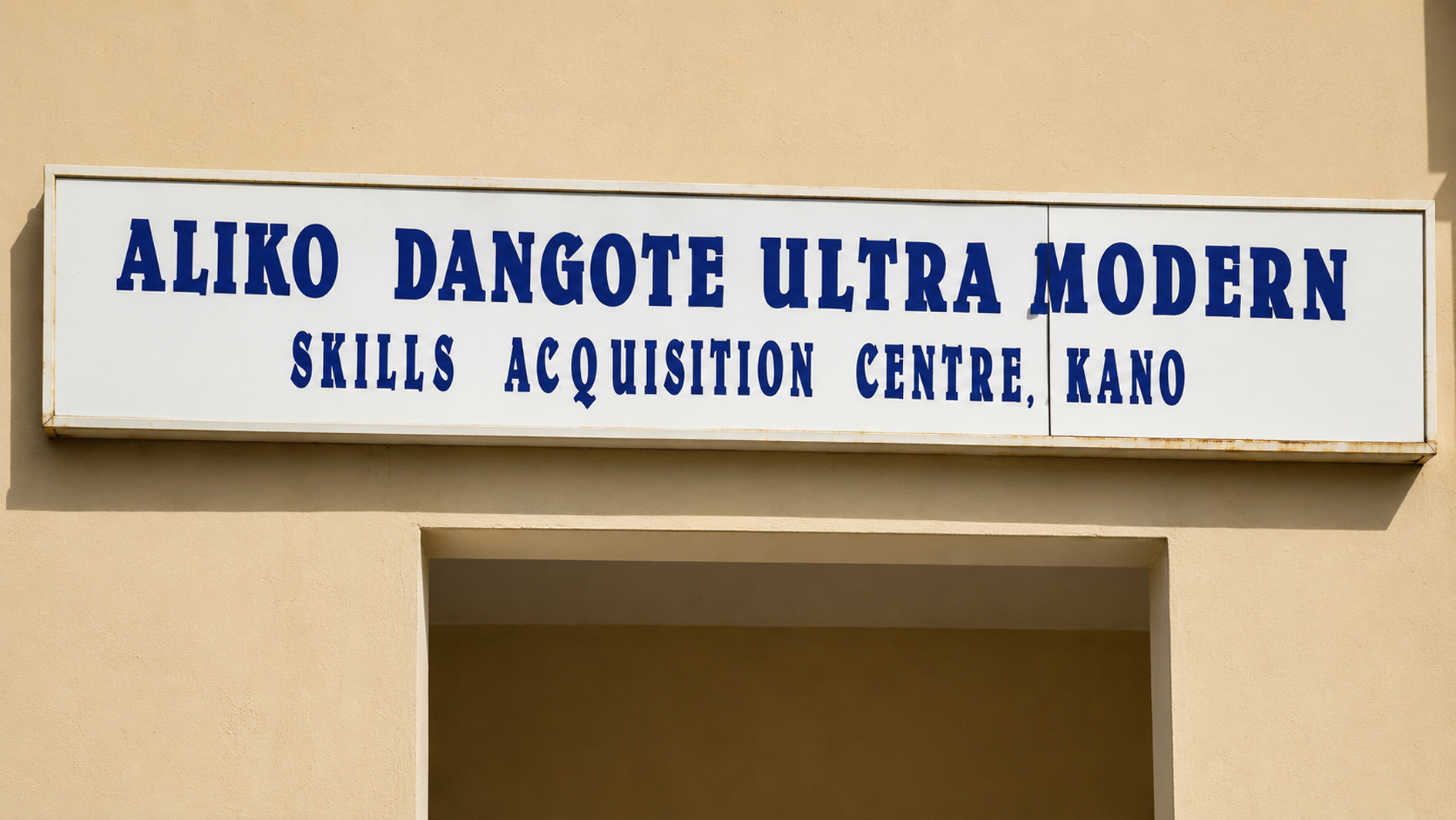
The Aliko Dangote Foundation has taken over the management of the Aliko Dangote Skills Acquisition Centre in Kano state.
The Memorandum of Understanding was signed between the Foundation and the Kano State Government, on Friday.
Under the agreement, the Foundation will manage the multi-million naira facility for a number of years and operate programmes aimed at equipping young people with technical, digital and industrial skills.
Chairman of the Manufacturers Association of Nigeria (MAN), Kano-Jigawa Branch, Muhammad Bello Isyaku Umar, described the intervention as “far-reaching and impactful,” saying skills acquisition remained one of the most effective ways of addressing youth unemployment in Nigeria..
“Programmes such as the Aliko Dangote Skill Acquisition Centre can equip young people with practical skills that enable them to become entrepreneurs, artisans or employees. The emphasis should increasingly be on modern technical, digital and industrial skills,” Umar said.
He described Kano as the economic and commercial hub of northern Nigeria and said the Foundation’s interventions across the region had extended to several sectors.
Business
Okin Biscuits Set For Comeback After 17 Years, Targets Revival Of Jobs, Local Manufacturing
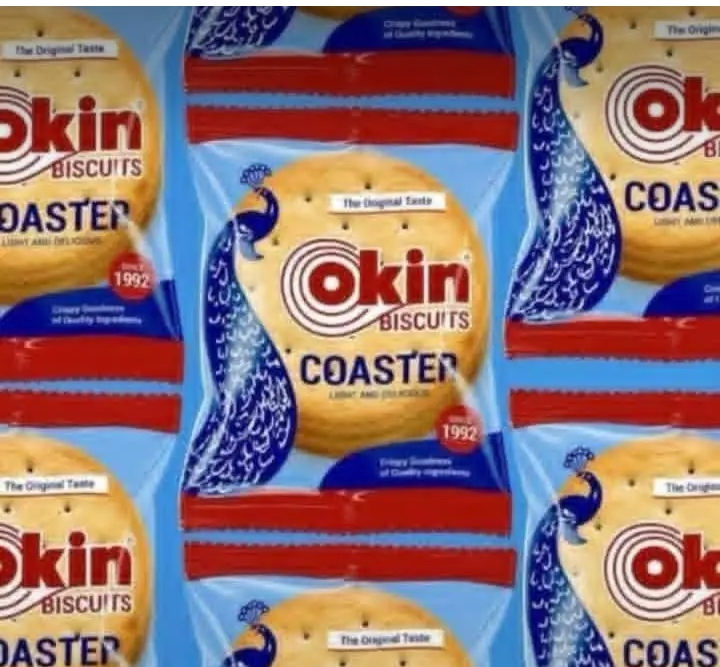
Founded in the 1980s by the late Chief Emmanuel Olatunji Adesoye, an illustrious son of Offa, Okin Biscuits grew into a household name with products including Okin Coasters, Shortcake and Okin Cabin Biscuits.
By Ochefa
After 17 years off the shelves, Okin Biscuits, one of Nigeria’s once-popular indigenous biscuit brands, is set to return to production as efforts intensify to revive the Ijagbo, Kwara State-based factory.
The planned comeback marks a significant attempt to restore one of the country’s old manufacturing brands while potentially reopening a major source of employment and economic activity in the community.
Founded in the 1980s by the late Chief Emmanuel Olatunji Adesoye, an illustrious son of Offa, Okin Biscuits grew into a household name with products including Okin Coasters, Shortcake and Okin Cabin Biscuits.
At its peak, the company provided direct and indirect employment to more than 2,000 people before production was eventually halted in 2009.
The shutdown reflected some of the structural problems that have continued to undermine Nigeria’s manufacturing sector, including harsh operating conditions, intense competition, inadequate infrastructure, vandalism and the theft of critical production equipment.
With the factory no longer producing, its products gradually disappeared from retail outlets and homes in Kwara, Lagos and other parts of the country.
Factory Undergoing Major Rehabilitation
However, the industrial facility is now showing signs of renewed activity.
A visit to the factory in Ijagbo showed that extensive rehabilitation work is underway across the complex.
The main factory building, which houses the production machinery, as well as the administrative block and other facilities, are undergoing comprehensive renovation.
The premises have already assumed a significantly different appearance, suggesting that the revival project has moved beyond plans and into physical reconstruction.
The management recently announced through its official Facebook page that production machinery was being test-run.
It said biscuits rolled off one of the rehabilitated production lines on August 25, 2026, marking the first production from the factory in 17 years.
The development is significant not merely as the return of a nostalgic consumer brand, but as an example of how the rehabilitation of abandoned industrial assets could contribute to renewed domestic production and employment.
For Nigeria, where manufacturers continue to contend with high energy and logistics costs, infrastructure constraints, foreign exchange pressures and strong competition from imported products, the reopening of an existing manufacturing facility could offer a potentially faster route to industrial capacity expansion than building an entirely new factory.
Community Backs Revival
…biscuits rolled off one of the rehabilitated production lines on August 25, 2026, marking the first production from the factory in 17 years.
The planned resuscitation has also attracted strong support from the Offa community.
The Aare Bobaselu of Offa, Chief Abdulatif Adekunle Ajeigbe, described the development as “heartwarming,” linking it to the broader Offa Mega City project championed by the Olora of Offa, Oba Muftau Mohammed Gbadamisi, Esuwoye II.
According to him, members of the community had made several efforts to revive the moribund factory, including exploring the possibility of group financing.
“We did our best to see that the factory came back to life, but it was the children of the late Asiwaju of Offa and the founder of the factory, Chief Emmanuel Olatunji Adesoye, who insisted on carrying on their father’s legacy through the factory,” he said.
Ajeigbe commended the founder’s children for their determination to preserve the family’s industrial legacy and bring the factory back into operation.
More Than A Brand Revival
The return of Okin Biscuits also highlights the wider economic value embedded in Nigeria’s abandoned industrial assets.
The company’s earlier success created employment not only within the factory but across its supply and distribution networks, including raw-material suppliers, transporters, distributors, retailers and other service providers.
A successful reopening could therefore have an economic impact extending beyond the factory gates, particularly if production eventually returns to significant capacity.
The bigger test, however, will be whether the revived company can operate sustainably in an increasingly competitive Nigerian consumer market.
The new investors will have to contend with production costs, energy supply, distribution challenges, consumer purchasing power and competition from both established domestic manufacturers and imported brands.
For Okin, the challenge is therefore not simply to restart the machines, but to build a commercially viable manufacturing operation capable of sustaining production, protecting jobs and reclaiming market share.
If successful, the return of Okin Biscuits could become more than a nostalgic homecoming for Nigerian consumers.
It could provide a practical demonstration that some of the country’s dormant industrial assets can be rehabilitated, modernised and returned to productive use.
After 17 years of silence, the sound of Okin’s production lines running again may therefore signal the beginning of a new chapter for one of Nigeria’s forgotten manufacturing brands.
Business
Dangote to launch Refinery’s IPO September 14 or 16
Dangote disclosed this on Thursday while speaking to investors and analysts in Botswana.
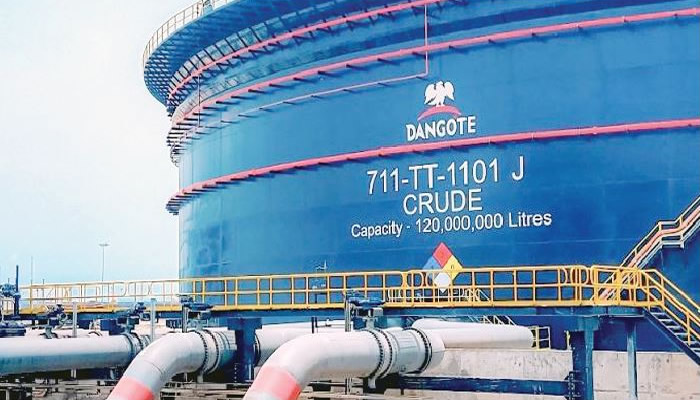
Aliko Dangote, chief executive officer (CEO) of the Dangote Group, says the initial public offering (IPO) of Dangote refinery will open in the next 10 to 12 days.
Dangote disclosed this on Thursday while speaking to investors and analysts in Botswana.
The refinery had announced plans to launch a Pan-African IPO, offering at least 10 percent of its refining business to fund a $40 billion expansion objective.
On August 18, the refinery said it had completed a $1 billion underwriting programme ahead of the planned IPO.
Speaking during his visit to the southern African country, Dangote said his ambition was to double the refinery’s capacity.“So our dream is that we want to make sure we double the capacity of the refinery… which will take us to 1.4 million barrels per day. The IPO will open in the next 10 to 12 days,” he said.


UN approves new world map replacing 16th century Mercator map

Dangote Foundation Takes Over Aliko Dangote Skills Acquisition Centre Kano

BBC Appoints Kakangi Editor Hausa Service

Tech Expert, Zuckerberg trains with UFC champions, Adesanya, Alexander

Organ Trafficking: Ekweremadu bags 10 years in UK prison

SAINT OBI: Between his marriage and his death
-

 Business3 days ago
BREAKING: Uber winds down operations in Nigeria, effective September 2
-

 Business20 hours ago
Okin Biscuits Set For Comeback After 17 Years, Targets Revival Of Jobs, Local Manufacturing
-

 News3 days ago
Eko Electricity blames Lekki-Ajah power outages on feeders disruption
-
 Business2 days ago
Forest Sector Employs 42m People Globally – FAO
-
 International3 days ago
China -Egypt lubricate over 70 years trade, diplomatic relation
-

 Business2 days ago
Entrepreneurship: “How I Made N10m Monthly From Akara Burger” – Gov Eno
-

 News19 hours ago
BREAKING: FG Harmonizes Workers’ Salaries
-

 News24 hours ago
Toxic fumes kill 37 in Okrika oil tragedy