
Business
Dangote says waiting for President Ruto to begin work on $17bn Kenyan refinery
Dangote said, he would need Ruto to offer land, some east African finance and, most important, protection from what he called dumping of cheap fuel from the likes of Russia or India.

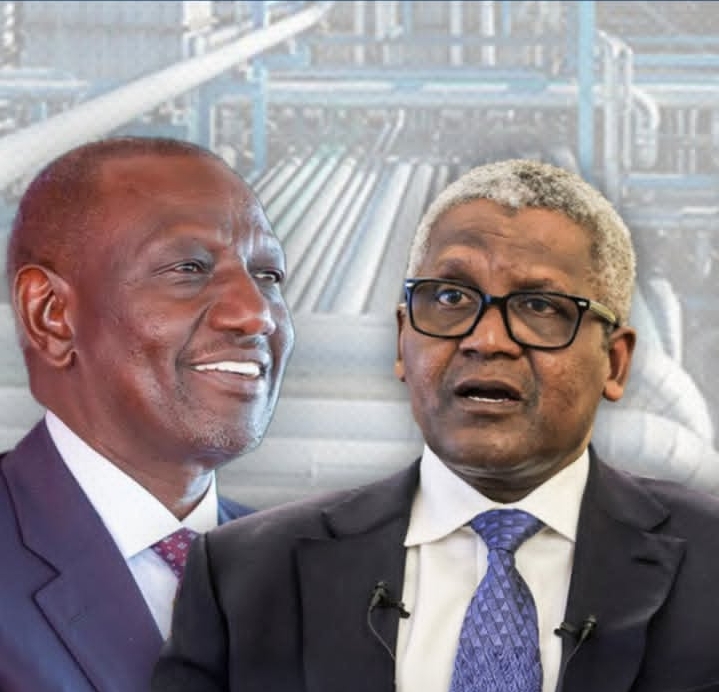
• Ruto, and Dangote
Aliko Dangote, Africa’s wealthiest industrialist, has stated that he is eyeing Kenya as the site of a huge $17 billion 650,000-barrel-a-day oil refinery he plans to build in east Africa, after questions over a previous push to build the facility in Tanzania.
Tanzanian President Samia Suluhu Hassan last week complained angrily to her Kenyan counterpart William Ruto that she had not been consulted over the earlier plan to build it on her country’s coastline, which was announced in her absence last month at an infrastructure summit.
“I’m leaning more towards Mombasa because Mombasa has a much larger, deeper port,” he told Financial Times in an interview.
He compared Kenya’s port to Tanga, the proposed Tanzanian site for the refinery to process oil from Uganda and the open market.
Dangote estimated it would cost $15 billion to $17 billion to build.“Kenyans consume more.
It’s a bigger economy,” he said, adding that crude oil for the refinery could be transported by ship and need not be located near a pipeline that will carry oil nearly 1,500 kilometres from Ugandan oilfields to the Tanzanian coast at Tanga.“The ball is in the hands of President Ruto,” he said.
“Whatever President Ruto says is what I’ll do,” the Nigerian billionaire added. For the east African refinery to get off the ground, Dangote said, he would need Ruto to offer land, some east African finance and, most important, protection from what he called dumping of cheap fuel from the likes of Russia or India.
“There is no refinery in the world that can survive without that protection,” he said. “If we have an agreement, we can start this year,” he explained. He told the FT he could still build the refinery in Tanzania “if they are able to sort themselves out”.
Business
CBN Pledges Policy Consistency Into 2027
The single-digit inflation target remains the anchor.

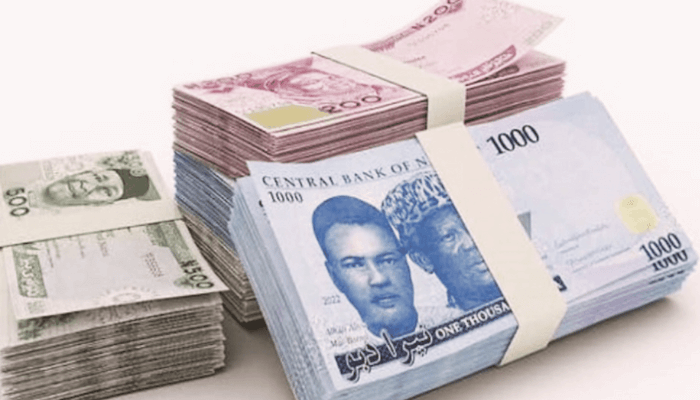
The Central Bank of Nigeria says that it will keep a consistent monetary policy direction in 2027, as it pursues the single-digit inflation target.
The stance puts policy continuity at the centre of the CBN’s inflation fight.
The bank is tying its inflation goal to consistency in monetary policy rather than a change in direction.
The single-digit inflation target remains the anchor.
The CBN’s message is that the target still stands and that policy will stay consistent in 2027.
₦1450 DOLLAR (USD)
₦1875POUND (GBP)
₦1575EURO (EUR)
₦950 CANADIAN DOLLAR (CAD)
₦70 SOUTH AFRICAN RAND (ZAR)
₦350 UAE DIRHAM (AED)
₦190 CHINESE YUAN (CNY)
₦100 GHANAIAN CEDI (GHS)
₦2240 WEST AFRICAN CFA F.(XOF)
₦2180 CENTRAL AFRICAN CFA F.(XAF)
₦820 AUSTRALIAN DOLLAR (AUD)
Business
MAN Seeks Tobacco Exclusion From NAFDAC Bills Over Regulatory Overlap
The association further maintained that the existing regulatory framework, administered through the Federal Ministry of Health and Social Welfare and the Federal Ministry of Industry, Trade and Investment, already provides for the regulation of the legal tobacco sector.

The Manufacturers Association of Nigeria (MAN) has called on the National Assembly for explicit tobacco products exclusion from two proposed bills seeking to repeal and reenact the laws establishing the National Agency for Food and Drug Administration and Control (NAFDAC), warning that their passage could create overlapping regulatory responsibilities and increase compliance costs for manufacturers.
The bills are the National Agency for Food and Drug Administration and Control (Repeal and Enactment) Bill, 2026 (SB. 940) and the Food, Medical Products and Related Products (Registration, Etc.) Bill, 2026 (SB. 952).
The Director-General of MAN, Segun Ajayi-Kadir, therefore urged the lawmakers to remove all references to tobacco from both bills, including relevant definitions, schedules and consequential provisions.
It also called for an explicit exclusion clause to prevent tobacco products from subsequently being brought under the proposed legislation through administrative instruments.
According to the association, such a provision would preserve clarity in institutional mandates and regulatory responsibilities while preventing unnecessary regulatory overlaps.
MAN maintained that regulatory reforms should strengthen public-health protection, address demonstrable regulatory gaps and improve compliance without creating additional administrative burdens for legitimate businesses.
It argued that clear institutional mandates, proportionate enforcement and effective inter-agency coordination were essential to achieving these objectives while supporting manufacturing, employment and investment.
The association further maintained that the existing regulatory framework, administered through the Federal Ministry of Health and Social Welfare and the Federal Ministry of Industry, Trade and Investment, already provides for the regulation of the legal tobacco sector.
MAN reaffirmed its readiness to engage constructively with the National Assembly and relevant government institutions, particularly the two federal ministries, to ensure that the proposed legislation delivers effective regulation without unnecessary duplication, conflicting institutional mandates or regulatory uncertainty.


CBN Pledges Policy Consistency Into 2027

Naira Exchange Rates, Thursday,26 Nov

MAN Seeks Tobacco Exclusion From NAFDAC Bills Over Regulatory Overlap

BREAKING: Lagos Govt Declares Today, Thursday Work-Free to Mark 2026 Ìṣẹ̀ṣe Day

Tech Expert, Zuckerberg trains with UFC champions, Adesanya, Alexander

Why we Increase the 2025 Budget by ₦700bn – Bichi
-

 Entertainment2 days ago
BREAKING: Veteran Nollywood Actor Chief Pete Edochie Dies at 79
-

 News2 days ago
Katsina Suspends Emir of Daura Over Sexual Allegations By Polish Tourist
-
 News2 days ago
“We’ve Lost a Titan, Legend, an Icon,” Gov Mbah Mourns Edochi
-

 News2 days ago
Arise TV Obaigbena Denies Police Invitation, Calls Declaration ‘Smear Campaign’
-
 Business2 days ago
Naira Exchange Rates, Thursday,26 Nov
-

 News2 days ago
Mother, daughter crushed to death by truck in Abuja
-
Business2 days ago
Naira Exchange Rates, Wednesday, 25 Nov 2026
-

 Business2 days ago
Cardoso : Pressure on The Naira Is Seasonal Factors- It won’t last