
Business
JUST IN : Traders Resist Takeover of Lagos International Trade Fair Complex By LASG
The ASPAMDA Market within the complex—one of the largest spare parts markets in Lagos—was among the sections affected by the shutdown.


Commercial activities at the Lagos International Trade Fair Complex were disrupted on Wednesday as traders shut down the facility while protesting a proposed takeover of the market’s management by state and local government authorities.
The traders said they were concerned about the implications of the planned arrangement, including possible new levies and taxes that could affect their businesses.
Many traders insisted that the complex is a federal facility and called for further consultations before any changes to its management structure are implemented.
The development led to the closure of shops across the complex, leaving hundreds of traders gathered around parks and garages within the market premises as discussions continued.
The ASPAMDA Market within the complex—one of the largest spare parts markets in Lagos—was among the sections affected by the shutdown.
Eyewitnesses said traders began the protest early in the morning by locking up their shops and stalls to draw attention to their concerns over the proposed changes.
We are not against development, but we are concerned about the possible levies and taxes that may be introduced if the management structure changes,” a trader who identified himself as Emeka Onu said.
The Minister of Industry, Trade and Investment, Jumoke Oduwole, visited the market during the day as part of efforts to engage with traders and encourage the reopening of the complex.
Before commencing her tour of the market, the minister urged that the gates of the complex be opened to traders, stating that her visit was aimed at interacting with stakeholders and supporting the smooth conduct of business activities.
Business
CBN Pledges Policy Consistency Into 2027
The single-digit inflation target remains the anchor.

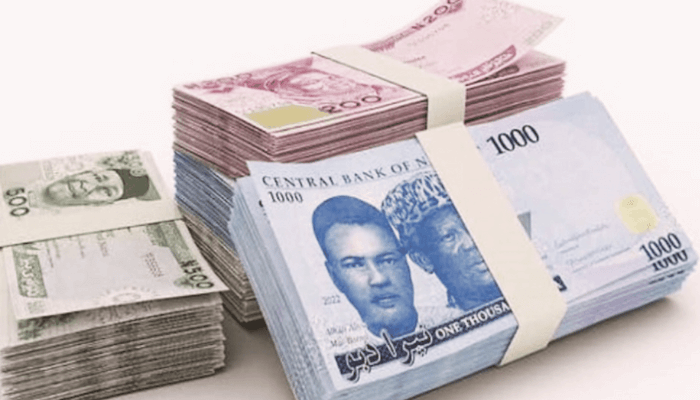
The Central Bank of Nigeria says that it will keep a consistent monetary policy direction in 2027, as it pursues the single-digit inflation target.
The stance puts policy continuity at the centre of the CBN’s inflation fight.
The bank is tying its inflation goal to consistency in monetary policy rather than a change in direction.
The single-digit inflation target remains the anchor.
The CBN’s message is that the target still stands and that policy will stay consistent in 2027.
₦1450 DOLLAR (USD)
₦1875POUND (GBP)
₦1575EURO (EUR)
₦950 CANADIAN DOLLAR (CAD)
₦70 SOUTH AFRICAN RAND (ZAR)
₦350 UAE DIRHAM (AED)
₦190 CHINESE YUAN (CNY)
₦100 GHANAIAN CEDI (GHS)
₦2240 WEST AFRICAN CFA F.(XOF)
₦2180 CENTRAL AFRICAN CFA F.(XAF)
₦820 AUSTRALIAN DOLLAR (AUD)
Business
MAN Seeks Tobacco Exclusion From NAFDAC Bills Over Regulatory Overlap
The association further maintained that the existing regulatory framework, administered through the Federal Ministry of Health and Social Welfare and the Federal Ministry of Industry, Trade and Investment, already provides for the regulation of the legal tobacco sector.
The Manufacturers Association of Nigeria (MAN) has called on the National Assembly for explicit tobacco products exclusion from two proposed bills seeking to repeal and reenact the laws establishing the National Agency for Food and Drug Administration and Control (NAFDAC), warning that their passage could create overlapping regulatory responsibilities and increase compliance costs for manufacturers.
The bills are the National Agency for Food and Drug Administration and Control (Repeal and Enactment) Bill, 2026 (SB. 940) and the Food, Medical Products and Related Products (Registration, Etc.) Bill, 2026 (SB. 952).
The Director-General of MAN, Segun Ajayi-Kadir, therefore urged the lawmakers to remove all references to tobacco from both bills, including relevant definitions, schedules and consequential provisions.
It also called for an explicit exclusion clause to prevent tobacco products from subsequently being brought under the proposed legislation through administrative instruments.
According to the association, such a provision would preserve clarity in institutional mandates and regulatory responsibilities while preventing unnecessary regulatory overlaps.
MAN maintained that regulatory reforms should strengthen public-health protection, address demonstrable regulatory gaps and improve compliance without creating additional administrative burdens for legitimate businesses.
It argued that clear institutional mandates, proportionate enforcement and effective inter-agency coordination were essential to achieving these objectives while supporting manufacturing, employment and investment.
The association further maintained that the existing regulatory framework, administered through the Federal Ministry of Health and Social Welfare and the Federal Ministry of Industry, Trade and Investment, already provides for the regulation of the legal tobacco sector.
MAN reaffirmed its readiness to engage constructively with the National Assembly and relevant government institutions, particularly the two federal ministries, to ensure that the proposed legislation delivers effective regulation without unnecessary duplication, conflicting institutional mandates or regulatory uncertainty.


Senator Idiat Oluranti Adebule Dies at 56

JUST IN: Obi-Kwankwaso Movement Suspends DG with Immediate Effect

CBN Pledges Policy Consistency Into 2027

BREAKING: Lagos Govt Declares Today, Thursday Work-Free to Mark 2026 Ìṣẹ̀ṣe Day

Tech Expert, Zuckerberg trains with UFC champions, Adesanya, Alexander

Why we Increase the 2025 Budget by ₦700bn – Bichi
-
 Business3 days ago
Naira Exchange Rates, Thursday,26 Nov
-
 Business3 days ago
MAN Seeks Tobacco Exclusion From NAFDAC Bills Over Regulatory Overlap
-
Business3 days ago
CBN Pledges Policy Consistency Into 2027
-
 Politics14 hours ago
JUST IN: Obi-Kwankwaso Movement Suspends DG with Immediate Effect
-
 News3 hours ago
Senator Idiat Oluranti Adebule Dies at 56