
Business
Vice Chancellors Hail Dangote’s Impact on Nigeria’s Agricultural revolution

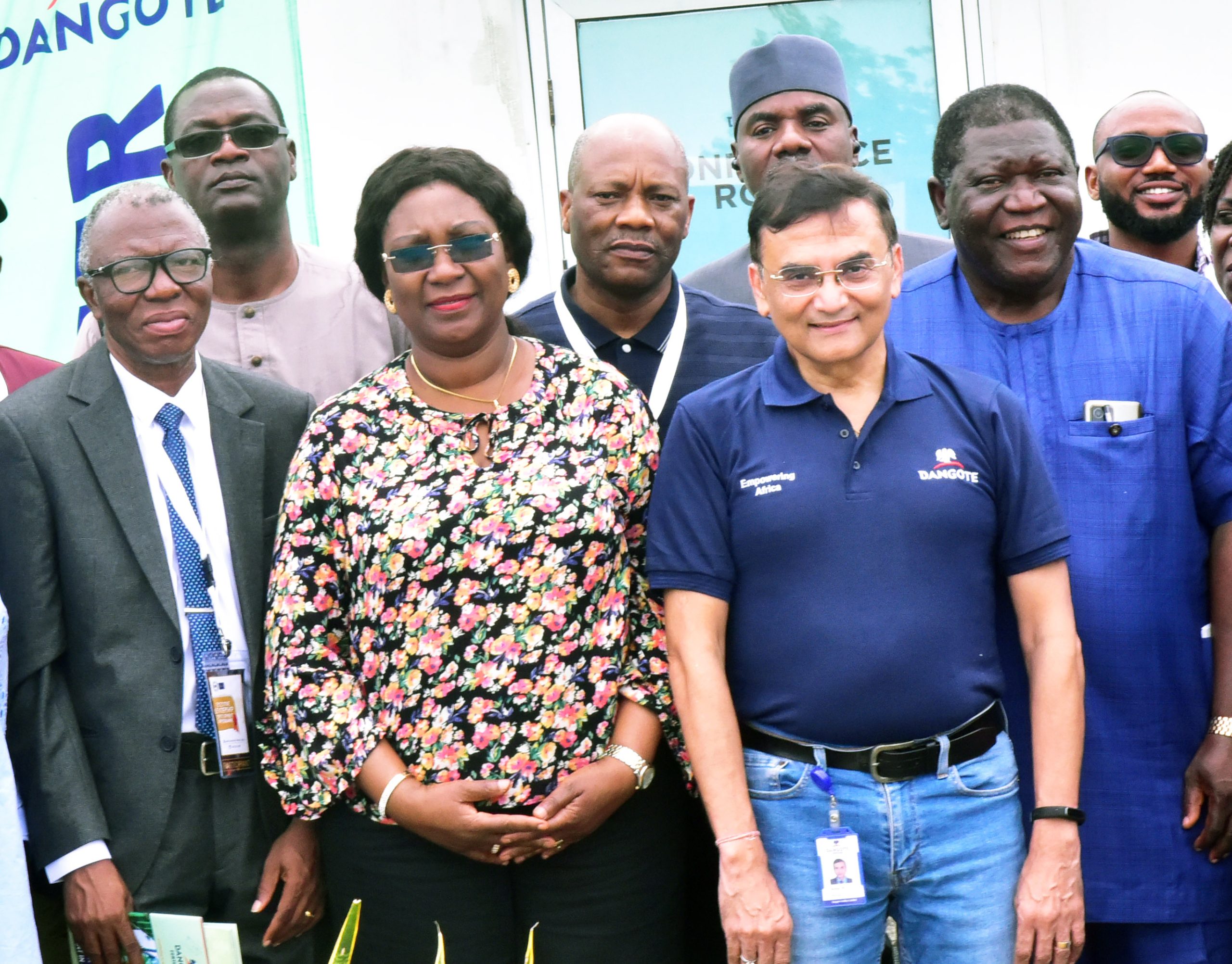
President of Dangote Group, Aliko Dangote has been hailed as a foremost entrepreneur whose laudable interventions in the agricultural sector in Nigeria should be applauded and emulated by others.
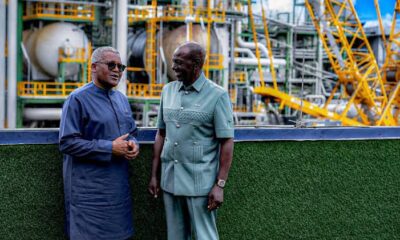
Many Nigerian University Vice Chancellors, under the auspices of Committee of Vice-Chancellors who were at the Dangote Fertiliser plant on a familiarisation visit over the weekend, marveled at the huge financial resources invested in the Plant.
The university heads unanimously agreed that Dangote should be specially recognised for his contribution on agricultural revolution in Nigeria, through his fertiliser project.
Secretary of Committee of Vice-Chancellors of Nigeria, Prof. Yakubu Ochefu, said all Nigeria needed for real growth and development in all sectors of the economy was just to have five of Aliko Dangotes.
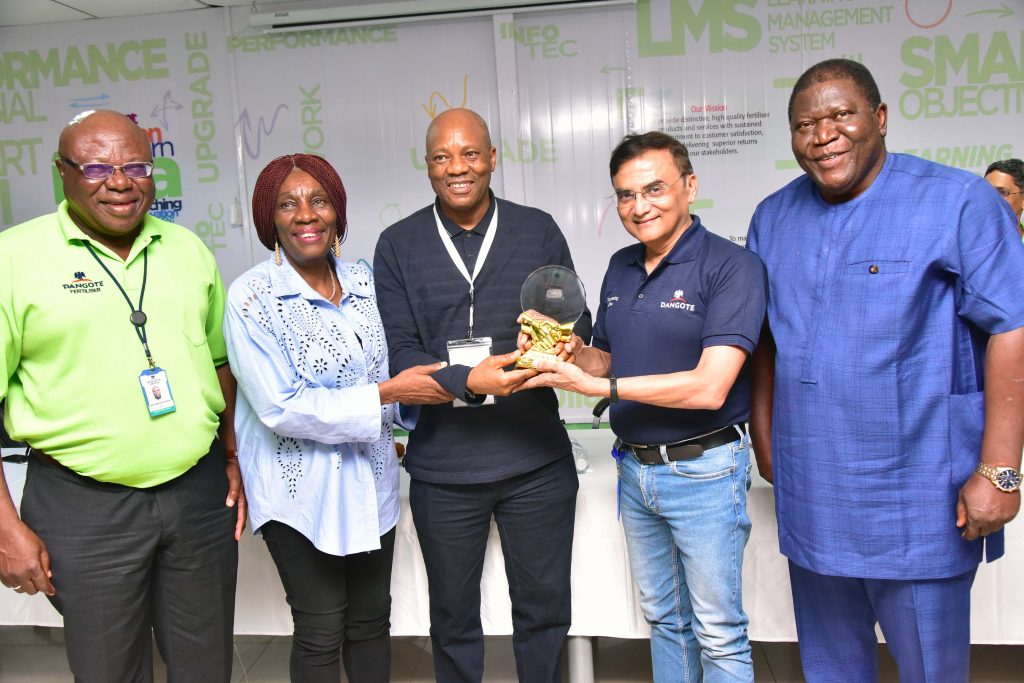
He urged other Nigerian billionaires to take a cue from Dangote and invest heavily in manufacturing, to significantly reduce the high unemployment rate among the youth and ameliorate the sufferings of many Nigerians.
According to him: “We decided to come and see organisation wellness and resilience in action, and we know that Aliko is one of the most resilient entrepreneurs this country has ever produced, so, it is important to come and have a feel of that action.
“We came to see how one man’s dream and vision and big picture can translate into something like this and I can say that this visit has exceeded all our expectations because nothing you see on television or even read in Newspapers can match the reality when you come here physically and see this massive edifice and process in place.
“Dangote is an enigma and like I said earlier, if we have five of his types across Nigeria or across Africa, this country and continent will be a different story entirely. We are truly very proud of him…”
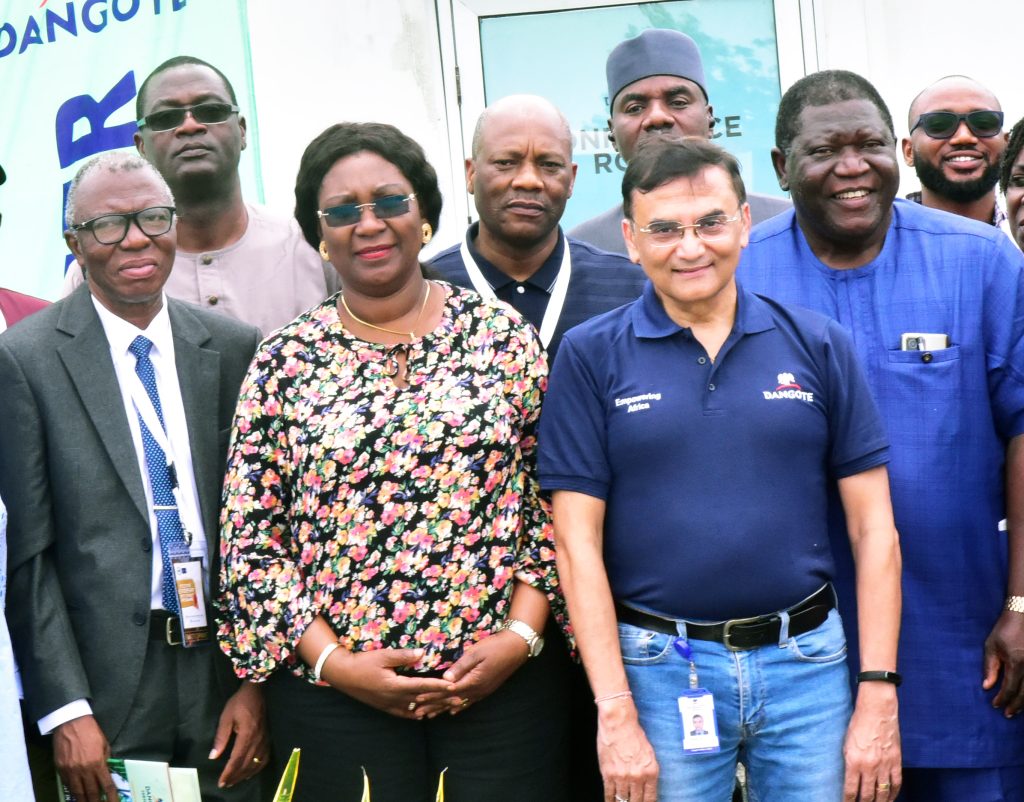
Speaking after the tour of the Fertiliser Plant, Vice Chancellor of the Federal University of Technology, Owerri, Prof. Nnenna Oti described the Plant as impressive and lauded the synergy between Lagos State Government and Aliko Dangote, a man from Kano State, describing the union as what Nigeria should really represent.
She said: “This plant is quite impressive. We wish we had more Nigerians who are investing in our country, creating opportunities and solving real problems as well as giving back to society as Aliko Dangote is doing…
“What is more impressive is that somebody from a different part of the county has enough confidence in another part of the country and there is this synergy between the different elements, the cooperation from the Lagos State Government and a man from Kano…this is the Nigeria of my dream,” she added.
Prof. Ibiyemi Olatunji-Bello, Vice Chancellor of the Lagos State University (LASU), also expressed satisfaction at the operations in the factory, noting that the 3 million tonnes of granulated Urea factory would go a long way in solving the food problems in Nigeria.
She said: “This trip to Dangote Fertiliser has been awesome. …when the president said that there was going to be a state of emergency against poverty, we now know that Dangote is contributing enormously to the growth of the nation, to the availability of food security, through the provision of fertiliser, which is an important component in crop and food production…
“I am very impressed. This factory is enormous, huge funds have gone into it and it will have a positive effect on the nation’s economy. The likes of Aliko Dangote are rare, and Nigeria should be thankful for having a bold man that is always willing to take huge risks, in our midst,” she added.
In the same vein, the Vice Chancellor of the University of Jos, Tanko Ishaya, urged the Federal Government to specially recognise Aliko Dangote, as he has braved the odds to provide real solution to one of the key problems, facing the country: food security.
He said: “We have all gone round the factory and I must confess that this is a fantastic environment, and we want to congratulate the President of Dangote Group for having that vision and for implementing the vision.”
Recall that the Dangote Urea Fertiliser plant was built to tap into Nigeria’s demand for fertiliser, a critical component of achieving food sufficiency for Africa’s most populous country.
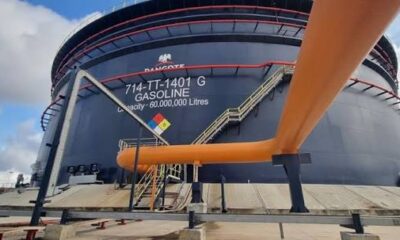
The Fertiliser plant is manufacturing 3 million metric tonnes of urea per annum, with a view to reducing the nation’s fertiliser imports, and generating over $400m annual foreign exchange from export to Africa countries.
Managing Director/CEO, Dangote Fertiliser Limited, Vishawajit Sinha, revealed that the Plant which has the capacity to turn out more than 4,500 tonnes of urea per day will conveniently meet the local demand and even produce for exports.
According to him: “…We have the capacity to turn out 4,500 tonnes of Urea every day…this is a bulk application fertiliser…each crop in Nigeria or globally will require Nitrogen and this is a rich fertiliser, having 46 per cent nitrogen…The company has the capacity to meet local demand and export to African countries.”
The plant, which is the largest granulated Urea fertiliser complex in Africa, occupies 500 hectares of land, was built at a cost of $2.5 Billion, and is expected to reduce drastically level of unemployment and youth restiveness in the country through employment opportunities.
The plant is expected to generate new jobs with top quality fertiliser being available and in sufficient quantities for the farmers.





BLACK/ PARALLEL MARKET RATES
₦1370 DOLLAR (USD)
₦1800 POUND (GBP)
₦1510 EURO (EUR)
₦970 CANADIAN DOLLAR (CAD)
₦65 SOUTH AFRICAN RAND (ZAR)
₦350 UAE DIRHAM (AED)
₦190 CHINESE YUAN (CNY)
₦100 GHANAIAN CEDI (GHS)
₦2300 WEST AFRICAN CFA F.(XOF)
₦2200 CENTRAL AFRICAN CFA F.(XAF)
₦850 AUSTRALIAN DOLLAR AUSSIE (AUD)
CBN OFFICIAL RATES
DOLLAR (USD)₦1331.61
POUND (GBP)₦1764.26
EURO (EUR)₦1490.48
SWISS FRANC (CHF)₦1608.23
JAPANESE YEN (JPN)₦8.4
CFA FRANC (XOF)₦2.27
WEST AFRICAN UNIT OF ACCOUNT (WAUA)₦1802.33
CHINESE YUAN (CNY)₦199.01
SAUDI RIYAL (SAR)₦354.83
SOUTH AFRICAN RAND (ZAR)₦80.49
Business
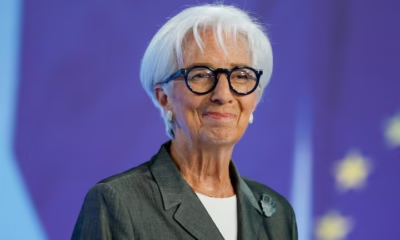
WEF could appoint Lagarde as its next chair, sources say
The WEF’s Board of Trustees, which includes Lagarde herself, was due to meet on November 2 and could elect her as its next chair, said the people close to the organisation, who spoke on condition of anonymity due to the sensitivity of the matter.

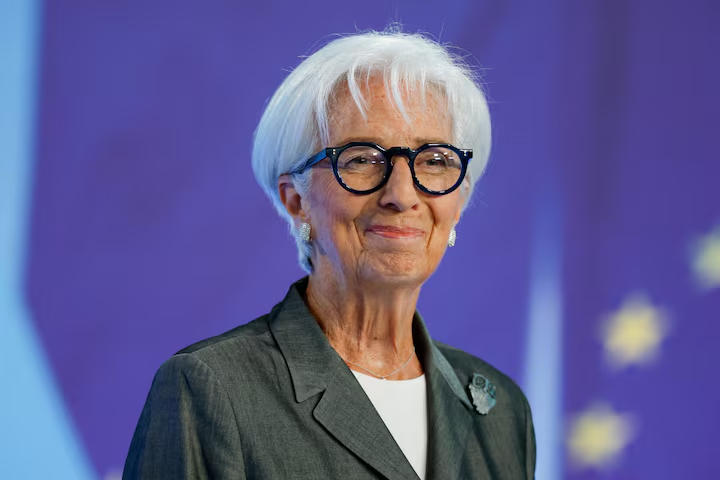
•European Central Bank President Christine Lagarde
The World Economic Forum could appoint Christine Lagarde as its next chair as soon as next month, four people close to the organisation told Reuters, meaning she would step down early as European Central Bank chief and trigger a wider reshuffle at the top of the ECB.Lagarde’s ECB term is scheduled to end in October 2027.
Leaving early would give European Union leaders a chance to pick a new ECB President before France’s spring presidential election, which opinion polls suggest the far-right could win, and could pave the way for a deal involving two other senior ECB roles.
The WEF’s Board of Trustees, which includes Lagarde herself, was due to meet on November 2 and could elect her as its next chair, said the people close to the organisation, who spoke on condition of anonymity due to the sensitivity of the matter.
No final decision has been taken yet, they said.
A spokesperson for the WEF said the forum could not confirm when the next full Board of Trustees meeting would take place, but that the aim was to hold one before the end of the year.
Business
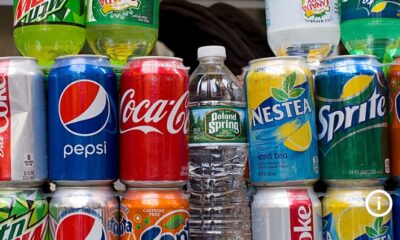
Germany plans tax on sugary drinks
The tax is expected to generate additional revenue for the federal government of €690 million in 2027 and €925 million in 2028.
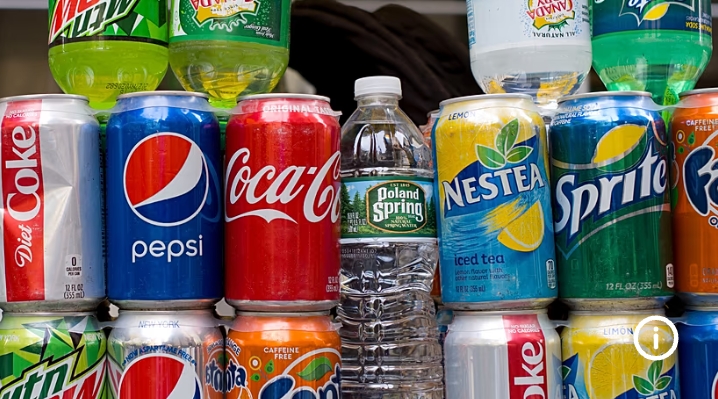
The German cabinet has approved draft legislation to tax sugary drinks in Europe’s biggest economy.
If passed by the German Bundestag, the tax will take effect on 1 July 2027.
The coalition aims to raise revenue for the federal budget while encouraging manufacturers to reduce sugar content and offer healthier products.
The levy is intended to ease pressure on the healthcare system, which faces costs of more than €2 billion every year linked to the high consumption of sugary drinks, which contributes to obesity, diabetes and tooth decay.
According to the federal government, Berlin is using the tax to implement “what associations from the fields of health, science, child protection, and consumer protection have long been demanding.”
The tax is expected to generate additional revenue for the federal government of €690 million in 2027 and €925 million in 2028.


JUST IN: Mob Sets BRT Bus Ablaze After Motorcyclist’s Death in Lagos

BREAKING: DSS Arrests Fugitive Maina Son, Hands Him to EFCC

BREAKING: 5 Arrested Over Imo NYSC Abduction

BREAKING: Lagos Govt Declares Today, Thursday Work-Free to Mark 2026 Ìṣẹ̀ṣe Day

Tech Expert, Zuckerberg trains with UFC champions, Adesanya, Alexander

Organ Trafficking: Ekweremadu bags 10 years in UK prison
-
 Business2 days ago
Naira Exchange Rates For Thursday, October 15
-
 Sports2 days ago
CAF Increases Annual Funding for Member Federations to $700,000
-
 News2 days ago
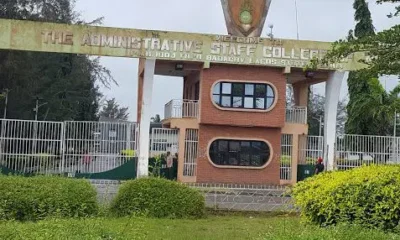
ASCON To Be Rebranded “National School Of Government”
-
 Business2 days ago
Germany plans tax on sugary drinks
-

 News3 days ago
Sanwo-Olu Appoints Olatunbosun Ogunbanwo, 5 Others as Perm Secs
-
 Business2 days ago
WEF could appoint Lagarde as its next chair, sources say
-

 International2 days ago
“Mother of all bombs,” Trump Plans To Hit Iran
-
 Business1 day ago
Naira Exchange Rates Friday, October 16