
Politics
Atiku Appears Before ADC Presidential Screening Panel

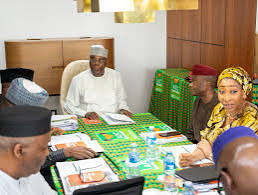
resents Economic Rescue and Security Blueprint
Former Vice President Atiku Abubakar on Wednesday appeared before the Presidential Screening Panel of the African Democratic Congress (ADC) as part of the party’s nomination process for the 2027 election.
The screening exercise, held in Abuja, saw Atiku present his credentials along with a comprehensive blueprint focused on economic revival and enhanced national security. He was accompanied by key allies including former Sokoto State Governor Aminu Tambuwal and former Attorney-General of the Federation Abubakar Malami.
A statement issued after the session by Atiku’s Senior Special Assistant on Public Communication, Phrank Shaibu, described the exercise as smooth and productive. Atiku reportedly assured the panel of his commitment to tackling insecurity, unemployment, and economic hardship if given the party’s ticket.
The development comes on the same day the rival Nigeria Democratic Congress (NDC) cleared Peter Obi as its sole presidential aspirant, highlighting the ongoing realignment within Nigeria’s opposition ahead of 2027.
Atiku, who recently joined the ADC, is seen as one of the party’s frontrunners for the presidential ticket. The ADC is expected to hold its primaries in the coming days, with party leaders urging unity to mount a strong challenge against the ruling All Progressives Congress (APC) and President Bola Tinubu.
Reactions have begun trailing in from across the political spectrum as major opposition figures position themselves for the next general election.






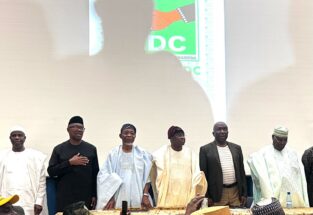


The Nigeria Democratic Congress (NDC) has strongly condemned the violent attack on its supporters in Lagos by suspected political thugs during a town hall meeting held on Thursday, November 12, 2026.
In a press statement signed by Dr. Chiogo Constance Ikokwu, Spokesperson of the NDC National Campaign Council, the party expressed deep sympathy for anyone injured in the attack and wished them a speedy and full recovery. It also extended its thoughts to the victims and their families.
The NDC described the incident as “an unacceptable assault on democracy, citizens’ fundamental rights and the freedom of political association.” The party stressed that no political party or group has a monopoly on Nigeria, and that no one has the right to use violence, intimidation or thuggery to silence opposing voices.
“Nigeria is not a conquered territory, and political participation is not a crime,” the statement said. The NDC demanded an immediate investigation, the arrest and prosecution of those responsible, and an end to the culture of political violence in some states.
The party warned that any calculated attempt to intimidate Nigerians, spread fear or discourage voter turnout ahead of the 2027 elections would fail. It urged citizens to come out in large numbers to exercise their democratic rights and vote for the Obi/Kwankwaso ticket as a peaceful demand for accountable leadership.
“The NDC and its supporters will not be silenced or bullied out of exercising their democratic rights,” the statement concluded.
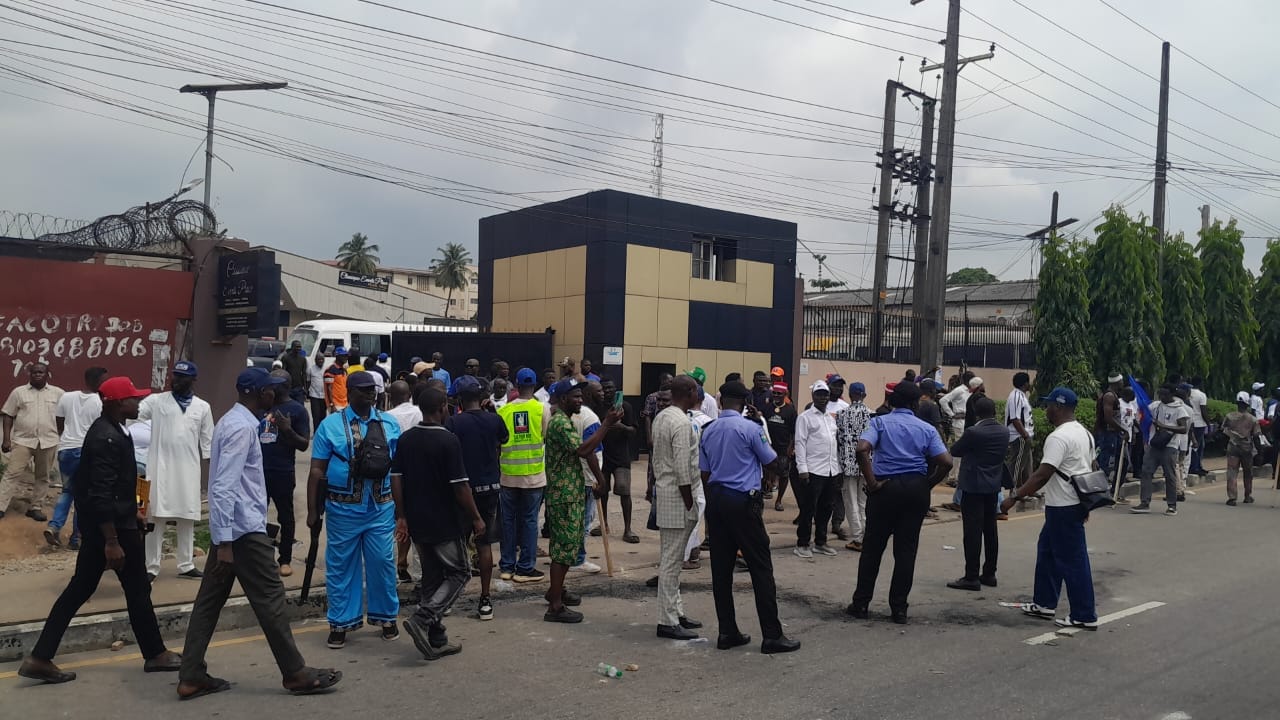
Pandemonium erupted on Thursday in the Oregun area of Lagos as suspected thugs armed with cudgels, cutlasses and stones invaded the venue of a Nigeria Democratic Congress (NDC) townhall meeting.
The attackers stormed Classic Event Place (also referred to as Classique Event Centre) along Kudirat Abiola Way around 11 a.m., where supporters had gathered ahead of an address by NDC presidential candidate Peter Obi and his running mate, Senator Rabiu Kwankwaso. Neither Obi nor Kwankwaso had arrived at the time of the incident.
Initial panic sent attendees scampering for safety. Some NDC supporters, dressed in blue shirts and white fez caps, quickly regained composure and fought back, hurling chairs at the intruders. They chased the suspected thugs out of the hall and apprehended one at the car park. Voices were heard urging the crowd to “deal with him” as the captive was surrounded and beaten with sticks.
The confrontation spilled onto Kudirat Abiola Way, a major road, forcing motorists to make U-turns and pedestrians to flee. Police later arrived and fired shots into the air (and in some accounts, tear gas) to disperse the crowd and restore order.
Several vehicles belonging to party members were vandalised, with smashed windscreens reported. At least a few supporters sustained injuries. Some accounts from NDC members alleged the attackers numbered over 70 and were linked to rival political interests, though affiliations have not been independently confirmed by authorities.
The disruption occurred amid rising political tensions ahead of the 2027 general elections.
Politics
Exclusive: 2027 Presidential Election: APC, ADC, NDC Manifestos Compared– Who Is Offering What To Nigerians?
In summary : While the APC emphasises consolidating existing reforms, the ADC focuses on structural reforms and a living-wage economy, whereas the NDC places production, enterprise and domestic industrial capacity at the centre of its economic agenda.

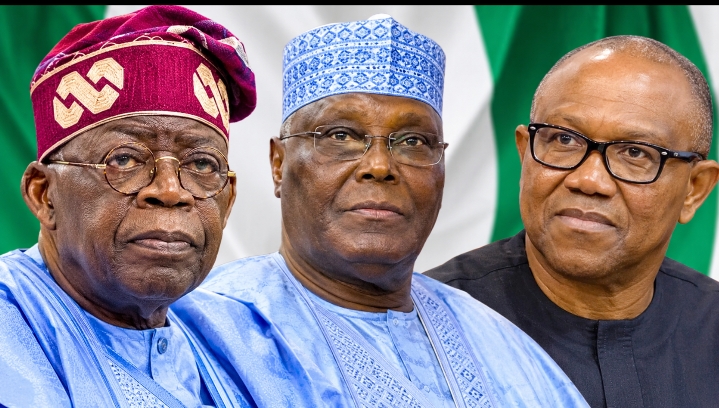
Image: President Bola Tinubu, Atiku Abubakar , and Peter Obi.
As Nigeria prepares for the 2027 presidential election, three political parties are presenting competing policy proposals to address the country’s economic difficulties, insecurity, unemployment, poverty, infrastructure deficits and declining living standards.
The governing All Progressives Congress (APC), the African Democratic Congress (ADC) and the Nigeria Democratic Congress (NDC) are seeking to convince Nigerians that their respective programmes offer a pathway to economic recovery and national development.
President Bola Tinubu is seeking another term under the APC, while former Vice-President Atiku Abubakar represents the ADC and former Anambra State Governor Peter Obi is the NDC presidential candidate.
Their manifestos reveal differences in economic philosophy, approaches to governance, social investment, security and industrial development.
Here is a breakdown of their policy positions based on APC’s 109-page 2027–2031 manifesto unveiled on November 10, 2026. The ADC manifesto unveiled in May 2026 and the NDC’s campaign policy blueprint.
ECONOMIC DEVELOPMENT: REFORM, RESTRUCTURING OR PRODUCTION?
APC – From Reform to Prosperity
The APC’s 2027–2031 manifesto, titled From Reform to Prosperity, seeks to consolidate the economic reforms introduced by the Tinubu administration since 2023.
Its economic priorities include:Sustaining foreign exchange reforms.Improving macroeconomic stability.
Achieving annual economic growth of six per cent.Increasing non-oil exports.
Attracting domestic and foreign investments.
Expanding infrastructure and industrial development.Improving household purchasing power.
The party argues that the first phase of economic reforms has laid the foundation for prosperity, while the next four years should translate those reforms into tangible improvements in living standards.
ADC – Production-Driven Economy
The ADC’s manifesto places emphasis on structural economic reforms and moving Nigeria away from a consumption-driven and oil-dependent economy.
Its proposals include:
Developing agriculture and manufacturing.
Promoting regional industrial value chains.Introducing a living-wage approach.Improving the business environment.
Addressing inflation and unemployment.
Protecting citizens’ purchasing power.Promoting productivity and private-sector investment.
The party also advocates a more humane implementation of economic policies, particularly those affecting vulnerable households.
NDC – From Consumption to Production
Peter Obi’s NDC campaign is built around transforming Nigeria from a consumption-oriented economy into a productive economy.
Its economic priorities include:Strengthening domestic manufacturing.
Supporting small and medium-sized enterprises.
Expanding agricultural production.Encouraging exports.
Reducing dependence on imports.
Promoting investment and enterprise.Reducing government waste.
Obi argues that Nigeria cannot achieve sustainable prosperity by importing most of what it consumes.
MANUFACTURING AND INDUSTRIAL DEVELOPMENT
This is particularly important given Nigeria’s struggling manufacturing sector.
The APC has specifically proposed establishing at least one flagship industrial hub in each geopolitical zone.
The ADC’s approach connects agriculture, manufacturing, logistics, technology and services through regional value chains.
The NDC’s position is that Nigeria must produce more of what it consumes and process more of its agricultural output locally.
The critical question for manufacturers: Which party will provide affordable electricity, accessible long-term financing, stable foreign exchange, competitive taxation and reliable infrastructure to make Nigerian industries competitive?
INFRASTRUCTURE AND ELECTRICITY
Electricity remains one of the biggest obstacles to industrial development in Nigeria.
The three parties recognise the importance of infrastructure, although their specific commitments differ.
APC: Plans to scale electricity generation towards 10,000MW, strengthen transmission and distribution, and expand clean energy access. It also proposes completing priority road, rail, port and airport projects.
ADC: Emphasises infrastructure development, energy-sector reforms and regional connectivity to support production and industrialisation.
NDC: Proposes expanding power generation and distribution, improving roads, railways and ports, and attracting private investment into infrastructure.
The NDC campaign blueprint specifically identifies an additional 10,000MW of power within four years as a target.
SECURITY AND NATIONAL SAFETY
APC
Recruit 50,000 additional police officers.
Recruit 28,000 additional military personnel.
Establish four additional Army divisions.
Expand community policing.
Introduce digital policing and body cameras.Strengthen border surveillance.
ADC
Strengthen intelligence gathering.
Promote decentralised policing under national standards.
Improve coordination among security agencies.
Introduce community-based security mechanisms.
Strengthen regional security cooperation.
Promote rights-based law enforcement.
NDC
Prioritise intelligence-driven security.
Strengthen coordination among security agencies.Improve border management.
Deploy technology to detect security threats.
Promote lawful community-based security arrangements.
Address poverty and unemployment as underlying contributors to insecurity.
GOVERNANCE, ACCOUNTABILITY AND CORRUPTION
APC
Strengthen public-sector accountability.
Improve digital governance.
Strengthen the justice system.
Publish allocations to all 774 local government councils.
Introduce measurable performance targets and public delivery tracking.
ADC
Promote independent electoral management.Strengthen the rule of law.
Establish a zero-impunity governance framework.
Introduce performance audits.
Promote transparency and fiscal responsibility.
NDC
Strengthen anti-corruption institutions.
Promote transparent procurement.
Reduce wasteful government expenditure.
Improve public-sector accountability.
Use technology to reduce corruption in public services.
In summary : While the APC emphasises consolidating existing reforms, the ADC focuses on structural reforms and a living-wage economy, whereas the NDC places production, enterprise and domestic industrial capacity at the centre of its economic agenda.


UPDATE: NDC Condemns Lagos Attack, Vows Not to Be Intimidated

UNN Mourns 4 Students Dead After Party

BREAKING: Party Supporters Fight Back as Thugs Break into NDC Townhall in Lagos

BREAKING: Lagos Govt Declares Today, Thursday Work-Free to Mark 2026 Ìṣẹ̀ṣe Day

Tech Expert, Zuckerberg trains with UFC champions, Adesanya, Alexander

Organ Trafficking: Ekweremadu bags 10 years in UK prison
-
 Politics1 day ago
Exclusive: 2027 Presidential Election: APC, ADC, NDC Manifestos Compared– Who Is Offering What To Nigerians?
-
 Sports1 day ago
BREAKING: Tinubu Rewards Flamingos with Massive Cash, Savings Certificates (Video)
-

 Business3 days ago
Domestic Flights Fare Surges Ahead of Christmas, New Year
-

 Business3 days ago
Naira Exchange Rates Tuesday,10 Nov 2026
-
 News2 days ago
Senate Fails to Meet Quorum Again as Akpabio Warns on 2027 Campaigns
-
 Sports2 days ago
Senate Approves N100m For World Cup Winning Flamingos
-

 Sports3 days ago
Flamingos bring World U-17 trophy home to Abuja
-

 Business3 days ago
Telcos Drag House of Reps To Court Over Network Oversight