
News
Understanding the Differences: Leasehold vs. Full Ownership Apartments by Dennis Isong

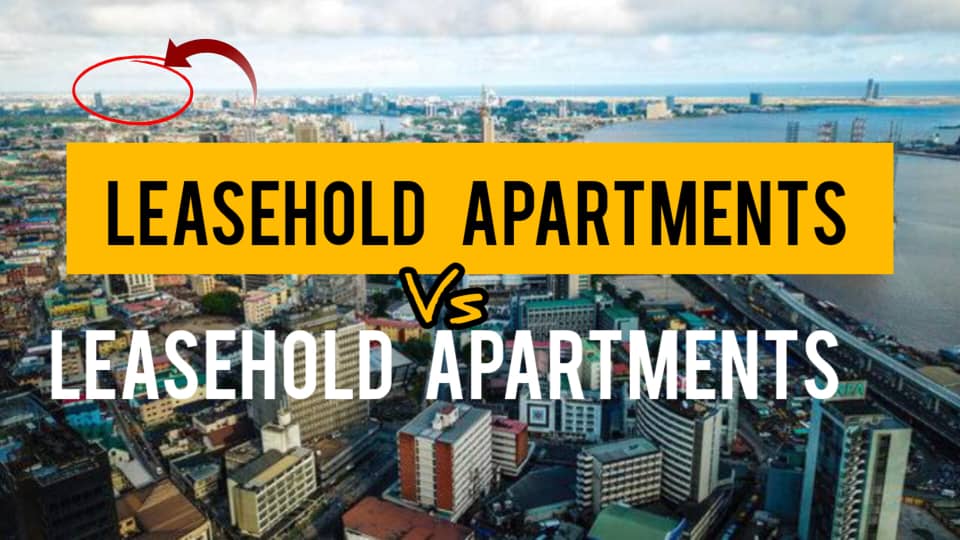
WHEN it comes to purchasing property, one of the fundamental decisions that prospective buyers must make is whether to opt for a leasehold or full ownership apartment. Each type of ownership has its own set of advantages and drawbacks, catering to different preferences, financial situations, and long-term goals.
Leasehold Apartments:
In the heart of Lagos, where the pulse of the city reverberates through its streets, people and businesses, the concept of leasehold unfolded in the neighborhood of Victoria Island.
This vibrant area, known for its mix of commerce and culture, became the backdrop for a story that unfolded at the crossroads of tradition and urban development in real estate.
Ade is a savvy entrepreneur with dreams of establishing a trendy cafe along the bustling waterfront.
Eager to realize his vision, Ade explored the world of leasehold agreements, a path that offered him access to prime real estate without the hefty burden of outright ownership.
Ade found a property owned by a longstanding family in Victoria Island. The family, hesitant to sell their ancestral land, opted for a leasehold arrangement that would allow Ade to operate his cafe while preserving the family’s connection to the place that held generations of memories. Ade transformed the space into a hub for creativity and conversation.
Meanwhile, the family retained a sense of ownership, participating in the cafe’s success while maintaining the historical significance of their land.
The neighborhood, once accustomed to traditional ownership models, began to witness the harmonious coexistence of progress and heritage. The leasehold, in this corner of Lagos, became a bridge between entrepreneurial aspirations and the rich family history.
Ade’s cafe, with its leasehold roots, became a symbol of innovation and collaboration. It stood as a testament to the adaptability of Lagos, where the spirit of entrepreneurship could flourish without severing ties to the past.
The story of Ade’s cafe echoed through the vibrant streets, showcasing how leasehold arrangements could weave a story of continuity and change in the dynamic fabric of Lagos.
Leasehold apartments involve the buyer acquiring the right to use the property for a specified period, typically ranging from 99 to 999 years.
However, the land on which the property is built remains owned by a landlord or freeholder.
In a leasehold arrangement, the buyer essentially leases the property from the freeholder. This means that while they have the right to occupy and use the space, they do not own the land beneath it.
Leaseholders are often required to pay ground rent and service charges to the freeholder. Also, there may be restrictions on making alterations to the property, and obtaining permission may involve additional costs.
The finite nature of the leasehold means that buyers should be aware of the remaining lease duration.
As the lease term diminishes, the property’s value may decrease, potentially impacting resale value.
Leasehold apartments involve the buyer acquiring the right to use the property for a specified period, typically ranging from 99 to 999 years
Full Ownership Apartments:
Sometimes ago in Ikoyi, Lagos, a story unfolded that captured the essence of full ownership in real estate. Ngozi is a successful businesswoman with a vision of creating a haven of comfort and elegance for her family.
Drawn to the serenity of Ikoyi, she embarked on a journey for a residence that would reflect her aspirations. Ngozi came across a penthouse in Azure Heights.
The process of acquiring the property involved careful legalities and paperwork, but as Ngozi received the keys to her penthouse, a profound sense of ownership and accomplishment washed over her.
The expansive living room, adorned with floor-to-ceiling windows framing panoramic views of the Lagos skyline, became a canvas for her dreams. As Ngozi settled into her new home, she felt a deep connection to the Ikoyi neighborhood.
Azure Heights, with its full ownership model, allowed her to not only enjoy the lavish amenities within the building but also embrace the exclusivity of belonging to one of Lagos’s most coveted addresses.
Ngozi’s apartment became a symbol of personal achievement, a testament to the possibilities that awaited those who aspired to own a piece of Lagos’s dynamic real estate.
Full ownership, also known as freehold, grants the buyer complete ownership of both the property and the land it stands on. This type of ownership provides greater autonomy and fewer restrictions compared to leasehold.
Full ownership apartments mean that the buyer has control over the property in perpetuity. This includes the freedom to make alterations, additions, and decisions without seeking permission from a landlord.
Unlike leasehold properties, full ownership does not typically involve paying ground rent to a landlord. However, owners are responsible for all maintenance and repair costs, which can be both a benefit and a challenge depending on the individual’s preferences and financial capacity.
Full ownership is often seen as a more secure investment in the long run. The absence of a lease term expiration provides stability, and the property is likely to appreciate over time.
Conclusion
The decision between leasehold and full ownership often hinges on financial considerations. Leasehold properties may have a lower initial cost, but the long-term expenses, such as ground rent and service charges, should be factored in.
Individuals who value autonomy and control over their living space may find full ownership more appealing. On the other hand, leasehold may suit those who prefer a hands-off approach to property management.
Buyers should carefully assess the resale and investment potential of each type of ownership. Full ownership is often considered a safer bet in terms of long-term value, but leasehold properties can still be lucrative if managed wisely.
▪︎ Dennis Isong is a TOP REALTOR IN LAGOS.He Helps Nigerians in Diaspora to Own Property In Lagos Nigeria STRESS-FREE. For Questions WhatsApp/Call 2348164741041


Teachers at the International School, University of Lagos (ISL), on Wednesday commenced a work-to-rule action over unpaid salary arrears, their removal from the university’s payroll, and delays in implementing a National Industrial Court judgment.
The staff are demanding the payment of outstanding Consolidated Tertiary Institutions Teaching Allowance (CONTTA) arrears, as well as arrears from the 25 per cent and 35 per cent salary adjustments approved in 2024. They also want full restoration to the university’s payroll.
Comrade Razak Yusuf, Chairman of the Senior Staff Association of Nigerian Universities (SSANU), University of Lagos branch, said the industrial action followed prolonged delays in resolving the teachers’ employment status and financial entitlements.
The teachers had approached the National Industrial Court of Nigeria, which ruled in their favour on May 11, 2026. Despite the judgment, they claim the university has yet to fully restore their names to the payroll or settle outstanding benefits.
Protesters carried placards with messages such as “Equal Work, Equal Rights,” “ISL tutors deserve their due,” and “Other UNILAG staff paid, ISL tutors still owed.” The action disrupted teaching and a scheduled mid-term examination at the school.
The teachers called on the university management to restore the affected staff to the payroll, settle all outstanding financial obligations, and provide a clear payment plan with timelines.
They rejected suggestions that any interim arrangement under the university’s Council protocol amounted to goodwill, insisting they were only seeking recognition of their employment rights.
The development continues a pattern of industrial disputes at the University of Lagos over salary and allowance issues.
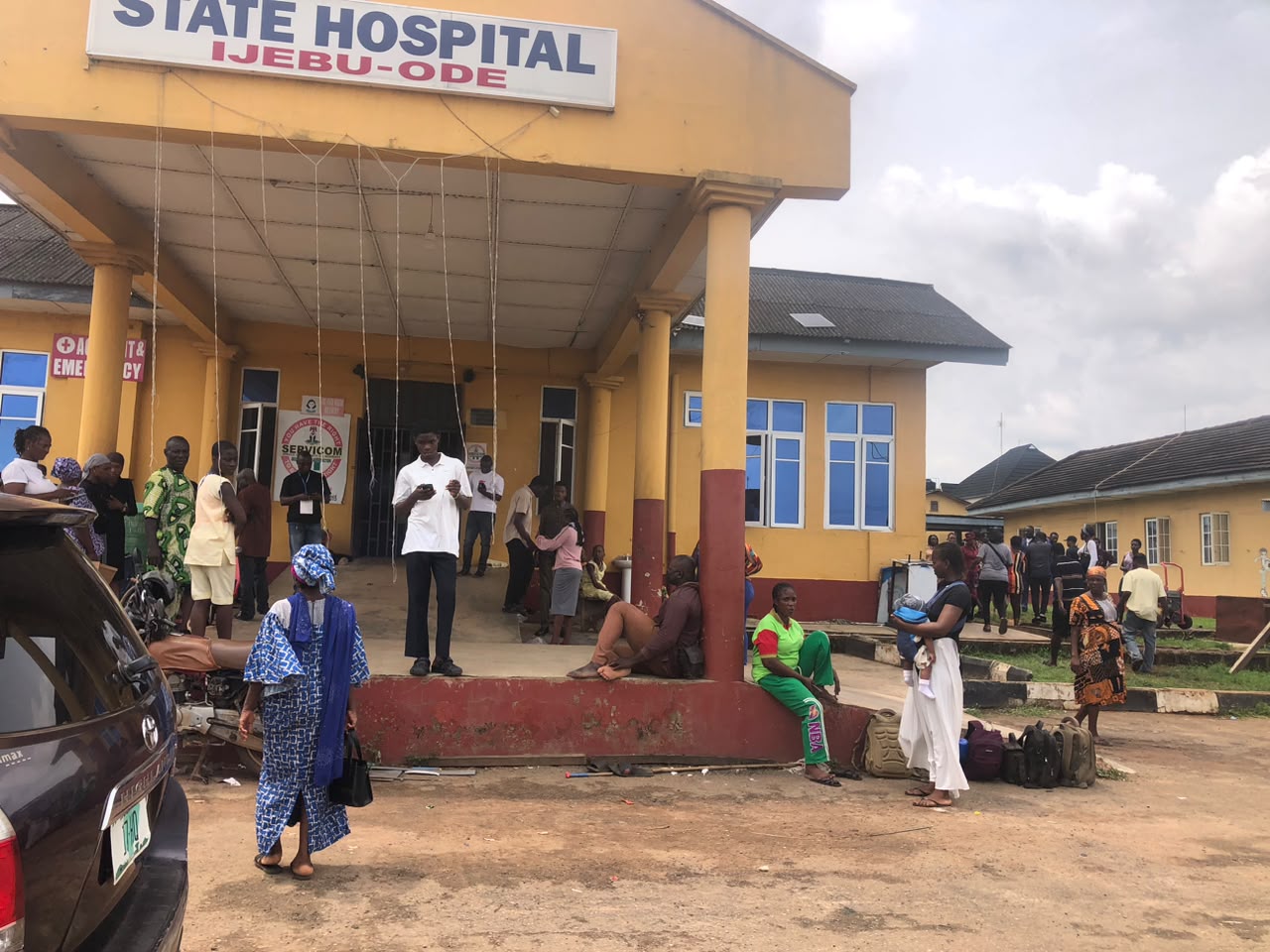
Hundreds of students were hospitalised on Wednesday morning after fresh gaseous emissions hit parts of Ogun State, including Ijebu-Ode, Ijebu-Igbo and Ago-Iwoye.
The incident affected pupils at Anglican Girls Grammar School, Obalende, Ijebu-Ode, and Ijebu-Igbo Girls Grammar School. Several schools in Ago-Iwoye suspended academic activities and sent students home as a precaution.
Kehinde Bello, General Manager of the Ogun State Environmental Protection Agency (OGEPA), visited the affected areas and linked the emissions to underground gas previously recorded in Ijebu-Ode since April 2026. He said the situation was under control and attributed the releases to natural geological and tectonic fault lines, ruling out sabotage or a gas pipeline leak.
Bello assured residents that the state government was working on a lasting solution. He advised anyone exposed to the odour to cover their noses and mouths with wet handkerchiefs.
The recurring emissions have renewed concerns about the safety of students and residents in the affected communities.

Former Delta State Governor Dr. Emmanuel Eweta Uduaghan is dead. He passed away on the morning of Monday, October 19, 2026, at the age of 71, after a period of illness.
A family statement announced his death, describing it as a devastating loss. Uduaghan, a medical doctor, served as Delta State Commissioner for Health (1999–2003) and Secretary to the State Government (2003–2007) before becoming governor from 2007 to 2015. He was known for contributions to infrastructure and human capital development in the state.
Delta State Governor Sheriff Oborevwori has expressed deep sadness over the passing. In a condolence message, he described Uduaghan as a detribalised leader whose service left a lasting mark on Delta State.
Oborevwori extended heartfelt condolences to Uduaghan’s wife, Roli, his children, the Uduaghan family, the Itsekiri nation, and the people of Delta State, praying for the peaceful repose of his soul.


UPDATE: Identity of Woman Who Flew into Nigeria with Ebola Virus Revealed

UNILAG School Teachers Begin Work-to-Rule Over Unpaid Arrears

Dollar to Naira Exchange Rate – Thursday, October 22, 2026

BREAKING: Lagos Govt Declares Today, Thursday Work-Free to Mark 2026 Ìṣẹ̀ṣe Day

Tech Expert, Zuckerberg trains with UFC champions, Adesanya, Alexander

Organ Trafficking: Ekweremadu bags 10 years in UK prison
-

 Sports3 days ago
Mbappé wins Onze d’Or award for 2025/26 season
-

 Business1 day ago
Naira Exchange Rates Wednesday, October 21, 2026
-

 Business1 day ago
Currency Words You Should Know
-

 Business1 day ago
NCC, CBN To Warn Companies By Flagging Fraudulent Phone Numbers
-

 Sports3 days ago
Ronaldo Gets 30-Day Suspension For Portugal Camp Walkout
-
 Business1 day ago
JPMorgan Eyeing Entry Into Nigeria’s Banking Industry
-

 Business1 day ago
RMRDC Taking 2027 Africa Raw Materials Summit To Kenya
-

 Health2 days ago
BREAKING: Nigeria Confirms First Ebola Case