
News
Tinubu sets up tax reforms committee, appoints Oyedele chairman

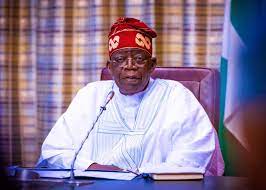
President Bola Tinubu on Friday approved the establishment of a Presidential Committee on Fiscal Policy and Tax Reforms.
He appointed the Fiscal Policy Partner and Africa Tax Leader at PriceWaterhouseCoopers, Mr. Taiwo Oyedele, as committee chairman.
Friday’s development comes barely 24 hours after the President signed four Executive Orders, suspending the five per cent excise tax on telecommunication services and the excise duties escalation on locally-manufactured vehicles.
The committee “Will comprise experts from both the private and public sectors and have responsibility for the various aspects of tax law reform, fiscal policy design and coordination, harmonisation of taxes, and revenue administration,” a statement signed by Tinubu’s Special Adviser on Special Duties, Communication and Strategy, Dele Alake, read on Friday.
According to the statement titled ‘President Tinubu sets up committee on tax reforms,’ the committee’s primary objective is to enhance revenue collection efficiency and ensure transparent reporting.
It will also promote the effective utilisation of tax and other revenues to boost citizens’ tax morale, foster a healthy tax culture, and drive voluntary compliance.
Alake cited earlier remarks by the Special Adviser to the President on Revenue, Mr Zaccheus Adedeji, who explained that Tinubu recognises the importance of a sound fiscal policy environment and an effective taxation system for the functioning of the government and the economy.
According to Adedeji, “Nigeria ranks very low on the global ease of paying taxes while the country’s Tax to GDP ratio is one of the lowest in the world and well below the African average.
“This has led to an overreliance on borrowing to finance public spending, which in turn limits the fiscal space as debt service costs consume a greater portion of government revenue, annually resulting in a vicious cycle of inadequate funding for socio-economic development.
“While some incremental progress has been recorded over the years, the outcomes have not been transformative enough to change the narrative,” he said.
Adedeji outlined the key challenges in Nigeria’s tax system, including multiple taxes and revenue collection agencies, fragmented and complex tax system, low tax morale, high prevalence of tax evasion, high cost of revenue administration, lack of coordination between fiscal and economic policies, and poor accountability in the utilisation of tax revenue.
Adedeji explained that the administration hopes to transform the tax system to support sustainable development and achieve a minimum of 18 per cent Tax to GDP ratio within three years without stifling investment or economic growth.
“It should be noted that this committee will not only advise the government on necessary reforms but will also drive the implementation of such recommendations in support of the comprehensive fiscal policy and tax reform agenda of the current administration,” the SA on Revenue added.
Oyedele, who chairs the committee, is the Thematic Lead for the Fiscal Policy & Planning Commission and Chairman of the West Africa Debt Management Roundtable of the Nigerian Economic Summit Group.
He also heads the Taxation & Fiscal Policy Faculty Board of the Institute of Chartered Accountants of Nigeria and is a member of the Nigerian Taxation Standards Board.
Oyedele serves as a member of the Ministerial Committee on implementing Nigeria’s National Tax Policy. He is a member of the Global Tax Forum and has previously served as a member of the Global Governing Council of the Association of Chartered Certified Accountants.
Oyedele, an Associate Professor at the Babcock University Business School, is an alumnus of the London School of Economics & Political Science, Yale University, and Harvard Kennedy School Executive Education.
He is also a guest lecturer at the Lagos Business School and the Founder and President of Impact Africa Foundation.








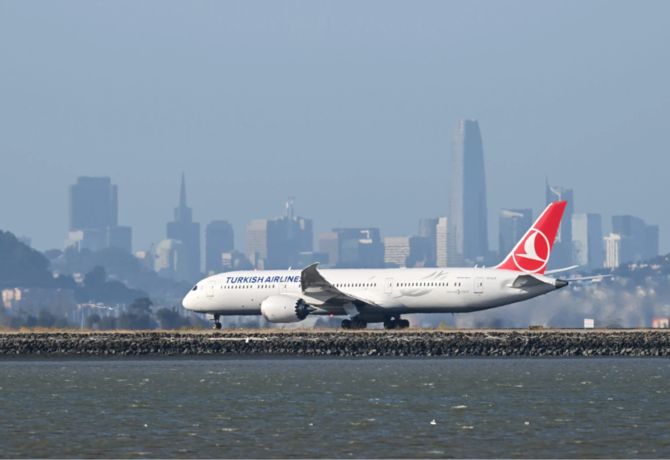
Airlines operating in Nigeria have issued a stern warning of an indefinite shutdown of flights if ongoing disruptions by aviation unions are not urgently resolved.
Industry operators cited repeated industrial actions, including strikes and work-to-rule tactics by union members, as severely impacting flight schedules, passenger movements, and operational costs. The threatened action could ground both domestic and international flights across major airports, including Lagos and Abuja.
Airline representatives stated that prolonged union-related interruptions have already caused significant financial losses and eroded passenger confidence. They called on the federal government and relevant labour authorities to intervene immediately to prevent a total collapse of commercial air travel.
No specific deadline for the proposed shutdown has been publicly announced, but stakeholders described the situation as “critical.” Passengers have been advised to monitor airline communications closely for any developments.
Authorities and union leaders have yet to issue detailed responses. Further updates are expected as talks continue.

A fire has broken out at the Lagos Customs Command office, officials confirmed early Monday.
Emergency services were dispatched to the scene as thick smoke rose from the building.
The cause of the blaze and the extent of the damage remain under investigation.
No immediate reports of casualties have been released. Authorities have urged the public to avoid the area while firefighters work to contain the flames.
Further updates are expected as the situation develops.
News
Nigeria is 66, Thursday October 1
The citizens are expecting the details of the anniversary events by the Federal Government, through the Minister of Interior, Olubunmi Tunji-Ojo.


Since Nigeria gained independence on October 1, 1960, the country will mark its 66th Independence Anniversary on Thursday, October 1, 2026.
The citizens are expecting the details of the anniversary events by the Federal Government, through the Minister of Interior, Olubunmi Tunji-Ojo.


BREAKING: Tragic One-Way Crash Claims Tricycle Driver’s Life in Meiran Lagos

BREAKING: AAC sues Tinubu, NASS over Europe vacation

2027: Atiku, ADC Move to Amend Suit Challenging Tinubu’s Eligibility

Tech Expert, Zuckerberg trains with UFC champions, Adesanya, Alexander

Organ Trafficking: Ekweremadu bags 10 years in UK prison

SAINT OBI: Between his marriage and his death
-
 Business1 day ago
SEC Highlights Focus of National Capital Market Conference 2026
-

 Business1 day ago
NGX Debuts Invest WhatsApp Channel
-

 Sports1 day ago
Flamingos win WAFU B U-17 women’s tournament
-

 Business1 day ago
Naira To Dollar, Pound, Euro …Today, September 28
-

 News1 day ago
Nigeria is 66, Thursday October 1
-

 Business1 day ago
Ghana Moves to Cut Domestic Airfares as Ticket Prices Stay High
-

 Entertainment1 day ago
Madonna and Taylor Swift win big at the MTV VMAs
-

 News21 hours ago
JUST IN: Fire Engulfs Lagos Customs Command Office