
Politics
Party Registration Hitches: INEC Finds Issues with Names, Requests

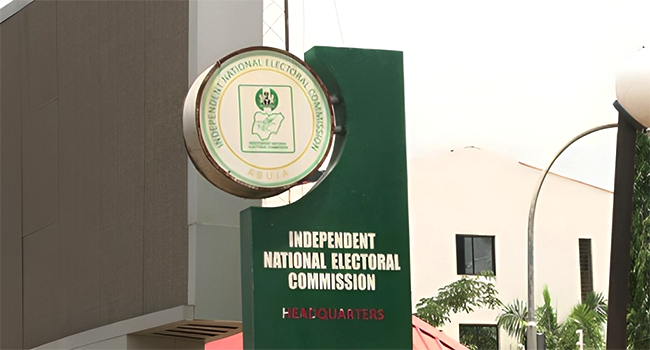
The Independent National Electoral Commission, on Wednesday, said it received letters of intent from 110 associations seeking registration as political parties.
It, however, flagged clashing names, and irregularities in the registration requests by most associations.
The list of the 110 parties, including proposed names, acronyms, addresses, and names of their protem chairmen and secretaries, was published on INEC’s website and social media platforms on Wednesday.
One of the proposed parties, the All Democratic Alliance, is reportedly supported by a coalition of prominent political figures, including former Vice President Atiku Abubakar, former Kaduna State Governor Nasir El-Rufai, and former Rivers State Governor Rotimi Amaechi.
Another group, believed to be backed by supporters of former Labour Party presidential candidate, Peter Obi, submitted a registration request under a similar name, raising concerns about potential acronym duplication.INEC noted that some of the proposed associations used identical acronyms, which violates the commission’s guidelines.
Additionally, 40 applications were missing a protem national secretary, five lacked a protem national chairman, and seven were missing both. Four submissions did not include an official address, while one application was submitted without a party logo.
Three applications—New Green Generation Party, New Green Congress, and New Green Coalition Party—listed the same individuals, Mallam Idris Abdulkarim and Amb Crystal Ikechukwu Ogu, as protem national chairman and secretary, respectively.
INEC also discovered that the Republican Party of Nigeria submitted two separate applications, each with different leadership and addresses. One was led by Col Vincent Enemoma Abu and Buhari Yakubu with an office in Mabushi, Abuja, while the other, led by MD Coma and Chief Abu Ali, listed an address behind Utako Market.
Also, there were two separate applications to register a party under the name Obidient Peoples Party.
Some applications had acronyms similar to those of previously deregistered parties, and several submissions were made by legal representatives or conveners without including the names of party officers, contrary to INEC’s regulations.
The list of proposed party names included a wide range of entities such as Key of Freedom Party, Absolute Congress, All Grassroot Party, Congress Action Party, United Social Democrats Party, National Action Congress, New Nigeria Congress, United People’s Victory Party, Allied Conservative Congress, Peoples Freedom Party, Abundant Social Party, All Nigeria’s Party, Citizens Party of Nigeria, National Freedom Party, Patriots Party, and Movement of the People.
Also included are the Peoples National Congress, Alliance of Patriots, African Union Congress, Socialist Equality Party, About Nigeria Party, Africa Reformation Party, Accelerated Africa Development Association, Obedient People’s Party, Zonal Rescue Movement, Zuma Reform, Party for Socialist Transformation, Liberation Peoples Party, Progressive Obedient Party, and Great Nigeria Party.
Other submissions feature names such as National Youth Alliance, National Reform Party, Patriotic Congress Party, Community Alliance Party, Grassroot Alliance Party, Advance Nigeria Congress, All Nigerians Alliance, All Labour Party, Team New Nigeria, About All Nigeria, Nigeria Liberty Movement, National Democratic Party, and Citizen United Congress.
Additional proposed parties include All Gender Party, Polling Units Ambassadors of Nigeria, Village Intelligence Party, Great Transformation Party, Alliance Social Party, Nigeria Democratic Alliance, New National Democratic Party, Nourish Democratic Peoples Congress, All Youth Reclaim Party, Marina Multipurpose Cooperative Society, Alliance Youth Party of Nigeria, The True Democrats, Democratic People’s Congress, National Democratic Movement, Economic Liberations Party, and Grassroot Ambassadors Party.
Other applications were filed under names such as All for All Congress, Peoples Democratic Alliance, United Youths Party of Nigeria, Peoples Liberations Party, Democratic Union for Progress, Citizen Democratic Alliance, Africa Action Group, Patriot Alliance Network, Democratic Leadership Party, Pink Political Party, Young Motivation and Awareness for Development Forum, Access Party, and Young Progressive Empowerment Initiative.
Further entries include the Republican Party of Nigeria, Sceptre Influence Party, Young Democratic Congress, Patriotic Nigeria Party, Far Right Party, Democratic Peoples Party, United Citizens Congress, Reset Nigeria, New Nigeria Democratic Party, Save Nigeria People Party, Above All, Alliance for Youth and Women, and Rebuild Nigeria Group.
The remainder of the proposed names comprise the Citizens Progressive Party, Guardian Party, Abiding Greatness Party, Patriotic Party, Development and Freedom Party, Peace, Unity and Prosper Culture, The Populist, New Nigeria Leadership Party, All Allies Alliance, National Action Network, Coalition for Nigerian Democrats, Abundance Africa Alliance, Free Will Humanitarian Party, People’s Emancipation Party, Peoples Liberations Congress Party, and Peoples Democratic Congress.
Speaking earlier during a consultative meeting with media executives in Abuja, INEC Chairman, Prof Mahmood Yakubu, stated that as of June 23, 2025, the commission had received 110 letters and was diligently processing them in accordance with electoral laws and guidelines.
“As of Monday, 23rd June 2025, the commission has received letters of intent from 110 associations that wish to register as political parties.
“We are diligently processing the requests in line with the procedure outlined in the law, as well as our regulations and guidelines.
“We have acknowledged all requests received so far except six of them received recently, which will be done before the end of the week,” he said.
Addressing concerns about impartiality, Yakubu dismissed claims that the commission was compromising its independence.
“We will treat all requests fairly, irrespective of the status of their promoters, be they ordinary or prominent citizens,” he said.
The INEC chair said the commission had acknowledged all but six of the letters received, adding that the handbook containing the 2022 regulations and guidelines for political parties was available on the commission’s website.
He also announced that the commission was ready to conduct outstanding by-elections and resume nationwide Continuous Voter Registration.
“I am glad to announce that the commission is now in a position to conduct the by-elections and to resume the nationwide CVR.
“The commission met yesterday and we are finalising the details of the two activities which will be made public in the next 24 hours,” he added.
He thanked the media for their continued support, adding, “We look forward to your support.”
The meeting also covered current electoral activities.
The INEC chairman noted that primaries for the Area Council elections in the Federal Capital Territory were ongoing and scheduled to conclude by June 30, 2025.
He said elections would take place across 68 constituencies, covering chairmen and deputies for six area councils and 62 wards.
“As you are aware, the election will be held in 68 constituencies made up of chairmen and their deputies for the six area councils, namely Abaji, the Abuja Municipal, Bwari, Gwagwalada, Kuje and Kwali, as well as 62 wards drawn on the basis of 10 wards for each area council, except AMAC, which has 12 wards on account of its population.
“The full delimitation details for the FCT are available on our website,” the chairman noted.
The upcoming Anambra State governorship election, set for November 8, 2025, was another major focus during the meeting.
Campaigning began on June 11 and will continue until midnight on November 6.Yakubu urged media personnel to promptly apply for accreditation to facilitate election coverage.
“I wish to appeal to you to promptly upload your applications for accreditation of media personnel for the Anambra State governorship election as soon as the portal opens,” he said.






Politics
Again, Desmond Elliot begs political mentor,Gbajabiamila , “I’m sorry, Daddy”
The latest apology is not the first time Elliot has publicly sought forgiveness from Gbajabiamila over the political disagreement.

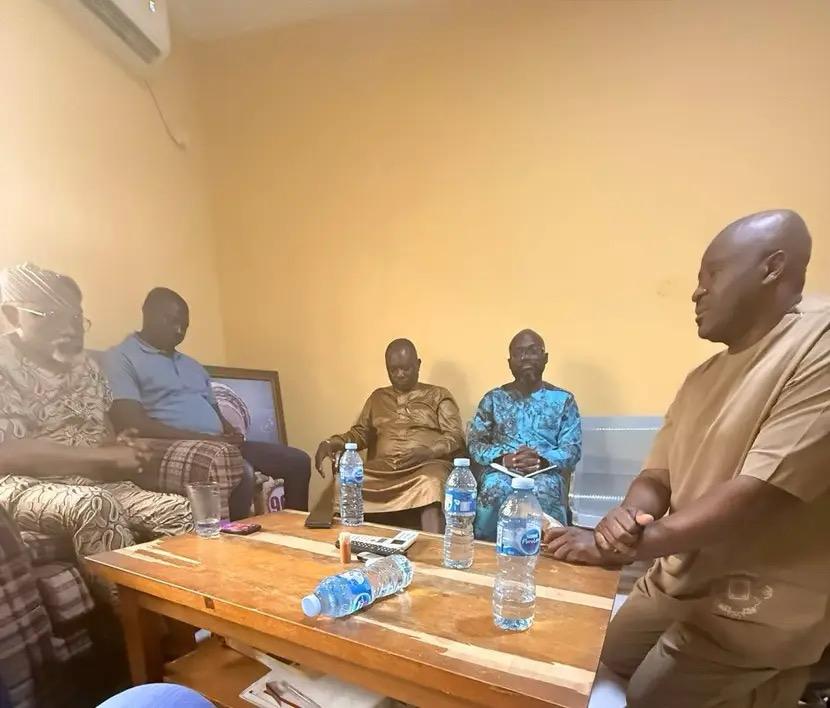
“I’m sorry. I have no excuse; I have nothing other than to say I’m deeply sorry. I’m deeply sorry, sir. And in our culture, we prostrate. Don’t be angry, Daddy.”
The above statement was made by
The lawmaker representing Surulere Constituency I in the Lagos State House of Assembly also reaffirmed his loyalty to the APC leadership and appealed for an end to any disagreement between him and Gbajabiamila.
The latest apology is not the first time Elliot has publicly sought forgiveness from Gbajabiamila over the political disagreement.
During an earlier appearance on TVC’s Your View, Elliot acknowledged that he may have offended his political mentor through his political engagements, while maintaining that any misunderstanding between them was not deliberate.
“I’m not saying, oh, yes, media will come out, oh yes, Desmond begs again. Yes, because he’s my egbon. And I grew up learning everything I knew in politics through him,” he said.
He added, “To err is human, to forgive is divine. So I’m sorry, my daddy, if I’ve offended you in any way.”
The dispute occurred amid the political tensions surrounding the Lagos State House of Assembly leadership crisis, during which Gbajabiamila said he faced difficulties at the Presidency over allegations concerning Elliot’s political activities.
Politics
I will concede defeat if 2027 election is credible — Obi
However, Obi maintained that he won the 2023 presidential election, saying those who conducted the poll knew what happened.
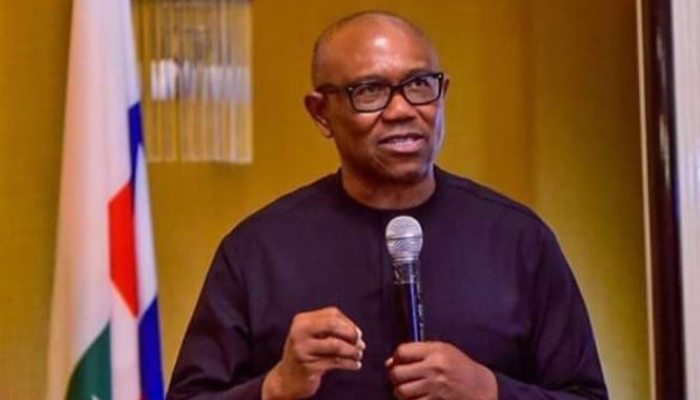
The presidential candidate of the Nigeria Democratic Congress (NDC), Peter Obi, has declared that he will concede defeat in the 2027 presidential election if the poll is free, fair and credible.
Obi stated this in an interview aired on Arise TV on Thursday, saying he would respect the will of Nigerians if they chose another candidate.
“If the election is free, fair and credible, I will because it’s an election. It’s the people that would say who they want to serve, and I will respect the will of the people; that’s democracy,” he said.
However, Obi maintained that he won the 2023 presidential election, saying those who conducted the poll knew what happened.
“I did, and I will maintain that as long as I live that I won the 2023 election. Those who conducted it know the records; they know why there was a glitch and what happened,” he said.
Fielding question on what about “turn-by-turn” presidency, Obi said elections should not be determined by tribe or religion.
“Election should not be driven by tribe or religion. Today, in terms of qualification, I’m qualified to be president of Nigeria. I have the competence; I have been all over the world studying what it takes to be president of a country, and I know what I can do to turn around this country in the right direction.”
Politics
Trump promises $5,000 ‘dividend’ to U.S. citizens if Republicans win midterms
It is estimated that the total proposed “Trump dividend” payout would cost more than $1 trillion — raising questions about how such an expense would be funded and its impact on fiscal strain facing the Federal budget.
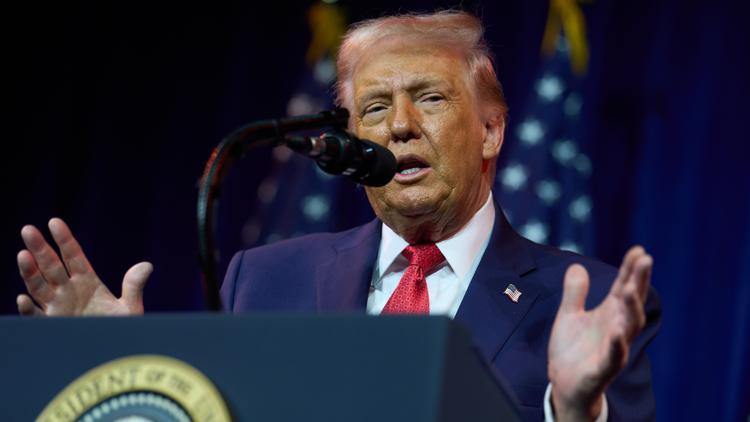
U.S. President Donald Trump has promised every adult American citizen a $5,000 “dividend” if the Republicans are victorious at the upcoming midterm elections.
Americans will vote in the midterms in early November, with the Democrats currently projected to win control of the House of Representatives.
Such a result would likely create barriers to Trump’s legislative agenda and send a signal about public opinion on the president’s policy mix throughout his second presidential term.
“Here is my promise: if the Republicans win the House of Representatives and the United States Senate, both of them… because of our tremendous strength and success economically, I will issue a dividend to every adult citizen in the United States of America for $5,000,” he told a crowd at the GOP’s midterm convention in Dallas.
“I’m asking you to pretend that I’m on the ballot,” he added.
It is estimated that the total proposed “Trump dividend” payout would cost more than $1 trillion — raising questions about how such an expense would be funded and its impact on fiscal strain facing the Federal budget.
The potential payout compares to the $1.27 trillion the U.S.


Macron Hosts Tinubu for Private Dinner at Élysée Palace (Photos)

Madonna Returns To MTV Video Music Awards, After 23 years

Emir Sanusi mobilises Kano People “Buy Dangote Refinery’s Shares Now”

Tech Expert, Zuckerberg trains with UFC champions, Adesanya, Alexander

Organ Trafficking: Ekweremadu bags 10 years in UK prison

SAINT OBI: Between his marriage and his death
-

 Health3 days ago
Ondo ‘Monkey Tail’ herbal drink kills 49
-

 Business3 days ago
Nigerians Speak As Petrol sells N1,500/litre
-
 Business2 days ago
Emir Sanusi mobilises Kano People “Buy Dangote Refinery’s Shares Now”
-
 News3 days ago
Digital Economy Minister Says NDPC Now Properly Functional With New HQ
-
 News2 days ago
UK court jails Nigerian man for masturbating in front of a woman
-
 Entertainment2 days ago
Madonna Returns To MTV Video Music Awards, After 23 years
-
 International2 days ago
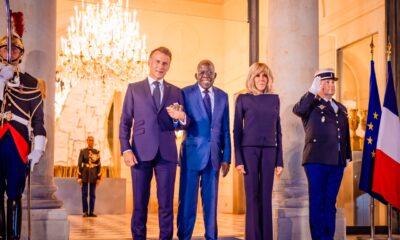
Macron Hosts Tinubu for Private Dinner at Élysée Palace (Photos)