
Politics
Drama as EFCC’s lawyer tags Yahaya Bello’s trial political
After the examination by the prosecution, the judge adjourned to tomorrow, June 27, for cross-examination by the Defendant’s Counsel.


Justice Emeka Nwite of the Federal High Court, Abuja, on Thursday, rejected a move by the Economic and Financial Crimes Commission (EFCC) to ‘cross-examine’ its third witness in the ongoing alleged money laundering case against the immediate past Governor of Kogi State, Yahaya Bello.
While delivering his ruling, Justice Nwite noted that there was no provision in the law that permits the court to allow the prosecution to re-examine its witness in the manner proposed.
This was just as the EFCC lawyer, Kemi Pinheiro, during the proceedings, described the case instituted against the former governor as a political case.
He emphasised that he was not prosecuting a bank official, but a political figure, “one who had even aspired to contest for presidency”.
He said this while arguments were being raised on whether the defence counsel would cross-examine the 4th witness when the prosecution concluded its examination at 2.30pm or wait till the next day.
The judge responded, “Political? If that is the case, then those handling political cases should prepare to take over the matter.”
On the ruling against the cross-examination of PW3 by the EFCC, the judge said, “I must agree with the learned counsel to the defendant that the prosecution can only cross-examine after it has declared the witness a hostile witness.
“The argument of the learned counsel to the prosecution is misconceived…This honourable court is not shutting the prosecution from re-examining the witness, but must restrict itself to pages 1, 14 and 15 of Exhibit 19.
“The prosecution is not allowed to re-examine the witness outside the pages prescribed.”
Nicholas Ojehomon, an internal auditor at the American International School, Abuja, had, at the last hearing, said there was no wired transfer of fees from the Kogi State Government or any of the local Governments in the state to the account of the American school.
On cross-examination, he also read out a part of a previous Federal Capital Territory High Court judgment that said there was no court order for AISA to return fees to EFCC or any judgment declaring the money as proceeds of money laundering.
After a brief re-examination, and the withdrawal of an earlier question posed to the witness, the EFCC lawyer, Kemi Pinheiro, SAN, told the court that the Commission had three other witnesses for the day.
During examination, Mshelia Arhyel Bata, a compliance officer with Zenith Bank, confirmed that the certificates of identification were attached to the statements of account provided by the bank in the seven sets of documents presented, as requested.
The court, thereafter, admitted the statements of account of Kogi State Government House Administration, and six others, as exhibits.
The witness, on subpoena, educated the court on the withdrawal limits allowed for individuals, corporate organisations and government, saying that before the cashless policy, it was pegged at N10 million for government.
The prosecution then took him to the 23rd of May, 2016 on the printed documents, and pointed at a transaction under the name, Abdulsalami Hudu.
When the witness was asked to explain the transaction, he said, “It is a cash withdrawal of N10 million in accordance with the then maximum threshold allowed for cheque withdrawal per transaction.”
He, however, said that he had nine cash transactions on the same date.
The witness was then told to go to the credit transactions of 30th January, 2018, and he confirmed that there were 10 separate credits of various sums, totalling about N1.092 billion.
When asked to mention the total amount of withdrawals, the Defendant’s counsel cut in: “He (Pinheiro, SAN), knows that they are for security votes.
“The witness aggregated the total amount of withdrawals to N1.968 billion, saying they were on different dates.”
He also read out the inflow and outflow between 2nd of May 2018 and 19th May, 2018.
After the examination by the prosecution, the judge adjourned to tomorrow, June 27, for cross-examination by the Defendant’s Counsel.


Politics
INEC removes 1.6m invalid voter records
The commission said it would publish the cleaned-up voter register on December 16, 2026, as required by the electoral law.

The Independent National Electoral Commission (INEC) on Monday said that it has removed 1,608, 660 invalid registrants from the voter register.
INEC in a statement said this is part of an ongoing clean-up exercise, following claims, objections and complaints that trailed the preliminary voter register that was displayed by the commission in October.
The clean-up exercise also led to the removal from the register of a total of 876 voters, who have been verified as deceased.
The commission said it would publish the cleaned-up voter register on December 16, 2026, as required by the electoral law.
Politics
Court of Appeal President Swears in 375 judges for 2027 election tribunals
Justice Dongban-Mensem, emphasised that the credibility of democracy depends not only on the conduct of elections but also on the existence of impartial, effective, and timely mechanisms for resolving electoral disputes.
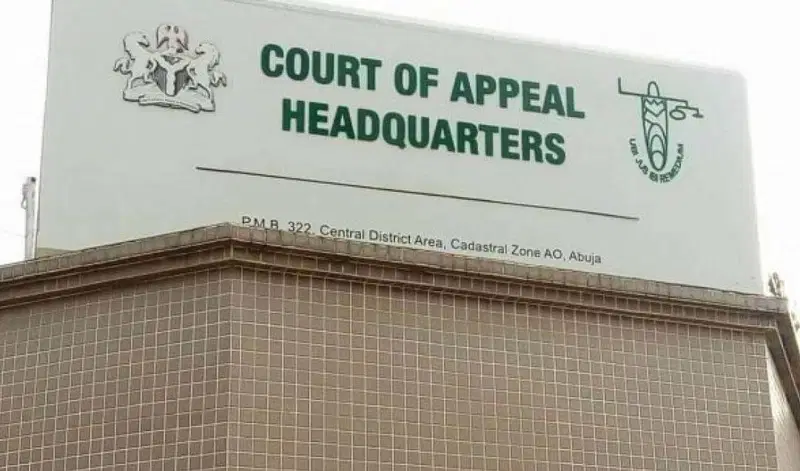
The President of the Court of Appeal, Justice Monica Dongban-Mensem, inaugurated today 375 judges to serve on tribunals that will hear 2027 general elections petitions filed by aggrieved parties across the country.
In her address on the occasion held at the Body of Benchers Complex in Abuja, she disclosed that the 375 tribunal judges were nominated from various courts and judicial institutions across the country.
“Of this number, 138 are returning members with previous Tribunal experience, while 237 are newly nominated members,” she added.
She urged the judges to be mindful that the judiciary will be subject to considerable public scrutiny owing to their actions.
Justice Dongban-Mensem, emphasised that the credibility of democracy depends not only on the conduct of elections but also on the existence of impartial, effective, and timely mechanisms for resolving electoral disputes.
said the inauguration of the tribunal judges highlighted a collective commitment to constitutional democracy, the rule of law, and the integrity of Nigeria’s electoral process.
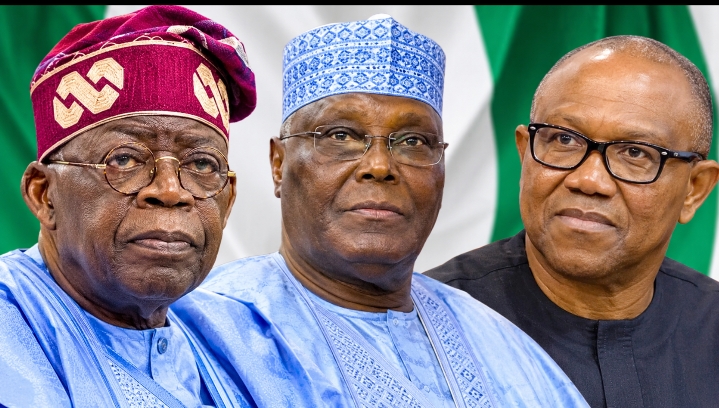
Cover image: The top three contenders
Ohibaba.com staff writer exclusively reports that as the 2027 elections approach, Nigerians need more than public declarations of peace from politicians.
Nigeria’s political environment is becoming increasingly charged as political parties intensify their campaigns ahead of the 2027 general elections.
Against this backdrop, questions are emerging about the effectiveness of the National Peace Accord signed by political parties and presidential candidates to promote peaceful, issue-based campaigns and discourage electoral violence.
The accord, facilitated by the National Peace Committee (NPC), was signed on August 18, 2026, ahead of the commencement of presidential and National Assembly campaigns.
Among the presidential contenders are President Bola Ahmed Tinubu of the All Progressives Congress (APC), former Vice-President Atiku Abubakar of the African Democratic Congress (ADC), and former Anambra State Governor Peter Obi of the Nigeria Democratic Congress (NDC).
They are among 18 presidential candidates cleared by the Independent National Electoral Commission (INEC) for the 2027 election.
The political parties and their candidates pledged to conduct peaceful campaigns, avoid inflammatory rhetoric, reject hate speech and misinformation, and refrain from personal attacks capable of escalating political tensions.
However, developments since the signing of the agreement have raised concerns about whether politicians are genuinely committed to its provisions.
A PEACE ACCORD WITHOUT CONSEQUENCES?
There is no doubt that the National Peace Accord has contributed to creating a framework for dialogue among competing political parties and candidates.
By bringing political rivals together to publicly commit themselves to peaceful elections, the initiative provides an opportunity to promote political tolerance, discourage hostility and strengthen democratic participation.
However, Nigeria’s experience with previous elections suggests that signing peace agreements does not necessarily translate into peaceful political conduct.
The 2023 general elections provide an important example.
The joint election observation mission of the International Republican Institute (IRI) and National Democratic Institute (NDI) documented widespread political violence during the 2023 election cycle, noting that it was more violent than the 2019 cycle.
The European Union Election Observation Mission also raised concerns about electoral violence and the failure to ensure accountability for perpetrators.
These findings raise a fundamental question: What happens when political parties and their supporters violate the commitments they have publicly made?
The problem appears to extend beyond the absence of peace agreements to the weakness of enforcement and accountability mechanisms.
Although arrests have been reported following previous incidents of electoral violence, questions remain about the transparency of investigations, prosecution of offenders and eventual sanctions.
Without consequences, the accord risks becoming a ceremonial exercise in which politicians make promises without being held accountable for their actions.
CAMPAIGN RHETORIC AND THE POLITICS OF PERSONAL ATTACKS
Recent campaign activities have also raised questions about the commitment of political leaders to issue-based electioneering.
On November 6, 2026, President Tinubu and Vice-President Kashim Shettima took their party’s re-election campaign to Akwa Ibom State, where they criticised opposition presidential candidates Peter Obi and Atiku Abubakar.
While Tinubu questioned Obi’s leadership record as former governor of Anambra State, Shettima challenged Atiku to account for the political structures, successors and enduring institutions he had built during his decades in public service.
Although political candidates have the right to scrutinise the records and policies of their opponents, such exchanges raise questions about the distinction between legitimate political criticism and rhetoric that could undermine the spirit of peaceful, issue-based campaigns.
Political competition should provide voters with an opportunity to compare candidates’ records, policy proposals and development programmes rather than degenerate into exchanges that heighten political hostility.
ASABA ATTACK: ANOTHER TEST FOR THE PEACE ACCORD
More recently, the reported attack on participants in the One Million Man March organised by the Obi/Kwankwaso (OK) Movement in Asaba, Delta State capital, has brought the issue of electoral violence into sharper focus.
The Delta State Coordinator of the movement, Mr Favour Emerue, called for an immediate investigation into the incident, alleging that armed hoodlums disrupted the peaceful procession and attacked participants with dangerous weapons.
According to him, one dead, several supporters sustained varying degrees of injuries and were receiving medical attention in hospitals across the state.
He also alleged that several campaign vehicles were vandalised during the incident.
Emerue described the attack as an assault on democratic participation and citizens’ constitutional rights to freedom of assembly and association.
The incident, which requires an independent investigation, raises serious concerns about the safety of political supporters and the ability of security agencies to protect citizens participating in lawful political activities.
It also presents another test for the National Peace Committee and the security agencies responsible for ensuring peaceful electioneering.
If political supporters cannot freely participate in campaign activities without fear of intimidation or violence, the fundamental principles underpinning the Peace Accord are undermined.
THE BIGGER QUESTION FOR 2027
The effectiveness of the National Peace Accord should not be measured by the number of politicians who sign it but by the extent to which its provisions are respected and violators are held accountable.
At the August signing ceremony, Peter Obi argued that Nigerians should punish politicians who violate the peace agreement through their votes.
Other opposition figures also expressed reservations about whether previous peace accords had achieved meaningful results beyond public declarations of commitment.
The concerns are not without historical justification.
The National Peace Committee itself has an important responsibility to monitor compliance, document violations and publicly identify political actors whose conduct contradicts their commitments.
However, the committee cannot single-handedly guarantee peaceful elections.
Effective policing, independent investigations, credible electoral institutions, impartial security agencies and the prosecution of offenders are equally essential.
Political parties must also take responsibility for the conduct of their candidates, members and supporters.
The government, particularly security agencies, must ensure that all political parties enjoy equal protection and that nobody is allowed to use violence or intimidation to suppress the political participation of others.
“Nigeria cannot continue to organise peace accord ceremonies while electoral violence remains a recurring feature of its democratic process.”
FROM PROMISES TO ACCOUNTABILITY
Nigeria’s National Peace Accord remains a valuable diplomatic and political instrument for encouraging dialogue and peaceful political competition.
However, its effectiveness as a deterrent against electoral violence remains a subject of serious concern.
The recent exchanges between political leaders and the reported attack on the OK Movement’s procession in Asaba illustrate why the commitments made at peace accord ceremonies must translate into responsible political conduct.
As the 2027 elections approach, Nigerians need more than public declarations of peace from politicians.
They need demonstrable commitment to democratic values, respect for opposing political views, protection of voters and supporters, and accountability for those who perpetrate electoral violence.
Ultimately, the credibility of the National Peace Accord will depend not on how many political leaders append their signatures to the document but on whether those who breach its provisions face identifiable consequences.
In summary, Nigeria cannot continue to organise peace accord ceremonies while electoral violence remains a recurring feature of its democratic process.


Senate Approves N100m For World Cup Winning Flamingos

Senate Fails to Meet Quorum Again as Akpabio Warns on 2027 Campaigns

Just In: Police Confirms Two Convicts Escape From Okene Correctional Centre.

BREAKING: Lagos Govt Declares Today, Thursday Work-Free to Mark 2026 Ìṣẹ̀ṣe Day

Tech Expert, Zuckerberg trains with UFC champions, Adesanya, Alexander

Organ Trafficking: Ekweremadu bags 10 years in UK prison
-

 Business3 days ago
Enugu Air Begins London Gatwick flights From December 10, 2026
-
 Politics3 days ago
Tinubu Woos Nigerian Youths At Rivers Rally
-

 Politics2 days ago
Governorship candidates Speak On Next Chapter For Lagos
-
 Business2 days ago
Dangote Says Refinery’s IPO Misses 10 Million Investors Target
-

 Business2 days ago
Naira Exchange Rates Monday, 9 Nov 2026
-

 News3 days ago
NNPCL Faults NISO’s Claim of No Gas To Power Generating Plants
-

 Sports3 days ago
Nigeria Wins First U-17 Women’s World Cup By 2:1 Against Japan
-

 Sports3 days ago
Manchester City lose ground in EPL title race