
Politics
BREAKING: INEC Withdraws Recognition of David Mark’s ADC

The Independent National Electoral Commission (INEC) has withdrawn its recognition of the Senator David Mark-led leadership of the African Democratic Congress (ADC), citing a recent judgment of the Court of Appeal.
The development stems from an ongoing leadership crisis in the party, pitting the faction led by former Senate President David Mark (as National Chairman) and former Osun State Governor Rauf Aregbesola (as National Secretary) against a rival group associated with Nafiu Bala Gombe, a former Deputy National Chairman.
According to reports, the Court of Appeal in Abuja, in a ruling delivered around mid-March 2026, dismissed an appeal filed by Senator Mark challenging an earlier decision of the Federal High Court. The appellate court struck out the appeal on procedural grounds, describing it as incompetent because it was filed against an interlocutory ruling without the required leave of court. It also directed parties to maintain the status quo ante bellum (the situation as it existed before the dispute escalated) pending the determination of the substantive suit at the lower court.
Factional leader Nafiu Bala Gombe subsequently wrote to INEC, arguing that the Appeal Court’s order effectively nullified the recognition previously granted to the Mark-led executive and threatened contempt proceedings against the electoral body if it continued to accord recognition to that leadership.
INEC’s decision to withdraw recognition appears to be in response to this interpretation of the appellate judgment and related petitions from the rival faction. The electoral commission had earlier recognized Mark and Aregbesola as the party’s national leaders following internal processes within the ADC.
The Mark-led ADC faction has consistently maintained that the Court of Appeal ruling was purely procedural and did not affect the legitimacy or tenure of its leadership. Party officials urged members not to panic, describing the judgment as preserving the status quo without sacking the current executives. Several state chapters have also disowned suits seeking to remove Mark.
The crisis has lingered for months, with multiple court cases filed by different factions. Earlier attempts to secure injunctions restraining INEC from recognizing Mark and Aregbesola were refused by the Federal High Court. Other suits challenging the leadership, including one involving former ADC presidential candidate Dumebi Kachikwu, have also been dismissed.
Political observers note that the withdrawal of recognition could have significant implications for the ADC’s participation in future elections, including the ability to submit candidate lists and access party funds or facilities. The substantive suit before Justice Emeka Nwite of the Federal High Court, which will determine the authentic leadership of the party, is still pending.
As at the time of filing this report, neither INEC nor the Mark-led ADC had issued an official statement confirming or reacting to the withdrawal of recognition. The development further deepens the internal divisions within what was positioned by some as a potential opposition platform ahead of future polls.
The African Democratic Congress has been embroiled in leadership tussles since Mark and Aregbesola assumed roles in the party, with accusations of constitutional breaches and external influences flying between factions. The final resolution now rests with the courts.




Politics
INEC : We Are Already Cleaning Up Our Register of AI-Generated Photos
The commission’s Director of Information and Communication Technology, Lawrence Bayode, confirmed this in a public statement on Sunday, emphasising that its Automated Biometric Identification System (ABIS) had flagged 268 records for review.

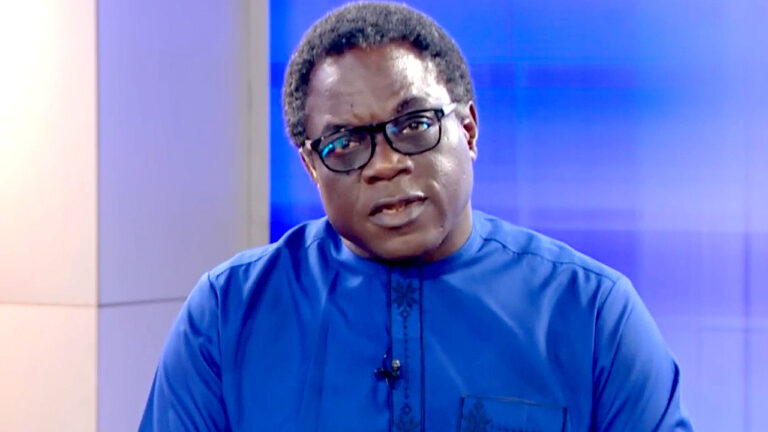
•Lawrence Bayode
The Independent National Electoral Commission (INEC) says it has begun cleaning up the affected Register of Voters following the identification of records with suspected AI-generated photographs and other irregularities.
The commission’s Director of Information and Communication Technology, Lawrence Bayode, confirmed this in a public statement on Sunday, emphasising that its Automated Biometric Identification System (ABIS) had flagged 268 records for review
.“What we are currently doing now is looking at all these 268 records that ABIS already flagged as AI-generated or even something of irregularities,” he said.
Bayode explained that some people allegedly used their official credentials to create questionable profiles, exploiting a registration option designed for persons with disabilities who do not have complete fingers or have no fingers.
According to him, the option, known as special registration, was used to deceive the system and was among the irregularities detected by ABIS.
Politics
NDC Tasks INEC to Remove Names of Deceased Nigerians From Voters’ Register
Some deceased Nigerians, including prominent figures such as Raymond Dokpesi, Ifeanyi Ubah, Muhammadu Buhari and Rotimi Akeredolu, still appear on the voters’ register, raising serious questions about its accuracy and integrity.
The Nigeria Democratic Congress (NDC) on Friday called on the Independent National Electoral Commission (INEC) to urgently clean up the national voters’ register by removing the names of deceased Nigerians still appearing on the commission’s database.
Dr. Chiogo Constance Ikokwu, Spokesperson National Presidential Campaign Council of the party, said that the clean up is critical for a credible 2027 general election.

According to her, some deceased Nigerians, including prominent figures such as Raymond Dokpesi, Ifeanyi Ubah, Muhammadu Buhari and Rotimi Akeredolu, still appear on the voters’ register, raising serious questions about its accuracy and integrity.
“These are just a few names. What about the 774 local government areas across Nigeria? How many deceased persons remain on the register? When was it last comprehensively updated? Is this an oversight, institutional failure or something more troubling?,” she queried.
She emphasised that INEC has the legal responsibility to cleanse the register, especially if it has been notified by citizens.
Her words: The electoral body owes Nigerians answers. We demand a credible, up-to-date and verifiable voters’ register ahead of the 2027 elections.
We call on Nigerians, and political parties to take advantage of their rights and file objections to the electoral body so INEC can effect removals.
On its part, INEC needs to look into these complaints, establish a portal to put all names under objection and give persons against whom a complaint has been lodged the opportunity to respond (in the case of the living), as well as publishing the procedure to object to illegal names in the interest of the public.
The electoral body is a well-funded organisation paid for by citizens, and therefore must provide value for money.
Nigerians will accept nothing less than the highest standards of efficiency, professionalism and accountability from INEC.
The electoral body must demonstrate that it has the capacity, competence and commitment to deliver an election whose credibility cannot reasonably be called into question.
This is not too much to ask; it is the bare minimum expected of an institution entrusted with the people’s democratic mandate.
Furthermore, in light of the 2023 election credibility challenges, it is time for an independent, unbiased and professional audit of INEC processes and mechanisms.
The 2027 election is too critical for unanswered questions about the very foundation of our democracy. No excuses. No complacency. No questionable register. INEC must do its job.”
Politics
Rochas Okorocha: 90% Of Nigerian Politicians Would Not Hold Office Under True Democracy
“Most of them are not truly the choice of people. These are people who are imposed, opportunists, who find their way,” he said.
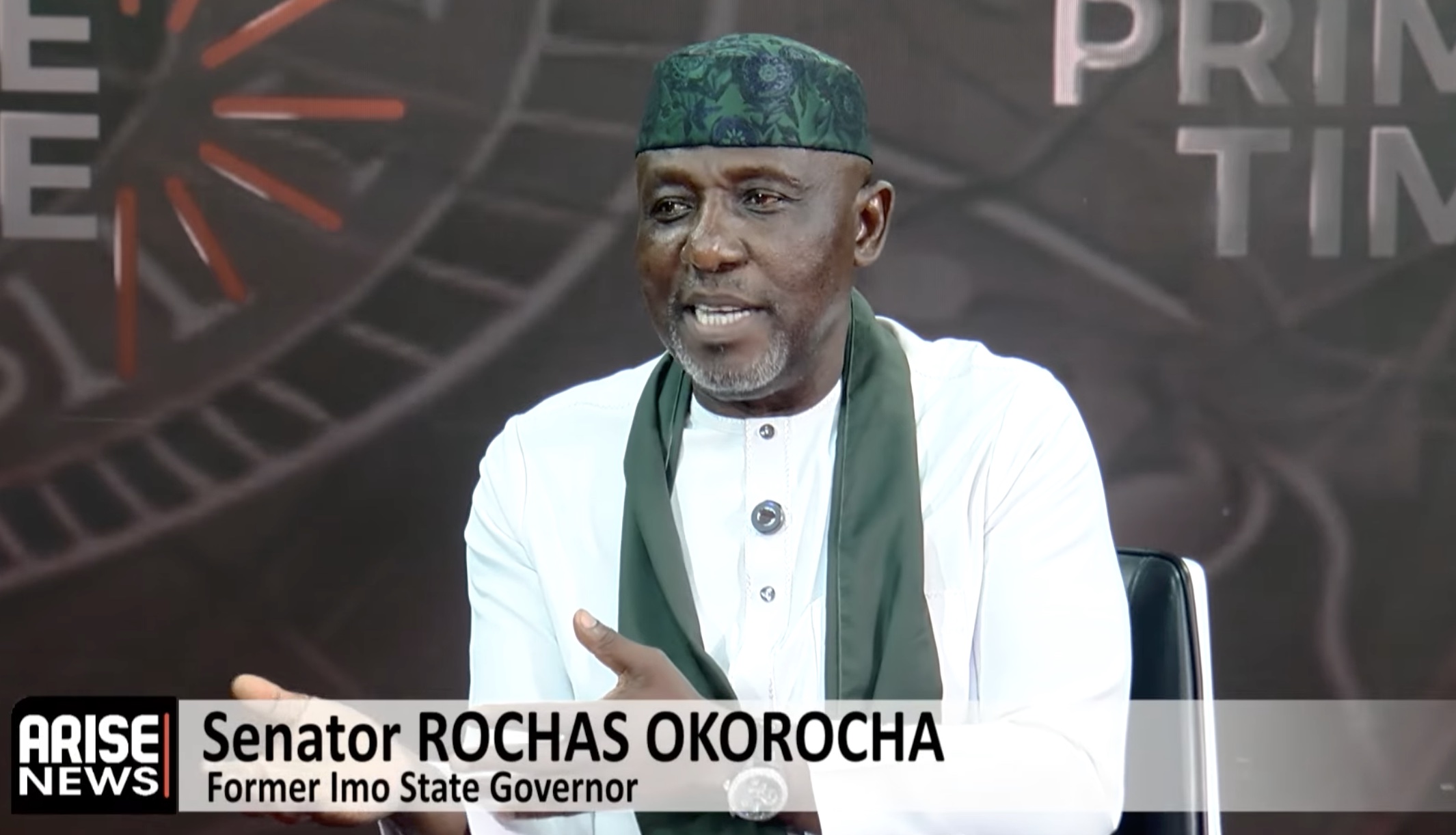
Former Imo State Governor Rochas Okorocha has said 90 per cent of Nigerian politicians would not remain in office if democracy were practised as it should be, arguing that many officeholders did not emerge through the genuine choice of voters.
Okorocha spoke during an appearance on Arise News on Thursday, while reacting to the Federal High Court’s judgment nullifying Governor Hope Uzodimma’s emergence as the All Progressives Congress candidate for Imo West Senatorial District in the 2027 elections and directing the Independent National Electoral Commission to recognise Okorocha as the winner of the party’s May 18 primary.
“If democracy is practiced the way it should be practiced, 90% of people holding office in Nigeria cannot hold office,” he said.
Okorocha argued that political candidates were often imposed on voters rather than emerging through a credible democratic process.
“Most of them are not truly the choice of people. These are people who are imposed, opportunists, who find their way,” he said.
The former governor said the court judgment was significant beyond his personal political contest, arguing that it raised broader questions about the integrity of party primaries and the electoral process.


Urbanisation: Lagos To Fall Behind Luanda as sub-Saharan Africa’s biggest city by 2050

Africa’s Top Five Strongest Currencies

JUST IN: Plane Crash Near Trump’s Florida Home Kills All 9 Aboard

BREAKING: Lagos Govt Declares Today, Thursday Work-Free to Mark 2026 Ìṣẹ̀ṣe Day

Tech Expert, Zuckerberg trains with UFC champions, Adesanya, Alexander

Organ Trafficking: Ekweremadu bags 10 years in UK prison
-

 Business1 day ago
Why Cement Is Expensive in Nigeria – PAMA
-

 Health2 days ago
BREAKING: NCDC Flags 2 New Suspected Ebola Cases in North-East
-

 Business1 day ago
African Energy Bank Headquarters Operation in Nigeria
-

 Business17 hours ago
Naira Exchange Rates Today, Monday November 2,2026
-

 Sports17 hours ago
Nigeria Thumbs up CAF For Samson’s Appointment As Secretary-General
-
Sports24 hours ago
CAF : Nigerian Samson Adamu Becomes General Secretary
-

 International17 hours ago
Tens of thousands protest against Narendra Modi regime in Delhi
-
 Politics16 hours ago
INEC : We Are Already Cleaning Up Our Register of AI-Generated Photos