
News
Nigeria New Tax Laws: What You Need to Know

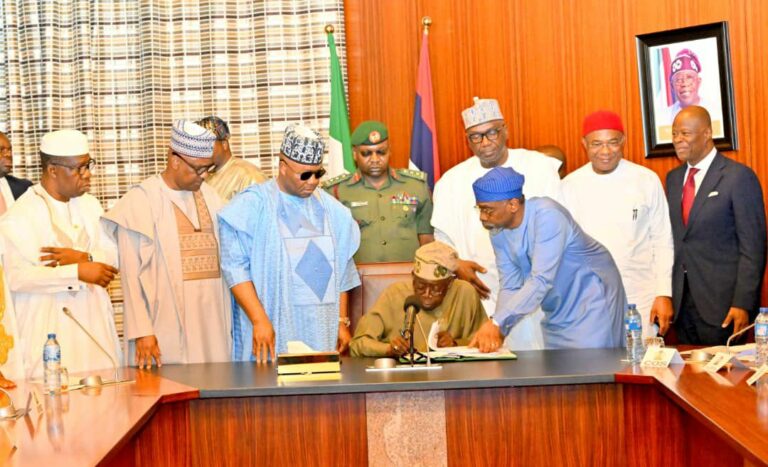
President Bola Tinubu on Thursday signed four new tax laws aimed at modernising and streamlining the country’s tax system.
In the new tax law, the Value Added Tax rate remains at 7.5 per cent despite initial proposals to increase to 12.5 per cent, but its scope is expanded.Essential items—such as food, education, healthcare, public transport, residential rent, and exports—are zero-rated to ease inflationary pressure.
For revenue allocation is restructured: now 30 per cent of VAT proceeds are distributed based on consumption (rather than contribution), 50 per cent equally among states, and 20 per cent to population-based allocation.
With the latest development, it is expected that state revenue streams will increase, and it will also discourage tax evasion.
Overview of the four new lawsNigeria Tax Act:
Consolidates various tax rules into a single, simplified code, eliminating over 50 small, overlapping taxes. This reduces complexity and duplication, making it easier for businesses to comply.
Tax Administration Act:
Establishes uniform rules for tax collection across federal, state, and local governments, ensuring consistency and reducing administrative conflicts.
Nigeria Revenue Service Act:
Replaces the Federal Inland Revenue Service with the independent Nigeria Revenue Service, aiming for greater efficiency and autonomy in tax administration.
Joint Revenue Board Act:
Enhances coordination between different government levels and introduces a Tax Ombudsman and Tax Appeal Tribunal to handle disputes fairly.
Key objectives of the new tax rules
Simplify Tax System:
Reduces bureaucratic hurdles and overlapping taxes to make compliance easier, especially for small businesses and informal traders.
Increase Revenue Efficiency:
Aims to boost Nigeria’s tax-to-GDP ratio from 10% (below the African average of 16–18%) to 18 per cent by 2026 without raising taxes on essential goods.
Reduce Financial Burden:
Provides relief for low-income households and small businesses while ensuring high-income earners and luxury consumers contribute more.
Fund Public Services: Increased revenue will support infrastructure, healthcare, and education, reducing reliance on borrowing.Who benefits and how
Low-Income Households:
Individuals earning up to ₦1 million ($650) annually receive a ₦200,000 rent relief, reducing taxable income to ₦800,000, exempting them from income tax.
VAT exemptions on essential goods and services (food, healthcare, education, rent, power, baby products) lower living costs.
Small businesses:
Businesses with an annual turnover below ₦50 million ($32,400) are exempt from company income tax.
Simplified tax filing without requiring audited accounts reduces compliance costs.
Large businesses:
Corporate tax rates drop from 30 per cent to 27.5 per cent in 2025 and 25 per cent thereafter.Tax credits for VAT paid on expenses and assets allow businesses to recover the 7.5 per cent VAT.
Charitable, educational, and religious organisations:
Tax incentives for non-commercial earnings, encouraging community-focused activities.
Impact on different groups
Low-Income Earners:
Benefit most from income tax exemptions and lower costs for essentials, increasing disposable income.
Small Businesses and informal traders:
Simplified rules and tax exemptions encourage compliance and reduce financial strain, potentially formalising more businesses.
High-income earners and luxury consumers face higher VAT on luxury goods and premium services, plus capital gains tax on large share sales.
Government: Expects increased revenue for public services without overburdening vulnerable citizens.
Why reforms were needed:
Nigeria’s tax system was outdated, inefficient, and disproportionately harsh on low-income groups.
The low tax-to-GDP ratio (10%) limited funding for critical services like healthcare and infrastructure.
Overlapping taxes and complex rules deterred compliance, especially among small businesses and informal traders.
Public and expert reactionsPositive sentiment:
Small business owners welcome tax exemptions but seek clarity on enforcement to avoid unexpected levies.
Low-income earners appreciate relief on essentials but remain cautious about implementation.
Taiwo Oyedele, head of the Presidential Fiscal Policy and Tax Reform Committee, claims 90% public support, emphasising that success depends on awareness and trust.
The reforms align with Tinubu’s administration’s goal to reduce economic inequality and boost fiscal capacity without overburdening citizens.
By encouraging voluntary compliance and reducing reliance on loans, Nigeria aims to strengthen its economy and fund development projects.
These reforms mark a significant step toward a fairer, more efficient tax system, with a focus on supporting vulnerable groups while fostering economic growth.
However, their success hinges on transparent enforcement and public trust.
For further details, you can refer to official statements from the Nigerian government or credible news sources covering the reforms.




An angry mob has set a Bus Rapid Transit (BRT) bus on fire after it reportedly crushed a commercial motorcyclist to death at Ogolonto Bus Stop along Ikorodu Road in Lagos State.
The incident occurred on Friday, October 16, 2026. Eyewitness accounts and social media reports indicate that the motorcyclist was riding alone along the restricted BRT lane when the collision happened. He died at the scene.
Enraged residents and youths then attacked the bus driver and set the vehicle ablaze. Police officers and officials of the Lagos Neighbourhood Safety Corps (LNSC), who were nearby, intervened promptly and rescued the driver unharmed.
The identity of the deceased motorcyclist and the exact circumstances of the crash had not been officially confirmed at the time of filing this report. It was also unclear whether any arrests had been made in connection with the burning of the bus.
News
ARISE News Wins Seven Honours At Nigerian Broadcasters Merit Awards
The awards recognised the network’s achievements in television journalism and programming, with ARISE News winning the Best TV Channel (Viewer’s Choice) category.


• ARISE News Anchor and host of What’s Trending Ojy Okpe was named Best Newscaster (TV – Female)
ARISE News has emerged as one of the major winners at the just ended Nigerian Broadcasters Merit Awards (NBMA).
ARISE News won seven honours across television broadcasting, news reporting, presentation and production during the ceremony.
The awards recognised the network’s achievements in television journalism and programming, with ARISE News winning the Best TV Channel (Viewer’s Choice) category.
The network’s flagship breakfast programme, The Morning Show, also won the Best TV Talk Show award, further strengthening its recognition in television broadcasting.
ARISE News Anchor and host of What’s Trending Ojy Okpe was named Best Newscaster (TV – Female).
Rufai Oseni was named Nigerian Broadcaster of the Year (Male), while Vimbai Mutinhiri-Ekpeyong received the Nigerian Broadcaster of the Year (Female) award.
The recognition extended to the network’s newsroom, with Ovieteme George winning Best TV News Reporter (Male) for his contributions to television news reporting.
Behind the camera, Sam Adeyemi received the Best Camera Operator/Cinematographer award, recognising his work in television production and visual storytelling.
News
Meta removes 3.7 million accounts in West Africa scam crackdown
The joint operation led to 28 arrests, identified more than 30 suspected scam centres and rescued 117 people allegedly trafficked and forced to work in scam compounds in Ghana.
Meta, the parent company of Facebook and Instagram, has removed more than 3.7 million Facebook and Instagram accounts, pages and groups linked to suspected scam networks operating in West Africa.
The joint operation led to 28 arrests, identified more than 30 suspected scam centres and rescued 117 people allegedly trafficked and forced to work in scam compounds in Ghana.
The company announced the crackdown in a statement on Tuesday, October 13, 2026. It involved 14 technology companies and law enforcement agencies from 10 countries.
The United Kingdom’s National Crime Agency coordinated the operation with the US Department of Justice, the Federal Bureau of Investigation and other agencies. Nigerian authorities were involved.
Other countries included Ghana, Australia, Canada, New Zealand and India.Tech companies that took part included Google, Microsoft, OpenAI, Coinbase, Starlink and Adobe.
Meta said the partnership let participants share intelligence across digital platforms, countries and financial systems to identify criminal networks.


JUST IN: Mob Sets BRT Bus Ablaze After Motorcyclist’s Death in Lagos

BREAKING: DSS Arrests Fugitive Maina Son, Hands Him to EFCC

BREAKING: 5 Arrested Over Imo NYSC Abduction

BREAKING: Lagos Govt Declares Today, Thursday Work-Free to Mark 2026 Ìṣẹ̀ṣe Day

Tech Expert, Zuckerberg trains with UFC champions, Adesanya, Alexander

Organ Trafficking: Ekweremadu bags 10 years in UK prison
-

 Business3 days ago
NAFDAC scolds fake manufacturers: “You are killing Nigerians in order to make money”
-
 Business3 days ago
Oyedele Chairs G-24 Call for Fairer Global Financial System, Affordable Development Financing
-
 Business2 days ago
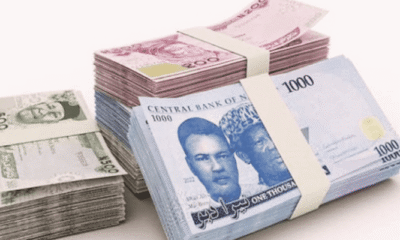
Naira Exchange Rates For Thursday, October 15
-
 Sports2 days ago
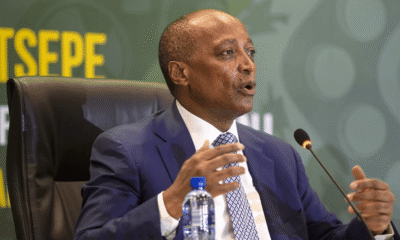
CAF Increases Annual Funding for Member Federations to $700,000
-

 Business1 day ago
Germany plans tax on sugary drinks
-
 Politics2 days ago
Exclusion of candidates from INEC list: CD cautions INEC against manipulation by politicians
-
 News1 day ago
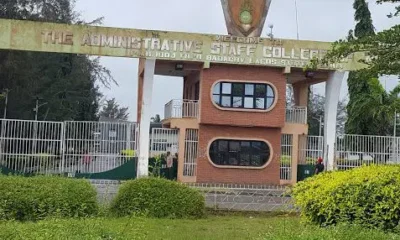
ASCON To Be Rebranded “National School Of Government”
-
 Business1 day ago
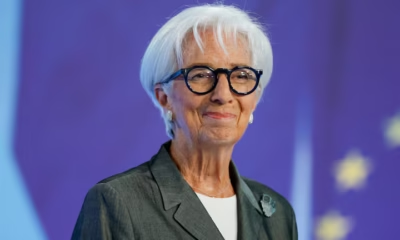
WEF could appoint Lagarde as its next chair, sources say