
News
Nigeria Launches National Halal Economy Strategy to Tap into $7.7 Trillion Global Market

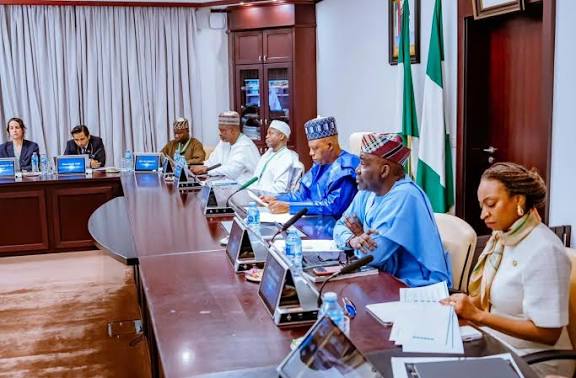
President Bola Ahmed Tinubu on Thursday unveiled Nigeria’s National Halal Economy Strategy, a major initiative aimed at positioning the country to capture a share of the rapidly expanding $7.7 trillion global halal market and accelerate economic diversification.
Represented by Vice President Kashim Shettima at the launch event held at the Presidential Villa in Abuja, President Tinubu described the strategy as a clear signal of Nigeria’s readiness to compete in this growing sector, which leading nations worldwide have already embraced.
The plan is projected to contribute an estimated $1.5 billion to Nigeria’s GDP by 2027, with cumulative efforts expected to unlock over $12 billion in economic value by 2030.
Vice President Shettima emphasized the need for disciplined, inclusive, and measurable implementation to translate the strategy into tangible benefits, including job creation, increased exports, and shared prosperity nationwide.
“It is with this sense of responsibility that I formally unveil the Nigeria National Halal Economy Strategy. This document is a declaration of our promise to meet global standards with Nigerian capacity and to convert opportunity into lasting economic value,” Shettima said. “What follows must be action that is disciplined, inclusive, and measurable, so that this Strategy delivers jobs, exports, and shared prosperity across our nation.
“He announced that the strategy’s implementation committee will be chaired by the Minister of Industry, Trade and Investment, Dr. Jumoke Oduwole, whom he described as “supremely competent.
“Key ambitions outlined in the strategy include expanding halal-compliant food exports, building value chains in pharmaceuticals and cosmetics, establishing Nigeria as a halal-friendly tourism destination, and scaling up ethical finance initiatives by 2030.
These efforts are expected to enhance food security, strengthen industrial capacity, and open doors for small- and medium-sized enterprises across the country.
Addressing concerns that the halal economy is tied exclusively to religious affiliation, Vice President Shettima clarified that it has evolved into a broader global framework centered on trust, quality, traceability, safety, and ethical production—principles that appeal to consumers, investors, and trading partners worldwide, regardless of faith.
He pointed out that advanced economies such as the United Kingdom, France, Germany, the Netherlands, the United States, Canada, Australia, and New Zealand have integrated halal standards into their export and quality systems, becoming major producers, certifiers, and exporters of halal food, pharmaceuticals, cosmetics, and financial products.
“The halal economy is a global market framework rooted in standards, safety, and consumer trust, not geography or belief,” Shettima noted.
The strategy stems from President Tinubu’s commitment to export diversification, foreign direct investment attraction, and sustainable job creation. It was developed in partnership with the Halal Products Development Company (HPDC)—a subsidiary of Saudi Arabia’s Public Investment Fund—alongside Dar Al Halal Group Nigeria, with support from the Islamic Development Bank and the Arab Bank for Economic Development in Africa.
The collaboration builds on a bilateral agreement signed in February 2025 at the Makkah Halal Forum.
It also aligns with recent diplomatic efforts, including an agreement on halal quality infrastructure signed with Türkiye during President Tinubu’s state visit, aimed at improving standards, certification, and international acceptance of Nigerian halal products.
Minister Oduwole, speaking as the committee chairperson, highlighted the public-private nature of the initiative, involving extensive stakeholder engagement and coordination across government agencies.
She stressed Nigeria’s potential to become a key exporter of halal-certified goods, leveraging the African Continental Free Trade Area (AfCFTA) for access to African and global markets, with participation remaining voluntary.
Alhaji Muhammadu Dikko Ladan, Chairman and CEO of Dar Al-Halal Group Nigeria, welcomed the collaboration and noted an ongoing export program with the Ministry of Industry, Trade and Investment to onboard Nigerian companies into the Saudi market and beyond, calling it a landmark opportunity for market access and foreign investment.
The French Ambassador’s representative, Carole Lebreton, expressed France’s interest in supporting Nigeria’s export ambitions in food, cosmetics, and pharmaceuticals, viewing the strategy as a bridge for stronger bilateral socio-economic ties.
The event was attended by key figures including the CEO of the Nigeria Export Promotion Council, Mrs. Nonye Ayeni; Managing Director of the Bank of Industry, Mr. Olasupo Olusi; and other senior officials.
The launch marks a strategic step in Nigeria’s push to integrate into international halal value chains while promoting inclusive economic growth through high-standard, ethical production systems.




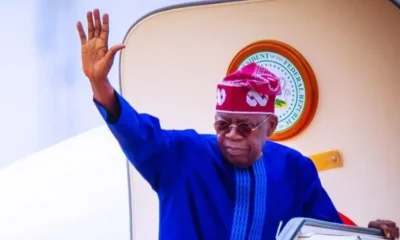


An angry mob has set a Bus Rapid Transit (BRT) bus on fire after it reportedly crushed a commercial motorcyclist to death at Ogolonto Bus Stop along Ikorodu Road in Lagos State.
The incident occurred on Friday, October 16, 2026. Eyewitness accounts and social media reports indicate that the motorcyclist was riding alone along the restricted BRT lane when the collision happened. He died at the scene.
Enraged residents and youths then attacked the bus driver and set the vehicle ablaze. Police officers and officials of the Lagos Neighbourhood Safety Corps (LNSC), who were nearby, intervened promptly and rescued the driver unharmed.
The identity of the deceased motorcyclist and the exact circumstances of the crash had not been officially confirmed at the time of filing this report. It was also unclear whether any arrests had been made in connection with the burning of the bus.
News
ARISE News Wins Seven Honours At Nigerian Broadcasters Merit Awards
The awards recognised the network’s achievements in television journalism and programming, with ARISE News winning the Best TV Channel (Viewer’s Choice) category.


• ARISE News Anchor and host of What’s Trending Ojy Okpe was named Best Newscaster (TV – Female)
ARISE News has emerged as one of the major winners at the just ended Nigerian Broadcasters Merit Awards (NBMA).
ARISE News won seven honours across television broadcasting, news reporting, presentation and production during the ceremony.
The awards recognised the network’s achievements in television journalism and programming, with ARISE News winning the Best TV Channel (Viewer’s Choice) category.
The network’s flagship breakfast programme, The Morning Show, also won the Best TV Talk Show award, further strengthening its recognition in television broadcasting.
ARISE News Anchor and host of What’s Trending Ojy Okpe was named Best Newscaster (TV – Female).
Rufai Oseni was named Nigerian Broadcaster of the Year (Male), while Vimbai Mutinhiri-Ekpeyong received the Nigerian Broadcaster of the Year (Female) award.
The recognition extended to the network’s newsroom, with Ovieteme George winning Best TV News Reporter (Male) for his contributions to television news reporting.
Behind the camera, Sam Adeyemi received the Best Camera Operator/Cinematographer award, recognising his work in television production and visual storytelling.
News
Meta removes 3.7 million accounts in West Africa scam crackdown
The joint operation led to 28 arrests, identified more than 30 suspected scam centres and rescued 117 people allegedly trafficked and forced to work in scam compounds in Ghana.
Meta, the parent company of Facebook and Instagram, has removed more than 3.7 million Facebook and Instagram accounts, pages and groups linked to suspected scam networks operating in West Africa.
The joint operation led to 28 arrests, identified more than 30 suspected scam centres and rescued 117 people allegedly trafficked and forced to work in scam compounds in Ghana.
The company announced the crackdown in a statement on Tuesday, October 13, 2026. It involved 14 technology companies and law enforcement agencies from 10 countries.
The United Kingdom’s National Crime Agency coordinated the operation with the US Department of Justice, the Federal Bureau of Investigation and other agencies. Nigerian authorities were involved.
Other countries included Ghana, Australia, Canada, New Zealand and India.Tech companies that took part included Google, Microsoft, OpenAI, Coinbase, Starlink and Adobe.
Meta said the partnership let participants share intelligence across digital platforms, countries and financial systems to identify criminal networks.


JUST IN: Mob Sets BRT Bus Ablaze After Motorcyclist’s Death in Lagos

BREAKING: DSS Arrests Fugitive Maina Son, Hands Him to EFCC

BREAKING: 5 Arrested Over Imo NYSC Abduction

BREAKING: Lagos Govt Declares Today, Thursday Work-Free to Mark 2026 Ìṣẹ̀ṣe Day

Tech Expert, Zuckerberg trains with UFC champions, Adesanya, Alexander

Organ Trafficking: Ekweremadu bags 10 years in UK prison
-
 Business3 days ago
Naira Exchange Rates Friday, October 16
-
 Crime2 days ago
BREAKING: 5 Arrested Over Imo NYSC Abduction
-
 News3 days ago
Meta removes 3.7 million accounts in West Africa scam crackdown
-

 News3 days ago
ARISE News Wins Seven Honours At Nigerian Broadcasters Merit Awards
-
 Crime2 days ago
BREAKING: DSS Arrests Fugitive Maina Son, Hands Him to EFCC
-
 News2 days ago
JUST IN: Mob Sets BRT Bus Ablaze After Motorcyclist’s Death in Lagos