
News
Mass failure: JAMB, VCs to review UTME results Thursday

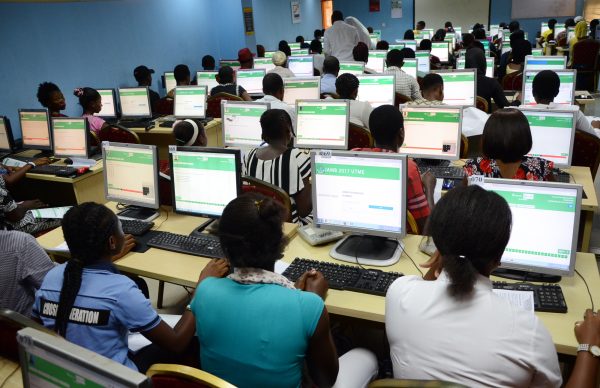
The Joint Admissions and Matriculation Board will on Thursday review the results of the 2025 Unified Tertiary Matriculation Examination following what it described as “unusual” public complaints.
A notice seen by The PUNCH in Abuja confirmed that the review meeting would bring together vice-chancellors, provosts, rectors, school principals, examiners, and technical experts to scrutinise the examination process and address the widespread dissatisfaction expressed by candidates and stakeholders.
This development comes in the wake of mounting protests from candidates and parents over the results released last Friday, with many alleging technical glitches and inconsistencies during the exam.
According to the official notice, the review panel, which includes members from the All Nigeria Confederation of Principals of Secondary Schools, the National Association of Proprietors of Private Schools, Computer Professionals Registration Council of Nigeria, the Educational Assessment and Research Network, and top officials from Nigeria’s tertiary institutions, will evaluate the conduct and outcome of the 2025 UTME.
“In furtherance of the commitment of the board to earn public confidence in its processes, the management of the board has approved your participation to be part of the review panel constituted to appraise the conduct of the examination with the mandate to identify challenges, if any, and proffer relevant recommendations to prevent a recurrence,” the notice reads in part.
It added that the panel’s assignment will be at no cost to the board.
The UTME is a critical prerequisite for admission into tertiary institutions in Nigeria. It tests candidates in four subjects, including the compulsory Use of English, with the other three drawn from their proposed field of study.
Of the 1.9 million candidates who sat the UTME, over 1.5 million reportedly scored below 200 out of the maximum 400 marks, raising concerns across the education sector.
According to the examination agency, a total of 1,955,069 results were processed, out of which only 4,756 candidates (0.24 per cent) scored 320 and above, considered top-tier performance, while 7,658 candidates (0.39 per cent) scored between 300 and 319, bringing the total for those who scored 300 and above to 12,414 candidates (0.63 per cent).
Also, 73,441 candidates (3.76 per cent) scored between 250 and 299 while 334,560 candidates (17.11 per cent) scored between 200 and 249.
A total of 983,187 candidates (50.29 per cent) scored between 160 and 199, which is widely regarded as the minimum threshold for admissions in many institutions.
In the same vein, 488,197 candidates (24.97 per cent) scored between 140 and 159, 57,419 candidates (2.94 per cent) scored between 120 and 139, 3,820 candidates (0.20 per cent) scored between 100 and 119, and 2,031 candidates (0.10 per cent) scored below 100.
Over 75 per cent of all candidates (1.5 million) scored below 200, average score seeing as the examination is graded over 400.
Some affected candidates threatened to initiate a lawsuit against JAMB.
Responding to the controversy, JAMB’s spokesman, Dr. Fabian Benjamin, on Monday said the board was accelerating its annual post-examination system review, which typically assesses the registration, examination, and result phases months after the exercise.
“We are particularly concerned about the unusual complaints originating from a few states within the federation,” Benjamin stated.
“We are currently scrutinising these complaints in detail to identify and rectify any potential technical issues.
”According to the statement, the board is scrutinising these complaints in detail to identify and rectify potential technical issues.
JAMB said the annual review encompasses three key stages: registration, examination, and result release.
It explained that during the examination, JAMB ensures that every candidate is afforded the opportunity to sit the test, and should any technical issues arise, the board reschedules the examination for affected candidates.
JAMB said experts have been engaged to assist in the review.
The Registrar of JAMB, Prof. Ishaq Oloyede, while reacting to the results said that the performance statistics for the 2025 Unified Tertiary Matriculation Examination are in line with results recorded over the past 12 years.
He emphasised, however, that such results are not unusual and align with historical patterns.
“This is not peculiar to this year. The performance statistics are consistent with those of the last 12 years,” he said.
In 2024, 76 per cent of candidates who sat the UTME scored less than 200 points.
In 2022, 1.3 million candidates out of 1.7 million – or 78 per cent – who sat the 2022 UTME scored below 200, according to JAMB.
In 2021, only 803 candidates out of 1.3 million – or 0.06 per cent – who sat the 2021 UTME scored above 300.
The Minister of Education, Dr. Tunji Alausa, while also reacting to the results, said the high failure rate in the 2025 Unified Tertiary Matriculation Examination was clear evidence that the government’s anti-malpractice measures were yielding results, especially within the Joint Admissions and Matriculation Board system.
Meanwhile, the JAMB board assured that any candidate affected by technical disruptions during the examination would be given another opportunity to write the test, in line with its established procedures.
Commenting on the performance outcome, the Minister of Education, Dr. Tunji Alausa, maintained that the results reflect the federal government’s strengthened efforts to combat examination malpractice and ensure integrity in the admissions process.
But candidates and parents have continued to allege discrepancies in the released results with some calling on the Board to release the modalities with which it scored each candidate.
Some candidates have rejected their results, insisting they do not reflect their actual performance.
A group of candidates, numbering over 8,000, reportedly submitted complaints regarding technical glitches experienced during the examination.
A social media user, @Pennyfabz, who scored 156 expressed concerns, saying she had previously scored 285 in the previous edition of the UTME.
“Dear @JAMBHQ, Something is wrong with my result. I’m very confident that this is not what I’m meant to get. Please look into this matter. I’m seriously comforting myself that everything is okay.
Please listen to our plea. I can’t go from 285 to 156,” the candidate posted on X.A parent also called for a review, saying, “We demand a remark from JAMB. These are exceptional students scoring below 200.
Many complained of incomplete questions and other technical issues. JAMB has said nothing. This cannot be swept under the rug.
”Meanwhile, it was not all about protests against the results as history was made with Afolabi Ayodeji, a 15-year-old student from Icons Comprehensive College in Ijapo Estate, Akure, Ondo State, scored 370 out of 400 maximum marks obtainable, setting a landmark record in the 2025 UTME result.
A breakdown of his scores, according to JAMB, indicates: Mathematics — 98, Physics — 98, Chemistry — 94 and Use of English — 80, highlighting his exceptional grasp of both the sciences and language subjects.
Ayodeji’s 370 score is the highest recorded in over a decade, marking a noteworthy milestone in Nigeria’s education sector in over a decade.
According to data from JAMB, no individual has attained a score of 370 since the inception of the board’s computer-based test in 2013, making his feat the highest in this era.
“I didn’t set out to break any record; I just wanted to give my best. I thank God, my parents, and my teachers for believing in me,” Ayodeji said after his feat.









News
FG launches new digital postcodes
The code is designed to provide a precise, GIS-enabled reference for identifying locations.

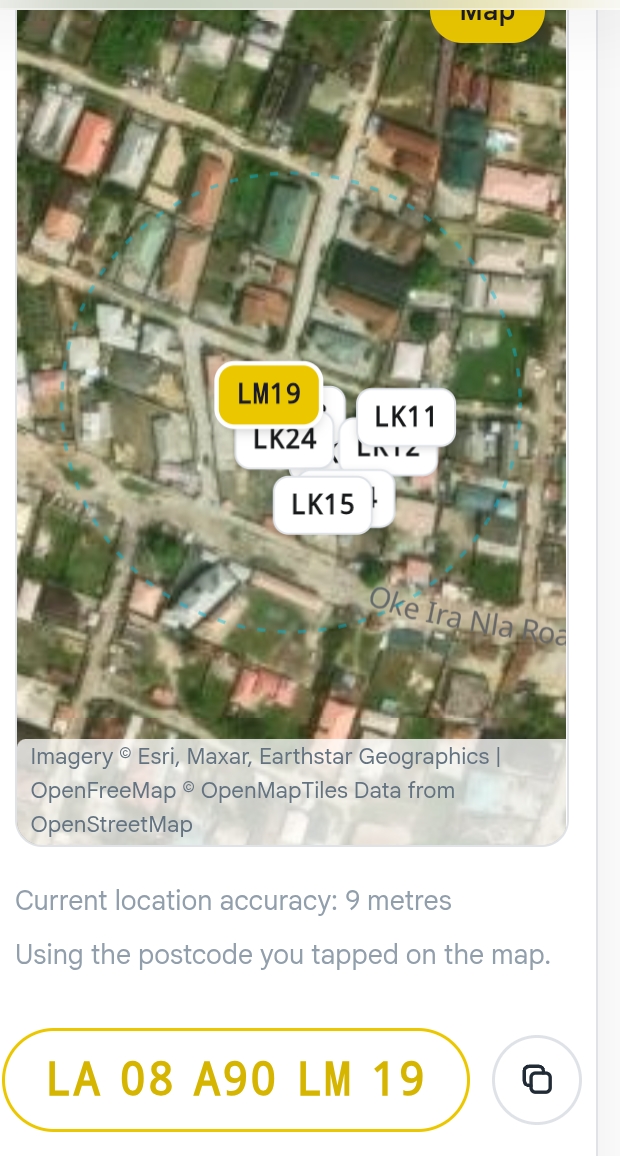
• Image credit: NIPOST
The Federal Government has launched the National Digital Alphanumeric Postcode System, urging Nigerians to find and begin using their postcodes.
The National Digital Alphanumeric Postcode, operated by the Nigerian Postal Service, gives every addressable building a unique 11-character code — the code is designed to provide a precise, GIS-enabled reference for identifying locations.system. Easier to find, share and use.
The Minister of Communications, Innovation and Digital Economy, Bosun Tijani announced the launch in a post on X on Thursday.
Tijani described the system as a step towards making locations across the country easier to identify and connecting people and businesses to services and opportunities.
Tijani said the system could help businesses reach customers beyond their immediate neighbourhoods, enable families to provide accurate locations during emergencies and help government agencies reach communities with essential services.
The minister encouraged Nigerians to search for their postcodes through the official Digital Postcode website, postcode.gov.ng, and share them with family members, friends and businesses.
News
Nigeria @ 66: President Tinubu says next phase of reforms’ll cut cost of living
“Our reforms did not create the weaknesses in our economy. They confronted them,” he said, while warning against attempts to reverse the policies and return to what he described as the “abuse of addictive subsidies”.
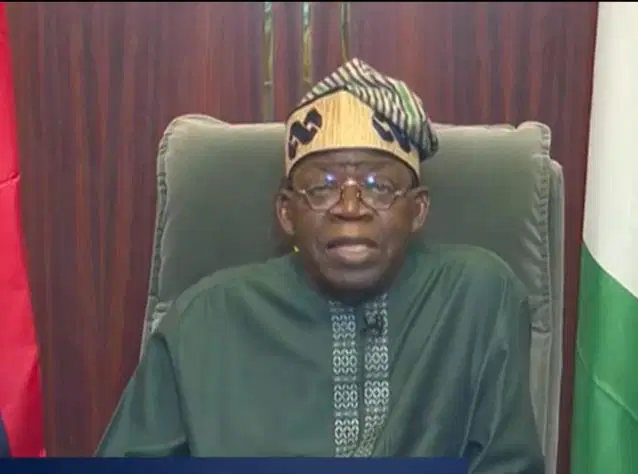
President Bola Tinubu has declared that the next phase of his administration’s reform will be focused on reducing the cost of living, creating jobs and ensuring that the benefits of economic growth were widely shared.
President Tinubu gave the assurance in his Independence Day address to mark Nigeria’s 66th anniversary, titled “From Reform to Prosperity”, in which he defended the economic policies of his administration and urged Nigerians to stay the course.
Tinubu said the reforms undertaken since his assumption of office had corrected the country’s economic direction, describing them as painful but necessary treatment for longstanding structural problems.
Using a cancer patient as an analogy, the President said Nigeria had for too long treated the symptoms of its economic problems rather than confronting their underlying causes.
“By 2023, poverty was rising, and hope was nearly gone. The country’s situation was darker than ever. We had no choice but to act,” he said.
Tinubu said previous administrations had chosen “morphine” by sustaining inefficient arrangements and postponing difficult decisions, while his administration chose to “excise the cancer”.
He acknowledged that the reforms had produced painful “side effects”, but argued that the hardship should not be confused with the underlying economic problems they were designed to address.
“Our reforms did not create the weaknesses in our economy. They confronted them,” he said, while warning against attempts to reverse the policies and return to what he described as the “abuse of addictive subsidies”.
The President’s speech came as some stakeholders and analysts regretted that, despite various reforms embarked upon by successive Federal Governments, the country was yet to come out of the woods economically and socially.

Former Vice President Atiku Abubakar has demanded the immediate release of five men arrested in Borno State for wearing T-shirts bearing the slogan “Tinubu Must Go.”
In a statement issued on Wednesday, the African Democratic Congress (ADC) presidential candidate condemned the arrests, describing the slogan as a legitimate political expression rather than a crime. He argued that wearing a T-shirt with a political message should not lead to detention in a democracy.
The five men — identified as Baba Aji Gremami, Mustapha Abba Yemen, Abacha Mohammed Ali, Adam Umar Gubio and Abdulhamid Mohammed — were reportedly arrested by the Borno State Police Command in Maiduguri and charged with offences including criminal conspiracy and inciting disturbance.
Atiku recalled that President Bola Tinubu had previously protested against the fuel pricing policies of the Goodluck Jonathan administration. He insisted that Nigerians must equally be free to express dissatisfaction with current government policies.
“‘Tinubu Must Go’ is a demand for political change. It is not a weapon, a threat or a crime,” Atiku said. “Tinubu was free to tell Jonathan that his policies were hurting Nigerians. Nigerians must be free to tell Tinubu that his policies are hurting them. Release these five citizens now.”
He called on the authorities to disclose the detainees’ whereabouts, grant them access to their families and lawyers, and free them if the political slogan was the sole basis for their arrest.


Naira Rates To Dollar, Pound ,Euro… Friday, October 2

Obafemi Hamzat promises to end ‘unauthorised levies’ in Lagos if he is elected

President Tinubu, Other Political Leaders Watch MKO Documentary

Tech Expert, Zuckerberg trains with UFC champions, Adesanya, Alexander

Organ Trafficking: Ekweremadu bags 10 years in UK prison

SAINT OBI: Between his marriage and his death
-
 Business2 days ago
Naira To Dollar, Pound, Euro… Rates Friday, October 1
-

 News2 days ago
Nigeria @ 66: President Tinubu says next phase of reforms’ll cut cost of living
-

 News3 days ago
Atiku Demands Release of 5 Arrested Over ‘Tinubu Must Go’ T-Shirts
-

 News3 days ago
FG Declares October 1 Public Holiday to Mark Independence Day Anniversary
-

 Business2 days ago
Court orders NMDPRA to continue issuing fuel import licences to Matrix Energy, AA Rano, AYM Shafa
-

 International3 days ago
Plane Makes Emergency Landing After Pilots Fight in Cockpit
-
 News2 days ago
FG launches new digital postcodes
-

 Business3 days ago
ON-GOING: Dangote $16 billion refinery groundbreaking holds in Kenya (Images)