
News
FG sustains 18 years entry age for SSCE, UTME candidates

The House of Representatives Committee on Basic Education has confirmed that the minimum age for candidates sitting for the Senior Secondary School Certificate Examination remains at 18 years.
The Minister of Education, Prof Tahir Mamman, had in July stated that with effect from 2025, any candidate below the age of 18 will not be allowed to sit the SSSCE and without which such students cannot secure admission to higher institutions of learning.
The announcement generated heated debate among parents and education stakeholders.
Following this, the Committees on Basic Education and Examination Boards took this matter to the leadership of the House of Representatives.
The speaker, Tajudeen Abbas, promptly appointed the House Leader, Prof Julius Ihonvere, to moderate a meeting between the two committees and the Minister of Education, Prof Tahir Mamman.
“The meeting was held on Wednesday, September 4, and the minister attended together with the Minister of State for Education, Dr Tanko Sununu, as well as the heads of basic education examination bodies.
The minister explained that the policy that relates to the 18 years age requirement for entry into the university is a policy that was developed before the adoption of the 6-3-3-4 system.
The Chairman of the House of Representatives Committee on Basic Education, Mark Useni, gave reasons the Federal Government might not likely reverse the decision.
The minister explained that the policy that relates to the 18 years age requirement for entry into the university is a policy that was developed before the adoption of the 6-3-3-4 system.
He explained that the policy also has a root in the Universal Basic Education Act.
Useni, a member of the All Progressives Congress representing Takum/Donga/Ussa Federal Constituency, Taraba State, frowned on the situation where children not older than 12 “are being made to seek admission into universities.
“While the policy is meant to ensure that children pursue their education alongside their cognitive and physical development and maturity, the Ministry of Education should develop a framework for proper transition into a full policy implementation.
“The Ministry of Education must ensure that students who are already progressing in the senior classes in secondary schools are not left stranded after completion of that level of education.
“We mandated the minister and his team to work out ways of handling the policy based on data available to the ministry and ensure that the policy does not jeopardise public interest,” he added.
Earlier, Prof Tahir said the policy is not peculiar to Nigeria, while also making reference to military and paramilitary institutions which place the entry age at 18 years.
He also said that the voting age in Nigeria is pegged at 18 years.




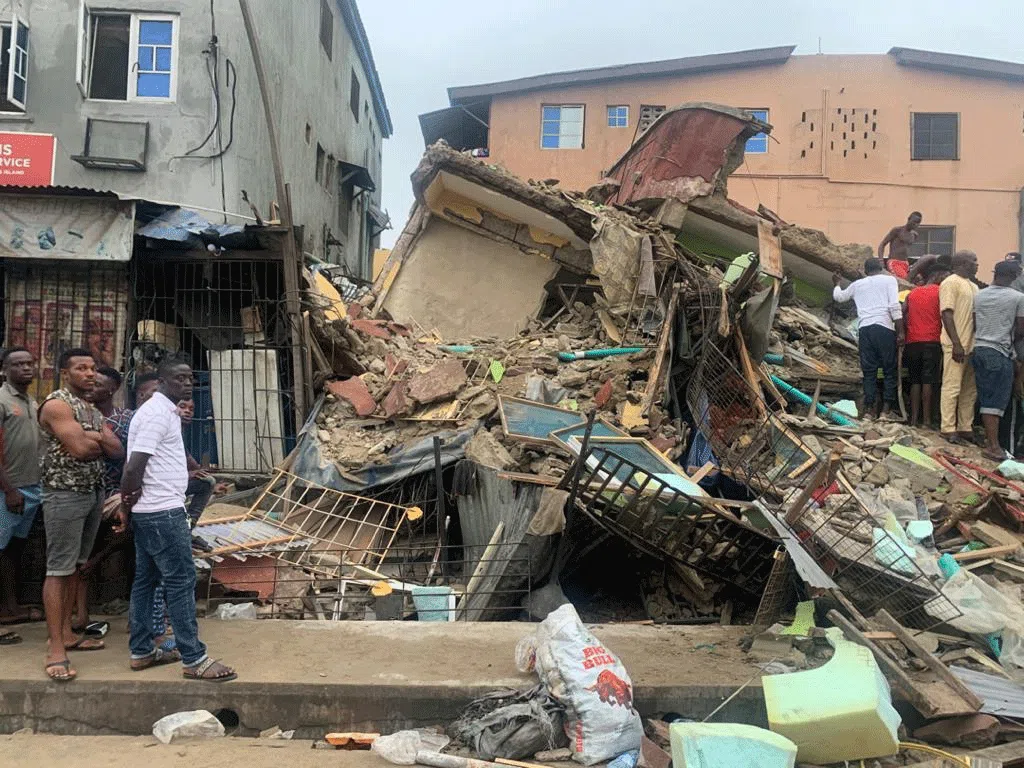
A two-storey building undergoing manual demolition partially collapsed in the early hours of Thursday in the Alimosho area of Lagos State, leaving one person dead and two others injured.
The incident occurred at No. 42, Governors Road, Aboru. The Lagos State Emergency Management Agency (LASEMA) received a distress call and immediately dispatched its Alpha Eagle Response Team from the Cappa, Oshodi unit at about 12:56 a.m.
First responders arrived promptly, cordoned off the scene and began search-and-rescue operations. Preliminary findings indicated the structure caved in while workers were carrying out the demolition, trapping several people under the debris.
In a coordinated effort involving LASEMA, the Lagos State Fire and Rescue Service and the Lagos State Ambulance Service (LASAMBUS), two adult males were successfully pulled alive from the rubble.
They received on-site first aid from LASAMBUS personnel before being transferred to a nearby health facility for further treatment.
Sadly, one adult male was recovered dead from beneath the collapsed structure.
LASEMA Permanent Secretary Dr Olufemi Oke-Osanyintolu expressed condolences to the family of the deceased and wished the injured a speedy recovery.
He also reaffirmed the Lagos State Government’s commitment to protecting lives and property, warning developers and property owners against compromising safety during construction or demolition works.
Further updates are expected as investigations continue into the exact cause of the collapse.
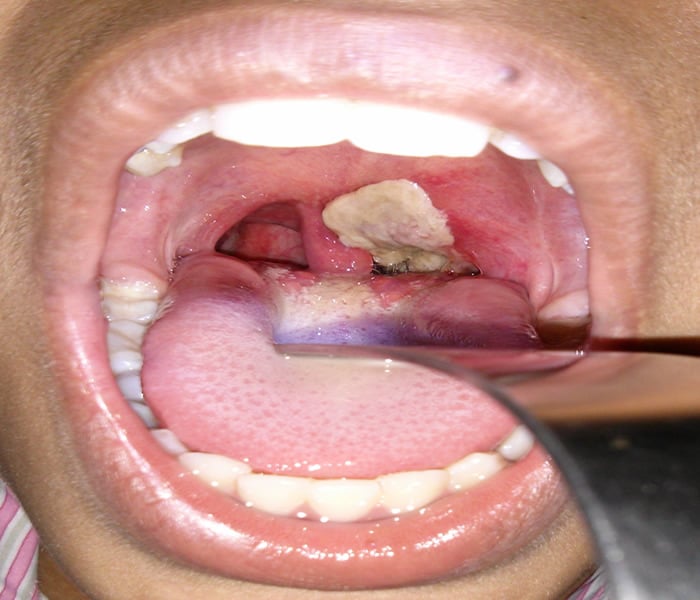
The Lagos State Government has confirmed six laboratory-verified diphtheria cases in 2026, drawn from 53 suspected infections, while insisting the state is not facing a widespread outbreak.
Commissioner for Health Prof. Akin Abayomi disclosed the figures at a press briefing in Alausa, Ikeja, on the state’s diphtheria preparedness and response. He said all six confirmed patients had been treated and that their contacts were traced and monitored through the incubation period.
“We are appealing to all Lagosians to remain calm. There is currently no outbreak of diphtheria in Lagos. We are taking precautionary measures,” Abayomi said.
Officials said the extra vigilance is because outbreaks are continuing in other parts of Nigeria and because Lagos has a large, highly mobile population. The state has strengthened surveillance across its 57 local government and local council development areas, expanded laboratory testing and designated treatment centres. Those facilities are Mainland Hospital (formerly the Infectious Disease Hospital), Yaba; Massey Street Children’s Hospital, Lagos Island; Lagos University Teaching Hospital (LUTH); and Lagos State University Teaching Hospital (LASUTH).
Abayomi urged parents to complete the three-dose pentavalent vaccine schedule at six, 10 and 14 weeks, noting that full childhood immunisation coverage in Lagos is about 64 per cent. Residents with a severe sore throat, fever, weakness, difficulty swallowing or breathing, neck swelling, or a white or grey membrane at the back of the throat were advised to seek care promptly and avoid self-medication, especially after travel to affected states.
News
Police arrest 46 for obstruction of Obi’s convoy in Benue
” Key arrests have been made, while efforts are ongoing to apprehend all other persons connected with the incident,” said Commissioner of Police, Cletus Nwadiogbu
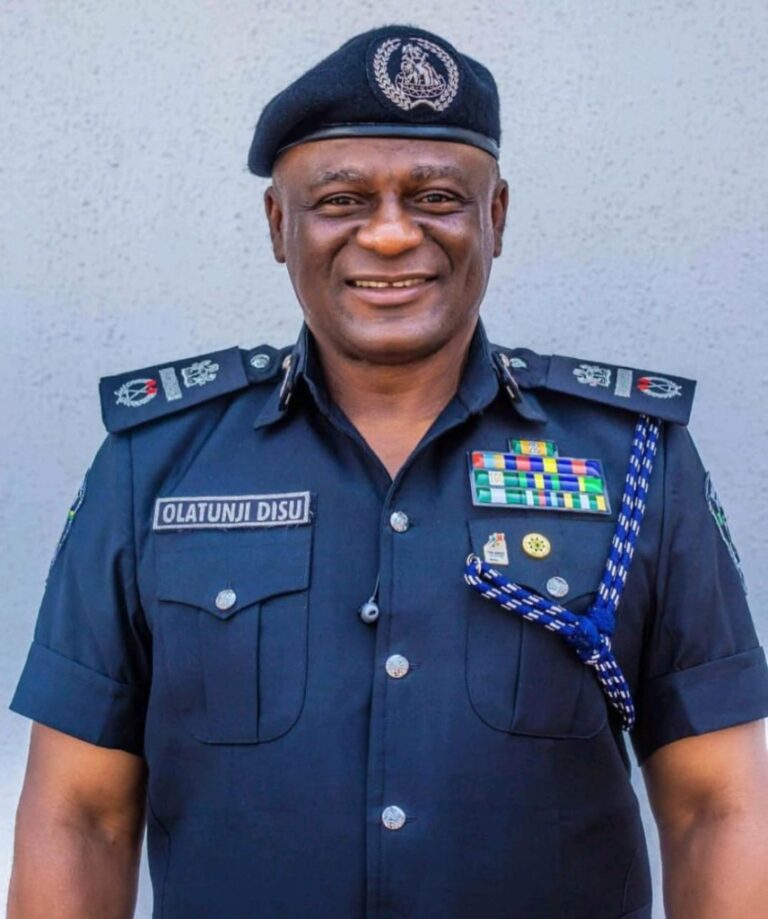
| • IGP, Tunji Disu
Benue State Police Command said that they have so far apprehended 46 suspects in connection with the obstruction of the presidential candidate of the Nigerian Democratic Congress (NDC) Peter Obi’s convoy during his visit to the state on Tuesday.
“Key arrests have been made, while efforts are ongoing to apprehend all other persons connected with the incident,” said Commissioner of Police, Cletus Nwadiogbu.
He stressed that the command remains a neutral institution, noting that every citizen possesses the constitutional right to freedom of movement regardless of political affiliation.He warned that with the 2027 general elections approaching, security agencies will not tolerate actions capable of escalating political tensions.
He warned that with the 2027 general elections approaching, security agencies will not tolerate actions capable of escalating political tensions.
Nwadiogbu also clarified that Obi’s representatives had initially described the trip as a non-campaign visit to families affected by the Yelwata crisis, promising that only a small entourage would accompany him.
He confirmed that the command was notified of Obi’s visit at approximately 5:30 p.m. on Monday.
The police deployed adequate security, including three police escort vehicles and personnel led by an Assistant Commissioner of Police, to safeguard the former Anambra State governor.
However, a group of persons subsequently blocked Obi’s movement, creating a tense environment that threatened to escalate into violence.
Nwadiogbu said the police made a tactical and professional decision not to use force immediately, aiming to prevent loss of life and destruction of property.
Obi was eventually escorted safely back to the airport and departed the state without further incident.


I will concede defeat if 2027 election is credible — Obi

JUST IN: One Dead, Many Feared Trapped as Two-Storey Building Collapses in Lagos

Trump promises $5,000 ‘dividend’ to U.S. citizens if Republicans win midterms

Tech Expert, Zuckerberg trains with UFC champions, Adesanya, Alexander

Organ Trafficking: Ekweremadu bags 10 years in UK prison

SAINT OBI: Between his marriage and his death
-

 Business3 days ago
NAFDAC Goes After Chinese Logistics Firms Over Products Counterfeiting
-
 International2 days ago
Kenya gives foreign workers 90 days to formalise status or leave
-
 News3 days ago
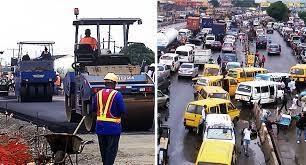
JUST IN: Traffic Chaos Expected on Lagos-Ibadan Expressway From Tuesday
-
 Sports3 days ago
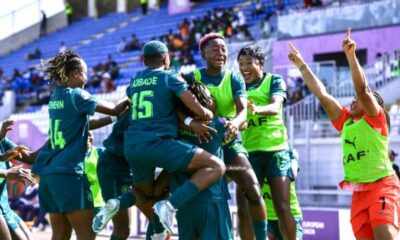
Falconets lose World Cup opener to Spain
-

 Entertainment2 days ago
Ikenga becomes highest-grossing Igbo film of all time
-
 Politics2 days ago
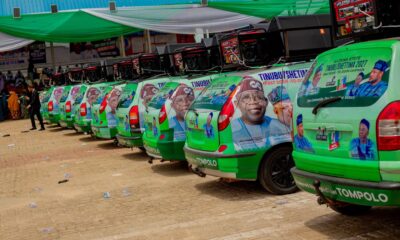
2027: Tompolo flags – off campaign for Tinubu with 34 Campaign Vehicles
-
 Business2 days ago
After South Africa, Kenya Cracks Down on Foreign Traders, Retailers
-

 Business3 days ago
Dangote woos ordinary Nigerians to own shares in oil refinery as IPO opens September 14