
Business
LCCI, NIXIN Reel Actions to Boost Nigeria’s Paper Industry
He condemned the current tariff regime, which imposes duties on plain paper imports but allows for the importation of printed materials duty-free.

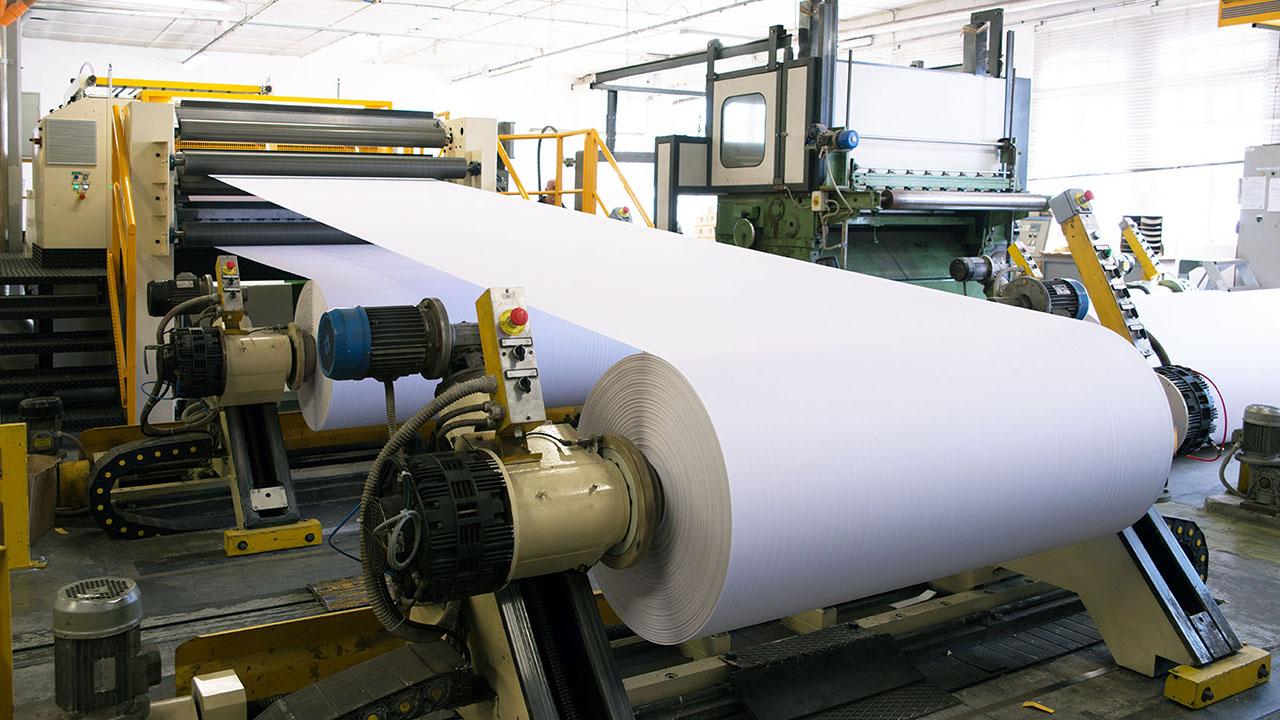
The Lagos Chamber of Commerce and Industry (LCCI) has called on the Federal Government to provide policy support and incentives to boost local paper manufacturing in Nigeria.
The Chairman, LCCI, Printing Publishing and Allied Group (PPA), Gabriel Okonkwo, stressed the urgent need for government intervention in the paper manufacturing sector to revive local production and reduce Nigeria’s dependence on imports.
During a meeting with stakeholders at NIXIN Paper Mill, Okonkwo highlighted policy inconsistencies that have continued to undermine local manufacturers.
He condemned the current tariff regime, which imposes duties on plain paper imports but allows for the importation of printed materials duty-free.
“This unfair policy has created a lopsided competitive environment that favours foreign manufacturers over local producers.
“This has led to a situation where it’s cheaper to print books and other materials abroad and import them, rather than produce them locally,” he added.
As a result, a significant number of printing jobs are being outsourced to other countries, depriving our local industry of business opportunities.
If local manufacturers can provide high-quality paper at competitive prices, it would reduce our reliance on imports, conserve foreign exchange, create jobs, and contribute significantly to the economy,” Okonkwo said.
He pointed out that Nigeria’s large population, especially its student demographic, offers a massive market for paper products, calling on support for local paper manufacturers to produce at scale and competitive prices.
Reinforcing his call for increased confidence in local capacity, Okonkwo pointed to recent developments with the electoral body as a case in point. “INEC didn’t even believe we could produce ballot papers locally until recently.
It’s time we began to believe in and invest in our own,” Okonkwo stressed.
As part of NIXIN Paper Mill’s commitment to the nation’s self-sustenance, the paper mill is concentrated on increasing production capacity, improving product quality, and expanding its product line to meet the growing demands of the Nigerian market, thereby reducing the country’s dependence on foreign paper products and contributing to the growth of the local economy.
The Managing Director of NIXIN Paper Mill, Eric Wang, highlighted the potential of Nigeria’s paper industry, comparing it with his hometown in China, with a population of just 300,000, supporting a paper factory that consumes over 20,000 tons monthly.
In contrast, Nigeria, with a population exceeding 200 million, recorded only 70,000 to 75,000 tonnes per month, a figure he believes should be much higher given the country’s educational and commercial demands.
“We see that over 80 percent of Nigeria’s educational and printing materials are imported from Asia,” Wang stated.
Business Manager, NIXIN, Williams Sun, echoed that Nigeria significantly underutilized its local paper production capacity, with many orders still going to countries like India and China.
He emphasized the significant investment NIXIN has made of over $60 million and expressed frustration over the lack of returns, noting that one year into operations, the expected market response has yet to materialize.
Sun urged the government to support investors and take steps that will attract more players into the publishing and paper production space, which is critical for building a self-sufficient industry.
Business
Airtel Money Targets October Listing On London Stock Exchange
Airtel Money’s parent company is Airtel Africa, a telecoms provider that is part of the Indian conglomerate Bharti Enterprises, which is ultimately controlled by the billionaire Sunil Bharti Mittal.

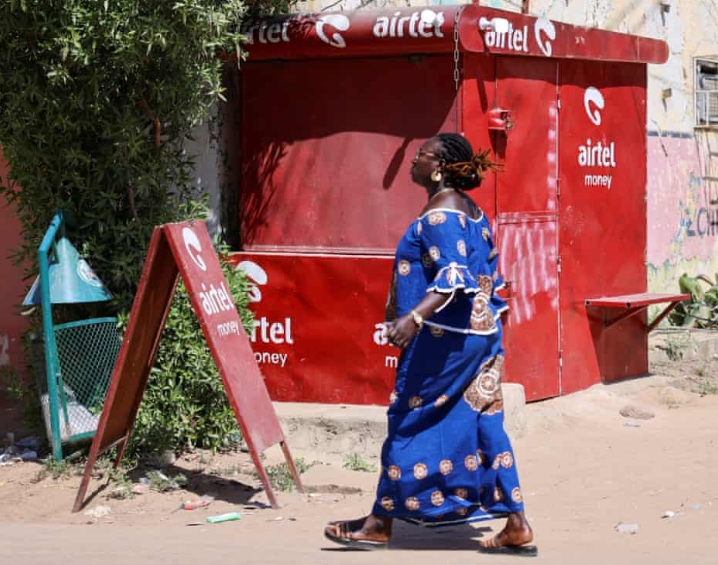
Airtel Money, the mobile money arm of Airtel Africa, has concluded plans to float on the London Stock Exchange in October.
Airtel Money’s chief executive, Ian Ferrao, made the disclosure Wednesday emphasising that the company would announce more details about the float in early October, including the indicative price range and number of shares to be offered, with final pricing to follow later in the month.
Airtel Africa had originally targeted a listing in the first six months of 2026 but delayed it to the second half of the year, blaming unfavourable market conditions as a result of the US-Israeli war on Iran. Several other companies also pushed back planned IPOs amid the market volatility caused by the conflict.
The company is hoping to raise about $800m (£601m) from the initial public offering (IPO) and is targeting a valuation of $8bn to $9bn, which would make it one of London’s largest listings in recent years.
Airtel Money has 53 million monthly active users across 13 countries in sub-Saharan Africa, including Uganda, Zambia and the Democratic Republic of Congo.
It operates through a network of branches and kiosks, which enable customers to load money on to their phones, withdraw cash and access other money services, and the company generated revenues of just under $1.4bn in the last financial year.
Airtel Money’s parent company is Airtel Africa, a telecoms provider that is part of the Indian conglomerate Bharti Enterprises, which is ultimately controlled by the billionaire Sunil Bharti Mittal.
Business
Cardoso Says Multiple FX Windows Cost Nigeria 3% of GDP, Higher Than Fuel Subsidy
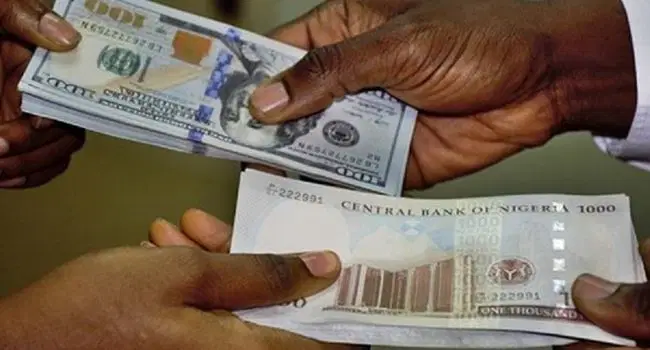
Before the CBN introduced FX reforms in 2023 to unify exchange rates, Nigeria had different channels through which dollars could be bought and sold. Different rates applied to different users and transactions.

Central Bank of Nigeria Governor Olayemi Cardoso has estimated that Nigeria lost about three per cent of its gross domestic product to multiple foreign exchange windows.
Mr Cardoso spoke in Abuja on Tuesday while answering questions after the 307th meeting of the Monetary Policy Committee.
He put the losses from the fuel subsidy regime at about 2.2 per cent of GDP, meaning the two distortions together cost the country roughly 5.2 per cent of GDP.
The committee cut the benchmark Monetary Policy Rate to 23 per cent from 26.5 per cent, a decision the governor described as an important operational realignment aimed at strengthening monetary policy transmission.
Mr Cardoso compared the cost of the old exchange rate system to the fuel subsidy, which he said was already a staggering amount of money.
The losses that we were making as a result of these multiple exchange rate windows was more. It was 3 per cent of GDP. So between those, you had 5.2 per cent of GDP lost,” he said.
Before the CBN introduced FX reforms in 2023 to unify exchange rates, Nigeria had different channels through which dollars could be bought and sold. Different rates applied to different users and transactions.
Black Market Rates
₦1382 DOLLAR (USD)
₦1860 POUND (GBP)
₦1555 EURO (EUR)
₦1000 DOLLAR (CAD)
₦70 SOUTH AFRICAN RAND (ZAR)
₦370 UAE DIRHAM (AED)
190 YUAN (CNY)
₦100 G.CEDI (GHS)
₦2250 CFA F.(XOF)
₦2250 CFA F.(XAF)
₦850 AUSSIE (AUD)
CBN Exchange Rate
DOLLAR (USD) ₦1327.78
POUND (GBP) ₦1774.31
EURO (EUR) ₦1521.37
SWISS FRANC (CHF) ₦1619.04
JAPANESE YEN (JPN) ₦8.44
CFA FRANC (XOF) ₦2.33
WEST AFRICAN UNIT OF ACCOUNT (WAUA)₦1814.83
CHINESE YUAN (CNY) ₦198.16
SAUDI RIYAL (SAR) ₦353.57
SOUTH AFRICAN RAND (ZAR) ₦81.82


Airtel Money Targets October Listing On London Stock Exchange

Cardoso Says Multiple FX Windows Cost Nigeria 3% of GDP, Higher Than Fuel Subsidy

Naira To Dollar, Pound , Euro Rate Wednesday September 23

Tech Expert, Zuckerberg trains with UFC champions, Adesanya, Alexander

Organ Trafficking: Ekweremadu bags 10 years in UK prison

SAINT OBI: Between his marriage and his death
-

 Business2 days ago
Gambia Orders Nigerian Banks To Replace Foreign Staff by December 2026
-

 International2 days ago
Trump launches ‘Trump TV’ as US networks halt White House coverage
-

 News2 days ago
Independent Panel Begins Probe into 37 Deaths in Civil Defence Custody
-

 Business2 days ago
CBN, MOF sign pact to align monetary, fiscal policies
-
 Business2 days ago
Dangote Whets Investors Appetite Ahead 2028 Fertiliser IPO
-
 Health2 days ago
Nigerian hospital successfully performs kidney cancer surgery via tele-robotic
-
 Business2 days ago
Naira To Dollar, Pound, Euro…Rate Today, September 22
-

 Sports1 day ago
Mbappé Leaves Nike To Promote Swiss Sportswear Brand On