
Business
For The Record: “I Will Build an “NNPC that’ll be the Pride of Nigerians”- Ojulari
Ojulari said that the NNPC Ltd. under his stewardship aims to attract sectoral investments worth $30 billion by 2027 and $60 billion by 2030; raise crude oil production to over 2 million barrels per day, sustained through 2027, and attain 3 million by 2030.

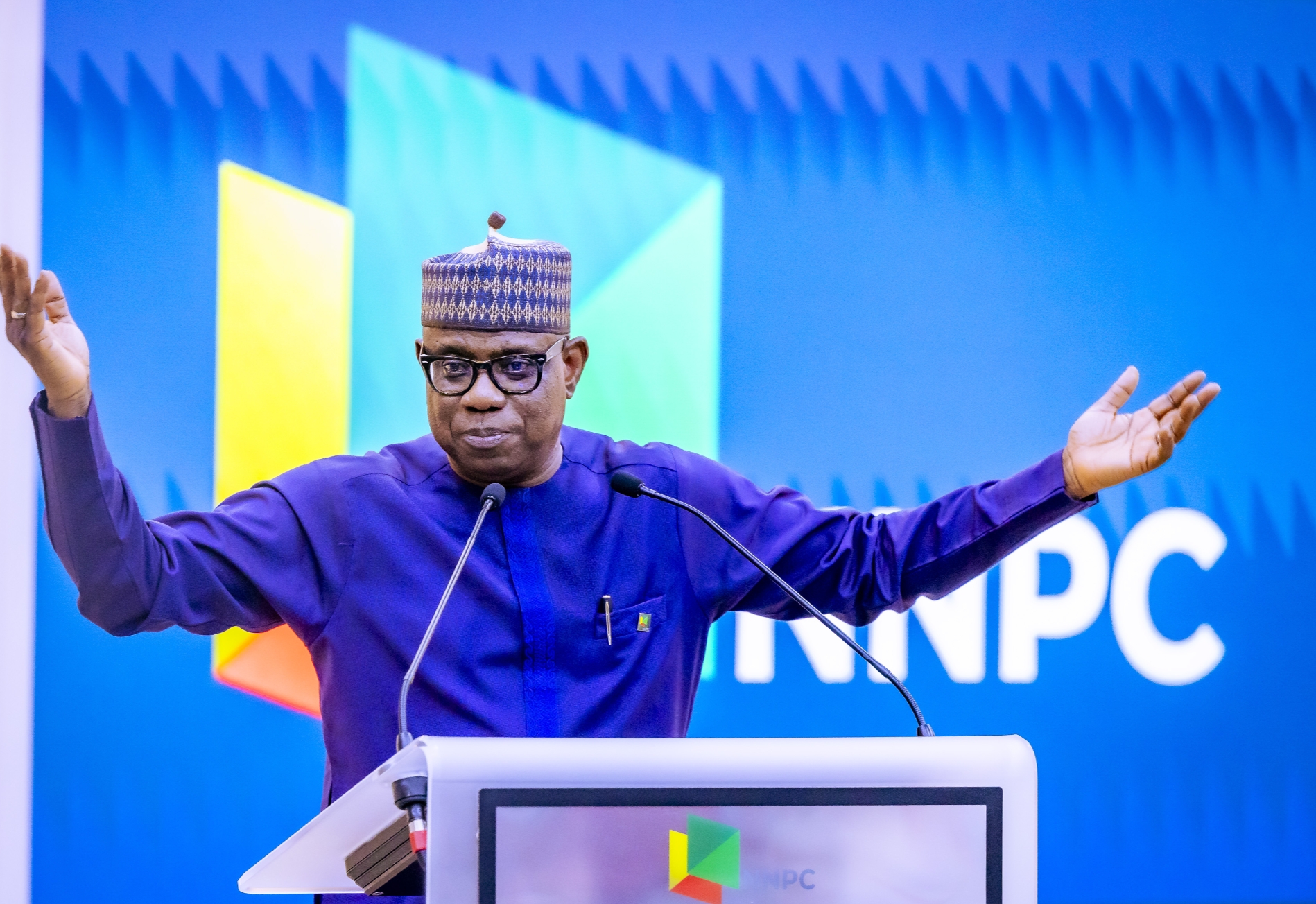
The new Group Chief Executive Officer of the NNPC Ltd., Mr. Bashir Bayo Ojulari, has pledged to build an NNPCL that will be the pride of all Nigerians.
“We recognize that our greatest asset is our people. Our success will be powered by empowered employees. As such, we are fully committed to creating a workplace where everyone is valued, motivated, and inspired to thrive. Together, we will build a high-performing, globally competitive NNPC Ltd that is proudly Nigerian and proudly world-class,” Ojulari said during a meeting with the staff of the Company, with a vow to pursue the company’s bold ambitions and build an NNPC that will be the pride of all Nigerians.
In a Town Hall meeting held at the NNPC Towers in Abuja, on Thursday, Ojulari said it was a huge honour and responsibility to lead the NNPC Ltd.
He describes the Company as an entity that means a lot to Nigeria and its future.
“We stand at the gateway of a new era—one that demands courage, professionalism, and a relentless drive for excellence.
The task before us is great, yet the opportunity to redefine Nigeria’s energy future is even greater. Now is the time to turn our transformation promise into performance,” Ojulari told thousands of the Company’s staff.
Ojulari said that the NNPC Ltd. under his stewardship aims to attract sectoral investments worth $30 billion by 2027 and $60 billion by 2030; raise crude oil production to over 2 million barrels per day, sustained through 2027, and attain 3 million by 2030; expand refining output to 200kbpd by 2027, and 500kbpd by 2030; grow gas production to 10bcf per day by 2027, and 12bcf by 2030 and deepen energy access and affordability for all Nigerians.
To achieve these targets, the company will be focusing on reconfiguring its business structure for agility and value creation, conducting independent value assessments to inform data-driven decisions, enforcing a robust performance management framework, building transparent, value-aligned partnerships with all stakeholders, and, most critically, taking control of its narrative.
While explaining the criticality of pursuing the Company’s bold ambitions, the Group CEO said the targets are not just metrics, but indicators of hope, jobs, industrial growth, and energy security for millions of Nigerians.
Describing NNPC Ltd. as a renewed, forward-facing, and future-ready organisation that is proudly leading Nigeria’s energy transformation, Ojulari said “it’s time we tell our story—one of innovation, reform, and national pride.”
He charged staff to be proud of NNPC Ltd.’s recent transformation, stressing that the next journey to becoming a fully-fledged limited liability company will require the collective drive towards making NNPC more transparent, profitable, and accountable.
The Group CEO pledged to give all employees the space to be able to outperform competitors.
“We will provide the best combination where the experienced and the young will both thrive towards achieving our set targets,” he assured.
He said his Management will deepen collaboration with the Company’s in-house and national unions to build a stronger, trust-based relationship that reflects shared purpose and mutual respect.
He also called on all staff to lead with integrity and act with urgency while bringing their very best to the table.

Business
President Tinubu Urges Africa to Stop Exporting Raw Minerals
The dialogue, themed, “From Resources to Wealth: Continental Cooperation for Mineral Value Addition, Data Sovereignty, Innovative Financing and Critical Minerals Security,” focused on transforming Africa’s mineral wealth into sustainable economic growth.
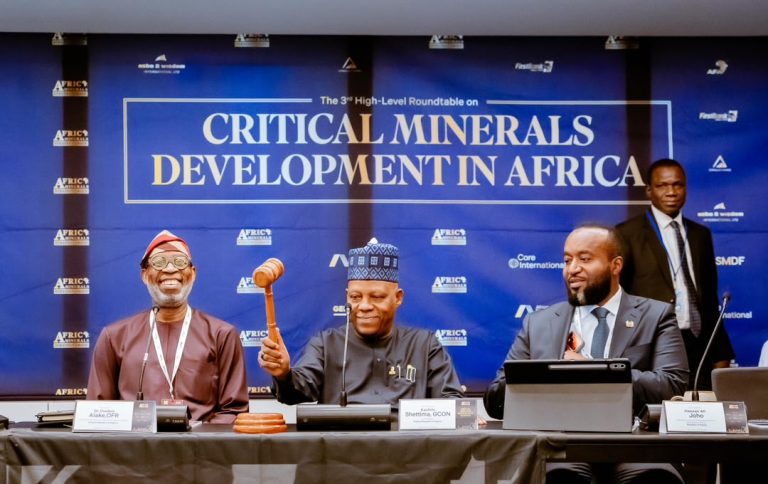
Photo: The President was represented by Vice President Kashim Shettima, alongside AMSG Chairman and Minister of Solid Minerals Development, Dr Dele Alake.
President Bola Tinubu has called for a fresh continental push to end the historical exploitation of Africa’s critical mineral resources, urging African nations to unite and halt the export of raw materials.
President Tinubu made the call in New York, United States, during the Africa Minerals Strategy Group (AMSG) High-Level Roundtable on Critical Minerals Development in Africa, held on the sidelines of the 81st Session of the United Nations General Assembly (UNGA).
He called for an aggressive alliance among African countries to ensure that the continent transitions from a mere supplier of raw minerals to a hub for local processing, manufacturing and value addition.
The President was represented by Vice President Kashim Shettima, alongside AMSG Chairman and Minister of Solid Minerals Development, Dr Dele Alake.
The dialogue, themed, “From Resources to Wealth: Continental Cooperation for Mineral Value Addition, Data Sovereignty, Innovative Financing and Critical Minerals Security,” focused on transforming Africa’s mineral wealth into sustainable economic growth.
President Tinubu told African leaders and other stakeholders that “the continent could not claim to be wealthy while its children wallowed in poverty amid mines that enrich the world.”
He noted that critical minerals such as cobalt, copper, lithium and rare earth elements had become indispensable to global supply chains and economic security.
According to him, the answer to the deprivation “must be processing, refining, batteries, components, African technologies and competitive skills”.
Business
Fans shown 65,000 junk food ads at World Cup
Coca-Cola had the highest number (21,893), followed by McDonald’s (13,915), Powerade (12,777), and Lay’s – the crisps manufacturer known as Walkers in the UK – (12,087).

Football fans were shown a “constant bombardment” of advertisements promoting junk food and drinks during matches at the 2026 Fifa World Cup, according to a new study.
BBC reported that researchers at the University of Bristol and University of Oxford created an AI tool to analyse ads which were visible to television viewers during live play in the tournament’s 104 matches, mostly displayed on pitchside advertising boards and around stadiums in the USA, Canada, and Mexico.
They found that logos and products for brands that produce junk food and drinks – defined by the UK government as being high in fat, salt or sugar – were displayed 65,722 times in total.
And the study also found that those adverts were visible for 28.1 hours’ time across the tournament, or just over 16% of the total time that matches were being played.
The ads were all shown on the international feed of matches during play – meaning they were visible to every viewer in every country broadcasting matches – and do not include ads shown during pre-match coverage, half-time commercial breaks, or the controversial in-match hydration breaks.
The model used by the researchers estimated that there were an average of 576 visible ads for junk food and drink shown during each individual match.
Coca-Cola had the highest number (21,893), followed by McDonald’s (13,915), Powerade (12,777), and Lay’s – the crisps manufacturer known as Walkers in the UK – (12,087).
All four brands are official partners of world football governing body Fifa, with the Powerade energy drink owned by the Coca-Cola company.
In response to the findings, Fifa argued that the vast majority of its revenue is put back into football, including on projects promoting health and wellbeing in which thousands of people participate.
Business
Gambia Orders Nigerian Banks To Replace Foreign Staff by December 2026
Each bank is expected to identify suitably qualified Gambian nationals who can fill affected roles as the transition progresses.

The Central Bank of The Gambia has ordered commercial banks, including Access Bank, Guaranty Trust Bank (GTBank), FirstBank, Zenith Bank and Ecobank, to replace non-Gambian employees with suitably qualified Gambian nationals by December 31, 2026.
The directive came in a circular dated September 16 and signed by CBG Second Deputy Governor Dr Paul J. Mendy.
The order followed a meeting between the central bank and managing directors of commercial banks on August 27, as well as an industry-wide review of how banks employ foreign personnel.
The CBG said the review uncovered a “relatively high number” of non-Gambians working in banks beyond those covered by recognised expatriate arrangements.
The regulator said the situation violates The Gambia’s Labour Act 2023 and is inconsistent with Guideline 9, which governs how banks employ expatriate staff.
It directed all banks to adopt a phased approach to replacing existing non-Gambian staff with qualified Gambian nationals.
The CBG said: “Consequently, all banks are required to adopt a phased approach to replacing existing non-Gambian staff with suitably qualified Gambian nationals, with appropriate arrangements for skills transfer and continuity of operations.
“Banks must also ensure that as positions are localised, the transition does not cause the loss of critical institutional knowledge or disrupt day-to-day banking services.
Each bank is expected to identify suitably qualified Gambian nationals who can fill affected roles as the transition progresses.
Credit: Abokiforex.com


BREAKING: Lassa fever kills 259, infects 1,086 in 24 Nigerian states — NCDC

Mbappé Leaves Nike To Promote Swiss Sportswear Brand On

JUST IN: UK Removes Nigeria, Ghana Teachers from QTS Eligibility List

Tech Expert, Zuckerberg trains with UFC champions, Adesanya, Alexander

Organ Trafficking: Ekweremadu bags 10 years in UK prison

SAINT OBI: Between his marriage and his death
-

 Business24 hours ago
CBN, MOF sign pact to align monetary, fiscal policies
-
 Business11 hours ago
Dangote Whets Investors Appetite Ahead 2028 Fertiliser IPO
-

 International9 hours ago
Trump launches ‘Trump TV’ as US networks halt White House coverage
-

 News8 hours ago
Independent Panel Begins Probe into 37 Deaths in Civil Defence Custody
-
 Health11 hours ago
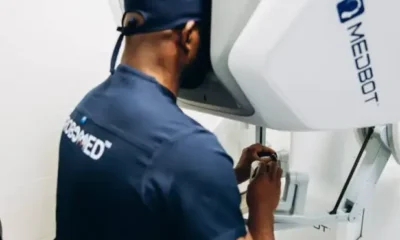
Nigerian hospital successfully performs kidney cancer surgery via tele-robotic
-
 Business10 hours ago
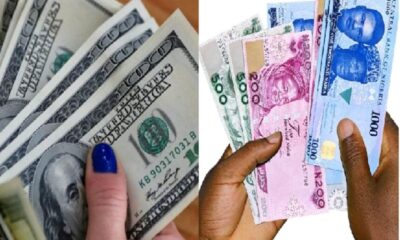
Naira To Dollar, Pound, Euro…Rate Today, September 22
-
 Business10 hours ago
Gambia Orders Nigerian Banks To Replace Foreign Staff by December 2026
-

 Business8 hours ago
Fans shown 65,000 junk food ads at World Cup