
Business
The companies making billions from the Iran war – BBC
Here are some of the sectors and companies making billions while the Middle East conflict continues.

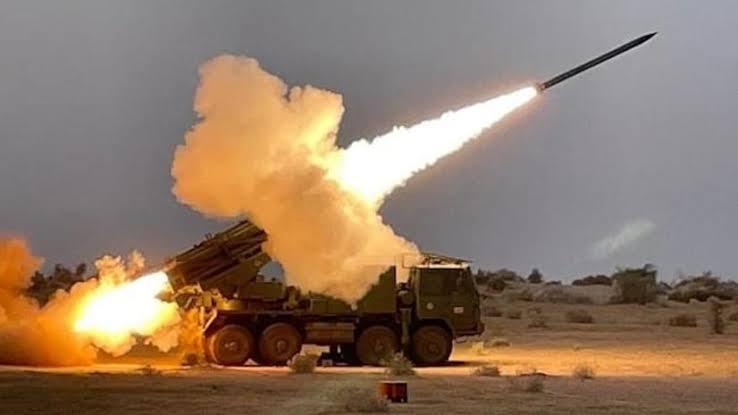
As households across the globe count the costs of the US-Israel war in Iran, some companies have been counting bumper profits instead.
The uncertainty sparked by the conflict, and Iran’s effective closure of the Strait of Hormuz, is driving up the cost of living and hitting the budgets of firms, families and governments.
But while some have been pushed to the brink, others, whose core businesses are more profitable in a war or who benefit from volatile energy prices, have seen record earnings.
Here are some of the sectors and companies making billions while the Middle East conflict continues.
1. Oil and gas
The biggest economic impact of the war so far has been a surge in energy prices. Around a fifth of the world’s oil and gas is transported through the Strait of Hormuz, but those shipments effectively ground to a halt at the end of February.
The result has been a rollercoaster of price movements on energy markets, with some of the world’s biggest oil and gas companies benefiting.
The main beneficiaries have been European oil giants, who have trading arms so have been able to gain from sharp price movements boosting profits.
BP’s profits more than doubled to $3.2bn (£2.4bn) for the first three months of the year, after what it called an “exceptional” performance in its trading division.
Shell also beat analysts’ expectations when it reported a rise in first-quarter profits to $6.92bn.
Another international giant, TotalEnergies, saw its profits jump by almost a third, to $5.4bn in the first quarter of 2026, driven by volatility in oil and energy markets.
US giants ExxonMobil and Chevron saw their earnings fall compared with the same period last year, due to supply disruption from the Middle East, but both beat analysts’ forecasts and expect their profits to grow further as the year goes on, with the price of oil still significantly higher than when the war broke out.
2. Big banks
Some of the biggest banks have also seen their profits boosted during the war in Iran.
JP Morgan’s trading arm made a record $11.6bn of revenue in the first three months of 2026, helping the bank overall to its second biggest ever quarterly profit.
Across the rest of the “Big Six” banks – which includes Bank of America, Morgan Stanley, Citigroup, Goldman Sachs and Wells Fargo, as well as JP Morgan – profits all rose substantially in the first quarter of the year.
Overall, the banks reported $47.7bn in profits for the first three months of 2026.
“Heavy trading volumes have benefited investment banks, in particular Morgan Stanley and Goldman Sachs,” Susannah Streeter, chief investment strategist at Wealth Club, said.
The major Wall Street lenders have been boosted by a surge in demand for trading, with investors rushing to drop riskier stocks and bonds and pile their cash into assets that are seen as safer. Trading volumes have also been lifted by investors seeking to capitalise on the volatility in financial markets.
3. Defence
One of the most immediate beneficiaries in any conflict is the defence sector, according to Emily Sawicz, senior analyst at RSM UK.
“The conflict has reinforced gaps in air defence capability, accelerating investment in missile defence, counter drone systems and military hardware across Europe and the US,” she told the BBC.
As well as highlighting the importance of defence firms, the war creates a need for governments to replenish weapons stocks, boosting demand.
BAE Systems, which makes products including F35 fighter jet components, said in a trading update on Thursday it expects strong growth in sales and profits this year.
It cited growing “security threats” around the world pushing up government defence spending, which has in turn created a “supportive backdrop” for the company.
4. Renewables
The conflict has also highlighted the need to diversify away from reliance on fossil fuels, Streeter said.
This has “supercharged interest in the renewable sector” even in the US, she said, where the Trump administration has popularised the “drill, baby, drill” slogan encouraging greater fossil fuel usage.
Streeter said the war has led to renewable investment being seen as increasingly important to stability and resilience to shocks.One firm that has been boosted is Florida-based NextEra Energy, which has seen shares surge by 17% so far this year as investors pile in on its mission.
Danish wind power giants Vestas and Orsted have also reported surging profits, highlighting how the fallout from the Iran war is also boosting renewable energy firms.
In the UK, Octopus Energy recently told the BBC the war had caused a “huge jolt” in solar panel and heat pump sales, with solar panel sales rising by 50% since the end of February.
The surge in petrol prices has also boosted demand for electric vehicles, with Chinese manufacturers in particular making the most of the opportunity.
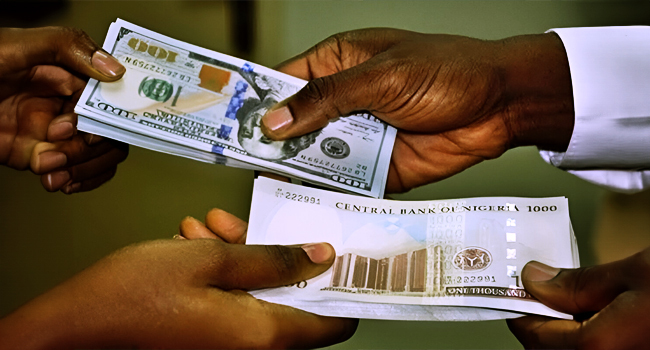
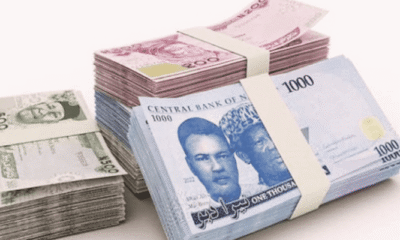
BLACK/ PARALLEL MARKET RATES
₦1370 DOLLAR (USD)
₦1800 POUND (GBP)
₦1510 EURO (EUR)
₦970 CANADIAN DOLLAR (CAD)
₦65 SOUTH AFRICAN RAND (ZAR)
₦350 UAE DIRHAM (AED)
₦190 CHINESE YUAN (CNY)
₦100 GHANAIAN CEDI (GHS)
₦2300 WEST AFRICAN CFA F.(XOF)
₦2200 CENTRAL AFRICAN CFA F.(XAF)
₦850 AUSTRALIAN DOLLAR AUSSIE (AUD)
CBN OFFICIAL RATES
DOLLAR (USD)₦1331.61
POUND (GBP)₦1764.26
EURO (EUR)₦1490.48
SWISS FRANC (CHF)₦1608.23
JAPANESE YEN (JPN)₦8.4
CFA FRANC (XOF)₦2.27
WEST AFRICAN UNIT OF ACCOUNT (WAUA)₦1802.33
CHINESE YUAN (CNY)₦199.01
SAUDI RIYAL (SAR)₦354.83
SOUTH AFRICAN RAND (ZAR)₦80.49
Business
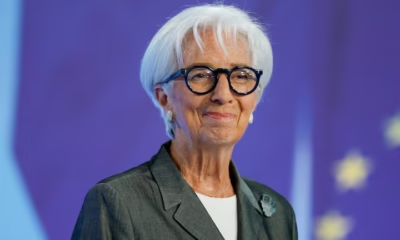
WEF could appoint Lagarde as its next chair, sources say
The WEF’s Board of Trustees, which includes Lagarde herself, was due to meet on November 2 and could elect her as its next chair, said the people close to the organisation, who spoke on condition of anonymity due to the sensitivity of the matter.

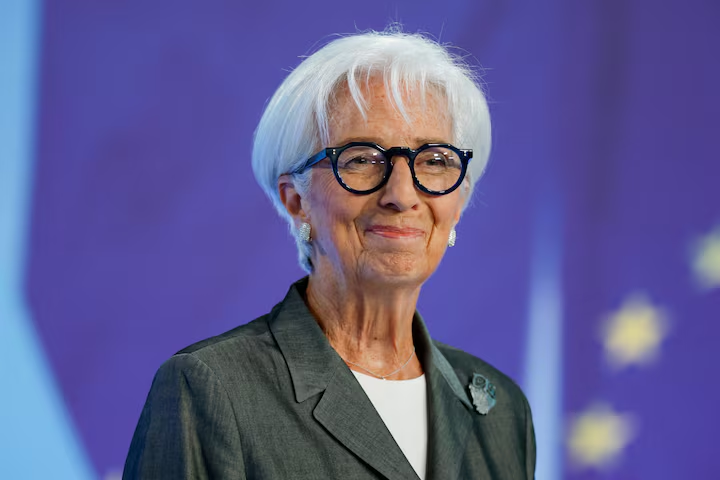
•European Central Bank President Christine Lagarde
The World Economic Forum could appoint Christine Lagarde as its next chair as soon as next month, four people close to the organisation told Reuters, meaning she would step down early as European Central Bank chief and trigger a wider reshuffle at the top of the ECB.Lagarde’s ECB term is scheduled to end in October 2027.
Leaving early would give European Union leaders a chance to pick a new ECB President before France’s spring presidential election, which opinion polls suggest the far-right could win, and could pave the way for a deal involving two other senior ECB roles.
The WEF’s Board of Trustees, which includes Lagarde herself, was due to meet on November 2 and could elect her as its next chair, said the people close to the organisation, who spoke on condition of anonymity due to the sensitivity of the matter.
No final decision has been taken yet, they said.
A spokesperson for the WEF said the forum could not confirm when the next full Board of Trustees meeting would take place, but that the aim was to hold one before the end of the year.
Business
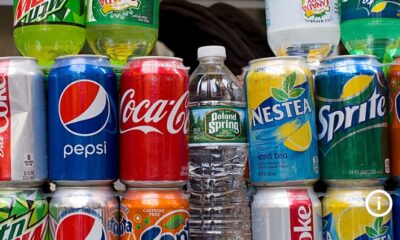
Germany plans tax on sugary drinks
The tax is expected to generate additional revenue for the federal government of €690 million in 2027 and €925 million in 2028.
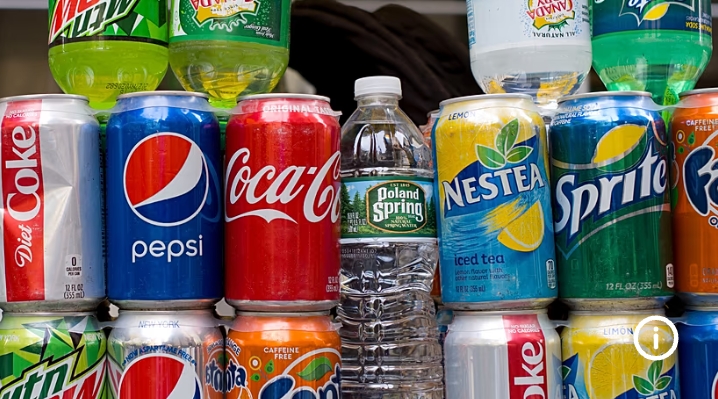
The German cabinet has approved draft legislation to tax sugary drinks in Europe’s biggest economy.
If passed by the German Bundestag, the tax will take effect on 1 July 2027.
The coalition aims to raise revenue for the federal budget while encouraging manufacturers to reduce sugar content and offer healthier products.
The levy is intended to ease pressure on the healthcare system, which faces costs of more than €2 billion every year linked to the high consumption of sugary drinks, which contributes to obesity, diabetes and tooth decay.
According to the federal government, Berlin is using the tax to implement “what associations from the fields of health, science, child protection, and consumer protection have long been demanding.”
The tax is expected to generate additional revenue for the federal government of €690 million in 2027 and €925 million in 2028.


JUST IN: Mob Sets BRT Bus Ablaze After Motorcyclist’s Death in Lagos

BREAKING: DSS Arrests Fugitive Maina Son, Hands Him to EFCC

BREAKING: 5 Arrested Over Imo NYSC Abduction

BREAKING: Lagos Govt Declares Today, Thursday Work-Free to Mark 2026 Ìṣẹ̀ṣe Day

Tech Expert, Zuckerberg trains with UFC champions, Adesanya, Alexander

Organ Trafficking: Ekweremadu bags 10 years in UK prison
-
 Business2 days ago
Naira Exchange Rates For Thursday, October 15
-
 Sports2 days ago
CAF Increases Annual Funding for Member Federations to $700,000
-

 News2 days ago
ASCON To Be Rebranded “National School Of Government”
-
 Business2 days ago
Germany plans tax on sugary drinks
-

 News3 days ago
Sanwo-Olu Appoints Olatunbosun Ogunbanwo, 5 Others as Perm Secs
-
 Business2 days ago
WEF could appoint Lagarde as its next chair, sources say
-
 International2 days ago
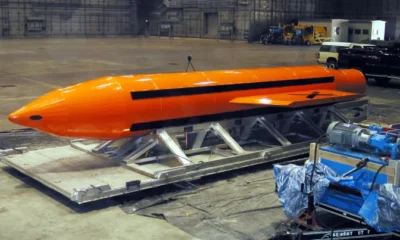
“Mother of all bombs,” Trump Plans To Hit Iran
-
 Crime20 hours ago
BREAKING: 5 Arrested Over Imo NYSC Abduction