
News
Kogi Commissioner confirms release of remaining abducted orphanage victims
The operation, carried out in the Agbaja Forest axis of Lokoja Local Government Area, resulted in the safe recovery of five boys, two girls, and two adult females.

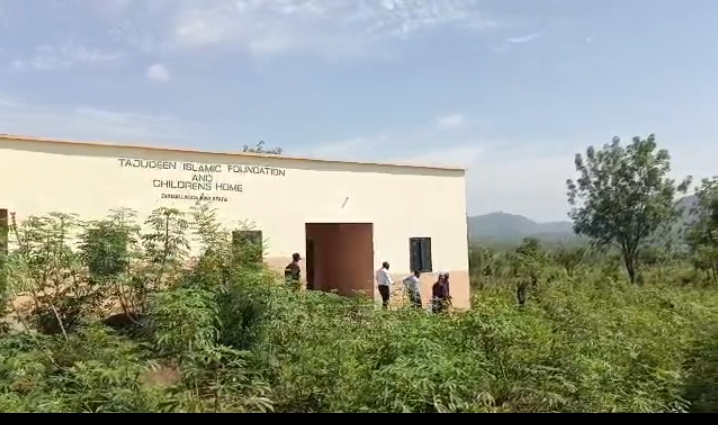
Kogi State Commissioner for Information and Communications, Kingsley Fanwo has confirmed the safe return of all those kidnapped from the Daarul-Kitab Islamic Orphanage in Lokoja.
Gunmen stormed the orphanage on April 26 and abducted 23 children, including the proprietor’s wife. Following intervention by security operatives, 15 victims were rescued on April 27.
In a statement Commissioner Fanwo said that the remaining nine victims regained freedom during a rescue operation conducted in the early hours of yesterday.
He described the development as a breakthrough against criminal elements operating within the state and a relief to affected families.
According to him, troops of the 12 Brigade of the Nigerian Army led the coordinated search-and-rescue mission with support from other security agencies.
The operation, carried out in the Agbaja Forest axis of Lokoja Local Government Area, resulted in the safe recovery of five boys, two girls, and two adult females.
Fanwo said the remaining nine victims regained freedom during a rescue operation conducted in the early hours of Wednesday.
He described the development as a breakthrough against criminal elements operating within the state and a relief to affected families.


News
UN approves new world map replacing 16th century Mercator map
The outcome is expected to result in an update of classroom curriculums and everyday technology given the wide usage of the Mercator projection in education, technology and governance.

The United Nations has voted to adopt a resolution for the world to formally phase out the traditional Mercator map of the globe in favour of one that more accurately displays Africa’s size.
The Guardian UK, reported that in a session at its headquarters in New York, on Friday, the UN general assembly officially retired the 16th-century Mercator projection in favour of one based on the more accurate 2018 Equal Earth design.
At the session, 164 countries voted in favour of the resolution. Only the US voted no, with its representative saying the resolution was “superfluous”. There were six abstentions.
UN resolutions are non-enforceable, so countries and institutions will not be mandated to use only the new projection or forbidden from using the old one.
However, the outcome is expected to result in an update of classroom curriculums and everyday technology given the wide usage of the Mercator projection in education, technology and governance.
Togo, which spearheaded a campaign for the resolution on behalf of the African Union, said the resolution “recognises and affirms that disproportionate cartographic representations, particularly those resulting from the Mercator projection, have had lasting cognitive, educational, cultural, geopolitical and socioeconomic effects, contributing to a drastic reduction in the perceived size of Africa and other regions of the world in the global collective imagination”.
Speaking before the resolution passed, Robert Dussey, Togo’s foreign affairs minister, said: “This discussion is not a political discussion [but] a scientific discussion, because there is scientific proof so we all have to accept the reality.”
The Mercator layout was introduced by the Flemish cartographer Gerardus Mercator in 1569 to help sailors navigate the seas. Almost five centuries later, it remains the global standard.
Because of its projection style, however, regions near the equator appear significantly smaller than they are, whereas high-latitude areas look much larger. For example, the map shows Africa as being similar in size to Greenland, but the continent is 14 times larger than the Danish territory.
“You could fit the United States, China, India, Japan, Mexico and much of Europe into Africa and still have land to spare,” says a petition on Change.org for the #CorrectTheMap campaign, which has more than 11,000 signatures.
The African Union endorsed the campaign in August 2025 and then asked Togo to spearhead its adoption.
News
BBC Appoints Kakangi Editor Hausa Service
Kakangi is a Senior Digital Journalist with over 10 years of experience producing high-quality content for global platforms.

•Haruna Ibrahim Kakangi
The British Broadcasting Corporation (BBC) has appointed Haruna Ibrahim Kakangi as the editor of BBC Hausa Service on a one-year attachment.
Before his appointment, Kakangi was a Senior Digital Journalist at BBC World Service.
He replaces Aliyu Tanko, who resigned from the BBC in August 2025 following allegations of bullying and maltreatment raised by his former colleague, Halima Umar Saleh, and some current staff members.
Kakangi is a Senior Digital Journalist with over 10 years of experience producing high-quality content for global platforms.
He has a track record in producing impactful stories, leading teams and driving audience engagement.
He is also skilled in storytelling, interviewing and broadcasting, with expertise in digital media. Kakangi attended Ahmadu Bello University, Zaria, from 2002 to 2008.
He was also a 2024 U.S. Journalism Fellow at the World Press Institute (WPI).


The Federal Government has moved to harmonize the salaries of its workers in a bid to address long-standing disparities across different grade levels and salary structures in the public service.
This development follows persistent complaints about uneven pay among civil servants on similar grades and the ongoing implementation of consequential adjustments arising from the National Minimum Wage Act, which raised the minimum wage to ₦70,000.
A committee earlier set up by the government had agreed percentage increases under the Consolidated Public Service Salary Structure (CONPSS): higher adjustments for lower grades (up to about 80% for levels 01–06) and more modest ones for senior levels. The National Salaries, Incomes and Wages Commission (NSIWC) was tasked with developing uniform templates for other consolidated salary structures to promote equity.
Officials have repeatedly stressed the need to bridge dichotomies in pay so that no sector is treated as more important than another, while workers’ groups continue to push for fuller implementation of adjustments and further reviews amid rising living costs.
The harmonization is expected to bring greater consistency to federal workers’ take-home pay once the new templates and adjustments are fully rolled out.


UN approves new world map replacing 16th century Mercator map

Dangote Foundation Takes Over Aliko Dangote Skills Acquisition Centre Kano

BBC Appoints Kakangi Editor Hausa Service

Tech Expert, Zuckerberg trains with UFC champions, Adesanya, Alexander

Organ Trafficking: Ekweremadu bags 10 years in UK prison

SAINT OBI: Between his marriage and his death
-

 Business3 days ago
BREAKING: Uber winds down operations in Nigeria, effective September 2
-

 Business22 hours ago
Okin Biscuits Set For Comeback After 17 Years, Targets Revival Of Jobs, Local Manufacturing
-
 Business2 days ago
Forest Sector Employs 42m People Globally – FAO
-
 International3 days ago
China -Egypt lubricate over 70 years trade, diplomatic relation
-

 Business2 days ago
Entrepreneurship: “How I Made N10m Monthly From Akara Burger” – Gov Eno
-
 News22 hours ago
BREAKING: FG Harmonizes Workers’ Salaries
-

 News1 day ago
Toxic fumes kill 37 in Okrika oil tragedy
-

 Politics1 day ago
Nduka Obaigbena Challenges Tinubu, Atiku, Obi on 2027 election campaigns