
News
Lagos communities decry water scarcity, demand govt intervention

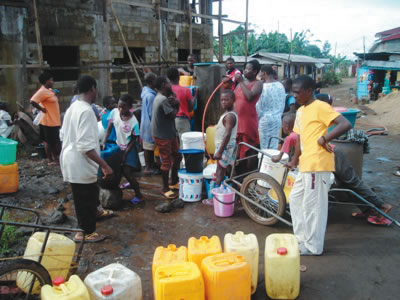
Some Lagos residents have called on the state government to make potable water accessible to reduce the huge amount of money spent on buying water.
They disclosed this in separate interviews with the News Agency of Nigeria on Monday in Lagos, against the World Water Day celebrated annually in March.
They urged the state government to reduce the spread of water-borne diseases in the state by ensuring the provision of portable water.
According to the World Health Organisation, water scarcity affects one in three people in the African region and is getting worse with population growth, urbanisation, and an increase in household and industrial uses.
While some residents attributed the lack of potable water in the state to poor management and inadequate infrastructure, others linked it to a lack of enough investment and human capital.
A resident in Akowonjo Local Government Area, Mr Ibrahim Mustapha, a businessman, who spoke with NAN, expressed dissatisfaction with the scarcity of potable water in their neighbourhood.
“I don’t know why water remains a big challenge in a state that is surrounded by large bodies of water. I am a 54-year-old man, and I can tell you that the last time I enjoyed public-sourced potable water was in my youth days.
We have had to rely on a privately generated water supply, which is not a good thing,” he said.
He called on the state government to make the water issue a priority and get it done once and for all.
Another resident, Mrs Folake Davies, a dentist who lives around Yaba, told NAN that the unavailability of potable water had led to increased household expenditure.
“This has resulted in buying sachet water for drinking and borehole water in gallons for other domestic use. This has added an extra financial burden on residents who are already struggling and posing environmental challenges like plastic pollution.
“Water scarcity also challenges the ability of residents to keep up with sanitation and healthful living habits, while predisposing them to water-borne diseases if the use of contaminated water continues,” she said.
She called on the state government to find a lasting solution to this menace as it affects residents’ way of life.
Another Makoko resident, Mr Saheed Abbas, an artisan, lamented the hardship that members of the community faced in accessing potable water, which had made its retailing a lucrative business.
“Before residents can access clean water in Makoko, they have to trek for a long distance. Some of them even use motorcycles to get clean water,” he said.
Abbas appealed to the state government to make life easy for them with the resuscitation of potable water in the community.
A resident living in the Igando area of the state, Mrs Lydia Anjorin, a business manager, was sad with the amount of money she spent on purchasing water in the area.
“This scarcity makes us spend significant amounts of money on bottled water and rely on potentially contaminated water sources, impacting our health and hygiene.
We demand that the authorities take steps to improve water access by building new water treatment plants, repairing existing systems, and implementing water conservation measures,” she said.
Mr Kayode Aderibigbe, a Lekki resident, expressed his frustration with the area’s water shortage.
“We often go without water for days, and when it’s available, it’s not even suitable for cooking or drinking. I was recently forced to relocate my family to my in-laws’ home due to a two-day water outage. I had to stay at one of my properties in Magodo just to take a bath.
The situation in Lekki is really disheartening,” Aderibigbe said.
However, for Mrs Ese Ayanwun, a resident of Lekki, access to clean water has become a reality in her area due to the efforts of the local water works.
Ayanwun said a water storage tank had been installed in her house that provides them with a reliable source of clean water.
“This initiative has brought significant relief compared to when we had previously struggled with water scarcity and contamination,” she said.
NAN reports that other areas such as Ajah, Ajao Estate, Ebute Metta, FESTAC and others also lack access to potable water.
A general physician, Dr Tunji Akintade, says lack of access to safe water leads to a wide range of health problems, including waterborne diseases, malnutrition, and increased vulnerability to infections.
Akintade stressed that safe and adequate water facilitates the practice of hygiene, critical to prevent morbidity and mortality, especially among children and vulnerable populations.
According to him, contaminated water and poor sanitation are linked to the transmission of diseases such as cholera, diarrhoea, dysentery, hepatitis A, typhoid, and numerous neglected tropical diseases.
“Safe and readily available water is crucial for public health, whether it is used for drinking, domestic use, or food production,” he said.
He urged the government to improve access to clean and safe water to enhance the health of citizens.
However, efforts to reach out to the Public Relations Officer of the Lagos State Water Corporation, Mr Anifowoshe Rasaq, for his comment proved abortive as his number has not been responsive as of the time of filing this report.
Meanwhile, NAN reports that the Commissioner for Environment and Water Resources, Mr Tokunbo Wahab, in a report, has assured Lagos residents of a constant water supply by 2027.
Wahab said this when he took a tour of the Adiyan Phase 2 ongoing water project at Iju area of the state.
Wahab, who was impressed with the ongoing work, expressed optimism that Lagos residents would soon be enjoying uninterrupted water supply.
He said that Governor Babajide Sanwo-Olu and the Deputy Governor, Dr Obafemi Hamzat, had decided that the water problem must be solved.
“To solve the water problem, we had to come to Adiyan 2, which is a 70 million gallons per day project and the biggest. We have mobilised the contractor, so we just came here to see what they are doing so far, and I am glad the media men took the walk too.
“With 70 million gallons, and then we have Iju with Adiyan 1 alongside micro and mini water works, the majority of Lagos houses and homes will have pipe-borne water, which is our target, and we are looking at sometime in 2027,” he said.
NAN
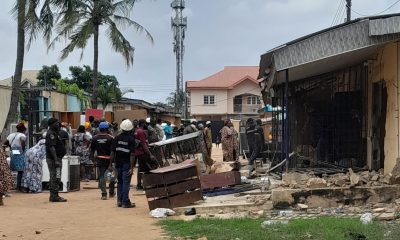


A joint security operation against terrorists has led to the rescue of nine persons in Ekiti Local Government Area of Kwara State.
According to inside sources, Forest Guards, under the supervision of the Directorate of Security Services and working with members of the local hunters and vigilante group, embarked on bush-combing operations. They discovered a hideout of the kidnappers and engaged them.
Nine persons were rescued in two separate operations in the forest of Obbo Aiyegunle. One of the kidnappers was neutralised while others fled with gunshot injuries.
One of the rescued persons is said to be receiving medical care at an undisclosed medical facility in the local government.
News
Zamfara LG Chairman Abduction: Security operatives intensify rescue efforts
Security forces are currently conducting deliberate operations at the suspected location of the terrorists, aimed at safely rescuing the abducted Chairman.

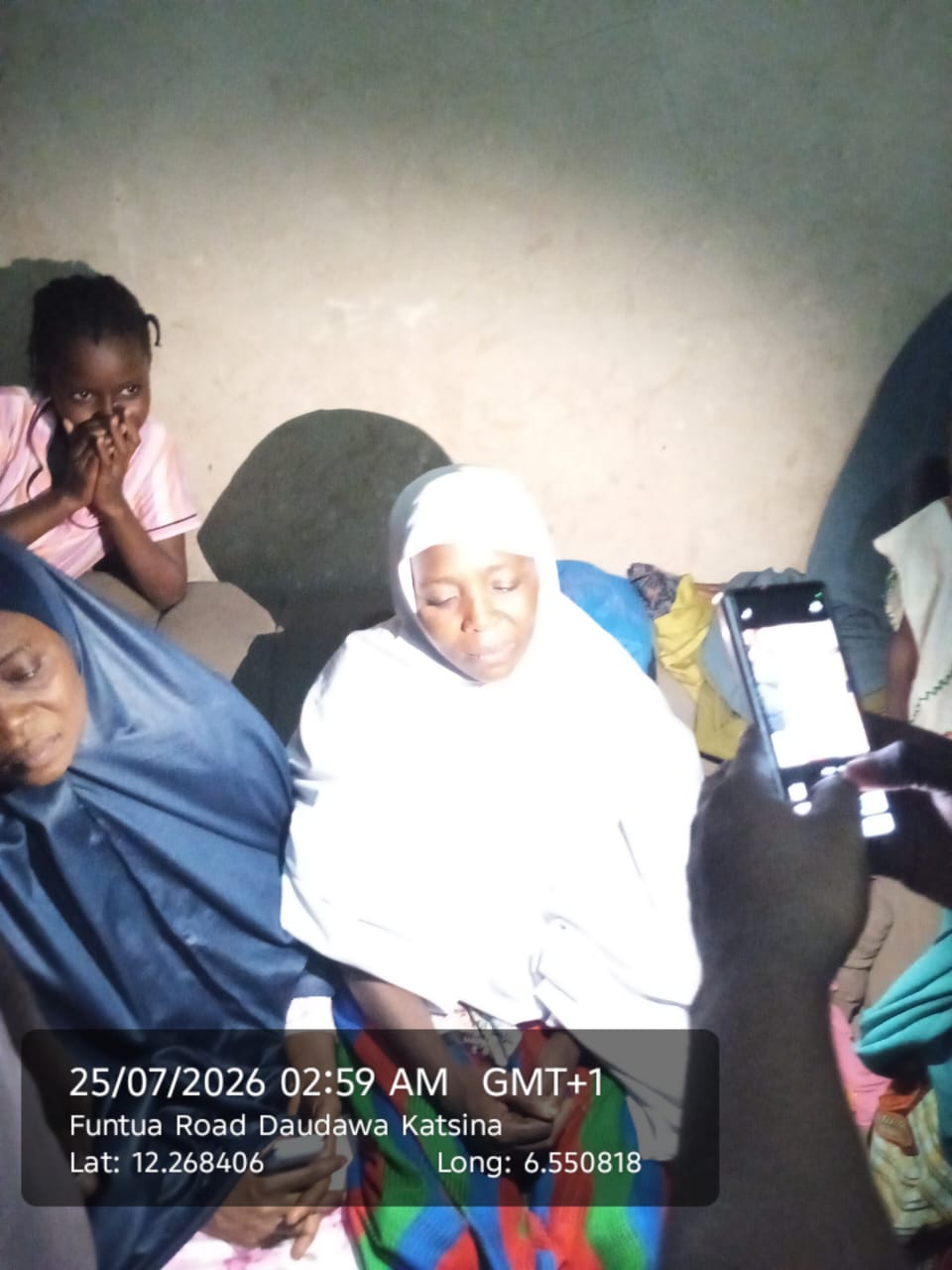
• Family of the abducted Zamfara LG Chairman
Aliyu Danjal, Lieutenant Colonel Media Information Officer Joint Task Force (North West) Operation FANSAN YAMMA, disclosed that on hearing gunshots, troops of Operation FANSAN YAMMA responded immediately and swiftly moved to the scene where they engaged in hot pursuit of the terrorists leading to a fierce exchange of fire.
News
IGP Disu orders officers to shoot anyone carrying illegal firearms
Disu explained that the directive was backed by Force Order 237, which empowers police officers to respond immediately to armed threats without waiting for approval from superior officers.

The Inspector-General of Police, Olatunji Disu, has directed police officers across the country to shoot on sight anyone found carrying illegal firearms, as part of intensified efforts to curb insecurity.
Disu issued the directive on Friday during a stakeholders’ meeting at the Government House in Makurdi, the Benue State capital, saying the move followed President Bola Tinubu’s instruction that the lingering security crisis in the state must be brought to an end.
The police chief maintained that only authorised security personnel are legally permitted to carry firearms, warning that law enforcement agencies would no longer tolerate the unlawful possession of weapons.
” You cannot move around freely carrying arms as if there is no law and order in this country. It will not be tolerated,” he said.
Disu explained that the directive was backed by Force Order 237, which empowers police officers to respond immediately to armed threats without waiting for approval from superior officers.


Security Forces Rescue 9, Neutralise Terrorist in Kwara

Nigeria’s Enang Presents Credentials to German President Steinmeier (Images)

Zamfara LG Chairman Abduction: Security operatives intensify rescue efforts

Tech Expert, Zuckerberg trains with UFC champions, Adesanya, Alexander

Organ Trafficking: Ekweremadu bags 10 years in UK prison

SAINT OBI: Between his marriage and his death
-

 Business3 days ago
Naira Exchange Rates Thursday, 23 July
-

 News2 days ago
311 lawmakers say “YES!” to establish state police
-

 Sports3 days ago
Nigeria’s NSC Chiefs Lead Team to 2026 Commonwealth Games in Glasgow
-

 Politics3 days ago
Fashola declares, “I’m not interested in becoming President of Nigeria”
-

 Politics3 days ago
Timi Frank says Trump’s letter not political ‘endorsement’ of Tinubu
-

 Business2 days ago
Naira Exchange Rates Across Black Market, CBN, Commercial Banks Friday, July 24
-

 Business2 days ago
US subjects imports from Nigeria to 12.5% tariff
-
 News2 days ago
Senate okays Yuguda acting in full capacity as AMCON Board chairman