Business
Dangote Refinery’s fuel supply won’t crash product price – Marketers, experts

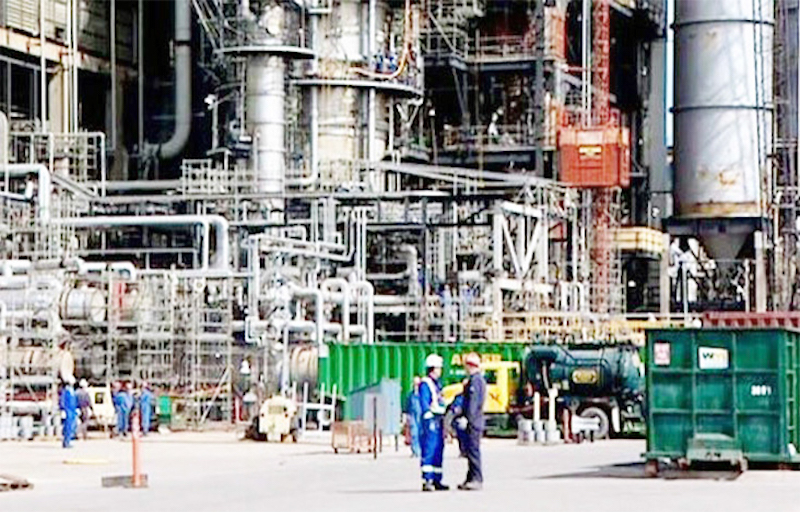
Ahead of Dangote Refinery’s commencement of Premium Motor Spirit, known as petrol, supply in the Nigerian market, marketers and energy experts in Nigeria’s oil and gas industry have ruled out expectations that it will lead to a price crash.
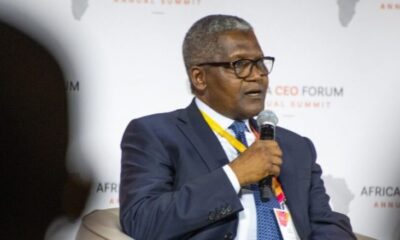
This comes as the Chairman of the Lagos-based Refinery, Aliko Dangote recently shifted the date to commence fuel supply to mid-July 2024 from its earlier projected June.
The richest in Africa, Dangote, blamed ‘a little bit of delay’, for the shift in the earlier commencement date.
Although the company commenced the supply of Diesel and Aviation Fuel in April, the firm which was commissioned on May 23 last year had continued to struggle to get crude supply for its petrol production.
Dangote had gone further to allege that cartels within the oil and gas sector are sabotaging the firms’ efforts to kick off full-scale.
The firm’s helmsman, speaking at the Afreximbank Annual Meetings in Nassau, the Bahamas and in an interview with CNN, said powerful cartels want his company to fail.
The Vice President of Dangote Industries Limited, Devakumar Edwin recently at the weekend accused International accused International Oil Companies in Nigeria of frustrating Dangote Refinery by refusing to sell crude oil. He alleged that IOCs are selling crude oil to Dangote Refinery at a premium price higher by $6 than the market price.
According to him, the development has led Dangote Refinery to look far away to the US to import crude oil to be cracked in Nigeria despite the country’s natural deposit of the product.
Meanwhile, on June 9, 2024, in response to Dangote’s allegation, the Lagos State Chamber of Commerce and Industry blamed oil theft and vandalization of pipelines for the inadequate supply of crude to Dangote by IOCs.
Also, reacting to Dangote’s accusation on the first of June, the Nigerian Upstream Petroleum Regulatory Commission, NUPRC, Spokesperson, Mrs. Olaide Shonola said the Commission will ensure IOCs supply crude oil to Dangote Refinery.
However, weeks after NUPRC’s assurance, the Dangote refinery is still insisting that the IOCs not supply crude to the company. This made the commencement date for the supply of fuel to the Nigerian market by Dangote Refinery shaky. Although Dangote insisted on mid-July.
While the debate of challenges facing Dangote Refinery subsists, the possibility of fuel price cuts with the domestic supply of the product has been the fulcrum of concern to Nigerians but some stakeholders believed otherwise.
Recall that upon fuel subsidy removal last year, petrol prices increased to an average of N769.62 per liter in May 2024 from N238 in the same period the previous year.
This development with other policies by President Bola Ahmed Tinubu’s government has pushed Nigeria’s headline and food inflation to 33.95 percent and 40.66 percent. The effect has resulted in the purchasing power of Nigerians and worsened the misery index.
The President of Petroleum Products Retail Outlets Owners Association, PETROAN, Billy Gillis-Harry said there is no way the entrance of Dangote refinery’s fuel will crash the price of the product.
According to him, when Dangote Refinery’s Automotive Gas Oil and Aviation fuel entered the Nigerian domestic market there were hopes that the price would crash but it did not.
This is because, despite the Dangote refinery’s announcement of a price cut for diesel for marketers, Nigerians ended up buying the product at N1403.96.
Gillis-Harry, further explained that as long Dangote Refinery exports crude into Nigeria, its fuel price when it commences supply may increase.
“I will tell you that Dangote Refinery when it is fully operational and we do hope that projection is correct, because we have had several projections in the past that never come to pass.
“It becomes difficult to premise our thoughts on projections. When diesel came, we hoped it would be the solution to Automotive Gas Oil, AGO, high prices in the country but we did not see that.
“We have been expecting PMS to be rolled out at Dangote Refinery. If it is rolled out in the Refinery, you will first ask yourself very critical questions, where is he getting crude oil from?
“If he is importing crude from the US to crack in Nigeria, are you expecting the price of PMS to come down? That will also be the same thing we have been doing.
‘You have to source for FX to buy crude oil that he will come to crack in Nigeria and sell fuel in Naira. The foreign exchange will continue to fluctuate. There is no way you will expect that the price of fuel will crash. This said, it is doubtful that Dangote’s fuel will enjoy any form of subsidy by the Federal Government”, he said.
According to him, the reason the fuel pump price stood at N700 per liter is because a subsidy was applied.
“There is nothing like quasi-fuel subsidy, the subsidy is applied, it is applied. The only thing is that Nigerians deserve to know the value of the fuel subsidy spent.
“We can’t be spending Trillions of the commonwealth of Nigeria and we do not know what it is we are spending it for, why we are spending and what is the result when we thought that in the last year, we have not been subsidizing PMS.
“With Dangote’s PMS, I doubt we will enjoy such a subsidy regime. It is selling at a free-market price based on the value of Naira to Dollar at the time. I rather expect that the price of PMS will go up.
“We do hope that quality meets what we are consuming in Nigeria and if that happens, the product should be available. When there is product availability, productivity in different sectors is guaranteed”, he explained.
He said oil marketers don’t have strong confidence in the commencement of Port Harcourt, Kaduna and Warri Refineries.
“We don’t have strong confidence in the full-scale commencement of Port Harcourt and Kaduna refineries.
“Because the commencement date has been shifted so many times. I find it difficult to comment about the refinery kick-off”, he said.
Speaking on whether NNPCL will exit the supply market upon the entrance of the Dangote refinery into the supply of fuel, Gillis-Harry said the chairman of the company is free to prospect his business opportunities.
“He (Dangote) is a businessman, he’s anticipating business opportunities that could give him semi-monopoly, so there is nothing wrong with him speculating and expecting NNPCL to say we are not going to import fuel again,” he noted.
He, however, urged that “the Decision of NNPCL still affects Nigerians and Nigeria’s commonwealth. I anticipate we should have stakeholder input into how some of these decisions are arrived at.
“So NNPCL can say that we are not importing fuel again because now that they are the sole importer we are still having hiccups. What I see is that Dangote Refinery will be a solution to shortfalls in the supply of PMS, not a price cut. Unless it (Price cut) will be a trade entrance strategy”, he said.
High energy cost stifling Nigeria’s economy – Ameh
Meanwhile, the Managing Partner, BBH Consulting and Convener, Public Interest Advocacy Network (PIAN), Barr. Ameh Madaki lamented that the country’s oil sector is badly run.
According to him, the high price of energy is stifling Nigeria’s economy.
He urged that the Dangote Refinery can go ahead to crash the prices of petroleum products.
“The Oil and Gas industry is currently so badly run that no one can effectively predict what the policymakers will do anymore.
“In a fully deregulated sector, the Government has no business setting prices for any product.
“Dangote Refinery has been producing and stockpiling PMS all this while. I strongly advise that Dangote Refinery should go ahead and crash the prices of PMS, DPK and AGO because they can do so.
“The economics doesn’t support a price threshold of N800 to N1,000, as this is outrageous and stifling the economy. The ideal prices of PMS, DPK, AGO and Jet-A1 should not be more than N300 per litre under any circumstance”, he stated.
Blame decision makers for oil sector challenges in Nigeria – Prof Iledare
On his part Wumi Iledare, Professor Emeritus and Executive Director of Emmanuel Egbogah Foundation, faulted decision makers for the challenges facing the oil and gas sector.
“As I have said in many forums recently, that understanding is deeper than knowledge.
“Many decision makers driving the governance of the energy sector oil, gas, and power, in Nigeria, though, may know the sector. Perhaps, the understanding of the complexity of the sector is very delimited.
“So one can be very understanding of the chaos and lack of policy consistency in more recent times.
“Some of us, over the years, have advocated for the decentralization of governance and regulatory institutions of the power sector, which the Electricity Act 2023 recently did. Petroleum Industry Act, PIA 2021 offers similar opportunities calling for deregulation of the downstream petroleum sector.
“Unfortunately, this administration seems to prefer Executive Orders to the Provisions of an Act!
“The truism in all of these irregularities is simply not to expect transactionally informed decisions to translate to sustainable national development. Only transformational ideas and policies can do that”.







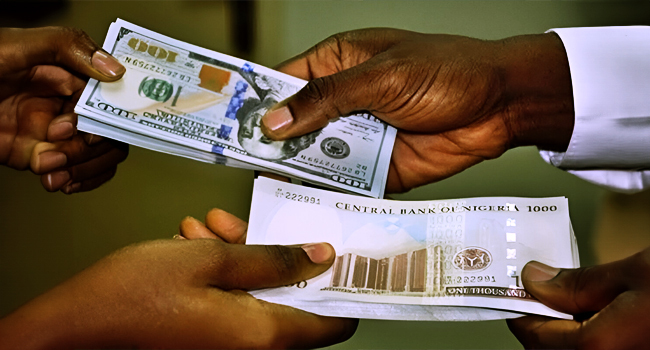
BLACK/ PARALLEL MARKET RATES
₦1370 DOLLAR (USD)
₦1800 POUND (GBP)
₦1510 EURO (EUR)
₦970 CANADIAN DOLLAR (CAD)
₦65 SOUTH AFRICAN RAND (ZAR)
₦350 UAE DIRHAM (AED)
₦190 CHINESE YUAN (CNY)
₦100 GHANAIAN CEDI (GHS)
₦2300 WEST AFRICAN CFA F.(XOF)
₦2200 CENTRAL AFRICAN CFA F.(XAF)
₦850 AUSTRALIAN DOLLAR AUSSIE (AUD)
CBN OFFICIAL RATES
DOLLAR (USD)₦1331.61
POUND (GBP)₦1764.26
EURO (EUR)₦1490.48
SWISS FRANC (CHF)₦1608.23
JAPANESE YEN (JPN)₦8.4
CFA FRANC (XOF)₦2.27
WEST AFRICAN UNIT OF ACCOUNT (WAUA)₦1802.33
CHINESE YUAN (CNY)₦199.01
SAUDI RIYAL (SAR)₦354.83
SOUTH AFRICAN RAND (ZAR)₦80.49
Business
WEF could appoint Lagarde as its next chair, sources say
The WEF’s Board of Trustees, which includes Lagarde herself, was due to meet on November 2 and could elect her as its next chair, said the people close to the organisation, who spoke on condition of anonymity due to the sensitivity of the matter.

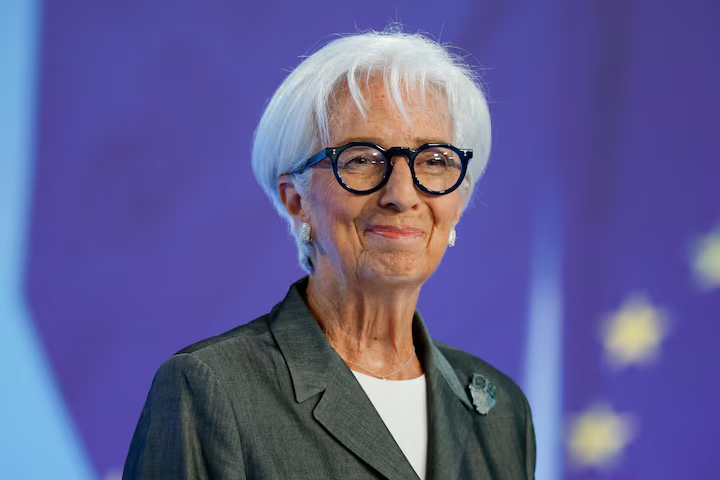
•European Central Bank President Christine Lagarde
The World Economic Forum could appoint Christine Lagarde as its next chair as soon as next month, four people close to the organisation told Reuters, meaning she would step down early as European Central Bank chief and trigger a wider reshuffle at the top of the ECB.Lagarde’s ECB term is scheduled to end in October 2027.
Leaving early would give European Union leaders a chance to pick a new ECB President before France’s spring presidential election, which opinion polls suggest the far-right could win, and could pave the way for a deal involving two other senior ECB roles.
The WEF’s Board of Trustees, which includes Lagarde herself, was due to meet on November 2 and could elect her as its next chair, said the people close to the organisation, who spoke on condition of anonymity due to the sensitivity of the matter.
No final decision has been taken yet, they said.
A spokesperson for the WEF said the forum could not confirm when the next full Board of Trustees meeting would take place, but that the aim was to hold one before the end of the year.
Business
Germany plans tax on sugary drinks
The tax is expected to generate additional revenue for the federal government of €690 million in 2027 and €925 million in 2028.
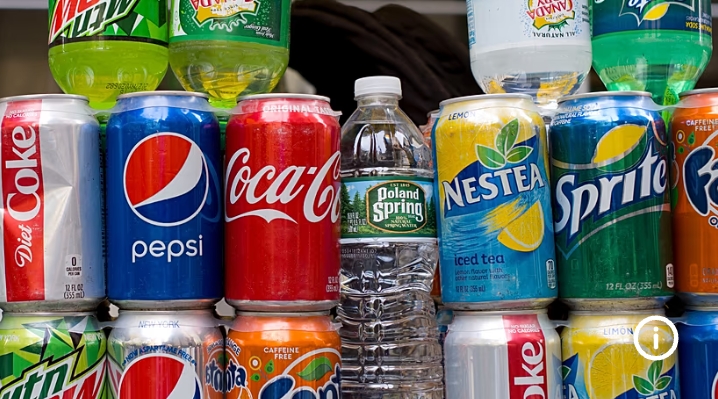
The German cabinet has approved draft legislation to tax sugary drinks in Europe’s biggest economy.
If passed by the German Bundestag, the tax will take effect on 1 July 2027.
The coalition aims to raise revenue for the federal budget while encouraging manufacturers to reduce sugar content and offer healthier products.
The levy is intended to ease pressure on the healthcare system, which faces costs of more than €2 billion every year linked to the high consumption of sugary drinks, which contributes to obesity, diabetes and tooth decay.
According to the federal government, Berlin is using the tax to implement “what associations from the fields of health, science, child protection, and consumer protection have long been demanding.”
The tax is expected to generate additional revenue for the federal government of €690 million in 2027 and €925 million in 2028.


JUST IN: Ex-Delta Gov Uduaghan Dies at 71, Oborevwori Mourns

JUST IN: Mob Sets BRT Bus Ablaze After Motorcyclist’s Death in Lagos

BREAKING: DSS Arrests Fugitive Maina Son, Hands Him to EFCC

BREAKING: Lagos Govt Declares Today, Thursday Work-Free to Mark 2026 Ìṣẹ̀ṣe Day

Tech Expert, Zuckerberg trains with UFC champions, Adesanya, Alexander