Business
CBN, Bank of Industry Partner with CEAN to stabilize Nigeria’s creative sector Post-Covid

In a bold and strategic move to rescue Nigeria’s creative industries from the lingering economic shocks of the COVID-19 pandemic, the Central Bank of Nigeria (CBN) and the Bank of Industry (BOI) have officially partnered with the Creative Entrepreneurs Association of Nigeria (CEAN) to design and implement a nationwide intervention targeting vulnerable creative businesses.
The collaboration, launched in mid-2022, marks a milestone in the recognition of Nigeria’s creative economy as a critical pillar of national development—and affirms CEAN’s position as a trusted stakeholder in industry policy and infrastructure development.
Responding to a Sector in Crisis
The partnership was galvanized by CEAN’s early post-pandemic whitepaper, “Creating Through Crisis: The Future of Nigerian Creativity Post-COVID,” which presented compelling data and policy recommendations that influenced federal strategy. While other sectors received initial support under the government’s economic recovery plans, it was CEAN’s persistent advocacy and detailed sector mapping that brought national attention to the creative industries’ urgent needs.
“From day one of the pandemic, we understood that Nigeria’s cultural workforce—millions strong—was at risk of collapse,” said Adebowale Ewedemi, CEAN founding executive and veteran media entrepreneur. “We didn’t just lobby for change; we brought the tools, the structure, and the roadmap.”
From Blueprint to Implementation
The result was a landmark intervention program backed by BOI and regulated by CBN, with CEAN serving as the official implementation partner. The program delivers targeted support to struggling sub-sectors including independent film, performance art, fashion, radio, music, design, and digital content production.
Highlights of the program include:
• Access to low-interest working capital for creative entrepreneurs
• Training grants and accelerator programs for skill development
• Support for studio and performance infrastructure
• Technical assistance for digital transformation and business retooling
CEAN’s nationwide rollout has seen the training of over 2,000 creative entrepreneurs, advisory support to more than 500 micro-businesses, and the establishment of regional Creative Recovery Hubs in Lagos, Abuja, and Enugu.
Sustained Leadership in Nigeria’s Creative Economy
This intervention is only the latest in CEAN’s long record of national impact. During the peak of the COVID-19 lockdowns, the association served as a frontline support system—offering emergency relief, transitioning training programs online, and shaping portions of the Federal Government’s Survival Fund.
For more than a decade, CEAN has played a vital role in connecting Nigeria’s informal creative workforce to structured policy, funding, and formal economic opportunities. Through this work, the association—under Ewedemi’s leadership—has consistently introduced original models, innovative frameworks, and institutional partnerships that define sustainable creative sector governance in Africa.
Architects of a New Creative Economy
This partnership with CBN and BOI reflects a broader understanding that Nigeria’s future is tied to the creative ingenuity of its people—and that long-term development requires strategic institutions with deep insight, trust, and capacity.
“We’re proud to move beyond advocacy into implementation,” said Ewedemi. “This is not a moment—it’s a movement. We are helping to reshape the creative industry into a nationally recognized economic force.”
As the creative sector continues to recover and rebuild, CEAN remains committed to ensuring that no artist, content creator, or cultural innovator is left behind.
About CEAN
The Creative Entrepreneurs Association of Nigeria (CEAN) is a national platform committed to advancing the business of creativity through advocacy, education, access to finance, and sustainable ecosystem development. CEAN represents creative professionals across music, media, fashion, film, design, performance, literature, and emerging creative technologies.
About Adebowale Ewedemi
Adebowale Ewedemi is a leading media and cultural entrepreneur with over 20 years of experience in broadcasting, creative industry leadership, and innovation policy. He is the founder of multiple FM radio stations in Nigeria and serves as Executive Director of CEAN, where he has led numerous national and international creative inte





Business
FAO Names 22 African Women Agrifood Heroes, Nigeria Missing
The UN agency recognises women from 22 African countries for contributions to agriculture, food security and rural development under its global Women Heroes initiative.

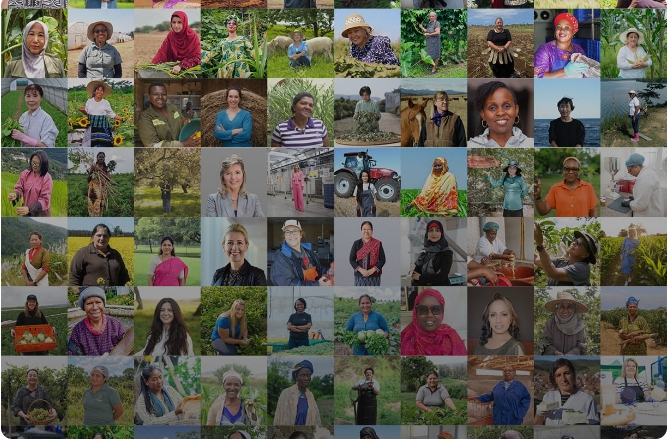
Image credit : FAO
By Ochefa
The Food and Agriculture Organization of the United Nations (FAO) has recognised 22 African women among its 100 Women Heroes in Agrifood Systems and Rural Development, with Nigeria conspicuously absent from the list.
The initiative, launched to mark the International Year of the Woman Farmer 2026, celebrates women whose contributions are advancing agriculture, strengthening food security and transforming rural communities worldwide.
The honourees represent diverse segments of the agrifood value chain, with achievements spanning market access, job creation, skills development, environmental conservation and the preservation of indigenous knowledge.
According to the initiative, their work demonstrates the critical role women play in building inclusive, sustainable and resilient agrifood systems.
22 African Honourees
The 22 women recognised come from different parts of the continent.
They include Teresa de Castro Vieira Mariz of Angola; Senait Gezahegn of Ethiopia; Lembie Tlhalerwa of Botswana; Simone Kountangni of Benin; and Amal Mekni of Tunisia.
Others are Grace Tumeo Bwanali of Zambia; Victoria Matebogo of South Africa; Didja Djaili Garga of Cameroon; Sanou Adiarra of Burkina Faso; and Zipporah Nyaguthii Gitonga of Kenya.
The list also features Sylvie Yakanandji of the Central African Republic; Pelegrinah Musingwini of Zimbabwe; Basamat Suliman Mursal Khalil of Sudan; Brenda Tsiba Djouassa of Gabon; and Alimata Coulibaly of Côte d’Ivoire.
Completing the list are Crescentia Mushobozi of the United Republic of Tanzania; Hasna Meeke Ahmed of Djibouti; Rozina Mebrahtu of Eritrea; Awa Jagne of The Gambia; Malerato Mary Khoeli of Lesotho; Berdiss Mohamed of Mauritania; and Nadege Uwamahoro of Rwanda.
Nigeria’s Absence Raises Questions
Despite agriculture’s importance to Nigeria’s economy and the livelihoods of millions of Nigerians, no Nigerian woman appears among the 22 African honourees identified in the list provided.
The omission raises questions about the visibility and international recognition of Nigerian women working across the agricultural value chain, from farming and processing to agribusiness, research and rural development.
Business
Global smartphone shipments fall 20% in Q3 2026, lowest in 14 years
“Consumers are holding on to their devices longer than estimated, increasingly considering refurbished devices and prioritizing higher-value devices,” said Shilpi Jain, a senior analyst at Counterpoint Research.

Counterpoint Research has reported drops in global smartphone shipments by 20% year on year in the third quarter of 2026, hitting the lowest level for the period in 14 years, or since 2012.
The report published on Monday showed that persistent memory shortages and rising component costs disrupted supply and pushed retail prices up.
Smartphone retail prices have increased by 20% so far in 2026 as manufacturers pass higher memory costs on to consumers.
Counterpoint said rising prices for DRAM and NAND memory components inflated bill of materials (BOM) costs, deepened supply shortages and disrupted shipments.
Manufacturers were forced to adjust shipment plans, raise prices and prioritise profitability over sales volumes.
The pressure is changing consumer behaviour. Buyers are holding on to their devices longer and considering alternatives.
“Consumers are holding on to their devices longer than estimated, increasingly considering refurbished devices and prioritizing higher-value devices,” said Shilpi Jain, a senior analyst at Counterpoint Research.
According to the report, Samsung and Apple gain market share during the period under review.
Samsung retained its position as the world’s largest smartphone manufacturer in the third quarter, accounting for 23% of global shipments despite a 3% year on year decline in shipment volume.
Counterpoint attributed Samsung’s performance to demand for its Galaxy Z Fold8 series and stable component supplies for its mid-range devices.
Apple’s market share reached 22%, crossing 20% for the first time in a third quarter, despite a year on year decline in shipments.
The absence of a base iPhone 18 model resulted in a smaller launch-month channel fill than the full iPhone 17 lineup a year earlier.
Counterpoint said the iPhone 18 Pro models recorded a stronger launch than their predecessors, particularly in China and India, while continued momentum from the iPhone 17 series helped offset the shipment decline.
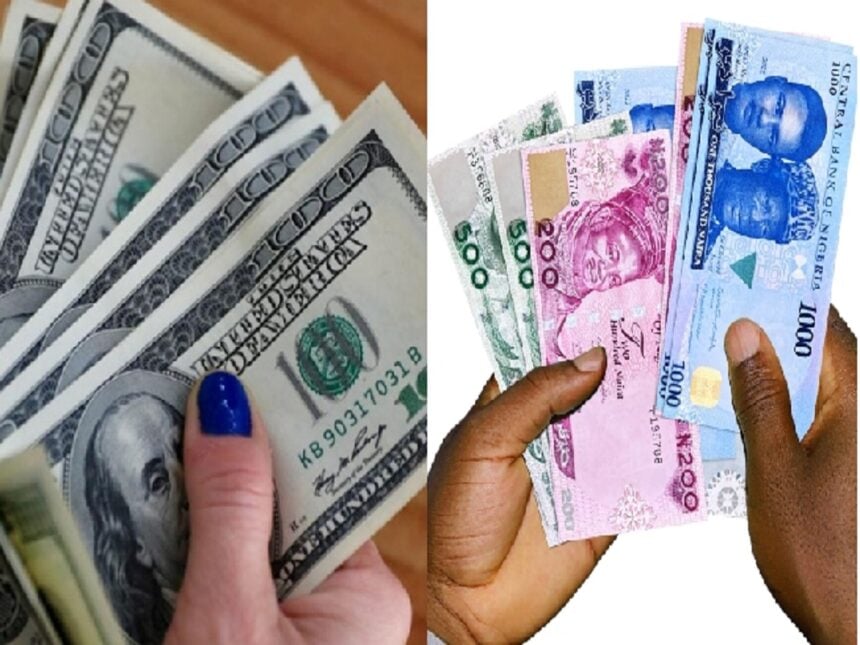
Black Market Rates
1365 DOLLAR (USD)
₦1820 POUND (GBP)
₦1525 EURO (EUR)
₦970 DOLLAR (CAD)
₦65 RAND (ZAR)
₦350 DIRHAM (AED)
₦190 YUAN (CNY)
₦100 G.CEDI (GHS)
₦2300CFA F.(XOF)
₦2200 CFA F.(XAF)
₦850 AUSSIE (AUD)
OFFICIAL CBN EXCHANGE RATES
DOLLAR (USD)₦1332.10
POUND (GBP)₦1762.63
EURO (EUR)₦1489.15
SWISS FRANC (CHF)₦1598.58
JAPANESE YEN (JPN)₦8.40
CFA FRANC (XOF)₦2.27
WEST AFRICAN UNIT OF ACCOUNT (WAUA)₦1800.76
CHINESE YUAN (CNY)₦199.03
SAUDI RIYAL (SAR)₦354.67
SOUTH AFRICAN RAND (ZAR)₦80.58


FAO Names 22 African Women Agrifood Heroes, Nigeria Missing

NAF Crash: Residents Fear Disease as Body Parts Foul Community River

UNCTAD Warns Debt Burden Threatens Future of 3.7bn People

Tech Expert, Zuckerberg trains with UFC champions, Adesanya, Alexander

Organ Trafficking: Ekweremadu bags 10 years in UK prison

BREAKING: Lagos Govt Declares Today, Thursday Work-Free to Mark 2026 Ìṣẹ̀ṣe Day
-
 Business2 days ago
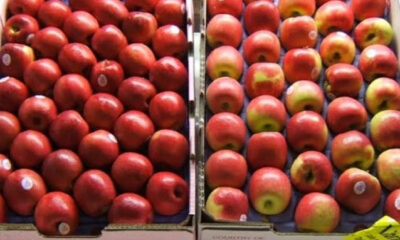
Nigeria’s ₦33bn Fruit Import Bill Exposes Missed Opportunities in Jos
-

 Business2 days ago
Naira To Dollar, Pound ,Euro …Rates For Monday, October 12
-

 International2 days ago
‘Up to our people’ to pick leader, Zelenskyy responds to Trump’s pledge for new elections in Ukraine
-

 Opinions2 days ago
Human Capital Africa Statement For International Day of the Girl Child 2026
-

 Politics2 days ago
2027: 119 Women Jostle For State’s Governors
-

 Politics1 day ago
BEWARE: Fake 2027 Gov’ Candidates List Circulating Online — INEC Raises Alarm
-

 News2 days ago
Forbes Scores GTBank Best Employers 2026
-

 Business13 hours ago
Dangote Refinery IPO Attracts N8.61trn in Subscriptions, Four Times Offer