
Business
Aliko Dangote retires

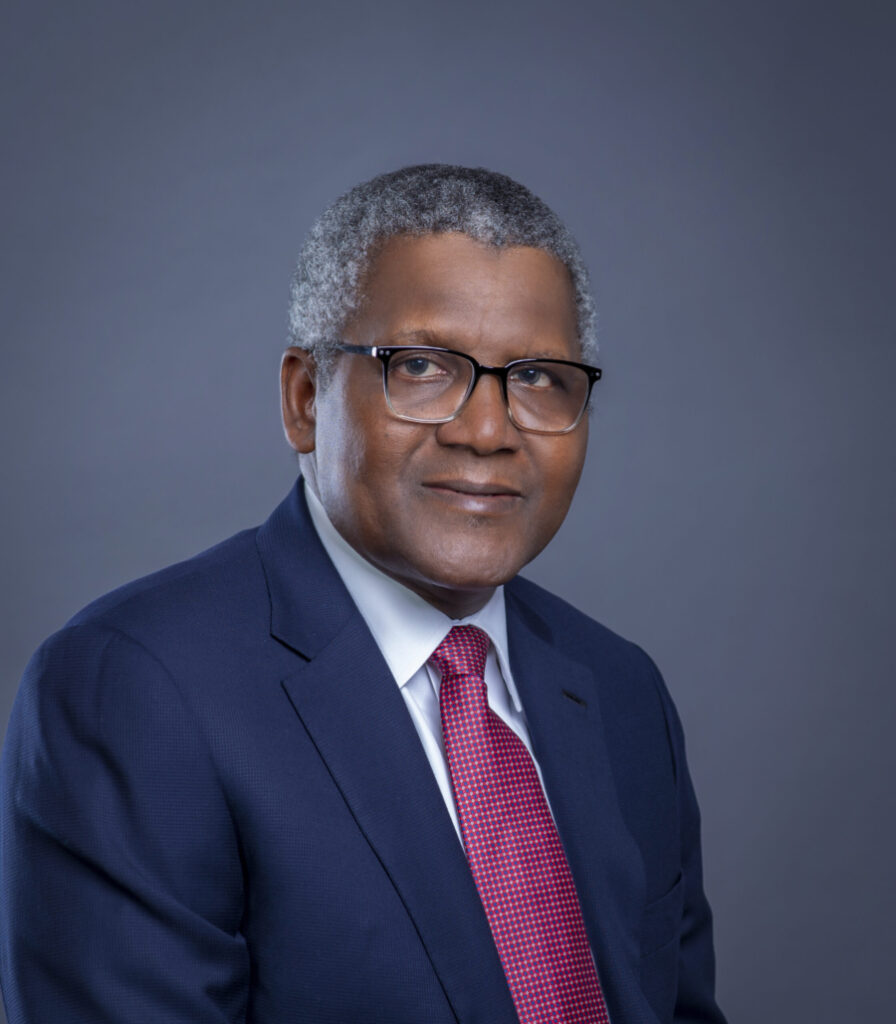
Foremost entrepreneur and founder of Dangote Cement Plc, Aliko Dangote has announced his retirement as a Director and the Chairman of the Board of Directors, effective July 25, 2025.
He is relinquishing his position as chairman and retiring from the board so as to focus more attention on the Refinery, Petrochemicals, Fertiliser and Government Relations, in order to drive the company’s five-year business trajectory to a superlative height.
The board of Dangote Cement Plc has therefore announced the appointment of Mr. Emmanuel Ikazoboh, an independent non-executive director, as the new Chairman, Board of Directors.
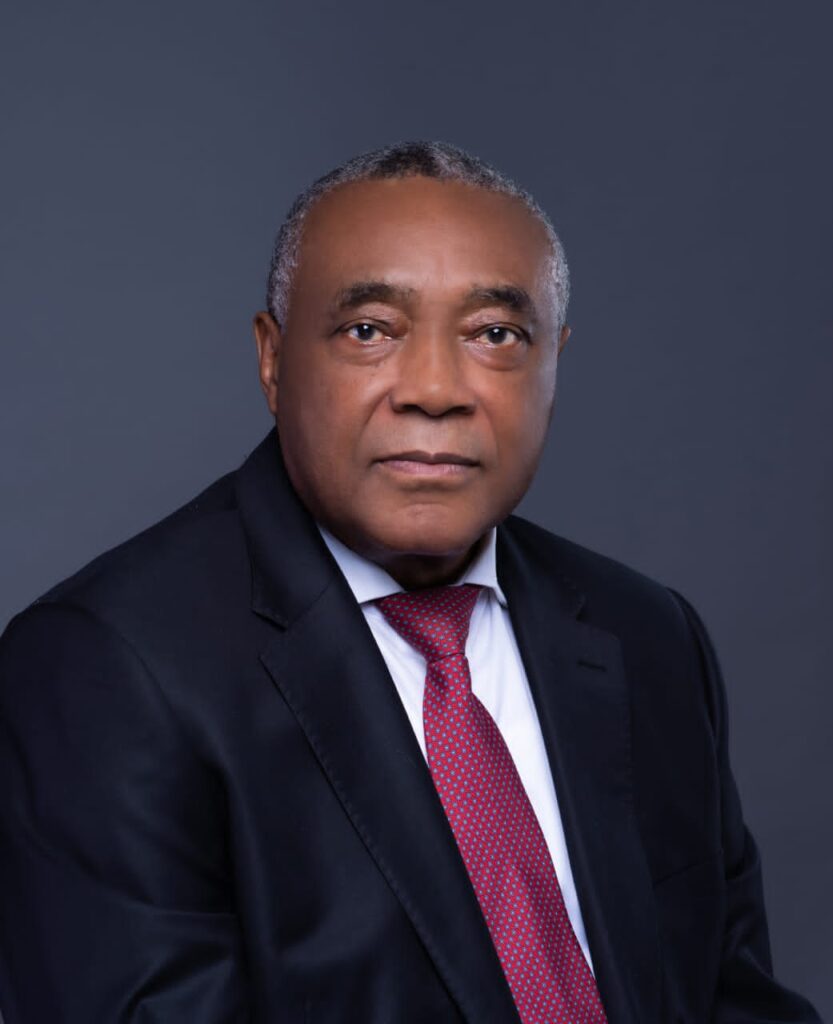
In the same vein, Hajiya Mariya Aliko Dangote was also appointed to the Board of Directors of the Company while Prof. Dorothy Ufot retired from the Board.
Reputed as Africa’s leading investor, Aliko Dangote leaves giant footprints as he retires from the board.
His vision and tenacity redefined not just a company, but the entire cement industry landscape by becoming Africa’s largest cement producer and largest exporter of cement and clinker in Sub Saharan Africa.
Aliko Dangote’s journey with cement began with a bold dream: to make Nigeria and Africa self-sufficient in cement production.
Through strategic investments in state-of-the-art plants, and a commitment to local content, he not only met that goal but exceeded it.
Dangote Cement Plc has 52.0Mta capacity across African continent with Nigeria accounting for 35.25Mta.
Currently, additional greenfield plants are coming up in Cote Ivoire (3.0Mta) and Itori, Nigeria (6.0 Mta) and on completion this year will push total capacity to 61.0Mta.
Under his visionary leadership, Dangote Cement Plc recorded the highest revenue and Earnings Before Interest, Taxes, Depreciation, and Amortization (EBITDA) in the history of the company.
According to the unaudited results for the six months ending 30th June 2025, the group revenue went up by 17.7 percent, from N1,760 billion at the same period in 2024 to N2,071.6 billion, representing the highest revenue in the history of the company.
Group Earnings Before Interest, Taxes, Depreciation, and Amortization (EBITDA) grew by 41.8 percent to N944.900 billion from N666.22 billion.
EBITDA (Nigeria Operations) grew by 82.4 percent to N845.4 billion. Profit before tax went up from N292.96 billion to N730 billion indicating 149 percent increase while profit after tax surged by 174.1 percent to ₦520.5 billion, in contrast to N189.90 billion in the same period at the preceding period.
In the six months, export volumes from Nigeria increased by 18.2 percent, with 18 successful clinker shipments made to Ghana and Cameroon.
Aliko Dangote’s legacy will be counted in the millions of jobs created, the infrastructure built, and the confidence restored in African industrial potential.
He has proven that Africa can produce, compete, and lead on the global stage. It is on record that subsidiaries under Dangote Group paid over N402 billion in taxes in 2024, making it the highest taxpayer in the country.
The new Chairman of the Board of the Company, Emmauel Ikazoboh in his acceptance speech, said he is truly honored to accept the role of Chairman of Dangote Cement Plc while pledging to uphold the highest standards of leadership and dedication in this role.
He described the company as a beacon of African enterprise, which has consistently demonstrated resilience, innovation, and a commitment to excellence.
Over the years, Dangote Cement Plc has not only become the continent’s leading cement producer but has also played a vital role in driving economic growth and development across numerous African nations.
Giving an insight into what his tenure holds for the company, he said, “my vision for Dangote Cement Plc is built upon a foundation of sustainable growth, operational efficiency, and unwavering commitment to our core values.
We will continue to focus on the following key priorities, Operational Excellence, Strategic Expansion, Sustainability, Innovation and Community Engagement.
Part of the strategies he intends to introduce include driving down costs through the implementation of robust cost-reduction strategies to navigate inflationary pressures and enhance competitiveness.
The company he stated will accelerate efforts to adopt alternative fuels and technologies, reducing reliance on fossil fuels and contributing to a more sustainable future.
Regarding staff welfare, he promised that the company will continue to invest in training and development, fostering a culture of excellence and empowering employees to reach their full potential.
Emmanuel Ikazoboh was previously the Group Chairman of Ecobank Transnational Inc., the Pan-African banking group. He started his professional career at Akintola Williams Deloitte.
He first became the Managing Partner for francophone offices in Cameroon and Côte d’Ivoire and later became the Managing Partner of the Deloitte firm in West and Central Africa until 2009.
In 2010 he was appointed by the Securities and Exchange (SEC) as an Interim Administrator to carry out capital market reforms of the Nigerian Stock Exchange (NSE) and the Central Securities Clearing System Plc. (CSCS).




Business
33 Nigerian Banks Beat CBN’s Recapialisation with ₦4.65trn Combined Capital Base
The recapitalisation programme has strengthened the capital base of Nigerian banks, reinforcing the resilience of the financial system and ensuring it is wellpositioned to support economic growth and withstand domestic and external shocks.”

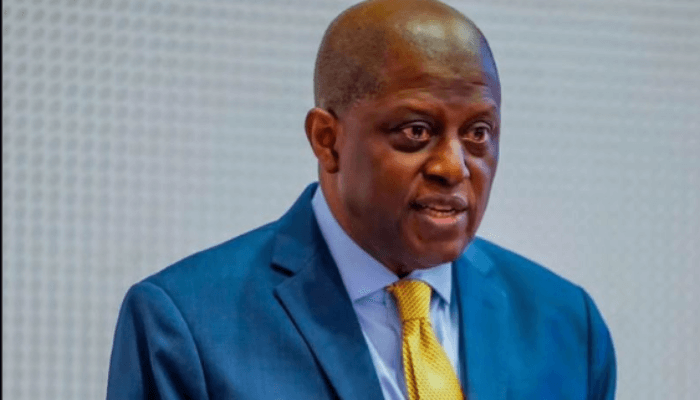
•Governor of CBN, Olayemi Cardoso
The Central Bank of Nigeria (CBN) has wrapped up the banking sector recapitalisation programme it introduced two years ago (March 2024-March 31, 2026) with 33 banks successfully met the requirements deadline.
The banks raised a total of ₦4.65 trillion in new capital, according to a statement signed by Olubukola A. Akinwunmi, the Director, Banking Supervision and Hakama Sidi Ali (Mrs.), the Ag. Director, Corporate Communications.
It said that the recapialisation exercises recorded strong participation from both domestic and international investors, with 72.55% of capital sourced locally and 27.45% from international markets, reflecting sustained confidence in the Nigerian banking sector.
The statement noted that the Governor of CBN, Olayemi Cardoso said “the recapitalisation programme has strengthened the capital base of Nigerian banks, reinforcing the resilience of the financial system and ensuring it is wellpositioned to support economic growth and withstand domestic and external shocks.”
“The CBN confirms that 33 banks have met the revised minimum capital requirements established under the programme.
A limited number of institutions remain subject to ongoing regulatory and judicial processes, which are being addressed through established supervisory and legal frameworks.
“All banks remain fully operational, ensuring continued access to banking services for customers.
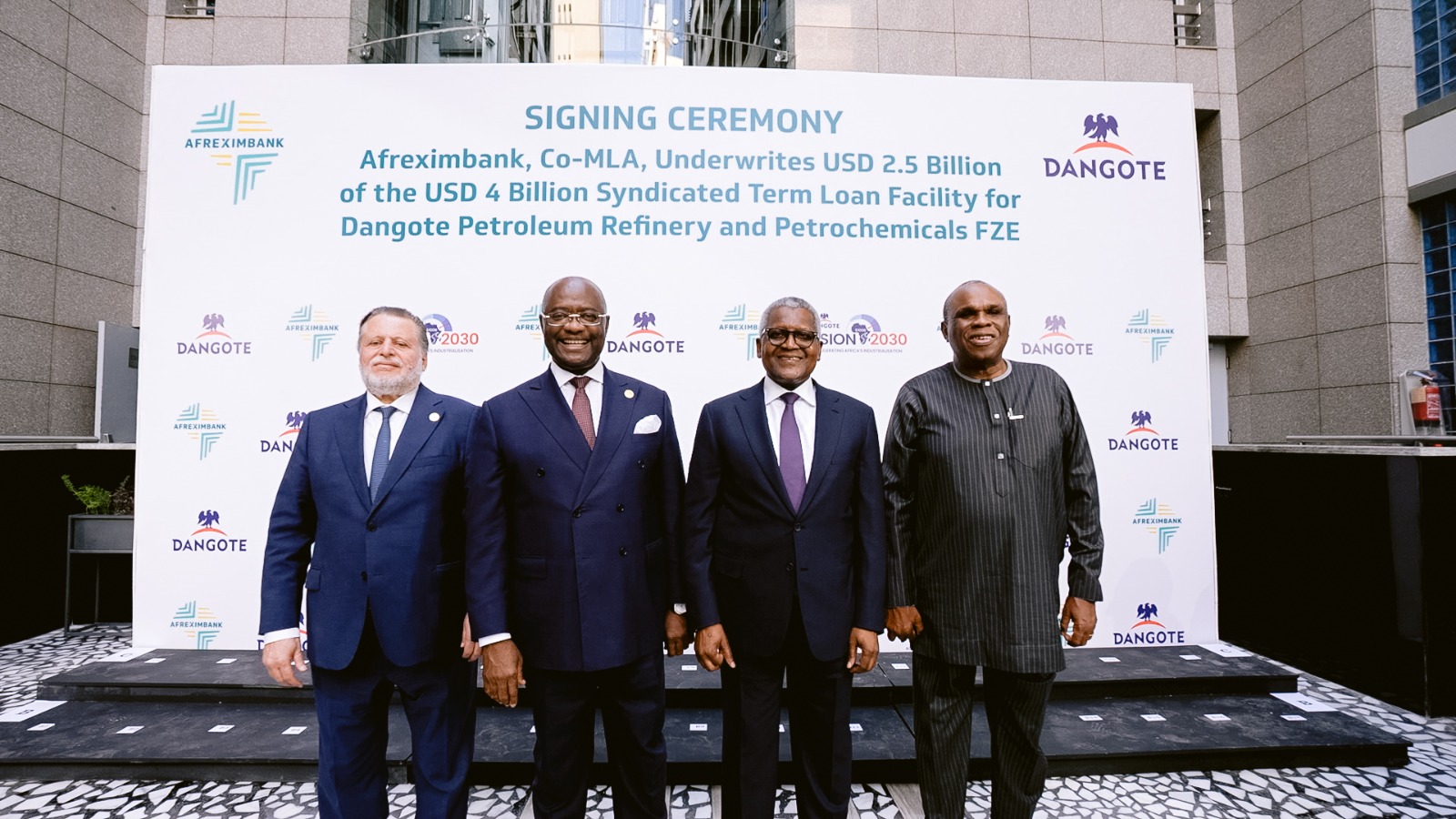
African Export-Import Bank has underwritten $2.5 billion in a $4 billion senior syndicated term loan for Dangote Petroleum Refinery and Petrochemicals, in a move aimed at strengthening the refinery’s financial position and supporting its long-term growth and expansion strategy.
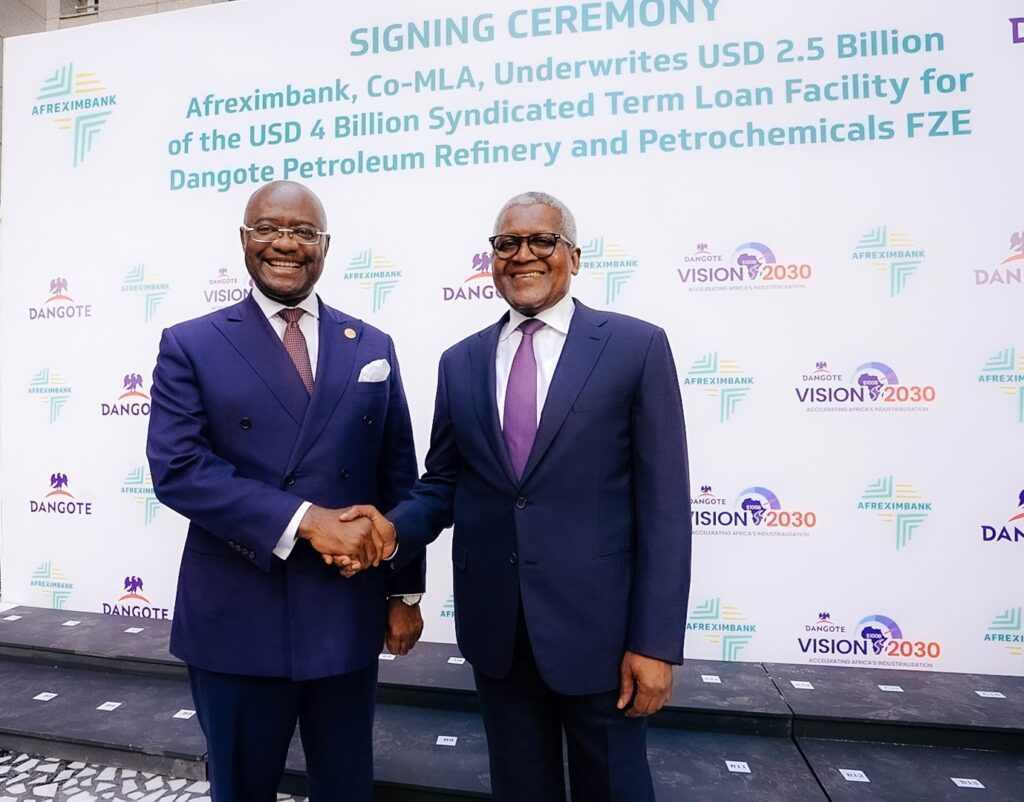
The five-year facility, arranged alongside Access Bank as co-Mandated Lead Arrangers, is designed to consolidate existing debt, optimise the refinery’s capital structure and align its financing with current operational realities.
The transaction marks a significant milestone for the Dangote Refinery, Africa’s largest refining and petrochemical complex with a capacity of 650,000 barrels per day.
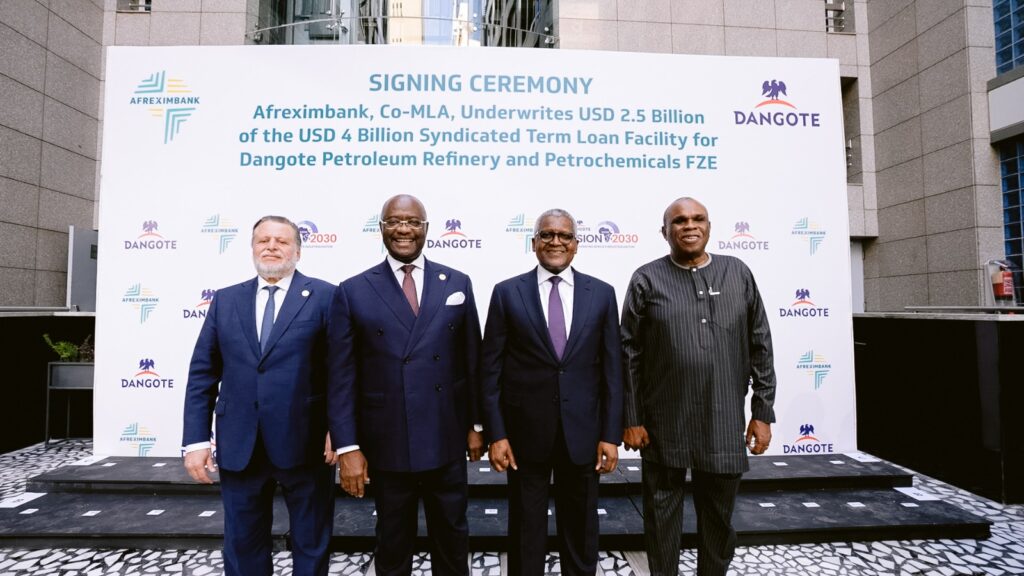
Afreximbank’s $2.5 billion participation represents the largest share of the syndicate, underscoring its strategic role in mobilising capital for industrial projects across the continent.
The bank said the financing aligns with its mandate to promote industrialisation, reduce reliance on imported petroleum products and deepen intra-African trade.
Since refining operations commenced in February 2024, Afreximbank has played a key role in supporting the project, including providing a $1 billion working capital facility and acting as financial adviser on the Naira-for-Crude initiative, which facilitates crude procurement and product sales in local currency.
Speaking during a strategy session in Cairo, Egypt, President and Chairman of the Board of Directors of Afreximbank, George Elombi, said the bank’s continued backing reflects confidence in indigenous African enterprises.
“We take immense pride in being the single largest provider of financing to the Dangote Group. We do so primarily because Dangote is African,” he said.
“When we invest in ourselves, we do more than create jobs and wealth or expand government revenues; we build a secure and resilient future for our continent”
Elombi disclosed that Afreximbank has committed about $15 billion to Dangote Group since 2015, highlighting the scale of its long-term partnership with the conglomerate.
President and Chief Executive of Dangote Industries Limited, Aliko Dangote, described the financing as a critical step in positioning the refinery for its next phase of expansion.
“This financing marks an important step in strengthening the financial foundation of Dangote Petroleum Refinery & Petrochemicals and positions the business for the next phase of its growth,” he said.
“We appreciate Afreximbank’s continued support and confidence in our vision to build world-class industrial capacity that serves Nigeria, Africa and global markets.”
The syndicated loan attracted strong participation from a mix of African and international financial institutions, reflecting sustained investor confidence in the refinery as a transformative industrial asset in advancing Africa’s energy security, reducing import dependence and supporting the continent’s broader industrialisation agenda.
Business
BUA Foods Plc Reports Strong 2025 Performance with ₦1.77 Trillion Revenue, Proposes Record ₦28 Dividend per Share
Leading Nigerian food manufacturer BUA Foods Plc has announced robust full-year 2025 audited results, with revenue climbing 16% to ₦1.77 trillion from ₦1.53 trillion in 2024.
The growth was driven by sustained consumer demand for the company’s core staples sugar, flour, pasta, and rice alongside higher sales volumes and strategic pricing amid a challenging economic environment marked by inflationary pressures on households.
Profit after tax nearly doubled, rising 95% to ₦518.4 billion, while gross profit surged to ₦737.3 billion from ₦540.8 billion the previous year.
Operating profit also increased significantly to ₦656.6 billion.In a strong signal of confidence in its outlook and commitment to shareholder value, the Board of Directors has proposed a final dividend of ₦28 per ordinary share of 50 kobo.
This represents a 115% increase from the ₦13 per share paid in 2024, translating to a total payout of approximately ₦504 billion, subject to approval by shareholders at the company’s 2026 Annual General Meeting.
Chairman Abdul Samad Rabiu highlighted the results, stating that the substantial dividend hike underscores the company’s dedication to rewarding investors while continuing to invest in business expansion and operational efficiency.
BUA Foods, a major player in Nigeria’s food processing sector controlled by billionaire Abdul Samad Rabiu, has continued to benefit from scale advantages, market expansion, and resilient demand for essential food products despite broader economic headwinds.
The company’s shares have reacted positively in recent trading, reflecting investor optimism over the strong earnings and generous dividend proposal.
Full details of the financial statements were filed with the Nigerian Exchange (NGX) on Monday.
Analysts view the performance as a testament to BUA Foods’ robust business model and ability to navigate Nigeria’s macroeconomic challenges through volume growth and cost discipline.


INEC Dismisses Calls for Chairman’s Removal

Ebonyi: Gunmen Assasinate Another Traditional Ruler

From South Africa to US, ‘Cicada’ COVID-19 variant spreading

Tech Expert, Zuckerberg trains with UFC champions, Adesanya, Alexander

Organ Trafficking: Ekweremadu bags 10 years in UK prison

SAINT OBI: Between his marriage and his death
-
 Business2 days ago
33 Nigerian Banks Beat CBN’s Recapialisation with ₦4.65trn Combined Capital Base
-
 Politics2 days ago
BREAKING: INEC Withdraws Recognition of David Mark’s ADC
-

 Sports2 days ago
FirstBank Sponsors Samuel Okwaraji U-16 Football Championship 2026
-
 News2 days ago
JUST IN: Tinubu Heads to Jos Tomorrow, Postpones Ogun Trip for 5-State Visits
-

 Entertainment2 days ago
Super Eagles Iwobi to launch music album ‘More To Life’
-
 News2 days ago
Easter: FG declares Friday, Monday public holidays
-

 Politics2 days ago
Arise News Anchor Ikokwu in Political Race for Reps Seat
-
 News2 days ago
Gas Leak in Ogun School: 30 Students, Teacher Hospitalised