
Politics
Senate’s Proposal to Elevate Ooni, Sultan Sparks Nationwide Debate

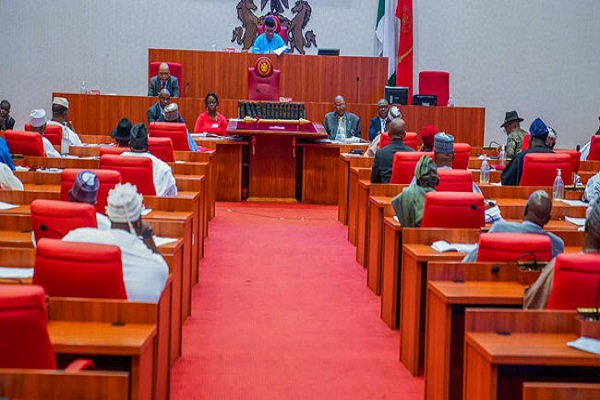
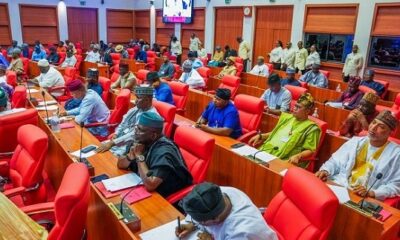
A proposed bill in the Nigerian Senate seeking to establish a constitutionally recognized National Council of Traditional Rulers has triggered widespread criticism across the country—particularly over a controversial clause that elevates the Ooni of Ife and the Sultan of Sokoto as permanent heads of the Council.
While the bill—sponsored by Senator Simon Bako Lalong (Plateau South)—is intended to formalize the role of traditional rulers in national development and peacebuilding, its provision giving the Ooni and Sultan precedence over all other monarchs has been condemned as divisive, undemocratic, and a threat to Nigeria’s federal character.
The bill, which passed second reading in March and is currently before the Senate Committee on Establishment and Public Service, has drawn sharp opposition from several groups, including Ohanaeze Ndigbo, the Middle Belt Forum (MBF), the Alaigbo Development Foundation (ADF), and Concerned Hausa Stakeholders, among others.
Ohanaeze Ndigbo: “This is injustice and ethnic bias”
The apex Igbo socio-cultural group, Ohanaeze Ndigbo, rejected the bill outright, calling it unjust, ethnocentric, and a violation of equity, fairness, and federal character principles.
Dr. Ezechi Chukwu, the group’s National Publicity Secretary, stated:
“The bill threatens to marginalize traditional institutions in the South-East, South-South, and Middle Belt. It disregards the diverse ethnic makeup of Nigeria and reduces the Senate to a promoter of executive lawlessness.”
Ohanaeze insisted the bill should be reviewed to reflect ethnic diversity and promote inclusive governance, rather than institutionalizing “ethnic hierarchy.”
Middle Belt Forum: “Sultan has no seniority over our monarchs”
The Middle Belt Forum also issued a strong rejection, particularly the clause elevating the Sultan of Sokoto. National Publicity Secretary Luka Binniyat said the move undermines historically older and culturally distinct institutions in the region.
“The Sultan of Sokoto is junior to ancient Middle Belt monarchies such as the Attah of Igala, the Tor Tiv, and the Etsu Nupe. This bill is a distortion of historical facts,” the group stated.
The MBF also criticized the Sultan’s role as primarily religious—not traditional—arguing that assigning him national traditional authority violates Nigeria’s secular character and marginalizes Christians and traditional worshippers.
They warned that if the clause is not removed, Middle Belt traditional rulers will boycott the Council and form their own autonomous body reflecting their heritage.
Concerned Hausa Stakeholders: “Nigeria is not a Fulani-Yoruba federation”
In a parallel rejection, a group of Concerned Hausa Stakeholders described the bill as ethnically biased and historically misleading. The group insisted that the Sultan of Sokoto does not represent the Hausa ethnic group culturally or traditionally.
“The Sultan is the Sarkin Musulmi, a religious leader of Fulani extraction, not a traditional Hausa monarch. He cannot speak for Hausa or northern traditional institutions,” the group said.
They argued that ancient Hausa city-states like Daura, Kano, and Zaria predate the Sokoto Caliphate, and it is insulting to subordinate them under the Sultan’s authority.
They further questioned the exclusion of other prominent monarchs, including the Oba of Benin, the Shehu of Borno, and Eze Nri in the East, saying the bill entrenches ethnic favoritism and risks igniting national disunity.
Alaigbo Development Foundation: “A slap on Nigeria’s cultural diversity”
The Alaigbo Development Foundation (ADF) also condemned the bill, describing it as provocative and subjugative. They warned that it disrespects Nigeria’s cultural diversity and could provoke ethnic tensions.
“This bill is an insult to the Igbo people and to Nigeria’s cultural heritage. We urge all Igbo lawmakers to reject it and protect the integrity of our traditional institutions,” the group said.
Individual Reactions from South-West and South-South
Despite the elevation of the Ooni of Ife under the bill, some Yoruba voices also expressed disapproval.
Femi Adebowale, a university lecturer, questioned the assumption that the Ooni could speak for the entire Yoruba nation:
“Historically, the Alafin of Oyo is senior to the Ooni of Ife. So how can he be placed above all other Yoruba monarchs? This is divisive and historically inaccurate.”
Similarly, Caleb Osazuwa, a lawyer from Edo State, said the idea that the Ooni could represent southern traditional rulers—including the Oba of Benin—was laughable.
“It’s the greatest joke of the century. The Oba of Benin cannot and will never be placed under the Ooni. Nigeria must respect its ethnic and historical realities.”
Proposed Alternatives
In their responses, several groups and individuals offered suggestions to preserve equity and national unity:
- Rotational chairmanship of the Council across Nigeria’s six geo-political zones or ethnic blocs.
- Democratic selection of leaders by traditional rulers themselves, through an inclusive process.
- Clear separation between religious and traditional leadership to reflect Nigeria’s secular constitution.
Conclusion
As the Senate continues deliberations on the bill, growing nationwide backlash underscores Nigeria’s deep ethnic and historical complexities. Many fear that elevating two monarchs as permanent leaders of a national council could spark tensions, marginalize diverse ethnicities, and derail efforts toward unity.
While the creation of a national body for traditional rulers is seen as a positive step, critics argue that any structure must be inclusive, fair, and reflective of Nigeria’s pluralistic identity—not one that institutionalizes ethnic hierarchy.






Politics
Pat Utomi Congratulates Adeleke, Says “Voters Can Defeat Rigging”
Utomi also attributed the outcome to voter participation and determination, arguing that citizens could protect democratic processes when they actively participate in elections.

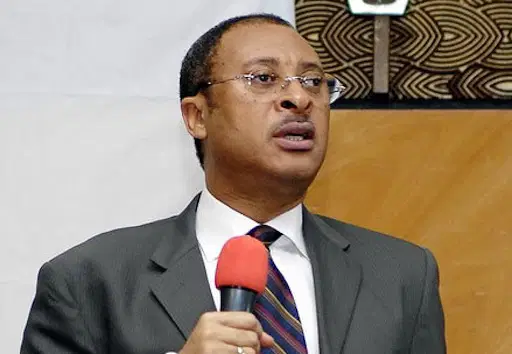
Professor of Political Economy, Pat Utomi, has described the outcome of the Osun State governorship election as evidence that the will of the electorate can overcome attempts at electoral manipulations.
Utomi stated this on Monday, while reacting to the election results, emphasising that the election demonstrated that determined citizens could resist forces seeking to manipulate electoral outcomes.
In a statement posted on his verified X handle, Utomi commended Osun voters following the declaration of incumbent Governor Ademola Adeleke as winner of the August 15 election by the Independent National Electoral Commission (INEC).
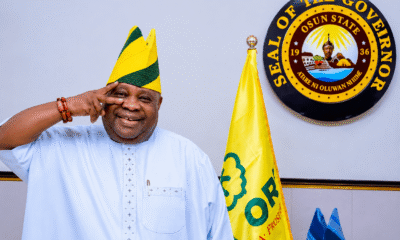
In the results announced by INEC, Adeleke secured 511,067 votes across 19 Local Government Areas, defeating his major challenger, Bola Oyebamiji of the All Progressives Congress (APC), who polled 444,815 votes in 11 Local Government Areas.
Utomi wrote:
” Nigeria we hail thee. So the people triumphed in the state of Osun.
“Like in Kano in years before, the people proved that their will can triumph over the forces of rigging.”
Utomi also attributed the outcome to voter participation and determination, arguing that citizens could protect democratic processes when they actively participate in elections.
Politics
‘Nigerian Politics Is Evil’ — Davido
Davido was one of the prominent voices who campaigned for Governor Adeleke throughout the Osun governorship race.
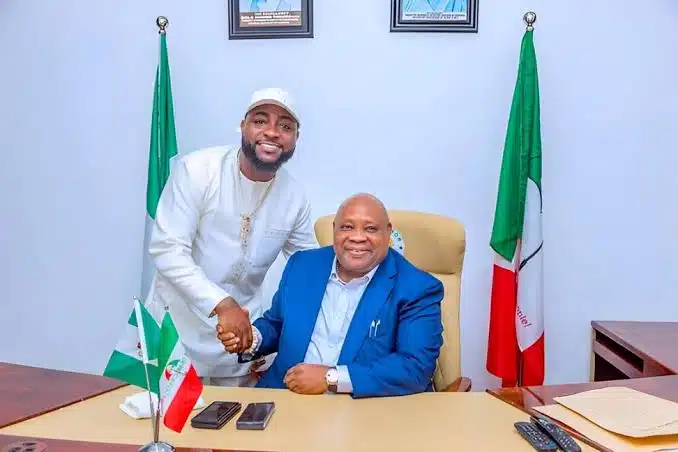
[File photo] : Davido and his uncle, Governor Ademola Adeleke
Afrobeats star David Adeleke, popularly known as Davido, said that he has no interest in participating in the country’s political system, which he described as “evil.”
The singer made the statement in a post on X while responding to reactions over his support for his uncle, Governor Ademola Adeleke during the recently concluded Osun State governorship election.
Davido insisted that his involvement was driven solely by family loyalty, stressing that he neither mobilised anyone nor relied on support from others while backing his family.
“I bought no one! No one defended me! I backed my family on my own!” Davido wrote.
He also aimed at critics who faulted his role during the election, describing their actions as “ruthless” and “disgusting.”A
ccording to the musician, he has played the role he believed was expected of him and has no intention of remaining active in political affairs.
“I have done my job! Nigerian politics is evil AND I DON’T WANT TO BE A PART OF IT TILL GOD HELPS US!” he said.
Davido was one of the prominent voices who campaigned for Governor Adeleke throughout the Osun governorship race.
Politics
BREAKING: Edo Assembly Speaker Agbebaku Resigns
The development has plunged the Edo State House of Assembly into a fresh leadership crisis, with lawmakers expected to begin the process of determining a new Speaker.

Photo: Speaker of the Edo State House of Assembly, Blessing Agbebaku.
The Speaker of the Edo State House of Assembly, Blessing Agbebaku, has resigned from his position amid moves by some lawmakers to impeach him.
Agbebaku stepped down on Monday, with his resignation confirmed by his media aide, Ivy Adodo-Ebojele, in a post on Facebook.
Adodo-Ebojele wrote: “EDO ASSEMBLY SPEAKER RT HON CHIEF BLESSING AGBEBAKU RESIGNS.”
She added that further details on the circumstances surrounding the Speaker’s resignation would be made public later.
The development has plunged the Edo State House of Assembly into a fresh leadership crisis, with lawmakers expected to begin the process of determining a new Speaker.


Edo House of Assembly Elect New Speaker Idiaye, Hints Why Agbebaku Resign

NDLEA destroys illicit drugs valued at N301bn in Lagos

Pat Utomi Congratulates Adeleke, Says “Voters Can Defeat Rigging”

Tech Expert, Zuckerberg trains with UFC champions, Adesanya, Alexander

Organ Trafficking: Ekweremadu bags 10 years in UK prison

SAINT OBI: Between his marriage and his death
-

 Politics7 hours ago
Kebbi Governor picks new running mate , Ibrahim Augie
-

 Politics2 days ago
#OsunDecides2026: First Results Emerge as Voting Ends, Collation Begins at Polling Units
-
 Politics2 days ago
(UPDATED) #OsunDecides2026: INEC Uploads 3,119 of 3,763 Polling Unit Results as Collation Continues
-
 Politics1 day ago
BREAKING: INEC declares Adeleke winner of Osun gov poll
-

 Politics3 days ago
HAPPENING NOW: Security Beefed up at INEC Office in Osun Ahead of Saturday’s Governorship Election
-
 Politics2 days ago
#OsunDecides2026: Adeleke Urges Tinubu to Protect Votes During Collation
-
Politics8 hours ago
Osun poll: ADC’s Salaam, Tambuwal Hail Adeleke for Second Term Win
-

 Politics2 days ago
Osun Poll: Youths Accuse APC of Vote-Buying in Ejigbo (Video)