
Entertainment
Why TV Makers Switched To OLED Panels
One of the biggest reasons manufacturers moved to OLED production was the panel’s ability to use individually self-emissive pixels instead of an LCD panel with LED backlighting.

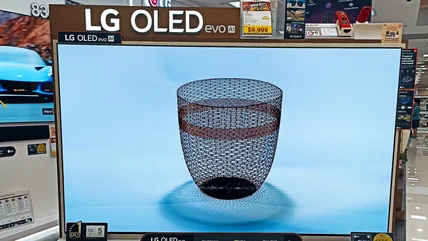
• Story and image credit: BGR.com
If you’re looking for a TV that delivers rich colors and the kind of black levels that put actual movie theaters to shame, you should consider an OLED TV.
The acronym stands for “organic light-emitting diode,” a panel type that signaled a major shift in display technology for TV makers.
One of the biggest reasons manufacturers moved to OLED production was the panel’s ability to use individually self-emissive pixels instead of an LCD panel with LED backlighting.
The result was something LCD panels struggled with at the time: unbeatable black levels, near-perfect contrast, and a thinner chassis.
While early OLED TVs carried eye-watering price tags (one of LG’s first sets was nearly $10,000), growing competition and expanded panel production helped bring costs down, solidifying OLED’s role as a go-to choice for premium televisions.
Nowadays, brands like LG and Samsung — two of the most reliable smart TV brands on the market — produce industry-lauded OLED TVs at multiple price.
Generally speaking, OLED TVs are more expensive to produce than LED LCDs, and that usually translates to the former being priced a bit higher in stores and online.
And while LED LCD technology has continued to get brighter, thinner, and more affordable with each new generation, issues like light bloom, flat contrast, and poor image quality when viewed from the sides have remained.
These are all picture maladies that pretty much don’t exist for OLED owners because of how much lighting and color control those self-emissive pixels deliver.
The Samsung S95F OLED is one of the best TVs to buy on Amazon, according to experts, and part of what makes its picture so great is quantum dot technology.
Interestingly, quantum dots were originally an LCD feature that emerged in response to OLED TV production.
LED sets needed a way to compete with the rich colors and superior viewing angles that OLEDs introduced, and a layer of quantum dots was the answer.
By refining how light is converted into pure red and green wavelengths, quantum dots allowed LCD TVs to deliver wider color gamuts and higher peak brightness levels, without abandoning LED backlighting.
This also led to a new picture tech acronym: quantum dot-light-emitting diode, or QLED.
Brands like Samsung later adapted this same technology for OLED panels, combining a blue OLED light source with a quantum dot layer to create QD-OLED.
The hybrid approach preserves OLED’s near-perfect contrast and black levels, while boosting color volume and brightness, helping models like the S95F deliver a more vibrant, HDR-friendly picture than earlier OLED generations.
Entertainment
BBNaija season 11: “And The Winner is Temi Nkem”
The finalists were Temi Nkem, Barry, Tram, Oyin, Flora, Sheba, Aikou, Ricky and Bluethopia.

Temi Nkem has emerged as the winner of BBNaija Season 11, bringing the reality show’s latest edition to an end.
The finalists were Temi Nkem, Barry, Tram, Oyin, Flora, Sheba, Aikou, Ricky and Bluethopia.
Temi Nkem was crowned winner during the grand finale on Sunday night after weeks of competition, evictions and intense drama among the housemates.
The victory sees Temi Nkem take home the ₦160 million prize package awarded to the winner of the season.
The season began with 24 housemates before the competition was gradually narrowed down to the finalists.
Entertainment
President Tinubu, Other Political Leaders Watch MKO Documentary
The documentary, MKO, directed by Nigerian-American filmmaker Ose Oyamendan, chronicles the life, political journey and legacy of the late Chief Moshood Kashimawo Olawale Abiola, with particular focus on the June 12, 1993 presidential election, its annulment, subsequent detention and the pro-democracy struggle that followed.
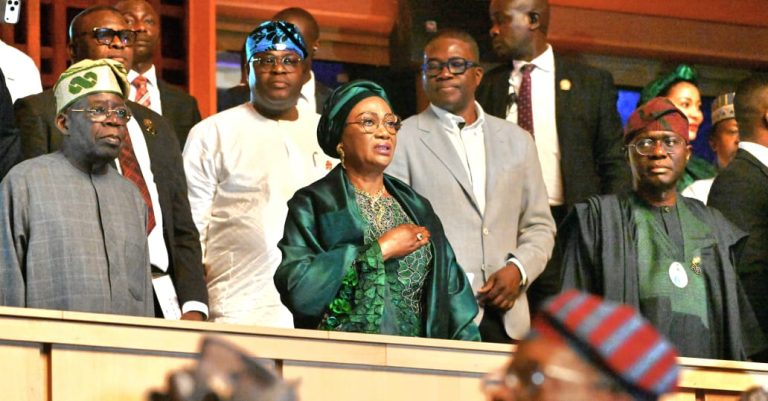
President Bola Tinubu on Thursday attended the official launch and premiere of MKO at the Wole Soyinka Centre for Culture and the Creative Arts in Lagos, ahead of the film’s nationwide cinema release from October 2.
Chief MKO Abiola occupies a prominent place in Nigeria’s democratic history as the winner of the June 12, 1993 presidential election, which was annulled by the then military government.
The President was joined at the Wole Soyinka Centre for Culture and the Creative Arts in Lagos by First Lady Senator Oluremi Tinubu, Senate President Godswill Akpabio, Lagos State Governor Babajide Sanwo-Olu, Ogun State Governor Dapo Abiodun and Kwara State Governor AbdulRahman AbdulRazaq.
Others present included Deputy Senate President Jibrin Barau, Deputy Speaker of the House of Representatives Benjamin Kalu, Chief of Staff to the President Femi Gbajabiamila, Minister of Art, Culture, Tourism and the Creative Economy Hannatu Musawa, former Ogun State Governor Segun Osoba and other dignitaries.
The documentary, MKO, directed by Nigerian-American filmmaker Ose Oyamendan, chronicles the life, political journey and legacy of the late Chief Moshood Kashimawo Olawale Abiola, with particular focus on the June 12, 1993 presidential election, its annulment, subsequent detention and the pro-democracy struggle that followed.
The film, which had its international premiere at the Sheffield International Documentary Festival in the United Kingdom in June 2026, features archival materials and first-hand accounts from key personalities connected to the period.
Entertainment
Nollywood actor Cjay Nwokafor dies
Cjay, who began his acting career in 2021, featured in several Nollywood productions, including Larry Cold, Mum Overnight and A Day to My Wedding.

•Nollywood actor Cjay Nwokafor
The death of Nollywood actor Chijioke “Cjay” Nwokafor has been announced.
Cjay, an indigene of Anambra, who began his acting career in 2021, featured in several Nollywood productions, including Larry Cold, Mum Overnight and A Day to My Wedding.
His colleague, actress Nkechi Blessing, announced his death on Instagram on Wednesday, sharing videos of herself with the late actor.
Blessing did not disclose the cause of his death but said she had cancelled the release of her movie, Egusi Ogbono, in his honour. Cjay featured in the film.
The actress had initially scheduled the movie for release at 5pm on Wednesday but withdrew it after a hospital confirmed the actor’s death.
Blessing said she spoke with Cjay at about 8am on Wednesday, only to receive news of his death a few hours later.
“Cjay Nwoke Oma, so this is really the end? Omo we had plans. I spoke to you at 8 a.m. today and a few hours later you are no more with us.


JUST IN: Mob Sets BRT Bus Ablaze After Motorcyclist’s Death in Lagos

BREAKING: DSS Arrests Fugitive Maina Son, Hands Him to EFCC

BREAKING: 5 Arrested Over Imo NYSC Abduction

BREAKING: Lagos Govt Declares Today, Thursday Work-Free to Mark 2026 Ìṣẹ̀ṣe Day

Tech Expert, Zuckerberg trains with UFC champions, Adesanya, Alexander

Organ Trafficking: Ekweremadu bags 10 years in UK prison
-

 Business2 days ago
Naira Exchange Rates For Thursday, October 15
-
 Sports2 days ago
CAF Increases Annual Funding for Member Federations to $700,000
-

 Business2 days ago
Germany plans tax on sugary drinks
-

 Politics3 days ago
Exclusion of candidates from INEC list: CD cautions INEC against manipulation by politicians
-

 News2 days ago
ASCON To Be Rebranded “National School Of Government”
-
 Business2 days ago
WEF could appoint Lagarde as its next chair, sources say
-

 International2 days ago
“Mother of all bombs,” Trump Plans To Hit Iran
-

 News3 days ago
Sanwo-Olu Appoints Olatunbosun Ogunbanwo, 5 Others as Perm Secs