
News
2027: Hurdles Before The Coalition, By Emeka Monye

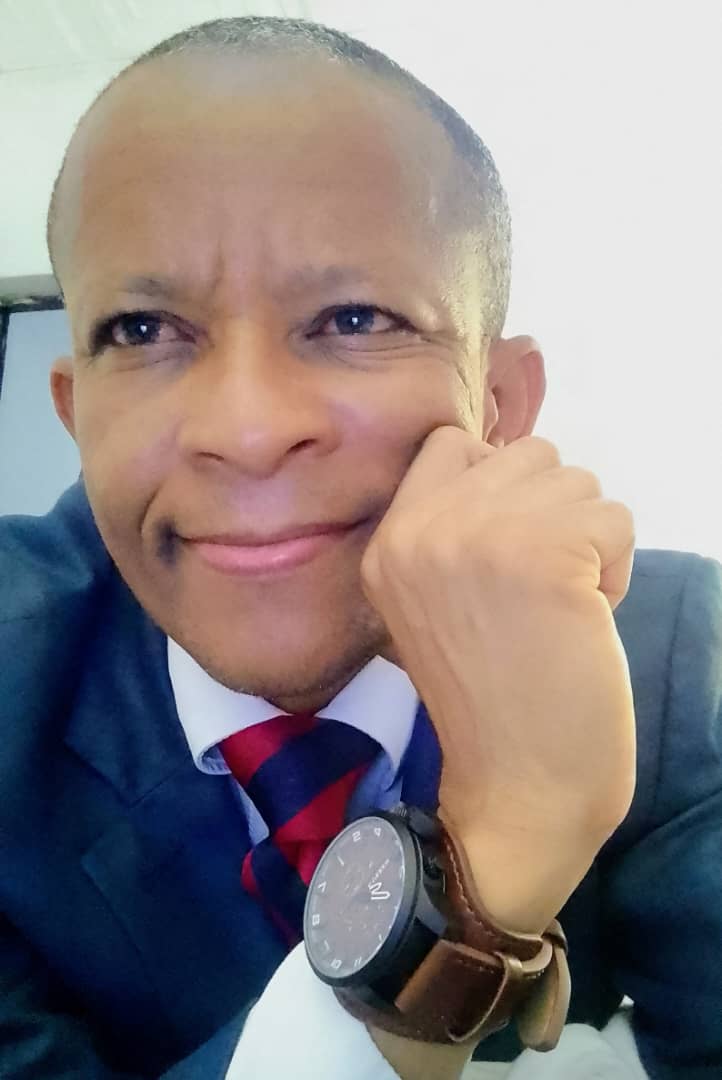
The 2027 presidential election in Nigeria is shaping up to be a crucial contest between the ruling All Progressives Congress (APC) and a potential coalition of opposition parties. Several hurdles need to be overcome for the opposition coalition to succeed.
The political class is already preparing for this quadrennial event, holding consultations, meetings, negotiations, among other contending factors.
The ruling party, The All Progressive Congress, appears to be the most beautiful bride at the moment as members of other opposition parties have been courting the party, in a gale of defections, in what many political pundits and analysts described as a political tsunami.
While the APC seems to be enjoying the foray of defections by other party members into their fold, the main opposition party, The Peoples Democractic Party, PDP, appears to have lost its steam in the run of play.
The once dominant party is plagued by a series of internal crises which many political analysts believe will be the party’s undoings.
The once largest political party in Africa and oldest in Nigeria since it was created in 1998 by some elder statesmen, is now a shadow of itself, living in past glory and trying to win its way back to national prominence.
Already, some past and present leaders of the party have been consulting, negotiating, discussing, even though they have agreed yet, all in a bit to wrestle power from the stronghold of the Bola Tinubu-Led APC at the centre.
Former Vice President Atiku Abubakar, Former Presidential Candidate of the Labour Party in the 2023 General elections, Peter Obi, former Governor of Kaduna state, Nasir El-Rufai, among other bigwigs, are believed to be in talks with one another of how to build a possible coalition to edge the ruling APC in the power game.
Although, no concrete decision has been reached by the major actors, their negotiations and their inability to reach a consensus remain critical factors that might endanger the birth of a viable coalition.
Factors like who will step down for who as the realignment begins, remains a major issue, taking into consideration their individual experiences, exposures, skills, knowledge, capacities and egos.
Except this issue is resolved in the run up to the 2027 presidential polls, it will be a mirage for them to unseat the Tinubu-Led government.
While the running party is busy strategizing ahead of the 2027 presidential polls, the other parties are still grappling with their internal crisis.
Some analysts believe that Atiku’s past experience as Vice President under the regime of Olusegun Obasanjo, might give him an edge, while others think Peter Obi’s popularity in the South could bring a geographical balance to the ticket.
For them to form a strong force against the APC, then, they must find common platform and agree on a candidate, which might be challenging given their different ideologies and interest.
Other factors which some political analysts have highlighted that may pose as a stumbling block agents the coalition is the timing. The time between and 2027 is quite a short time for the coalition to gather and make the desired impact.
This of course, is no brainer. Any merger of alliance must be arranged within a reasonable timeframe to be effective. Also, the coalition will have to convince the Nigerian voting public of its purpose and demonstrate a clear vision for the country’s future, particularly in the area of addressing the economic misfortunes of majority of the people. Another hurdle that would be staring the coalition in the face remains the issue of power rotation.
While the south believe it’s that turn to complete their second term in 2027, the north on the other hand argue that they have been short-changed in the governance structure of the country – in terms of number of years – since the return of democracy in 1999.
Out of the total 26 years, the north has ruled for 11 years, with the south 15 years. The issue remains a key factor that would affect the coalition to birth.
The coalition, must as a matter of urgency, decency decide on this unwritten agreement about rotating power between the North and the South, potentially present a southern for one term to allow the South to complete its own two terms for the office of the president.
In conclusion, the coalition, if it really wants to win power in 2027, must make a compelling case for itself, highlighting its unique strengths and vision, rather than just criticizing the incumbent.
It needs to differentiate itself and show Nigerians that it has a better alternative.
Emeka Monye Is A Journalist And Works With ARISE NEWS.


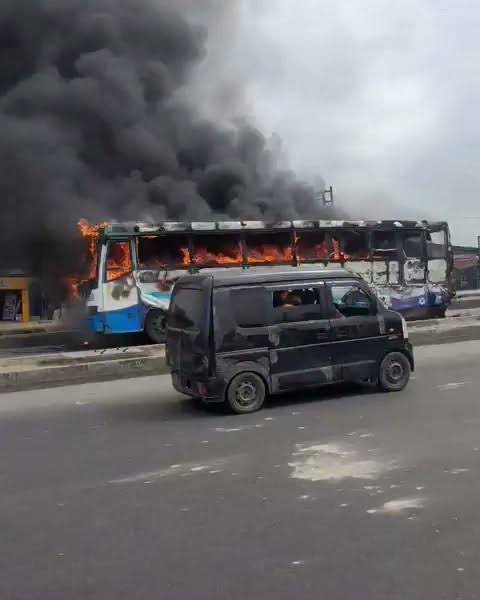
An angry mob has set a Bus Rapid Transit (BRT) bus on fire after it reportedly crushed a commercial motorcyclist to death at Ogolonto Bus Stop along Ikorodu Road in Lagos State.
The incident occurred on Friday, October 16, 2026. Eyewitness accounts and social media reports indicate that the motorcyclist was riding alone along the restricted BRT lane when the collision happened. He died at the scene.
Enraged residents and youths then attacked the bus driver and set the vehicle ablaze. Police officers and officials of the Lagos Neighbourhood Safety Corps (LNSC), who were nearby, intervened promptly and rescued the driver unharmed.
The identity of the deceased motorcyclist and the exact circumstances of the crash had not been officially confirmed at the time of filing this report. It was also unclear whether any arrests had been made in connection with the burning of the bus.
News
ARISE News Wins Seven Honours At Nigerian Broadcasters Merit Awards
The awards recognised the network’s achievements in television journalism and programming, with ARISE News winning the Best TV Channel (Viewer’s Choice) category.

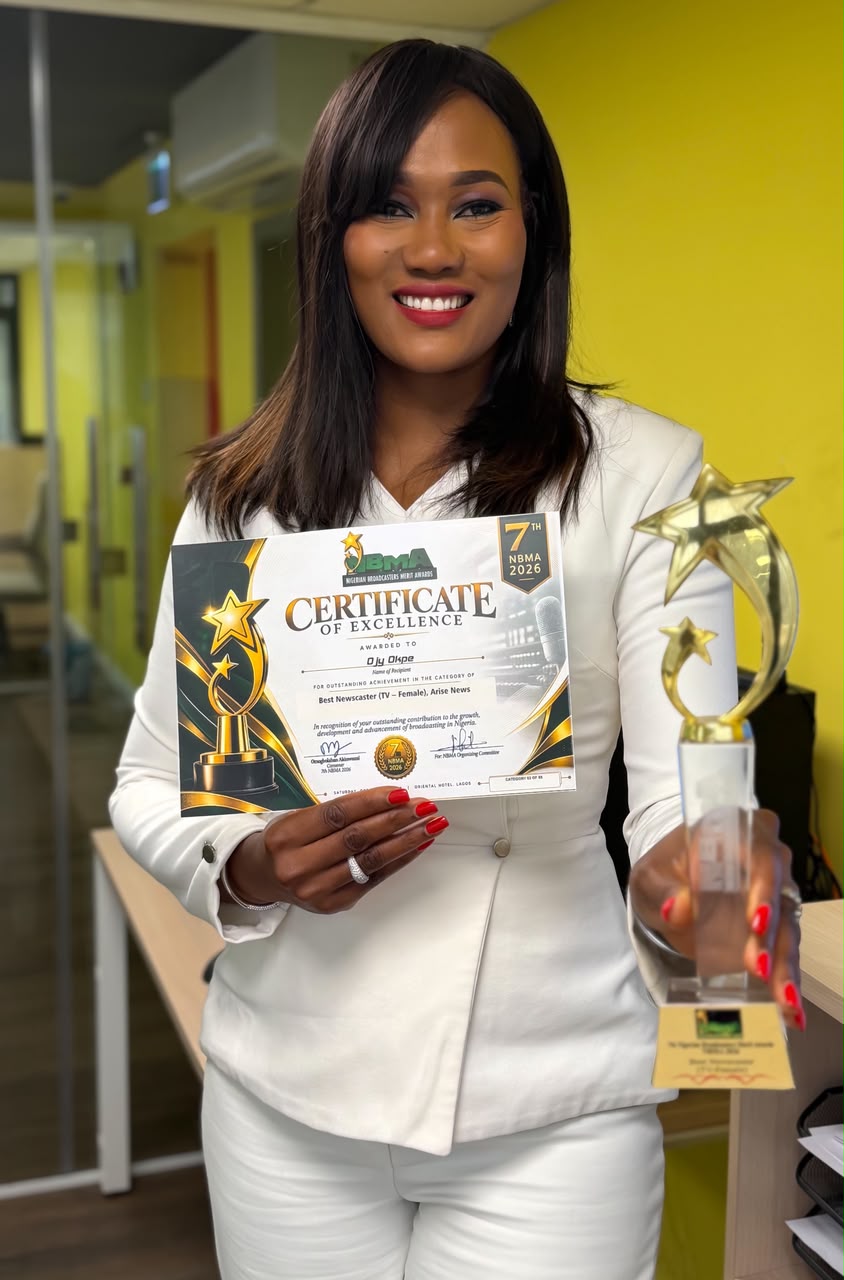
• ARISE News Anchor and host of What’s Trending Ojy Okpe was named Best Newscaster (TV – Female)
ARISE News has emerged as one of the major winners at the just ended Nigerian Broadcasters Merit Awards (NBMA).
ARISE News won seven honours across television broadcasting, news reporting, presentation and production during the ceremony.
The awards recognised the network’s achievements in television journalism and programming, with ARISE News winning the Best TV Channel (Viewer’s Choice) category.
The network’s flagship breakfast programme, The Morning Show, also won the Best TV Talk Show award, further strengthening its recognition in television broadcasting.
ARISE News Anchor and host of What’s Trending Ojy Okpe was named Best Newscaster (TV – Female).
Rufai Oseni was named Nigerian Broadcaster of the Year (Male), while Vimbai Mutinhiri-Ekpeyong received the Nigerian Broadcaster of the Year (Female) award.
The recognition extended to the network’s newsroom, with Ovieteme George winning Best TV News Reporter (Male) for his contributions to television news reporting.
Behind the camera, Sam Adeyemi received the Best Camera Operator/Cinematographer award, recognising his work in television production and visual storytelling.
News
Meta removes 3.7 million accounts in West Africa scam crackdown
The joint operation led to 28 arrests, identified more than 30 suspected scam centres and rescued 117 people allegedly trafficked and forced to work in scam compounds in Ghana.
Meta, the parent company of Facebook and Instagram, has removed more than 3.7 million Facebook and Instagram accounts, pages and groups linked to suspected scam networks operating in West Africa.
The joint operation led to 28 arrests, identified more than 30 suspected scam centres and rescued 117 people allegedly trafficked and forced to work in scam compounds in Ghana.
The company announced the crackdown in a statement on Tuesday, October 13, 2026. It involved 14 technology companies and law enforcement agencies from 10 countries.
The United Kingdom’s National Crime Agency coordinated the operation with the US Department of Justice, the Federal Bureau of Investigation and other agencies. Nigerian authorities were involved.
Other countries included Ghana, Australia, Canada, New Zealand and India.Tech companies that took part included Google, Microsoft, OpenAI, Coinbase, Starlink and Adobe.
Meta said the partnership let participants share intelligence across digital platforms, countries and financial systems to identify criminal networks.


JUST IN: Mob Sets BRT Bus Ablaze After Motorcyclist’s Death in Lagos

BREAKING: DSS Arrests Fugitive Maina Son, Hands Him to EFCC

BREAKING: 5 Arrested Over Imo NYSC Abduction

BREAKING: Lagos Govt Declares Today, Thursday Work-Free to Mark 2026 Ìṣẹ̀ṣe Day

Tech Expert, Zuckerberg trains with UFC champions, Adesanya, Alexander

Organ Trafficking: Ekweremadu bags 10 years in UK prison
-
 Business2 days ago
Naira Exchange Rates For Thursday, October 15
-
 Sports2 days ago
CAF Increases Annual Funding for Member Federations to $700,000
-
 News2 days ago
ASCON To Be Rebranded “National School Of Government”
-
 Business2 days ago
Germany plans tax on sugary drinks
-
 Business2 days ago
WEF could appoint Lagarde as its next chair, sources say
-
 International2 days ago
“Mother of all bombs,” Trump Plans To Hit Iran
-

 News3 days ago
Sanwo-Olu Appoints Olatunbosun Ogunbanwo, 5 Others as Perm Secs
-
 Business1 day ago
Naira Exchange Rates Friday, October 16