
News
What Our Schools Don’t Teach Our Students, By Emeka Monye

In his 2009 book, “What America Really Want, Dr. Frank Luntz, a respected pollster who measures the heartbeat of America, asked these survey questions: “If you had to choose, would you prefer to be a business owner or CEO of a fortune 500 company?”
His question was a closed ended one, bearing in mind he wanted a direct and simplistic answer.
The response he received from his residents is as diverse and clear as one would expect.
Out of all his respondents, eighty percent of them said they would want to be owner of business that employs 100 or more people, while fourteen percent said they would want to be Chief Executive Officer of a fortune 500 company that employs more than 10,000 people and the rest six percent not giving a clear answer to his research question.
His response re-echoes the desires of the average human, working to be their own boss, living the life of the dreams and having to live the life of freedom, yet such desires of owning one’s business remains elusive for an average student because our school systems only teach and train the students to be employees. This is part of the problem.
The school system does not train the student to create jobs, to build capacity to set up industries for students and when you don’t have this kind of culture, where the school system prepared the student to be job creators, then you just know that with time, the job seekers will find no job.
Our school system, apart from the skills they teach, the system doesn’t teach the student capacity, competence, street smart, exposure and many of those contending factors that set apart entrepreneurs from employees.
According to Robert Kiyosaki, author of the famous book, “Rich Dad, Poor Dad, There is a tremendous difference between the skill sets of an employee and an employer.
The skills of an employer are not taught in schools.
Kiyosaki submits that both skills differ because while the employee is deep in neck reading hard to pass exams and make good grades and potential unemployment, the employer is building capacity, street wisdom, exposure to understand the vagaries of business success.
While the school system focuses more on theoretical framework, it really doesn’t teach the student practical, at best what the school system teaches the student is ability to memorize concepts.
This procedure doesn’t really prepare the student for the real world of Entrepreneurship.
The world of entrepreneurship is practical, brut, adventurous, smart, continuous learning, discerning, intuitive, intelligent, wise, and above all, a combination of classroom knowledge and real life experience and exposures.
Dr. Luntz also in his book, ” What America Really Wants”, asserts that the lack of financial education is the main reason why many people will remain employees.
Many people dream of becoming entrepreneurs yet a few people will take a leap of faith to actualise such dreams.
This is what the school system does teach one – financial education.
Financial education and the transformation it delivers are essential for entrepreneurs because it teaches some fundamental principles of creating wealth and takes one from being a consumer to advancing to becoming a saver and ultimately attaining the height of an investor.
While these three cardinal factors are keys to remain poor and building wealth – consumption, savings and investments, the school systems really don’t teach the students about this.
One only gets to learn about this after leaving the school system.
This is part of the problem – lack of financial education.
One of the challenges in the contemporary school system is that it trains students to be A student in academics, to be B students in government establishments, and therefore leaving the very few C students, the very street smart, practical ones, to follow the entrepreneur path.
That doesn’t mean the school system is not good, it is of course, but in reality, its limitations to the classroom doesn’t reveal certain fundamentals about financial intelligence, the real life after classroom and how one can navigate all these vagaries and make the student achieve real financial intelligence and success is what the school system doesn’t teach you.
Emeka Monye Is A Journalist And Works With ARISE NEWS




News
FG launches new digital postcodes
The code is designed to provide a precise, GIS-enabled reference for identifying locations.

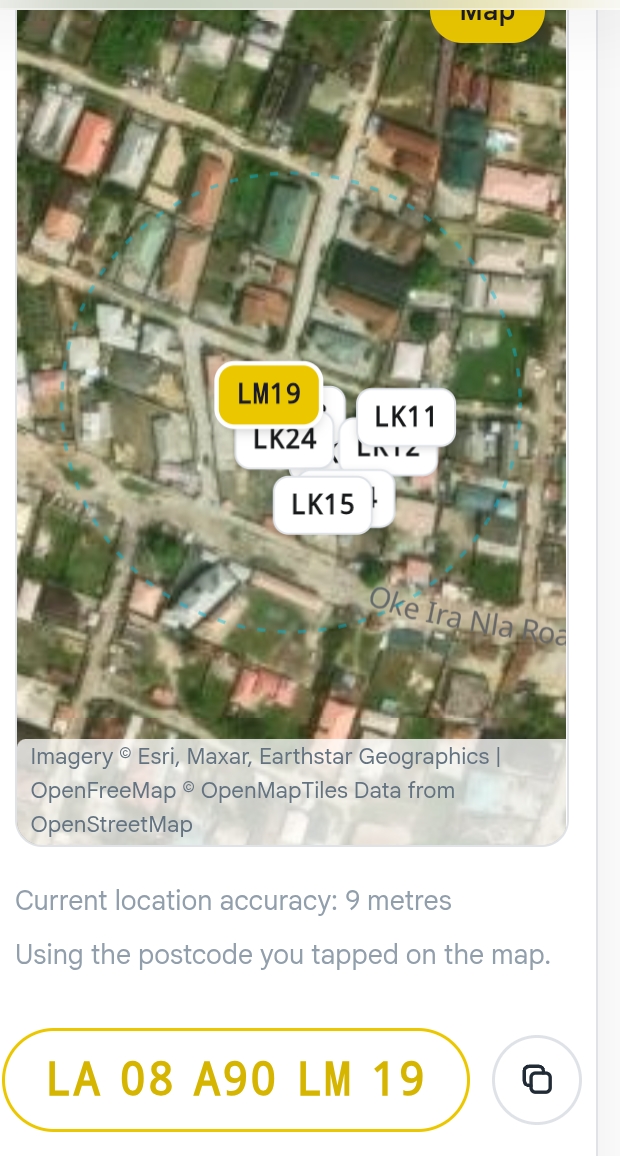
• Image credit: NIPOST
The Federal Government has launched the National Digital Alphanumeric Postcode System, urging Nigerians to find and begin using their postcodes.
The National Digital Alphanumeric Postcode, operated by the Nigerian Postal Service, gives every addressable building a unique 11-character code — the code is designed to provide a precise, GIS-enabled reference for identifying locations.system. Easier to find, share and use.
The Minister of Communications, Innovation and Digital Economy, Bosun Tijani announced the launch in a post on X on Thursday.
Tijani described the system as a step towards making locations across the country easier to identify and connecting people and businesses to services and opportunities.
Tijani said the system could help businesses reach customers beyond their immediate neighbourhoods, enable families to provide accurate locations during emergencies and help government agencies reach communities with essential services.
The minister encouraged Nigerians to search for their postcodes through the official Digital Postcode website, postcode.gov.ng, and share them with family members, friends and businesses.
News
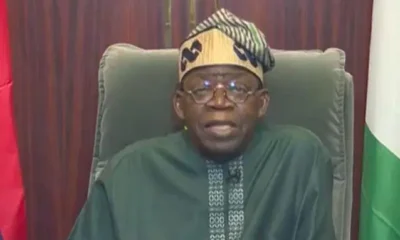
Nigeria @ 66: President Tinubu says next phase of reforms’ll cut cost of living
“Our reforms did not create the weaknesses in our economy. They confronted them,” he said, while warning against attempts to reverse the policies and return to what he described as the “abuse of addictive subsidies”.
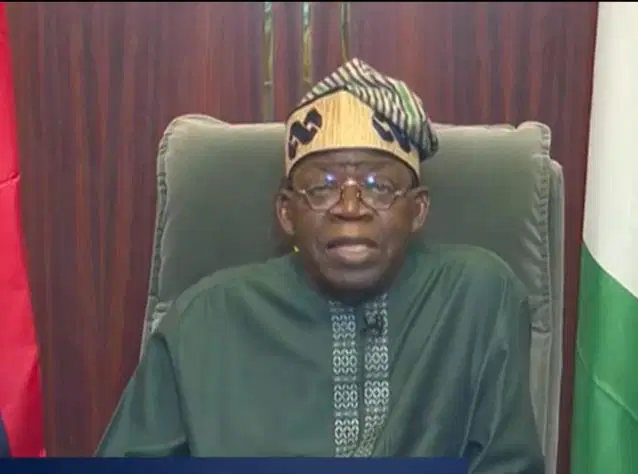
President Bola Tinubu has declared that the next phase of his administration’s reform will be focused on reducing the cost of living, creating jobs and ensuring that the benefits of economic growth were widely shared.
President Tinubu gave the assurance in his Independence Day address to mark Nigeria’s 66th anniversary, titled “From Reform to Prosperity”, in which he defended the economic policies of his administration and urged Nigerians to stay the course.
Tinubu said the reforms undertaken since his assumption of office had corrected the country’s economic direction, describing them as painful but necessary treatment for longstanding structural problems.
Using a cancer patient as an analogy, the President said Nigeria had for too long treated the symptoms of its economic problems rather than confronting their underlying causes.
“By 2023, poverty was rising, and hope was nearly gone. The country’s situation was darker than ever. We had no choice but to act,” he said.
Tinubu said previous administrations had chosen “morphine” by sustaining inefficient arrangements and postponing difficult decisions, while his administration chose to “excise the cancer”.
He acknowledged that the reforms had produced painful “side effects”, but argued that the hardship should not be confused with the underlying economic problems they were designed to address.
“Our reforms did not create the weaknesses in our economy. They confronted them,” he said, while warning against attempts to reverse the policies and return to what he described as the “abuse of addictive subsidies”.
The President’s speech came as some stakeholders and analysts regretted that, despite various reforms embarked upon by successive Federal Governments, the country was yet to come out of the woods economically and socially.

Former Vice President Atiku Abubakar has demanded the immediate release of five men arrested in Borno State for wearing T-shirts bearing the slogan “Tinubu Must Go.”
In a statement issued on Wednesday, the African Democratic Congress (ADC) presidential candidate condemned the arrests, describing the slogan as a legitimate political expression rather than a crime. He argued that wearing a T-shirt with a political message should not lead to detention in a democracy.
The five men — identified as Baba Aji Gremami, Mustapha Abba Yemen, Abacha Mohammed Ali, Adam Umar Gubio and Abdulhamid Mohammed — were reportedly arrested by the Borno State Police Command in Maiduguri and charged with offences including criminal conspiracy and inciting disturbance.
Atiku recalled that President Bola Tinubu had previously protested against the fuel pricing policies of the Goodluck Jonathan administration. He insisted that Nigerians must equally be free to express dissatisfaction with current government policies.
“‘Tinubu Must Go’ is a demand for political change. It is not a weapon, a threat or a crime,” Atiku said. “Tinubu was free to tell Jonathan that his policies were hurting Nigerians. Nigerians must be free to tell Tinubu that his policies are hurting them. Release these five citizens now.”
He called on the authorities to disclose the detainees’ whereabouts, grant them access to their families and lawyers, and free them if the political slogan was the sole basis for their arrest.


Obasanjo: “Aliko Embarrass Me”

How Passengers Overpowered Flydubai Co-Pilot After Stabbing Pilot, To Crash Plane

Minister Tasks Charcoal Merchants on Sustainable Forestry

Tech Expert, Zuckerberg trains with UFC champions, Adesanya, Alexander

Organ Trafficking: Ekweremadu bags 10 years in UK prison

SAINT OBI: Between his marriage and his death
-

 News3 days ago
JUST IN: Fire Engulfs Lagos Customs Command Office
-

 News3 days ago
BREAKING: Nigerian Airlines Threaten Indefinite Shutdown Over Union Disruptions
-

 Politics3 days ago
BREAKING: AAC sues Tinubu, NASS over Europe vacation
-

 Business3 hours ago
Naira To Dollar, Pound, Euro… Rates Friday, October 1
-

 News2 days ago
BREAKING: Court Order Threatens Dangote Kenya Refinery Launch
-
 Politics3 days ago
2027: Atiku, ADC Move to Amend Suit Challenging Tinubu’s Eligibility
-
 News3 hours ago
Nigeria @ 66: President Tinubu says next phase of reforms’ll cut cost of living
-

 Crime3 days ago
BREAKING: Tragic One-Way Crash Claims Tricycle Driver’s Life in Meiran Lagos