
International
Zuckerberg’s Meta Faces Competition Lawsuit in U.S.
The trial will extend until July 2025. If the FTC wins this first phase, a second and even tougher stage would begin, aiming to argue that forcing Meta to sell Instagram and WhatsApp would directly benefit competition and consumers.

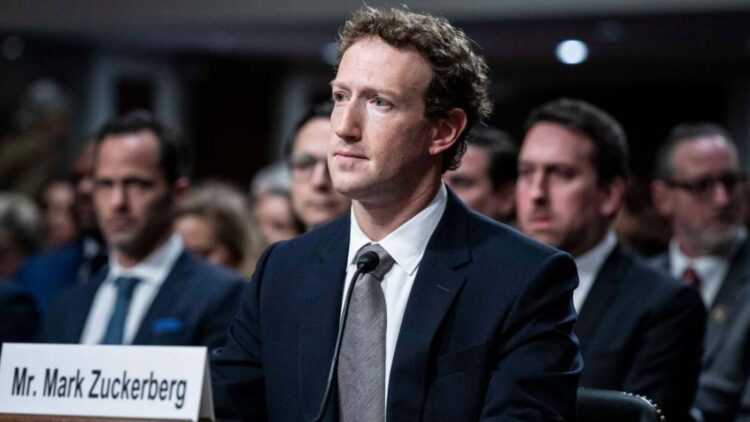
Zuckerberg is back in the news, this time not to announce the purchase of another company, but quite the opposite.
Union Rayo, reported that this time, Zuckerberg has had to defend himself in a trial that could redefine the history of digital business.
The U.S. Federal Trade Commission (FTC) has taken Meta (the parent company led by the mogul) to court, accusing them of eliminating competition through “killer acquisitions” (buying the competition to shut it down).
That’s exactly the case here, and Zuckerberg might have to say goodbye to his last two purchases: WhatsApp and Instagram. How legal is it to buy your competitors so they won’t outshine you? That’s for a judge to decide.
This trial has been open since April 14, and it has revealed some incredible facts, such as that the purchase of those last two social networks, WhatsApp (one billion dollars) and Instagram (19 billion dollars), could be an illegal strategy.
On the stand, Zuckerberg himself admitted that Facebook is no longer used to connect with family and friends. Want to know more about what’s happening to Meta? We’ll tell you below.
“Facebook no longer serves its original purpose”
During his testimony, Zuckerberg admitted that the social network that made him a billionaire is no longer what it used to be.
Today, he explained, Meta is no longer about personal relationships.
Meta is focused on content, discovering viral trends, and following global conversations.
He said it himself: what used to be a platform to share pictures of your cat with distant relatives or childhood classmates is now a showcase where the algorithm is in charge.
Justifying the most controversial acquisitions
The trial also focused (a lot) on Meta’s two most controversial acquisitions: Instagram (in 2012) and WhatsApp (in 2014). Zuckerberg defended both decisions.
He said those platforms wouldn’t have survived without Meta’s investment, and now they’re essential tools for billions of people. Basically, his argument was: “We didn’t destroy them, we made them bigger”
The FTC’s accusations: a strategy to eliminate competition?
In search of a solo reign? Of course, the FTC didn’t see it that way at all.
During the trial, internal emails were shown where Zuckerberg described Instagram as a “terrifying threat” that had to be neutralized “at all costs”.
A rejected 6 billion dollar offer for Snap in 2013 was also revealed, which, according to prosecutors, proves a systematic policy of eliminating rivals.
Was it then a strategy to get rid of the competition? Naturally, the ghost of monopoly is hanging over them, since they have 2 billion direct users between WhatsApp and Instagram alone, with these two companies generating more than half of Meta’s advertising revenue.
“We are not a monopoly”
Meta insists it’s not acting alone. Platforms like TikTok, Reddit, YouTube and X (formerly Twitter) are cited as direct competition.
The company also reminds everyone that all of its acquisitions were legally approved at the time. And of course, undoing them now would just be changing the rules of the tech game.
What’s coming: a battle
The trial will extend until July 2025. If the FTC wins this first phase, a second and even tougher stage would begin, aiming to argue that forcing Meta to sell Instagram and WhatsApp would directly benefit competition and consumers.
What’s at stake?
Basically, the future of how large digital platforms work.
If Meta loses, it wouldn’t be surprising if other giants like Google or Amazon start facing similar lawsuits.
Pressure against big tech isn’t new, but this time, the one on the ropes is Zuckerberg. And this time, there’s no “like” button to save him




International
“Mother of all bombs,” Trump Plans To Hit Iran
The 21,600-pound airburst weapon is designed to affect surface targets over a wide area and has so far not been deployed by the U.S. in previous strikes on targets inside Iran. It was used in Afghanistan in 2017 during the previous Trump administration.

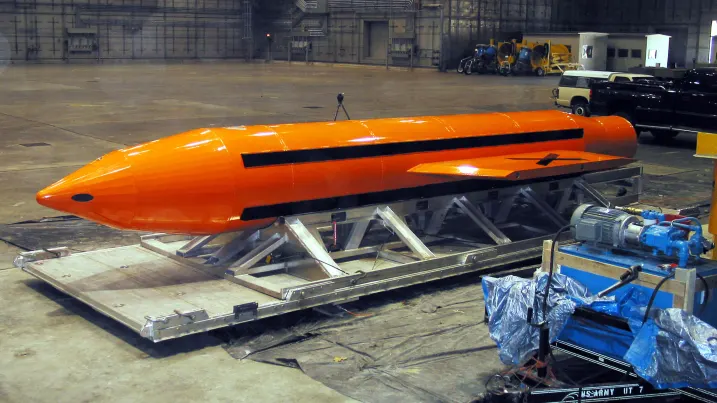
The U.S. military is considering use of the GBU-43/B Massive Ordnance Air Blast (MOAB) bomb if it resumes strikes inside Iran, CNN reported Thursday, citing U.S. officials.
The 21,600-pound airburst weapon is designed to affect surface targets over a wide area and has so far not been deployed by the U.S. in previous strikes on targets inside Iran. It was used in Afghanistan in 2017 during the previous Trump administration.
Trump said Oct. 8 that he would not resume U.S. strikes on Iran before the Nov. 3 midterm elections, while attacks on shipping near the Strait of Hormuz and deadly Houthi strikes in Saudi Arabia have raised regional tensions.
Iranian Parliament Speaker Mohammad Bagher Ghalibaf said Tehran will combine military capabilities and negotiations to press its demands.
International
Child marriage in southern Germany: Over 350 cases recorded, some brides as young as 11
The most recent entries in the overview relate to 2026. They include, among other things, marriages of 16- and 17-year-old girls to adult men.

• Child marriage / UNICEF
In the southwestern German state of Baden-Württemberg, a total of 358 so-called child marriages have been officially recorded since 2012.
Euro News reported that only eight of these forced marriages have so far been legally annulled.
According to authorities, the other 350 cases were brought to an end in other ways.
This alarming finding comes from a response by the Baden-Württemberg state government to a minor inquiry submitted by AfD state parliament members Nikolaos Boutakoglou and Emely Knorr.
The Tübingen regional authority is responsible for recording the data, the answer came from the Ministry of the Interior.
The eight final annulments took place between 2018 and 2024. Among the documented cases was the marriage of an 11-year-old girl from Iraq to a 17-year-old Iraqi, which was annulled in 2020.
As early as 2018, the marriage of a 14-year-old Afghan girl to a 30-year-old man had been ended.
In 2024 two further annulments were added: they concerned a 16-year-old German girl and a 25-year-old Pakistani man and a 16-year-old Syrian girl and a 27-year-old man from the same country.State parliament member Nikolaos Boutakoglou wrote on Facebook that the issue was “really awful” but was being treated as a taboo.
According to its own account, the ministry deals exclusively with such marriages entered into abroad.
Since summer 2017, the Act to Combat Child Marriages has been in force in Germany.
In 2024, the Bundestag adopted new rules to protect minors in marriages concluded abroad.
Hundreds of cases without state intervention
The significantly higher number of cases concluded in other ways raises questions about how these marriages continued.
For the period from 2015 to 2026, the regional authority lists a total of 350 proceedings under the heading “other disposals.”But what became of the other child marriages?
The state government cites, among other things, the death of a spouse, reaching adulthood, a decision not to seek annulment or a new marriage concluded abroad.
In these cases, there was therefore no legally binding annulment.
For 2023, the records include the case of a 12-year-old Afghan girl who was married to a 21-year-old Afghan man. Girls aged 13 and 14 also appear several times in the statistics.
The most recent entries in the overview relate to 2026. They include, among other things, marriages of 16- and 17-year-old girls to adult men.
The statistics record the age of the spouses at the time of marriage and their respective nationalities.


Pope Leo XIV has announced that he will undergo surgery in the coming days to remove a small, localized nodule found on his lung during a recent routine medical checkup.
The 71-year-old pontiff made the disclosure himself during his weekly Angelus prayer in St. Peter’s Square. “Doctors found a localized nodule in my lung,” he said. “It was detected at a very early stage and is well-contained.
The doctors believe it is advisable to intervene, so, following their advice, I have decided to undergo surgery to remove it.”
The Vatican confirmed the operation is scheduled for the first days of this week at Rome’s Gemelli Hospital, which has a dedicated papal suite. Holy See spokesman Matteo Bruni said the Pope is expected to need about a week to recover. On Monday, the Vatican added that Leo will be admitted Tuesday morning.
The nodule’s nature—whether benign or malignant—has not been specified. Medical experts note that most lung nodules are non-cancerous, and early detection generally carries a favorable outlook.
This marks the first significant health issue of Leo’s papacy since his election in May 2025. The American-born pope, known for remaining physically active, has continued his full schedule of audiences and is still expected to proceed with a planned trip to Latin America next month.


History of Naira Revaluation and Devaluation (1973–2026) (Part 1)

JUST IN: 1 Dead, 3 Rescued in Fadeyi Building Collapse, Lagos

Obasanjo Accuses Tinubu : “You Made Every Nigerian Poor By 300% Naira Devaluation”

BREAKING: Lagos Govt Declares Today, Thursday Work-Free to Mark 2026 Ìṣẹ̀ṣe Day

Tech Expert, Zuckerberg trains with UFC champions, Adesanya, Alexander

Organ Trafficking: Ekweremadu bags 10 years in UK prison
-
 Business3 days ago
Currency Words You Should Know
-

 Business3 days ago
Naira Exchange Rates Wednesday, October 21, 2026
-

 Business3 days ago
NCC, CBN To Warn Companies By Flagging Fraudulent Phone Numbers
-
 Business3 days ago
JPMorgan Eyeing Entry Into Nigeria’s Banking Industry
-

 Business2 days ago
RMRDC Taking 2027 Africa Raw Materials Summit To Kenya
-
 Health2 days ago
Ebola In Nigeria: Symptoms, Spread and How To Protect Yourself
-

 News2 days ago
JUST IN: Gas Emissions Hit Ogun Schools, Hundreds of Pupils Hospitalised
-

 Health2 days ago
Ebola Outbreak: Don’t Panic, FG Assures Nigerians