
Business
Senate dispatches five MDAs to handle Ogijo lead poisoning crisis
The motion, jointly sponsored by Mukhail Adetokunbo Abiru (Lagos East) and Gbenga Daniel (Ogun East), was brought under Matters of Urgent Public Importance pursuant to Orders 41 and 51 of the Senate Standing Orders, 2023 (as amended).


The Senate has mandated the Federal Ministry of Health, the Federal Ministry of Environment; the Nigeria Centre for Disease Control (NCDC) including the NESREA and the Federal Ministry of Solid Minerals to quickly look into the lead poisoning crisis at Ogijo community in Ogun State and report back to the Chamber within six weeks.
The motion, jointly sponsored by Mukhail Adetokunbo Abiru (Lagos East) and Gbenga Daniel (Ogun East), was brought under Matters of Urgent Public Importance pursuant to Orders 41 and 51 of the Senate Standing Orders, 2023 (as amended).
During the plenary on Thursday , the lawmakers expressed grave concerns over the reported fast-spreading lead-poisoning crisis in Ogijo, describing it as a full-blown environmental and public-health emergency that threatened thousands of lives.
Lawmakers cited scientifically verified reports of extreme lead contamination linked to a cluster of used lead-acid battery recycling factories operating in the area for years.
According to the Senate, the crisis had left residents battling persistent headaches, abdominal pain, memory loss, seizures, and developmental delays in children, symptoms strongly associated with chronic lead exposure.
The Senate acknowledges and commends the proactive efforts of the Lagos and Ogun State Governments and their relevant ministries and agencies for conducting early inspections, raising community awareness and working with federal authorities to contain the exposure.
The chamber noted with concern that the Federal Government had already begun clampdowns, with the Minister of State for Labour and Employment, Nkeiruka Onyejeocha, shutting down seven battery-recycling factories and ordering a temporary halt to lead-ingot exportation pending safety investigations.
Senators said they were “alarmed that residents have for several years complained of persistent headaches, abdominal pains, loss of memory, seizures, cognitive decline, and developmental delays in children, symptoms strongly associated with chronic lead exposure.”
Despite years of community protests, the smelters allegedly continued operating openly, releasing toxic fumes and particulate dust into surrounding homes, markets and playgrounds.
Some environmental samples, senators noted, showed lead levels “up to 186 times the global maximum safety threshold.”
A major dimension of the scandal, lawmakers said, was that lead processed in Ogijo had already been traced into international supply chains, reaching global battery and automobile manufacturers who either did not address the findings or relied solely on assurances from Nigerian suppliers.
Following the extensive deliberations, the chamber mandated the Federal Ministry of Health and the Nigeria Centre for Disease Control (NCDC) to deploy emergency medical teams to Ogijo to provide free toxicology screenings, blood-lead management, chelation therapy, and ongoing treatment for affected children and adults.
Simultaneously, the Federal Ministry of Environment and NESREA were directed to carry out comprehensive environmental remediation, mapping soil, groundwater, air, and household dust contamination.
The Senate also called on the Federal Ministry of Solid Minerals and relevant regulatory agencies to enforce strict compliance standards for battery-recycling and lead-processing operations nationwide.
Additionally, it recommended establishing a National Lead Poisoning Response and Remediation Task Force within NEMA and directed the Committee on Legislative Compliance to monitor progress and report back within six weeks.
Business
Textiles was my biggest business mistake — Dangote
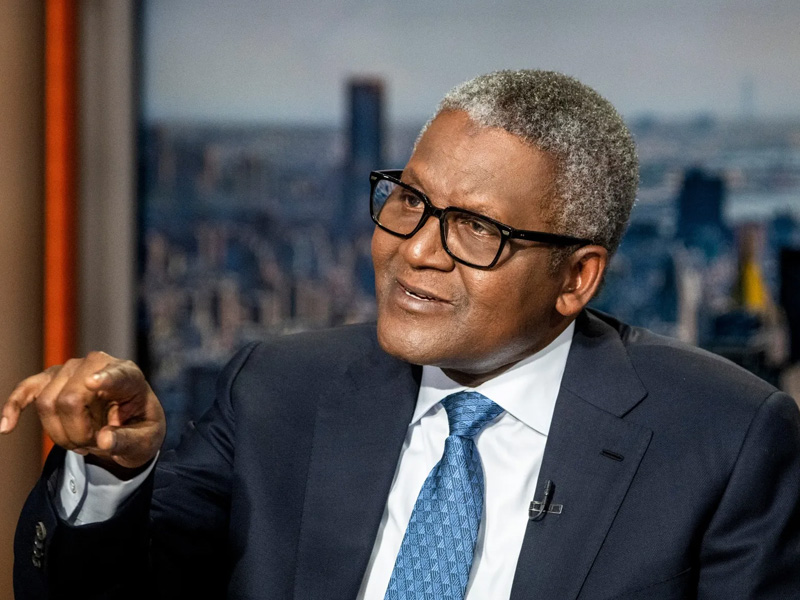
Dangote disclosed that almost 8,000 workers were laid off across the textile business, with 6,920 of them coming from Nigerian Textile Mills in Ikeja alone.
•Aliko Dangote
President of Dangote Group, Aliko Dangote, has described his investment in the textile industry as the biggest business mistake of his decades in business.
Dangote made the disclosure during an appearance on Arise Television, where he reflected on some of the challenges he encountered while building his business empire.
Dangote’s comments come amid ongoing concerns over the survival of local manufacturing industries and the impact of imported goods on domestic production and employment.
“My biggest business mistake was textiles,” he said.
According to the industrialist, the textile business eventually collapsed due to inadequate policy protection and what he described as dumping by foreign manufacturers.
“We were swamped by Chinese dumping and Indian dumping. So eventually we had to close down,” Dangote said.
He said the closure had a significant impact on workers, particularly employees of Nigerian Textile Mills in Ikeja, Lagos.
Dangote disclosed that almost 8,000 workers were laid off across the textile business, with 6,920 of them coming from Nigerian Textile Mills in Ikeja alone.
He said the experience shaped his approach to subsequent investments, stressing the need to ensure that businesses remain viable even when government protection is eventually withdrawn.
Business
Dangote: Africa Is Like a ‘Scratch Card’ — Opportunities Are Immense
Dangote’s message, therefore, extends beyond the refinery itself: Africa’s opportunities will remain invisible unless capital is deployed to “scratch” the surface and turn potential into productive assets.
| map of Africa by Wikipedia
By Ochefa
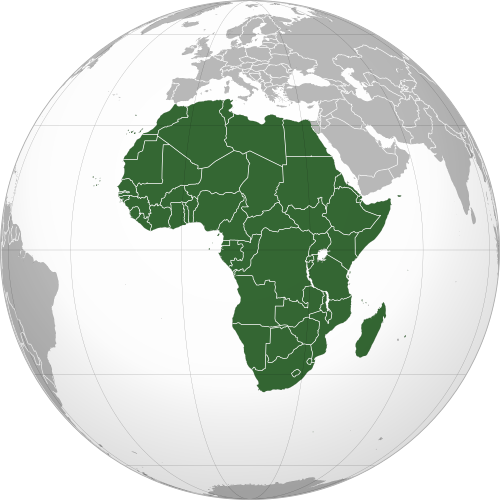
Africa is sitting on enormous economic opportunities that remain largely untapped, President and Chief Executive Officer of Dangote Industries Limited, Alhaji Aliko Dangote, has declared.
Dangote likened the continent to a “scratch card”, saying its vast opportunities would only become visible when Africans and investors take deliberate steps to unlock them.
“Africa is like a scratch card. Unless you scratch it, you don’t see the use of it. The opportunities are immense,” Dangote said.
He spoke in Lagos during the Dangote Petroleum Refinery and Petrochemicals “Facts Behind the Offer” presentation and opening gong ceremony, held to mark the formal opening of the refinery’s Initial Public Offering (IPO) on the Nigerian Exchange Limited (NGX).
The offer comprises 4.1 billion new ordinary shares at ₦525 per share, giving the issue a value of about ₦2.15 trillion, with a minimum subscription of 10 shares valued at ₦5,250. The offer is scheduled to close on October 13, 2026, subject to the terms contained in the prospectus.
Dangote said the group was looking beyond Nigeria as it seeks to expand its industrial footprint across Africa, disclosing plans being explored for the establishment of a refinery in Lamu, Kenya.
The move, he said, reflects the need to build African businesses capable of attracting large-scale international capital while creating greater economic integration across the continent.
According to him, the Dangote Group’s expansion strategy is not simply about building individual businesses, but about creating platforms through which Africans and international investors can participate in the continent’s economic transformation.
“What we are trying to do is to open up the market and make sure that when we open up the market, Africans and non-Africans will join us to have what you call the new Africa rising,” he said.
The refinery IPO represents a major test of Nigeria’s ability to mobilise domestic and international capital behind large-scale industrial projects.
Dangote urged Nigerians and other Africans to seize the opportunity presented by the offer, arguing that the refinery has the potential to become Africa’s largest company by the end of 2026.
His “scratch card” analogy captures the central argument behind the expansion strategy: Africa’s economic potential may be enormous, but unlocking it requires capital, infrastructure, industrial investment and businesses willing to take long-term risks.
For Nigeria, the refinery’s public offering also signals a potentially significant shift in the ownership structure of one of the country’s biggest industrial assets—from a project largely associated with one private investor to an enterprise in which a broader pool of investors can participate.
The development comes as Nigeria seeks to deepen its capital market, retain more domestic savings within the economy and mobilise long-term funding for productive investment.
Dangote’s message, therefore, extends beyond the refinery itself: Africa’s opportunities will remain invisible unless capital is deployed to “scratch” the surface and turn potential into productive assets.

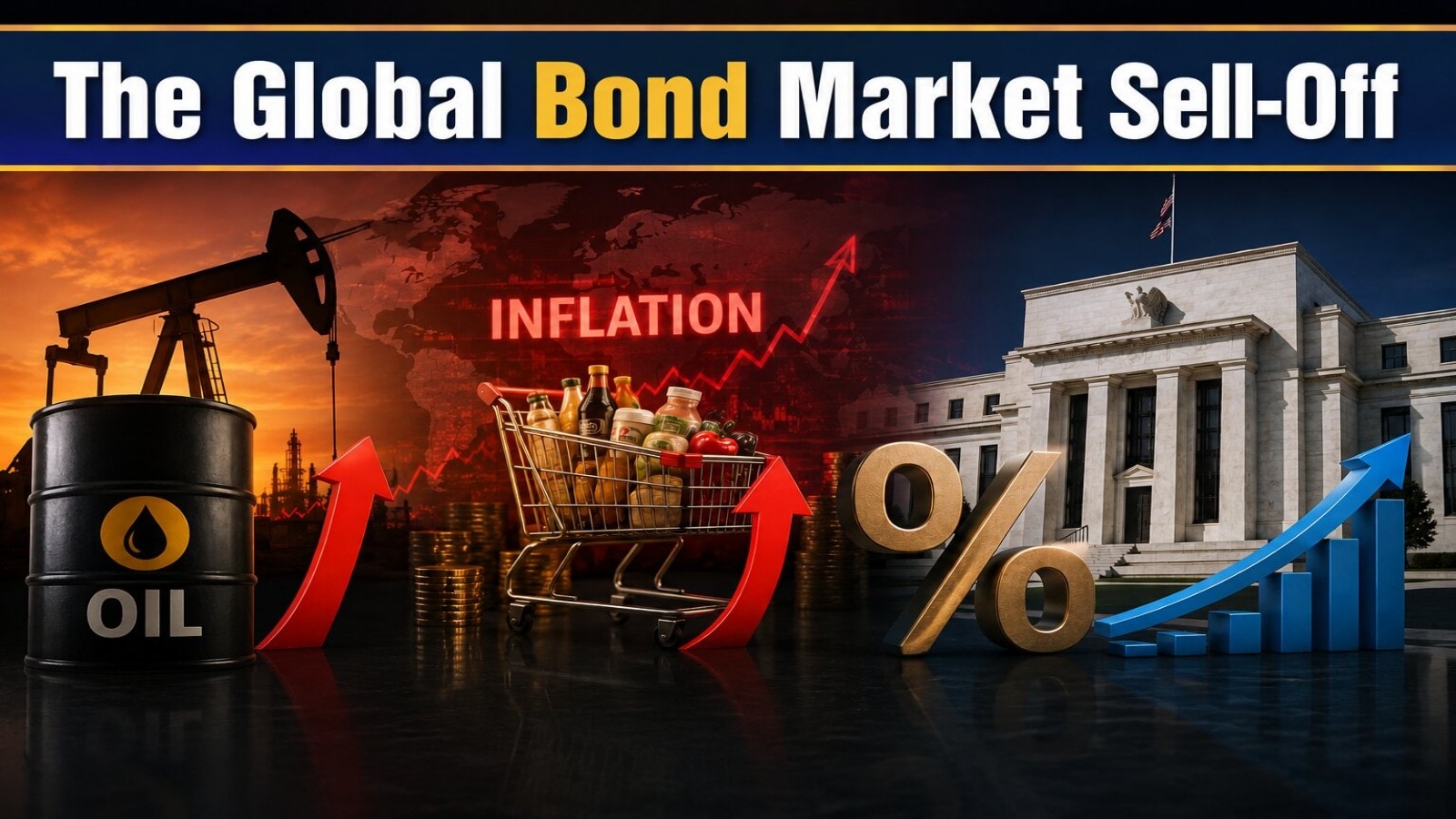
A sharp selloff in the US bond market has driven the benchmark Treasury yield above 5%, sending shockwaves through equity markets and heightening investor anxiety.
The surge in yields, particularly on the 10-year Treasury note, reflects growing concerns over persistent inflation, the outlook for interest rates, and the broader path of monetary policy. As bond prices fell, yields climbed past the psychologically important 5% threshold, marking a significant move that has unsettled risk assets.
US stock markets reacted with broad declines, as higher yields increased the attractiveness of fixed-income investments relative to equities and raised borrowing costs for companies. Major indices came under pressure, with investors reassessing valuations amid the rising cost of capital.
Market analysts note that the rapid move higher in yields has intensified volatility across asset classes. Traders are closely watching upcoming economic data and any signals from the Federal Reserve for clues on whether the upward pressure on yields will persist.
The development underscores the sensitivity of both bond and equity markets to shifting expectations around inflation and monetary policy in the world’s largest economy.


Millions affected as floods strike India

JUST IN: All Occupants Survive as Aircraft Crashes, Catches Fire

Textiles was my biggest business mistake — Dangote

Tech Expert, Zuckerberg trains with UFC champions, Adesanya, Alexander

Organ Trafficking: Ekweremadu bags 10 years in UK prison

SAINT OBI: Between his marriage and his death
-
 Business1 day ago
Naira Exchange Rates To Dollar, Pound , Euro… September 14
-
 Business2 days ago
Filling Stations Selling Petrol, Diesel Higher Driven By Global Crude Prices
-
 Business1 day ago
Dangote Refinery’s IPO Officially Opens Today On NGX
-
 News11 hours ago
Boko Haram Denies Ceasefire with FG, Vows Continued Attacks
-
 Business1 day ago
Dangote at IPO Listing, Charges Public,”I don’t want to be called richest man in Africa”
-
 Politics1 day ago
Again, Desmond Elliot begs political mentor,Gbajabiamila , “I’m sorry, Daddy”
-
 News11 hours ago
Police Raise Alarm Over Terrorists and Informants Spying on Schools, Other Targets
-
 Crime11 hours ago
Boko Haram Attacks Adamawa Community, Kills Residents