
News
Ambassadors Screening: Senate Clears Lateef Kayode, Kolawole Are, and Amin Dalhatu
The nominees Rtd. Col. Lateef Kayode Kolawole Are (Ogun), Amb. Amin Muhammad Dalhatu (Jigawa), and Amb. Emanuel Ayodele Oke (Oyo) were collectively described as credible assets capable of strengthening Nigeria’s diplomatic and strategic engagements.

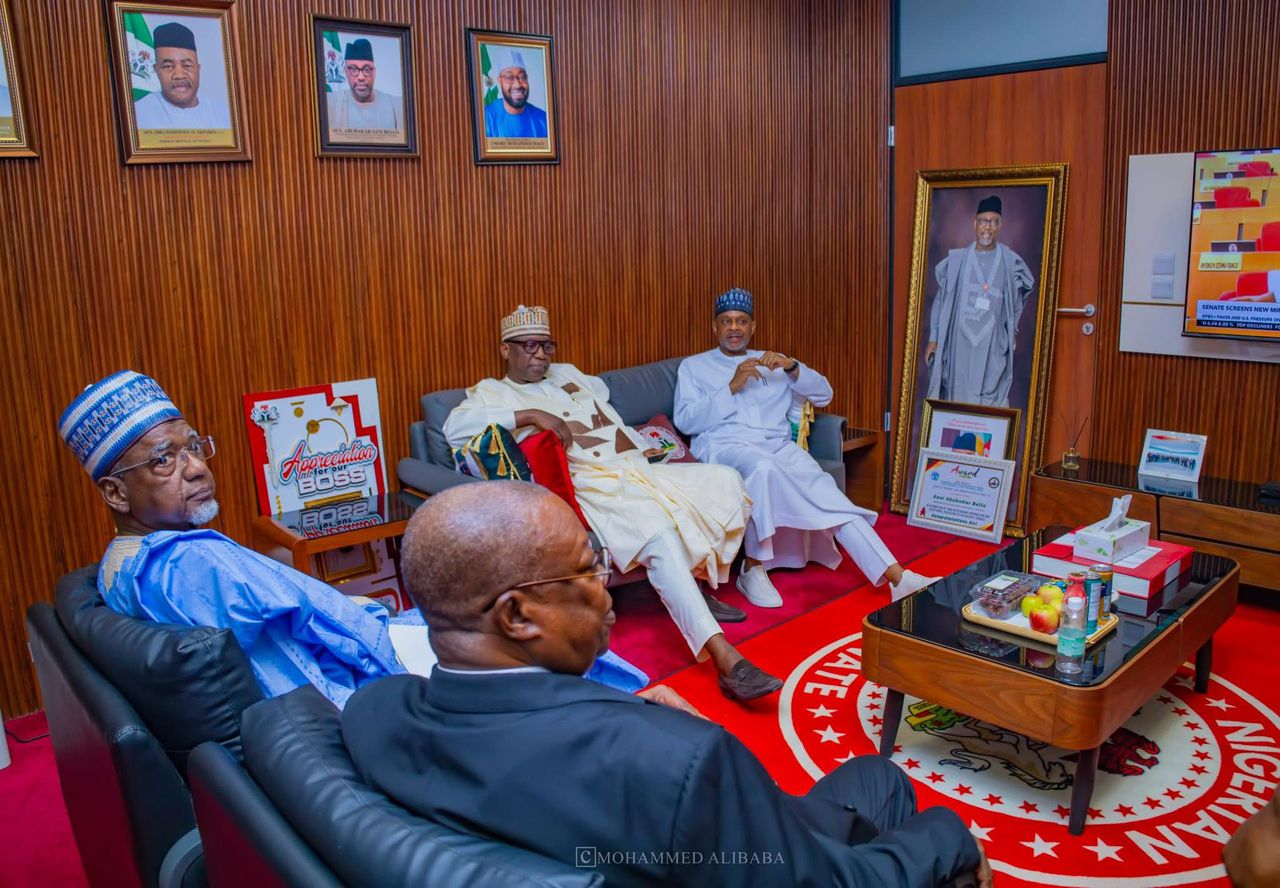
The Senate Committee on Foreign Affairs have thoroughly screened three ambassadorial nominees forwarded by President Bola Ahmed Tinubu, and gave them a clean bill of health.
Those who have been screened are :
Rtd. Col. Kayode Are : He offered a detailed overview of his extensive career in national intelligence and security, highlighting his distinguished roles in the Nigerian Army, as former Director-General of the State Security Service, Deputy National Security Adviser, and his continued contributions to security reforms.
Amb. Amin Muhammad Dalhatu : He recounted his longstanding service in the Federal Ministry of Finance and NNPC, his transition into agriculture, and his successful tenure as Nigeria’s Ambassador to South Korea between 2016 and 2021, a period that strengthened his diplomatic acumen.
Ambassador Ayodele Oke, a seasoned diplomat and intelligence professional, presented a rich 38-year service history across six countries on three continents. With academic qualifications in political science, international relations, law, and international criminal law, along with advanced training in reputable international institutions.
He addressed concerns regarding past intelligence-related allegations, noting that all issues had been conclusively resolved following official reviews.
Niger North Senator and Chairman of the Committee, Senator Abubakar Sani Bello, who presided over the Wednesday screening exercise, said that the Committee expressed unanimous satisfaction with the calibre of the candidates and applauded the President for presenting individuals of notable experience and merit.
The Committee, empowered to scrutinise the competencies and suitability of the non-career nominees, conducted an in-depth engagement attended by over a dozen senators.
The session featured rigorous interrogation, professional assessments, and broad deliberations focusing on each nominee’s track record, capacity, and character.
At the conclusion of the exercise, the Committee expressed unanimous satisfaction with the calibre of the candidates and applauded the President for presenting individuals of notable experience and merit.
Members observed that all three nominees possess robust professional backgrounds, diverse national service credentials, and the temperament required for high-level diplomatic assignments.
They commended the President for identifying individuals whose experience aligns with Nigeria’s evolving global priorities.
Upon completion of the screening, Senator Sani Bello presented the nominations for the Committee’s decision, and members unanimously endorsed all three nominees for Senate confirmation.
The nominees Rtd. Col. Lateef Kayode Kolawole Are (Ogun), Amb. Amin Muhammad Dalhatu (Jigawa), and Amb. Emanuel Ayodele Oke (Oyo) were collectively described as credible assets capable of strengthening Nigeria’s diplomatic and strategic engagements.
The Senators in attendance included Senators Henry Seriake Dickson (Bayelsa West), Mohammed Sani Musa (Niger East), Orji Uzor Kalu (Abia North), Mukhail Tokunbo Abiru (Lagos East), Ali Ndume (Borno South), Ikra Aliyu Bilbis (Zamfara North), :Salisu Shuaib Afolabi (Ogun Central), Peter Ndalikali (Niger South), Ahmed Aliyu Wadada (Nassarawa West) among others
The Senate Committee on Foreign Affairs, under the leadership of Senator Abubakar Sani Bello, will resume the screening of the remaining ambassadorial nominees at a subsequent date.


Boko Haram has strongly denied reports of a ceasefire agreement with the Federal Government and insisted that it will continue its campaign of attacks.
In a statement released by the group, the militants dismissed claims of any truce or negotiated pause in hostilities, describing such reports as false and misleading.
The group reaffirmed its commitment to ongoing operations against government forces and other targets, vowing that its attacks will persist without interruption.
The denial comes against the backdrop of persistent insecurity in the northeast and other affected regions, where the group has maintained a long-standing insurgency.
Security sources note that the latest statement appears aimed at clarifying the group’s position and rejecting any suggestion of dialogue or de-escalation with the authorities.
Military and government officials have not issued an immediate detailed response to the claim, though security operations against the militants remain active. Authorities continue to urge vigilance as the group signals its intention to sustain violence.
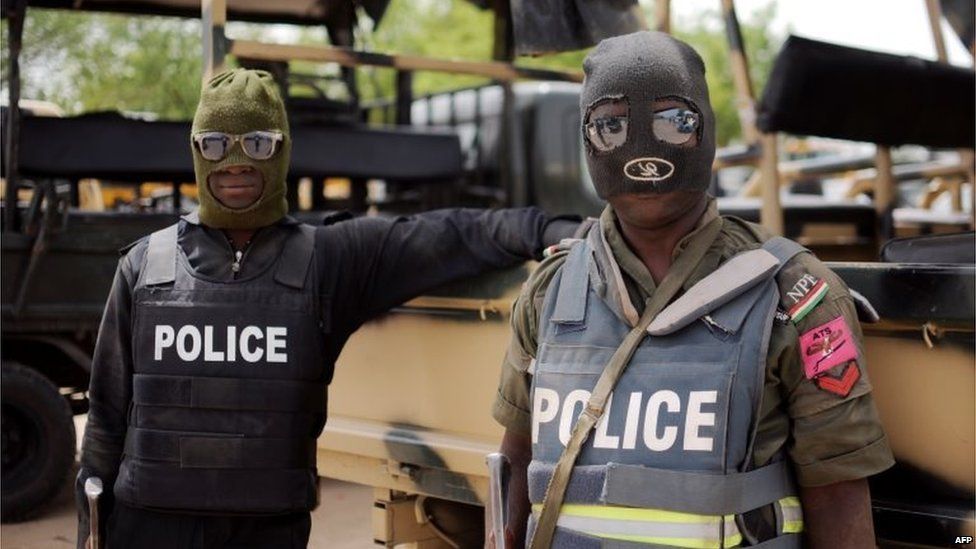
Police authorities have raised a serious alarm over intelligence indicating that terrorists and their informants are actively spying on schools and other sensitive targets across the country.
According to security sources, the surveillance activities form part of a broader effort by extremist groups to gather information on soft targets, with educational institutions identified as particularly vulnerable. Officials warn that such reconnaissance could be a precursor to planned attacks and have called for immediate heightened vigilance by school administrators, security personnel, and the general public.
The police statement urges institutions to strengthen access controls, report suspicious individuals or activities promptly, and cooperate fully with security agencies. “We are treating these reports with the utmost seriousness,” a senior police official said, noting that the involvement of local informants makes the threat more difficult to detect.
The military has responded by confirming that it is closely monitoring the situation. In a brief statement, military authorities said relevant formations have been placed on alert and are working in coordination with the police and other security agencies to track and disrupt any potential threats.
Security experts note that schools and public gathering places have increasingly featured in the operational planning of terrorist groups in recent years, making continuous intelligence sharing and community awareness critical to prevention. Authorities continue to appeal for calm while stressing that proactive measures are already underway.
News
Dangote Refinery IPO: SEC Warns Investors, ‘Don’t Pay Into Wrong Hands’
The warning effectively places investors on notice that interest in the IPO should not override basic due diligence, particularly in verifying where subscription applications are submitted and where payments are made.
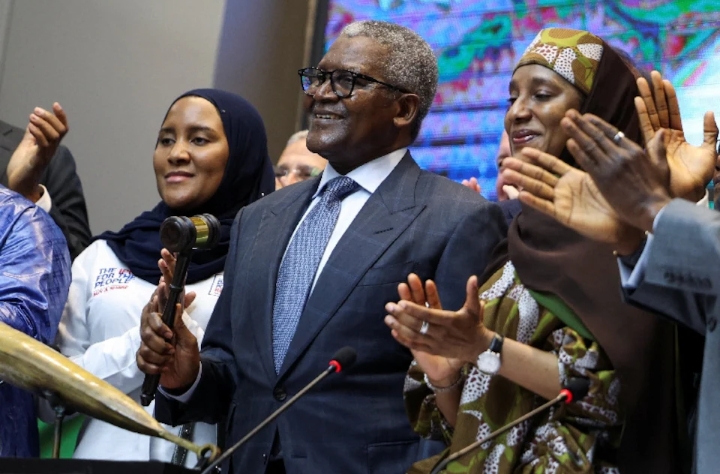
• Aliko Dangote , flanks by her daughters and capital market regulators, during the gong opening ceremony on the NGX, Monday September 14,2026
The Securities and Exchange Commission (SEC) has warned prospective investors in the Dangote Petroleum Refinery and Petrochemicals Initial Public Offering (IPO) against fraudsters and unauthorised platforms seeking to divert subscription funds.
The warning came as the refinery’s was quoted on the Nigerian Exchange Limited (NGX) on Monday, September 14, 2026, marking a major milestone in the company’s planned public offer.
With strong public interest expected around one of Nigeria’s largest capital-market offerings, the SEC urged investors to deal only with officially designated and approved receiving agents, subscription channels and platforms.
“The public is hereby advised to exercise caution and ensure that all applications and payments relating to the IPO are made only through the officially designated and approved receiving agents/subscription channels and platforms,” the Commission said.
The regulator’s alert highlights growing concerns over the possibility of fake investment websites, cloned platforms, fraudulent payment channels and individuals posing as authorised agents to exploit the huge interest generated by the Dangote Refinery offer.
The SEC therefore advised prospective investors to obtain information about the IPO only through the Commission’s official channels, the issuer’s official channels and other channels specifically established and approved for the offer.
The warning effectively places investors on notice that interest in the IPO should not override basic due diligence, particularly in verifying where subscription applications are submitted and where payments are made.


Olu Jacobs: His Life and Times
EXCLUSIVE: Veteran Nollywood Actor, Olu Jacobs Dies at 84

Naira Exchange Rates To Dollar, Pound, Euro…Wednesday, 16 September 2026

Tech Expert, Zuckerberg trains with UFC champions, Adesanya, Alexander

Organ Trafficking: Ekweremadu bags 10 years in UK prison

SAINT OBI: Between his marriage and his death
-

 Business2 days ago
Naira Exchange Rates To Dollar, Pound , Euro… September 14
-

 Business2 days ago
Filling Stations Selling Petrol, Diesel Higher Driven By Global Crude Prices
-

 Politics2 days ago
Again, Desmond Elliot begs political mentor,Gbajabiamila , “I’m sorry, Daddy”
-

 News1 day ago
Boko Haram Denies Ceasefire with FG, Vows Continued Attacks
-

 Business2 days ago
Dangote Refinery’s IPO Officially Opens Today On NGX
-

 Business2 days ago
Dangote at IPO Listing, Charges Public,”I don’t want to be called richest man in Africa”
-

 News1 day ago
Police Raise Alarm Over Terrorists and Informants Spying on Schools, Other Targets
-
 Business1 day ago
Dangote: Africa Is Like a ‘Scratch Card’ — Opportunities Are Immense