
News
BREAKING: Retired General Christopher Musa Sworn In as Nigeria’s New Defence Minister Amid Surging Security Crisis

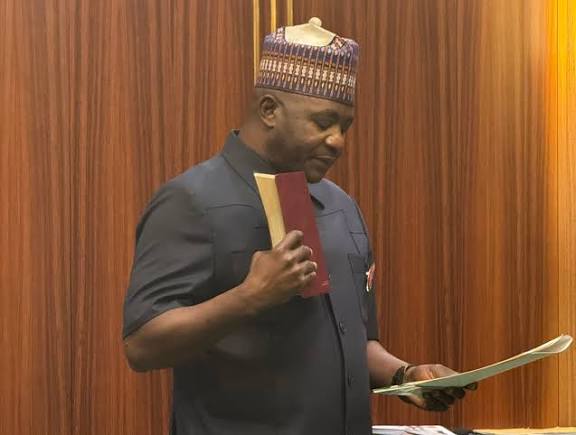
In a pivotal move to bolster the nation’s faltering security apparatus, Retired General Christopher Gwabin Musa was officially sworn in today as Nigeria’s Minister of Defence, capping a whirlwind nomination process that underscores President Bola Tinubu’s aggressive push to combat rampant terrorism, banditry, and kidnappings.
The ceremony, held at the Presidential Villa in Abuja, marked the culmination of Musa’s rapid ascent following his nomination by Tinubu on December 2 and a grueling five-hour Senate confirmation hearing the previous day.
Clad in a traditional brown kaftan and hula cap, the 58-year-old former Chief of Defence Staff (CDS) – who retired from active military service in October 2025 – took the oath of office in the presence of family, top government officials, and fellow security chiefs, vowing to “go after” insurgents “fully” without retreat.
Musa’s appointment comes at a dire moment for Nigeria, where insecurity has reached alarming heights. A National Bureau of Statistics report revealed that Nigerians shelled out a staggering N2.23 trillion ($1.3 billion) in ransom payments between May 2023 and April 2024 alone, fueling a cycle of mass abductions – including recent school kidnappings in Kebbi State that drew fierce public backlash over alleged military withdrawals.
During his Senate grilling, Musa addressed these failures head-on, promising an immediate probe into the Kebbi incident and declaring, “The military is not known for cowardice.”
He emphasized leveraging technology for tracking ransom flows and building a national database to monitor citizens electronically, while urging an end to payments that embolden criminals.Born on December 25, 1967, in Sokoto State, Musa brings a storied 34-year military career to the role.
A graduate of the Nigerian Defence Academy with a Bachelor of Science degree, he rose through the ranks as Commanding Officer of the 73 Battalion, Theatre Commander for Operation Hadin Kai against Boko Haram, and CDS from June 2023 until his retirement.
His accolades include the 2012 Colin Powell Award for Soldiering Excellence, and he holds advanced degrees in military science from institutions in China and the U.S.
In his post-swearing-in remarks, Musa outlined a multi-pronged strategy: fostering inter-agency collaboration, empowering communities to share intelligence, reinforcing the Safe Schools Initiative, and overhauling outdated security laws.
He warned that terrorists view Nigeria as a “lucrative target” due to its perceived wealth, calling for zero tolerance and robust border controls to thwart foreign infiltration.
Senate President Godswill Akpabio, who presided over the confirmation, congratulated Musa and implored him to wield his office decisively in the war on crime.
Analysts see Musa’s insider knowledge as a game-changer, potentially ushering in a “new era” for Nigeria’s defence amid criticisms of fragmented responses to threats.
As Musa assumes command, all eyes are on whether his tenure will finally stem the tide of violence that has claimed thousands of lives and displaced millions.
The defence portfolio now rests on a general who has stared down defeat before – and vows to do so again.


Boko Haram has strongly denied reports of a ceasefire agreement with the Federal Government and insisted that it will continue its campaign of attacks.
In a statement released by the group, the militants dismissed claims of any truce or negotiated pause in hostilities, describing such reports as false and misleading.
The group reaffirmed its commitment to ongoing operations against government forces and other targets, vowing that its attacks will persist without interruption.
The denial comes against the backdrop of persistent insecurity in the northeast and other affected regions, where the group has maintained a long-standing insurgency.
Security sources note that the latest statement appears aimed at clarifying the group’s position and rejecting any suggestion of dialogue or de-escalation with the authorities.
Military and government officials have not issued an immediate detailed response to the claim, though security operations against the militants remain active. Authorities continue to urge vigilance as the group signals its intention to sustain violence.
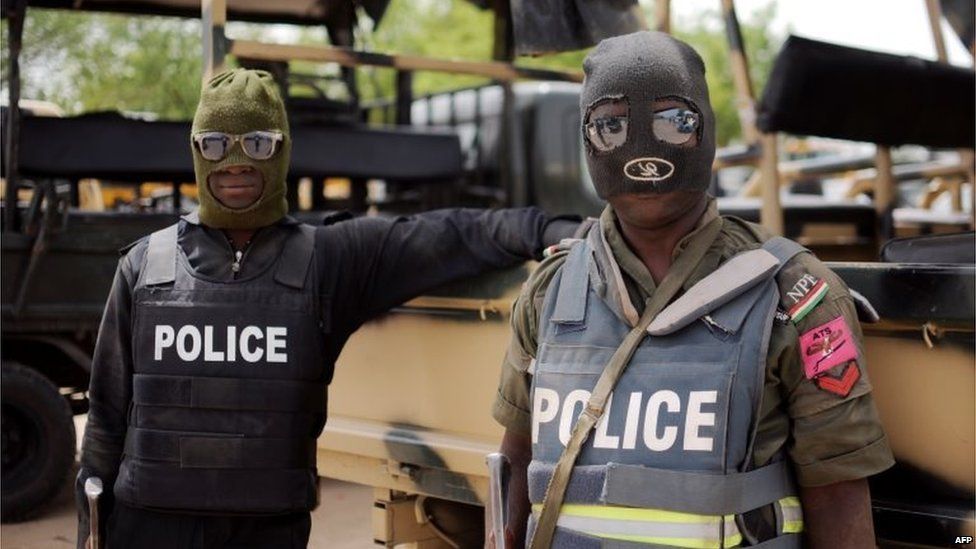
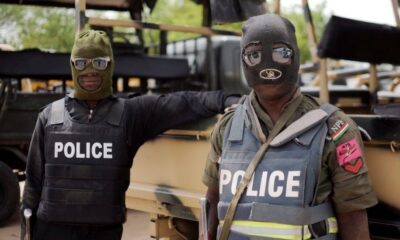
Police authorities have raised a serious alarm over intelligence indicating that terrorists and their informants are actively spying on schools and other sensitive targets across the country.
According to security sources, the surveillance activities form part of a broader effort by extremist groups to gather information on soft targets, with educational institutions identified as particularly vulnerable. Officials warn that such reconnaissance could be a precursor to planned attacks and have called for immediate heightened vigilance by school administrators, security personnel, and the general public.
The police statement urges institutions to strengthen access controls, report suspicious individuals or activities promptly, and cooperate fully with security agencies. “We are treating these reports with the utmost seriousness,” a senior police official said, noting that the involvement of local informants makes the threat more difficult to detect.
The military has responded by confirming that it is closely monitoring the situation. In a brief statement, military authorities said relevant formations have been placed on alert and are working in coordination with the police and other security agencies to track and disrupt any potential threats.
Security experts note that schools and public gathering places have increasingly featured in the operational planning of terrorist groups in recent years, making continuous intelligence sharing and community awareness critical to prevention. Authorities continue to appeal for calm while stressing that proactive measures are already underway.
News
Dangote Refinery IPO: SEC Warns Investors, ‘Don’t Pay Into Wrong Hands’
The warning effectively places investors on notice that interest in the IPO should not override basic due diligence, particularly in verifying where subscription applications are submitted and where payments are made.

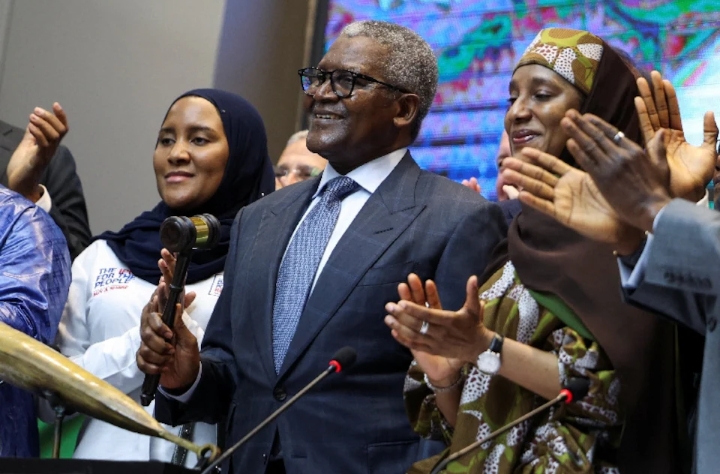
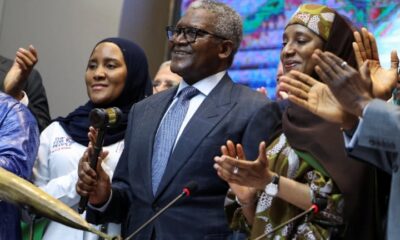
• Aliko Dangote , flanks by her daughters and capital market regulators, during the gong opening ceremony on the NGX, Monday September 14,2026
The Securities and Exchange Commission (SEC) has warned prospective investors in the Dangote Petroleum Refinery and Petrochemicals Initial Public Offering (IPO) against fraudsters and unauthorised platforms seeking to divert subscription funds.
The warning came as the refinery’s was quoted on the Nigerian Exchange Limited (NGX) on Monday, September 14, 2026, marking a major milestone in the company’s planned public offer.
With strong public interest expected around one of Nigeria’s largest capital-market offerings, the SEC urged investors to deal only with officially designated and approved receiving agents, subscription channels and platforms.
“The public is hereby advised to exercise caution and ensure that all applications and payments relating to the IPO are made only through the officially designated and approved receiving agents/subscription channels and platforms,” the Commission said.
The regulator’s alert highlights growing concerns over the possibility of fake investment websites, cloned platforms, fraudulent payment channels and individuals posing as authorised agents to exploit the huge interest generated by the Dangote Refinery offer.
The SEC therefore advised prospective investors to obtain information about the IPO only through the Commission’s official channels, the issuer’s official channels and other channels specifically established and approved for the offer.
The warning effectively places investors on notice that interest in the IPO should not override basic due diligence, particularly in verifying where subscription applications are submitted and where payments are made.


Olu Jacobs: His Life and Times
EXCLUSIVE: Veteran Nollywood Actor, Olu Jacobs Dies at 84

Naira Exchange Rates To Dollar, Pound, Euro…Wednesday, 16 September 2026

Tech Expert, Zuckerberg trains with UFC champions, Adesanya, Alexander

Organ Trafficking: Ekweremadu bags 10 years in UK prison

SAINT OBI: Between his marriage and his death
-

 Business2 days ago
Naira Exchange Rates To Dollar, Pound , Euro… September 14
-
 News1 day ago
Boko Haram Denies Ceasefire with FG, Vows Continued Attacks
-

 Business2 days ago
Filling Stations Selling Petrol, Diesel Higher Driven By Global Crude Prices
-

 Politics2 days ago
Again, Desmond Elliot begs political mentor,Gbajabiamila , “I’m sorry, Daddy”
-

 Business2 days ago
Dangote Refinery’s IPO Officially Opens Today On NGX
-
 Business2 days ago
Dangote at IPO Listing, Charges Public,”I don’t want to be called richest man in Africa”
-
 News1 day ago
Police Raise Alarm Over Terrorists and Informants Spying on Schools, Other Targets
-

 Crime1 day ago
Boko Haram Attacks Adamawa Community, Kills Residents